
Category: Recaps

  • The Death of Big Brother: How Big Brother 1000 Rewrote History to Protect CBS & The Go Along Get Along Gang

    The Death of Big Brother: How Big Brother 1000 Rewrote History to Protect CBS & The Go Along Get Along Gang

    Big Brother 1000 was never meant to celebrate genuine Big Brother history. It was a corporate infomercial designed to validate the lowest-rated, most sanitized era of the franchise while hiding behind performative identity politics and rigged retrospective awards. CBS has spent recent seasons waving the “woke” banner—championing casting mandates and acting like moral arbiters—yet Thursday night’s milestone broadcast proved that race on Big Brother is nothing more than a convenient plot device. When demographic narratives serve network PR, production parades them front and center; when acknowledging true merit threatens their preferred brand favorites, real history gets completely erased.

    Danielle Reyes vs. The “Go Along Get Along” Hierarchy

    The decision to award Janelle Pierzina “Best Player to Never Win” over Danielle Reyes was the defining insult of the broadcast, but it wasn’t about race—it was about network compliance. Janelle sits at the absolute top of the modern “Go Along Get Along Gang” hierarchy. After coming out of Big Brother 22 complaining, she quickly adjusted her tune, played nice with production, and became a safe corporate mascot who gladly plays along with whatever script CBS hands her.

    Danielle Reyes, on the other hand, played the single most dominant, format-shattering runner-up game in reality TV history on Big Brother 3. Her strategic manipulation of the house was so legendary that CBS was forced to rewrite the rules and sequester the jury because of her. Yet, instead of honoring the player whose intellect legitimately broke and fixed the game format, CBS had Danielle sitting silently in the studio audience watching Janelle collect the trophy.

    The irony is glaring: CBS pretends to be hyper-conscious of representation, but when faced with an undeniable legend like Danielle, they passed her over to reward an overhyped production darling. Race suddenly didn’t matter because validating the compliant, network-approved circle of alumni mattered more.

    Big Brother 1000

    The Cookout Insult: Erasing Chilltown, The Renegades, and True Black Pioneers

    The centerpiece of CBS self-congratulatory broadcast was crowning Season 23’s The Cookout as the “greatest alliance of all time” over the true foundational juggernauts of the game.

    To give The Cookout the crown over Chilltown—an alliance that produced two wins across two different eras (BB2 and BB7) through sheer charisma and psychological warfare—is an embarrassment to reality television. It insulted The Renegades, The Hitmen, The Brigade, The Quack Pack, and the unmatched undercover partnership of Jason Guy and Danielle Reyes.

    The alliance operated on a game strategy built strictly on racial exclusion—systematically targeting and evicting every single non-Black houseguest regardless of individual gameplay, relationships, or social positioning. To justify it, they manufactured a martyr narrative claiming that Black players had never had a real chance to succeed in the game. That claim was a direct insult to the historic competitors who made deep runs purely on skill and intellect:

    • Monica Bailey (BB2): Battled her way to Final 3 purely through raw social navigation.
    • Danielle Reyes (BB3): Outmaneuvered the entire house to reach Final 2.
    • Jameka Cameron (BB8): Navigated a deeply fractured house to lock in a Final 4 finish.
    • Marvin Latimer (BB5): The master strategist who literally invented the “Six-Finger Plan” (the backdoor)—the most vital game mechanic in franchise history.

    Marvin Latimer was completely erased from the milestone episode. CBS had zero interest in mentioning the Black man whose mind revolutionized the show’s mechanics. Instead, they focused on an alliance built on demographic steamrolling because it fits their corporate branding.

    The Back Row Farce: Sitting at the Kiddie Table

    If anyone needed undeniable proof of how performative CBS’s celebration of Black houseguests actually is, they only needed to look at the studio seating during Big Brother 1000. While Julie Chen Moonves stood on stage crowning The Cookout as the “greatest alliance in franchise history,” the camera caught the reality: the entire Cookout, alongside recent winners like Chelsie Baham, was relegated to the back row, swallowed by shadows behind production’s favored circle of alumni.

    In the front row, lit in full high-definition glam, sat the network’s favored veterans soaking up camera time. Behind them sat the very alliance CBS used as a shield to prove its modern progressive credentials. The image was a telling metaphor for modern Big Brother: the network will happily use demographic steamrolls for corporate marketing and award segments, but when the lights go up, those contestants are shoved to the back row like a literal kitty table. It exposed the entire celebration for what it was—a cynical corporate transaction where Black players are used for optics, given a cheap title, and then told to sit in the dark.

    Favorite Winner Revisionism: Sidelining Dr. Will for the Safe Edit

    Awarding Dan Gheesling “Favorite Winner” over Dr. Will Kirby was another calculated move to pacify the compliant social media wing of the fanbase.

    Dr. Will won Big Brother 2 when there was no blueprint, no Power of Veto, and no safety net. He sat on the block nearly every single week, told the house to their faces that he hated them, threw every competition, and still manipulated every single person to the end. Even Dan Gheesling has spent years acknowledging that Dr. Will is the undisputed standard-bearer of the format. But because Dr. Will refuses to be a sanitized corporate brand pet for CBS, the network pushed him aside to maintain its sterile, production-approved image of the game.

    The Taylor Hale Issue and The Viewership Reality

    The corporate revisionism reached peak absurdity by placing Taylor Hale in the running for best winner of all time. Taylor was literally the lowest-rated winner in franchise history during Season 24. CBS and mainstream trades continue to run coordinated PR campaigns to fabricate a legacy of universal acclaim, but the cold hard metrics destroy the narrative:

    • The Unlocked Collapse: With CBS officially counting Unlocked episodes in the series canon to artificially inflate the episode count toward Big Brother 1000, Taylor’s appearances struggle to even break 2 million live viewers.
    • Historical Lows: Counting those spin-off broadcasts as official episodes means Taylor is attached to at least 5 of the lowest-rated Big Brother episodes ever aired.
    • Manufactured Acclaim: Production weaponized a compliant Twitter echo chamber and heavy-handed edits to force a winner into the history books whose actual television draw ranks at the absolute bottom of the franchise’s 26-year existence.

    Media Complicity: Trade Spin vs. Historical Decay

    The gaslighting surrounding modern Big Brother isn’t confined to CBS broadcasts—it is actively enabled by the entertainment press. Industry trades like The Hollywood Reporter routinely publish glowing puff pieces framing modern seasons and milestone celebrations as massive triumphs, spinning multi-platform streaming metrics to shield the network’s corporate brand.

    By laundering selective streaming data and ignoring the collapse of linear television viewership, the media manufactures an alternate reality where recent, sanitized seasons are celebrated as cultural peaks. The reality documented by independent ratings trackers is the exact opposite: modern Big Brother is operating at historic viewership lows, bleeding millions of golden-era fans who tuned out once authentic conflict was replaced by managed optics.

    Corporate Gatekeeping and Identity Cosplay

    The celebration also put the franchise’s awkward identity curation on full display. Casting executives construct diversity quotas, and then the network decides who gets to act as the official voice on cultural dynamics. Biracial houseguests like Hannah Chaddha (South African and Indian) are platformed by production to speak authoritatively on Black solidarity and activism, while real franchise pioneers are kept off the stage.

    To many viewers, watching production curate identity checkboxes while sidelining foundational innovators felt insulting. It exposed how identity on CBS is managed top-down by white producers who determine who gets to speak for whom.

    Sanitizing History for Social Media Pets

    The editorial framing throughout the retrospective made the quality drop in Big Brother unmistakable. In one breath, they showed Dr. Will Kirby’s ruthless, unfiltered All-Stars Veto speech; in the next, they cut directly to Taylor Hale’s rehearsed TV monologues. Authentic strategic alliances like The Brigade were equated with modern demographic pacts.

    The studio was deliberately packed with houseguests from the lowest-rated era in series history—social media influencers like Quinn, Keanu, and Morgan, alongside recent winners like Xavier Prather, Taylor Hale, and Chelsie Baham. These are production’s compliant brand ambassadors. CBS is desperate to convince audiences that these recent, sanitized seasons are the golden age of the franchise, using rigged awards to fabricate nostalgia for an era defined by dwindling viewership and performative influencer dynamics.

    Selective Morality and the Feeds Blackout

    The network’s hypocritical moral posturing collapsed further with the selective protection of production favorites. When network pets cross lines—like Paul Abrahamian debating wearing a “blackface” snake costume to taunt Dominique Cooper on BB19—they are quietly welcomed back and platformed when CBS needs bodies for a milestone show. Yet early unscripted contestants who didn’t play nice with network edits, like Will Mega in Season 1, were put through intense public interrogations. Production decides when race is an issue and when it can be swept under the rug.

    The final slap in the face was the ending twist: shutting off the 24/7 live feeds for 72 hours, stripping away HOH and Veto mechanics, and forcing fans into a medieval-themed blackout. Fans across Reddit and X torched the broadcast for taking away the only transparency left in modern Big Brother.

    Big Brother 1000 wasn’t an organic celebration; it was a curated corporate infomercial. By treating race as an on-demand marketing tool, giving awards to race-conscious steamrolls over legendary alliances like Chilltown, ignoring Dr. Will’s unmatched legacy, propping up historically low-rated winners through media spin, forcing Black winners into the dark back row, erasing true innovators like Marvin Latimer, and locking the feeds, CBS delivered a hollow showcase that proved just how disconnected the show has become from the game fans fell in love with.

    #ShayWasRight Big Brother is dead.

    – Shay

    Make sure to subscribe to our Late Night Crew Youtube Channel. 

    Follow @yorkjavon@kspowerwheels@MS_MISCHA & 

    @LateNightCrewYT on X.
  • Big Brother 28 Episode 1000 Review & Recap: Mallory Evicted as a Terrible Twist Hijacks the Celebration

    Big Brother 28 Episode 1000 Review & Recap: Mallory Evicted as a Terrible Twist Hijacks the Celebration

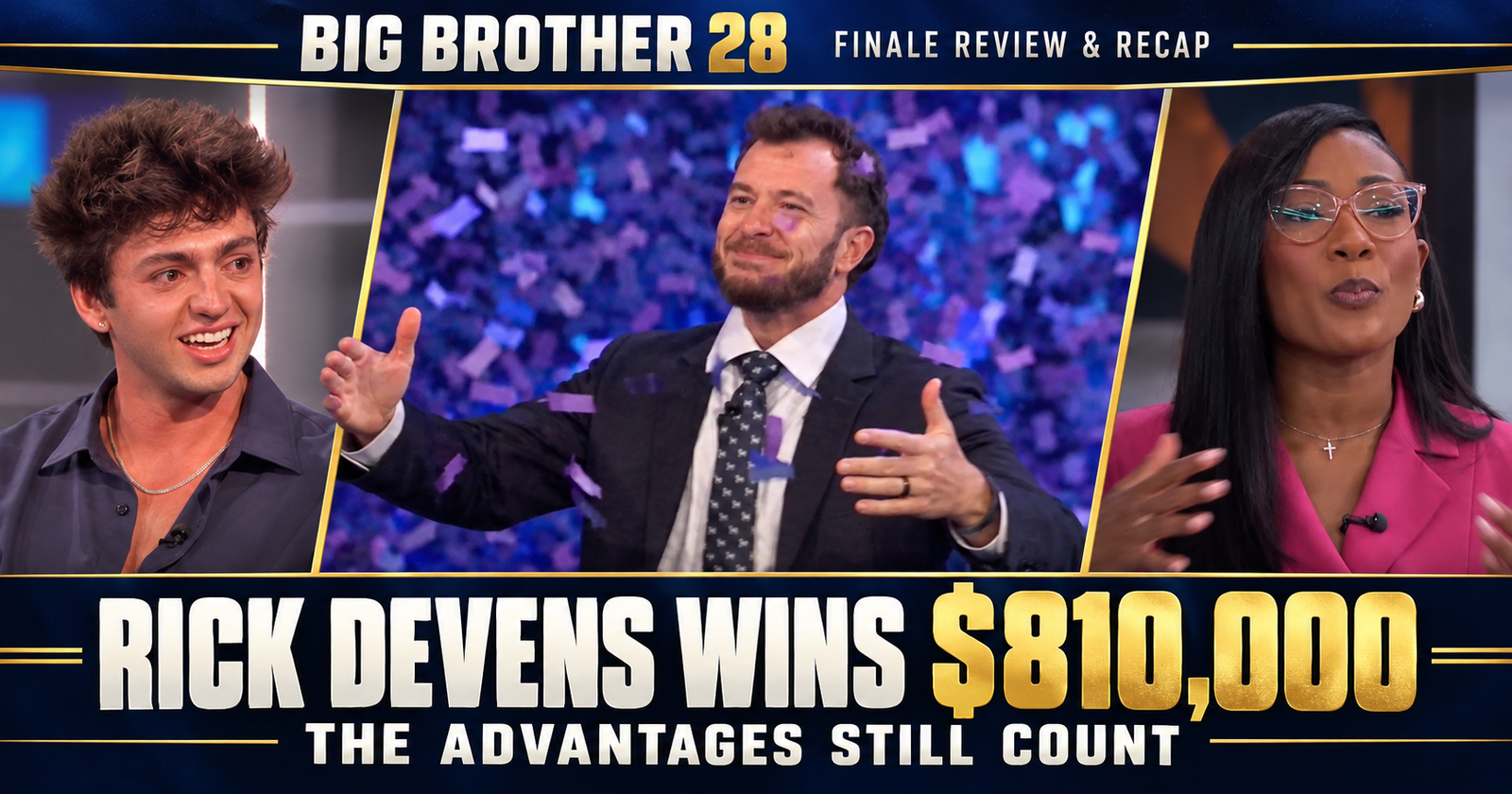
    Big Brother 28 Episode 1000 spent a large part of its anniversary celebration reminding us how good this show can be. Then it ended by announcing that several of the things that make the current game work were about to disappear.

    Mallory was evicted 6–2. Drew won the BB Block Buster, escaped the vote Barrett had been trying to organize against him, and then voted out Mallory himself. Angela voted her out, too. Melody and Barrett were the only people who voted to keep her.

    Then came the trip to the year 1000: no Head of Household, no veto competition, no Block Buster, and someone’s game ending before the next live eviction. The feeds would stay off until after Sunday’s show.

    That is how Big Brother chose to finish celebrating a thousand episodes.

    The opening screamed series finale. The ending gave the people who follow the game between broadcasts a reason to turn the television off until Sunday.

    Somewhere between all the applause and the next production announcement, there was an actual eviction with actual consequences. That should have been the part the show trusted most.

    The Opening Had Series Finale Energy

    The retrospective covered fights, twists, blindsides, competitions, disastrous decisions, showmances and winners. Former houseguests were in the audience. There were fan awards, familiar faces and Guinness World Records recognition.

    Reaching this milestone deserved acknowledgment. Nobody needed Big Brother to pretend twenty-six years of television had not happened.

    But the opening had the energy of a farewell special: look at everything we did, remember everyone you loved, and please applaud the institution.

    I wanted an anniversary episode that made me excited about the season still being played.

    Instead, the celebration leaned hard into the franchise congratulating itself. The go along, get along gang atmosphere became exhausting because the current season already has enough people treating proximity to an established name like an accomplishment.

    For a celebration this large, I also wanted the earliest seasons to feel more central. Janelle’s presence mattered, but a greatest-hits montage is not the same experience as hearing more from the people who built those first few years.

    The issue is what the broadcast chose to emphasize. An audience full of alumni cannot substitute for a compelling episode happening inside the house.

    The Cookout Won Favorite Alliance. That Does Not End the Argument.

    The category was Favorite Alliance, and the Cookout won the fan vote. That wording matters. A popularity award does not establish an objective ranking of the best alliances ever assembled.

    My objection to the Cookout has always included the decision to make race a condition of membership in its core alliance. I consider that exclusion discriminatory. The goal of securing a Black winner explains why the alliance formed; it does not require me to approve of that organizing principle.

    Its members’ achievement still has to be described accurately. All six reached the final six, and the alliance secured a Black winner of the regular U.S. series. Keeping that many people committed while maintaining relationships outside the group took coordination and discipline.

    But effectiveness, entertainment value and the best decision for every individual member are separate questions.

    A group can accomplish its shared mission while leaving some members with a worse path to the money. It can dominate a season and still make that season less interesting to watch. Viewers are allowed to acknowledge the accomplishment without enjoying the experience.

    That is the discussion these celebrations usually flatten. Everything becomes a trophy, a highlight package and another round of applause.

    I would have voted differently. The Cookout winning Favorite Alliance does not make disagreement with that choice an inability to understand what happened in BB23.

    Dan Won Favorite Winner. Dr. Will Still Has My Vote.

    Dan winning Favorite Winner is understandable. His BB10 victory ended with a unanimous 7–0 jury vote, and his ability to recover from danger is a major reason people still talk about him.

    But Dr. Will remains my choice.

    Will won BB2 without winning Head of Household and without a Power of Veto available. He was nominated four times. The record does not need to become “almost every week” to make the argument impressive.

    Once he was on the block, there was no veto competition waiting to give him another way out. He had to make keeping him seem preferable to keeping the person beside him. His influence came through relationships, manipulation and how other players assessed their own interests.

    That is an extraordinary foundation for a winning game.

    The absence of a veto does not automatically settle the comparison, because everyone in BB2 played under that format. Dan navigated a different game with different tools, and his unanimous victory deserves its place in the argument.

    Still, a fan poll does not close the debate.

    There is another distinction worth keeping straight: Dan’s Funeral happened in BB14, which he did not win. It absolutely belongs in a discussion of his career. It is not part of his BB10 winning season. Fans choosing their favorite winner can consider both appearances; anyone ranking the strongest winning game needs to separate them.

    My vote stays with Will. Dan’s trophy does not erase the case.

    Janelle Had a Case. Danielle Had the Stronger One.

    Janelle received both Best to Never Win and Favorite Comp Beast.

    The competition award is easy to understand. Her consecutive third-place finishes in BB6 and BB7 made her one of the defining players of that era. Her popularity came from surviving pressure, winning when she needed to and giving the audience a personality it wanted to follow.

    There is a legitimate case for her.

    For Best to Never Win, I still would have chosen Danielle.

    Danielle reached the BB3 final two through a strategically valuable, largely concealed partnership with Jason. Her social positioning and information management were central to that run. Evicted jurors could watch the broadcasts, including her Diary Room commentary, before voting; the following season introduced a sequestered jury.

    That history gives her candidacy a different weight. She helped define a style of Big Brother built on relationships that did not look like an alliance from the outside, while telling the audience what she was actually doing.

    That does not erase Lisa’s victory or mean Danielle handled every part of the game perfectly. It does mean that this category deserved more than an assumption that the most beloved competition performer was also the strongest player without a win.

    And yes, seeing Danielle passed over stings. Whatever anyone thinks of her later appearances or her relationship with the franchise, her BB3 game should not need another round of smiling, showing up and playing nice to remain central to this conversation.

    She does not owe the franchise more loyalty to make that résumé matter.

    The fans chose Janelle. I disagree with the result. A vote for Danielle would have recognized a different kind of excellence, and it is the kind I value more in this category.

    The Best Memories Explained Why the Current Game Deserved More Time

    Dan’s Funeral won Favorite Moment. Rachel’s “Floaters, grab a life vest” won Most Iconic Quote. The retrospective and record presentation gave the anniversary its historical context.

    Those memories also exposed the problem with the evening’s priorities.

    People remember a desperate player talking his way out of danger. They remember personalities colliding, loyalties cracking and contestants making decisions that immediately change the house.

    BB28 had its own version of that tension waiting: Barrett was questioning whether protecting Drew meant continuing to protect the Icons, while Mallory was discovering how little her place in Mosh Pit guaranteed her.

    That story did not need a trophy or a medieval setting.

    It needed room.

    Mallory’s Nomination Finally Forced Barrett to Choose

    Once the episode returned to the current house, the reaction to Mallory’s replacement nomination supplied the conflict the anniversary packaging could not manufacture.

    Mallory was furious with Dee. Melody was prepared to keep Mallory over Drew. Barrett was frustrated with Dee’s handling of the week and increasingly uncomfortable with what his relationship with the Icons was costing him.

    Devens understood the danger. Changing the target required care because the Icons risked losing Drew and Barrett along with Mallory’s trust.

    That was the actual strategic problem: how much damage could the Icons do to their wider alliance before its other members stopped accepting it?

    Barrett eventually told Mallory she was the target. Then he brought Mallory and Melody together, raised the problem of Drew’s positioning and pushed the possibility of sending Drew out against the Icons’ wishes.

    That would not have removed an Icon directly. It could have removed a player helping keep their structure intact, while proving they did not control every eviction.

    Barrett was finally confronting something this house has spent too long avoiding. Being included in an alliance does not mean the alliance’s decisions are designed to benefit you.

    His frustration mattered because he started translating it into a voting plan. Unfortunately, that plan still depended on Drew remaining eligible for eviction.

    Drew Won BB Lackluster and Killed the Blindside

    The BB Grand Cliptacular put Drew, Mallory and Taylor into a challenge involving clues and clips displayed across different screens. They had to identify the correct screen and submit the answer.

    It fit the anniversary theme. It also required attention and speed rather than simply rewarding the strongest body in the room.

    Drew won. Give him credit for saving himself under pressure.

    And there went the blindside butterbeans.

    Barrett could organize votes against Drew, Melody could agree to cut him, and the Icons could finally be facing a result they did not want. None of it could remove somebody who was no longer on the block.

    The final choice became Mallory or Taylor.

    Calling it BB Lackluster captures how deflating that result was to watch, but disliking the outcome is not evidence the competition was rigged. Drew won an established safety competition. The frustration is what his win prevented: a test of whether Barrett’s rebellion had enough support to survive an actual vote.

    The house returned to the eviction with a different decision in front of it. Anyone judging the votes has to judge that decision, rather than the Drew eviction that could no longer happen.

    Angela’s Vote Told Mallory Where She Ranked

    Angela voted to evict Mallory.

    For someone who had treated Angela as a close connection, that was the clearest answer Mallory was going to get about where she stood.

    Friendship does not obligate someone to keep you in Big Brother. Betrayal is part of the game. But viewers do not have to pretend the betrayal becomes emotionally meaningless because the person casting the vote has a strategic explanation.

    Angela chose the outcome Dee and Devens wanted over keeping Mallory.

    That is the point the rest of the house keeps learning after it becomes expensive: the relationships around the Icons can be real, and the Icons can still put each other first.

    Mallory’s connection with Angela did not outweigh that priority. The vote made the hierarchy visible in a way another reassuring conversation never could.

    Drew Saved Himself, Then Helped the Icons Cut Mallory

    Drew’s vote was the one that made me roll my eyes hardest.

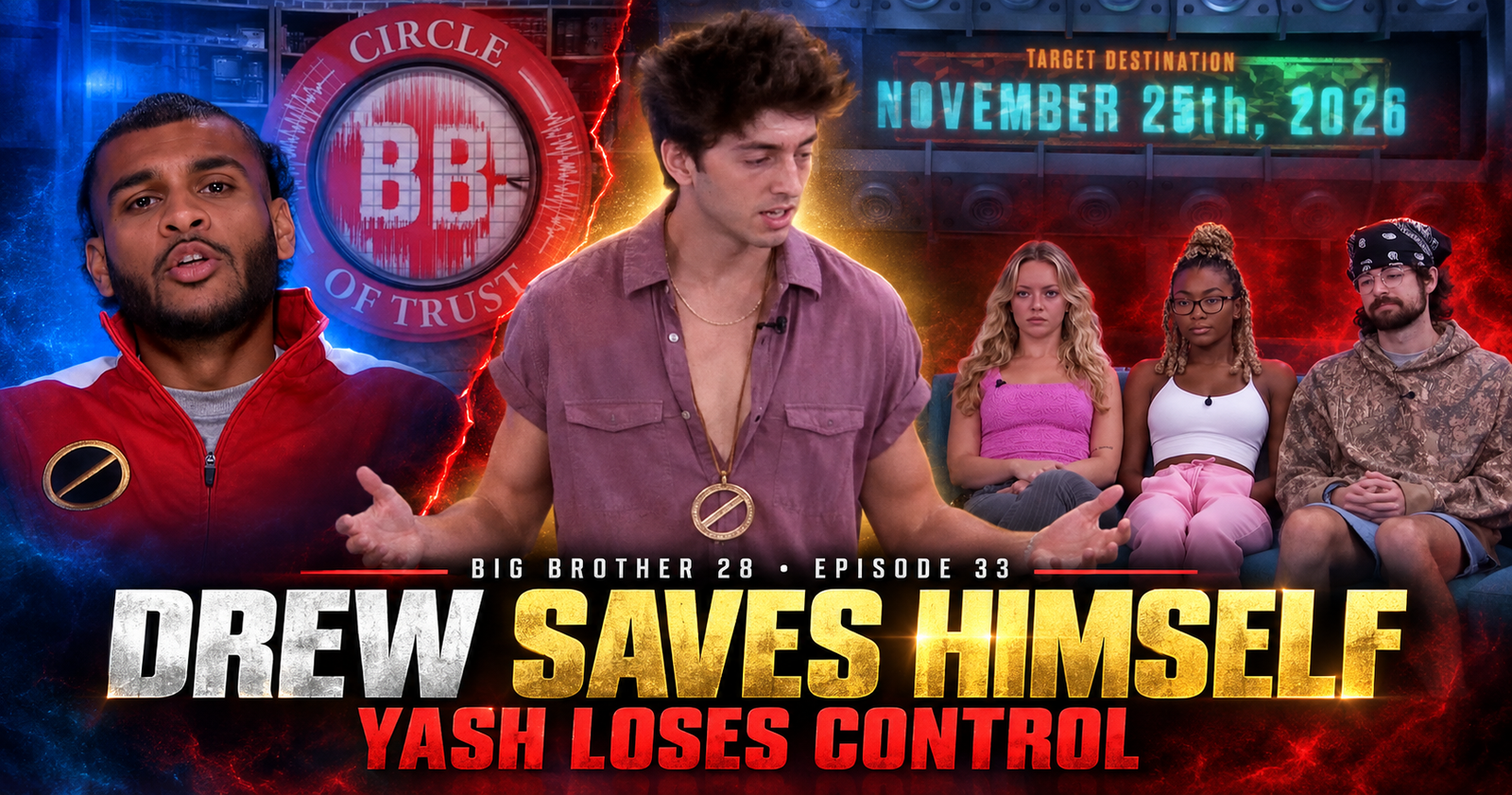
    He survived the block, then entered the Diary Room and voted to evict Mallory. After everything Dee had done to the people around him, he still helped deliver the result her side wanted.

    It looked weak. More specifically, it looked like another opportunity to establish independence that Drew decided was not worth taking.

    There is a defense available: Mallory was leaving, and Drew may have considered a minority vote an unnecessary risk. That is a possible strategic explanation, not a confirmed account of his thinking.

    But avoiding friction with the majority also has a price. Mallory was another relationship outside the Icons’ central trio. Losing her reduced the alternatives around Drew, and his vote gave Melody and Barrett another reason to question whether he would choose their interests when the choices became uncomfortable.

    The arithmetic matters, too. Drew did not single-handedly evict Mallory. If only his vote had changed, she still would have left, 5–3.

    His vote mattered as a statement of priorities. Blaming him for personally deciding a six-vote eviction would overstate his influence almost as badly as his game has overstated his independence.

    Melody and Barrett Were the Two Votes That Matched Their Promises

    Mallory received eviction votes from Angela, Drew, Yash, Haley, Devens and LaLa. Melody and Barrett voted to evict Taylor.

    That made the result 6–2.

    Whatever else there is to criticize about Melody and Barrett’s earlier decisions, they did not abandon Mallory when the vote arrived. Barrett’s resistance to the target switch survived the competition result, even though his larger plan to remove Drew did not.

    The remaining votes also deserve more analysis than calling everyone obedient.

    Yash and LaLa were choosing between Mallory and Taylor, a player with whom they had their own strategic connections. Keeping Taylor could serve their interests while also producing the outcome the Icons wanted. Voting together on one eviction does not prove everybody has the same alliance or the same reason.

    That makes Drew’s position more frustrating, not less. He had a substantial connection to Mallory and still joined the six votes sending her out.

    The people who stayed loyal to her were the two sitting on the losing side of the count.

    Mallory’s Exit Made Her HOH Mistake Impossible to Ignore

    The tears after Drew’s win gave the eviction its emotional weight. Julie told the houseguests they were appearing in the milestone episode, Mallory and Taylor made their final appeals, and Mallory left after fifty-two days in the house.

    She received a standing ovation. In her exit conversation, she acknowledged that she had not tried as hard in the HOH competition.

    That admission belongs beside every complaint about Dee’s choices.

    Mallory did not deserve a guarantee that another player would protect her simply because she felt comfortable letting that player have power. And easing off did not guarantee Dee would win, either. It meant Mallory had not done everything she could to control her own position.

    There is no way to know that trying harder would have made her HOH. The mistake was accepting less effort as sufficient while relying on a structure that was already showing cracks.

    Her anger at Dee made sense. Her disappointment with Angela and Drew made sense. Those reactions do not erase her responsibility for trusting the wrong arrangement.

    The applause was a warm send-off. It could not give her the competition or the week back.

    Big Brother 28 Episode 1000 Ended by Taking Away the Usual Game

    Julie announced that the houseguests would travel to medieval times, the year 1000, for the next phase.

    No Head of Household.

    No veto competition.

    No Block Buster.

    Someone’s game would end before the next live eviction.

    That is a major change to the structure the remaining players have spent weeks navigating. It also leaves the most consequential question unanswered in the announcement: exactly how does somebody lose their place in the game?

    A theme is decoration. An elimination mechanism determines whether someone still has a chance at the prize. Announcing the former does not adequately explain the latter.

    I have no interest in calling this brilliant just because the show can say it has never done this exact combination before. On the information announced, it is one of the worst directions the season could have taken at this moment.

    And before anyone points to BB2, yes, Big Brother existed before the veto. Will’s season had an established HOH-and-eviction structure. This criticism concerns a midseason suspension of the current format, with another elimination promised before the replacement process has been clearly explained to viewers.

    Novelty does not make that a satisfying anniversary gift.

    The Twist Gives the #PIFE Criticism Plenty of Fuel

    The timing is what makes this so irritating.

    The house had finally produced an organized attempt to resist the Icons’ preferred outcome. Drew’s competition win stopped that particular plan. A normal next round would have given the remaining players another chance to win HOH and act on the relationships this eviction damaged.

    Instead, the familiar route to power disappeared for the announced medieval phase.

    After the Diamond Veto and the BB Bribe had already affected the Icons’ position, another dramatic change naturally invites the #PIFE reaction. The show has given skeptical viewers plenty of reason to question how often twists interrupt the consequences players would otherwise face.

    But the criticism needs to stay accurate. Nothing announced proves that an Icon is immune, that production chose a particular person to save, or that this format will necessarily help the trio. Removing veto and HOH opportunities also removes opportunities they could have used themselves.

    We do not yet know who benefits most.

    What we do know is that the show interrupted the established game just as the next contest for power had a clear, interesting story behind it. That decision deserves criticism without pretending an unannounced outcome has already happened.

    If an Icon ends up losing under the twist, that would not automatically make the design good. The standard should be whether the rules produce a coherent, credible competition, regardless of whose favorite survives.

    Three Days Without Feeds Is a Miserable Anniversary Gift

    The feeds would remain unavailable until after Sunday’s show.

    Roughly three days without feeds, immediately after a contested eviction and during a major format change. That is a wild way to thank the audience for staying with Big Brother through a thousand episodes.

    The feeds are how viewers follow decisions before they are condensed into an episode. They let us see relationships change, competing versions of a conversation and the difference between what somebody tells the Diary Room and what they actually do.

    This was precisely when that access mattered.

    How would Melody respond to Drew voting out Mallory? Would Barrett keep pushing against the Icons? Would people who agreed on evicting Mallory remain aligned once the next decision arrived?

    Those were immediate questions created by the players. The show answered them with a waiting period.

    A blackout does not prove production is hiding wrongdoing. It does mean viewers lose the contemporaneous access that makes this format different from an ordinary edited competition show.

    The go along, get along gang got its celebration. The feed audience got told to come back Sunday.

    What the Episode Got Right

    Barrett’s resistance was the strongest part of the current-game story because it developed from identifiable damage to his relationships. Dee’s target shift had consequences, and Devens recognized that managing those consequences mattered.

    Melody’s willingness to prioritize Mallory made her position clear. The 6–2 eviction showed that those loyalties survived the final decision instead of disappearing into a unanimous vote.

    Drew’s competition win mattered. Mallory’s reaction mattered. Her exit admission about the HOH mattered because it connected her disappointment to a decision she had made herself.

    The standing ovation gave her a generous reception after an ugly week.

    And a milestone retrospective had a legitimate place in the broadcast. Seeing the history was not inherently the problem. The problem was how much more confidently the episode celebrated past gameplay than it trusted the current game to carry the ending.

    There was enough material here for a strong Big Brother episode.

    Where the House Actually Stands

    Mallory is out, and ten houseguests remain: Angela, Barrett, Dee, Devens, Drew, Haley, LaLa, Melody, Taylor and Yash.

    Dee’s second HOH ended with Mallory leaving. LaLa’s veto had already saved LaLa, and Drew’s Block Buster win left Taylor beside Mallory for the final vote.

    The Icons are intact. Melody has lost her closest partner. Barrett has shown that he will oppose their preferred target. Drew is still in the house, but his vote supplies another concrete reason for people outside the trio to question his priorities.

    Taylor survived. Yash and LaLa helped keep her. That does not settle their relationships with everyone else going forward.

    The announced medieval phase does not have a conventional HOH, veto competition or Block Buster. An additional elimination is coming before the next live eviction, but its full mechanism and eventual result were not established here.

    Yash’s bribe restriction was tied to his next HOH. It should not be stretched into a claim that the Icons have blanket protection under every possible replacement format. The announcement did not resolve that interaction.

    The next scheduled point for feed access is after Sunday’s broadcast. Until then, the uncertainty belongs in the coverage instead of being filled with invented results.

    Final Thoughts

    Big Brother 28 Episode 1000 had a useful story sitting underneath all the celebration: people were finally being forced to decide whether their anger at the Icons meant anything when it became time to vote.

    Barrett tried to organize a move. Melody chose Mallory. Drew won his safety and then chose the majority. Angela showed exactly where Mallory ranked. Mallory left having acknowledged that she had not fought as hard as she could for power.

    Those are the decisions worth examining. They explain the eviction, and they would have made the next ordinary HOH competition worth watching.

    Instead, the anniversary ended with an unexplained elimination process replacing the usual structure and the feeds disappearing for the weekend.

    The awards were fan preferences, and I disagreed with several of them. The nostalgic tone felt far too much like a farewell. But the biggest disappointment was how quickly the show moved from celebrating the history of its game to putting the current version on hold.

    If Big Brother wanted this milestone to remind us why we keep watching, the answer was already inside the house.

    Let the players deal with the consequences of their choices. Let the next struggle for power develop. Let the audience watch it.

    Episode Grade: D−

    Barrett’s attempted rebellion, the split eviction vote and Mallory’s exit gave the episode substance. Drew also earned his safety, however frustrating the result was for anyone hoping for a blindside.

    But the extended self-celebration, the poorly explained format change and the weekend feed blackout overwhelmed those strengths. This grade is for the episode and the twist announcement we received, not an elimination that has not happened yet.

    Big Brother’s thousandth episode deserved an ending that showed confidence in the game people spent twenty-six years following.

    Make sure to subscribe to our Late Night Crew Youtube Channel. Follow @yorkjavon@kspowerwheels@MS_MISCHA & @LateNightCrewYT on X.

  • Big Brother 28 Day 52 Live Feeds Update: 28 More Brutal Truths as Melody Commits to Cutting Drew and Barrett Spills Yash’s Bribe Deal

    Big Brother 28 Day 52 Live Feeds Update: 28 More Brutal Truths as Melody Commits to Cutting Drew and Barrett Spills Yash’s Bribe Deal

    The Big Brother 28 Day 52 live feeds update now has the answer that last night’s rebellion was missing: Melody says she is voting Drew out.

    The person whose hesitation could have rescued Drew is now telling Mallory and Barrett that she is prepared to make the cut. Barrett says he is doing the same. Meanwhile, Angela and Devens are still discussing a vote count that includes Barrett on their side.

    Somebody is counting a relationship that no longer comes with the vote.

    The previous update ended with Barrett exposing his work with the Icons and helping build an alternative to Mallory’s eviction. Thursday has moved that story forward. Melody has given a firmer answer. Barrett has told Mallory about Yash accepting Dee’s bribe and disclosed another alliance. Mallory and Taylor have discussed helping each other in the BB Lackluster. Dee is warning Drew that votes can change and privately worrying that he might throw the competition to Mallory.

    Drew has spent the week trying to make the people who nominated him comfortable. Now those people need him uncomfortable enough to compete.

    The Icons have not lost the vote yet. They still have a route to the outcome they want. But their protection of Drew is running into an obvious limitation: three people promising to save somebody cannot cast five votes.

    This update covers Thursday, August 27, through the pre-show feed shutdown around 1:45 p.m. Pacific. The competition preview below was added afterward.

    Tonight’s BB Lackluster competition preview

    Here is a look at tonight’s BB Block Buster, better known around here as the BB Lackluster. Drew, Mallory and Taylor enter with three different survival problems. One wins safety; the other two face the eviction vote.

    Watch tonight’s BB Lackluster competition preview

    The competition decides whether the house gets to vote on Drew at all. If he wins, the people who want him out have to choose between Mallory and Taylor instead.

    Current Big Brother 28 Week 7 status

    ● Head of Household: Dee

    ● Original nominees: Drew, Taylor and LaLa

    ● Power of Veto winner: LaLa

    ● Veto result: LaLa removed herself; Dee nominated Mallory in her place

    ● Current nominees: Drew, Taylor and Mallory

    ● Icons’ preferred outcome: Evict Mallory if she remains nominated; keep Drew over Taylor if Mallory wins safety

    ● Developing countervote: Melody and Barrett say they will evict Drew; that plan still requires Drew to lose the BB Lackluster and the necessary votes to hold

    28 more brutal truths from the Big Brother 28 Day 52 live feeds update

    1. Melody has moved from considering the cut to stating her vote

    Last night, Melody’s willingness to evict Drew over Taylor remained the question hanging over the counterplan. Thursday morning brought a more direct answer.

    In her conversation with Mallory and Barrett, Melody said she was voting Drew out. Barrett agreed and said he was not changing his position.

    Keeping Melody’s vote now requires her to reverse an answer she has given to the two people most invested in seeing her stick with it.

    She can still change her mind before the Diary Room. For now, the countervote no longer depends on reading her frustration as an answer. She has supplied one.

    2. Drew keeps supplying the argument against keeping him

    Melody’s frustration is about repeated opportunities to tell her the truth and Drew continuing to withhold it. His willingness to evict her closest friend gives that frustration an immediate consequence.

    She does not have to establish that Drew dislikes her. She has to decide whether his priorities leave room for her game when the Icons want something else.

    Drew can care about Melody and still choose an arrangement that leaves her exposed. Both can be true.

    For Melody, voting him out would mean accepting that closeness has not produced the protection she expected. Keeping him would mean trusting that the next conflict ends differently despite the evidence from this one.

    3. Barrett’s position survives into the final stretch of the feeds

    Barrett did not leave his objection behind in Wednesday night’s conversations.

    Thursday afternoon, when Mallory asked him to take Melody far, he told her he did not intend to keep sticking with the people he had been working with. That is consistent with his morning promise to vote Drew out.

    He has spent another day around the people trying to preserve the Crossovers, and he is still telling Mallory that he wants out of the arrangement.

    Overnight resistance has become a morning commitment and an afternoon reaffirmation. The Icons can keep the conversations pleasant. That is not the same as getting his vote back.

    4. Barrett admits the Icons did work that benefited him

    During his camera talk, Barrett acknowledged that the Icons had done plenty of his dirty work. He also did not want his entire game reduced to going along with them.

    That is a more honest account than pretending he has spent seven weeks fighting the power structure.

    He benefited from it. He helped maintain it. Now the costs have reached people he wants to keep, and he wants another direction.

    Barrett deserves credit if he follows through on a move that changes his position. He does not get to erase his role in the arrangement because he finally dislikes the person it is targeting.

    5. Barrett’s plan for the aftermath is less convincing than his vote plan

    Barrett also considered whether the Icons could still trust him after Drew leaves.

    That is possible in a limited, practical sense. Players can work with somebody who just voted against them when the next set of circumstances demands it.

    But continuing to talk is different from restoring the same trust. Evicting Drew would remove a person the Icons are actively trying to protect and expose Barrett’s willingness to organize elsewhere.

    Barrett cannot assume he gets the strategic benefit of breaking their plan without the relationship cost. His next problem would be making the people who voted with him dependable enough that he does not immediately need forgiveness upstairs.

    6. Barrett tells Mallory that Yash accepted Dee’s bribe

    The new disclosure is not that a BB Bribe exists. Dee’s deal was already part of this week’s conversations.

    Barrett tells Mallory that Yash took Dee’s offer. That gives her information about a restriction affecting someone she might otherwise expect to help attack the Icons.

    Knowing who wants the trio weakened is only part of the calculation. Mallory also needs to understand what those people can do if they win power.

    The disclosure helps her evaluate the next week as well as this vote. If her survival plan ends with somebody else winning HOH, she needs to know whether that person can actually make the nominations she wants.

    7. The Red Corner disclosure expands the problem beyond Drew

    Barrett also identifies the Red Corner while giving Mallory more information.

    The value is not simply another alliance name. It gives her another reason to question how much of the house’s earlier structure she understood while making decisions.

    After the Crossovers admission, Mallory already knows Drew and Barrett had commitments they did not fully explain to her. Additional disclosures make it harder to treat that as one isolated misunderstanding.

    Barrett is giving her information she can potentially use. He is also revealing how much information he previously kept. Any new working relationship has to account for both parts.

    8. Mallory considers making the Mosh Pit Haley’s problem

    Mallory discusses another approach if her attempts to secure the Icons’ votes fail: tell Haley about the Mosh Pit and try to pull her away from them.

    For now, it remains a threat Mallory is considering. Haley has not become a secured vote because Mallory has information she might dislike.

    The logic is clear. Instead of only asking Haley to care about her eviction, Mallory could give Haley a reason to question her own place in the structure.

    The risk is just as clear. Haley could take the information upstairs, reinforce the target and leave Mallory with no additional vote. Information becomes useful only if it changes the recipient’s incentives.

    9. Barrett is not selling Mallory another comforting vote count

    While sharing information, Barrett also tells Mallory he does not think she can obtain Drew’s vote or the Icons’ votes in the dangerous pairing against Taylor.

    That is an unpleasant answer, but it is more useful than treating every sympathetic conversation as progress.

    Mallory can keep campaigning. She should not confuse the existence of another pitch with evidence that the pitch has worked.

    Her best route and her backup route are not equally strong. Keeping Drew nominated gives the countervote a target. Drew winning removes that target and adds a voter who has said he will evict her. Barrett is finally making that distinction clear to her.

    10. Haley takes Mallory’s campaign back to Dee and Drew

    Haley’s morning conversation with Dee and Drew includes a report on Mallory asking for her vote. Haley questions the relationship Mallory is trying to invoke and disputes the idea that Yash would evict Taylor.

    Whatever Haley says about wanting Mallory in jury, this conversation shows where she is taking the information.

    That does not prove she can never change her mind. It does mean Mallory cannot reasonably count her as a secured vote against the Icons’ preference.

    A campaign can fail quietly. The person hearing it does not have to announce a rejection if they are already carrying the details to the people organizing your exit.

    11. Haley’s read on Yash has to stay attached to the right pairing

    Haley is skeptical that Yash would vote Taylor out to save Mallory. That question belongs to the scenario in which Drew wins safety.

    It should not be carried into the other two scenarios as proof that Yash will protect Drew.

    Yash has been working to evict Drew. Keeping Taylor over Mallory and keeping either woman over Drew are entirely compatible priorities.

    This is why the house’s loose talk about who somebody is “with” keeps producing unreliable counts. The relevant question is who they would evict from the two people actually sitting there. Until the BB Lackluster ends, those two names are not settled.

    12. Angela and Devens are still counting Barrett

    The morning count between Angela and Devens includes Barrett among the votes they expect to keep Drew.

    That assumption is now running directly against Barrett’s private commitments.

    They have heard warning signs. This is not a situation in which nobody has suggested he might resist. The error is continuing to treat their relationship with him as more reliable than his stated determination to protect the people they are willing to lose.

    If Barrett follows through, the missing vote will not appear because the Icons explain that he belongs in the Crossovers. They need another person to replace him. An alliance name cannot fill the seat.

    13. Dee reduces Barrett’s objection to his attachment to Mallory

    When Angela asks about Barrett speaking with her, Dee describes his frustration in terms of Mallory being his girl.

    His attachment to Mallory clearly matters. The mistake would be assuming that explains the entire problem.

    Barrett has also discussed his own game, the Icons’ influence and whether remaining with them leaves him anything he can claim for himself. He is considering the cost of protecting Drew while losing other relationships.

    Treating this as an emotional episode to wait out could leave Dee addressing the wrong concern. Barrett is upset about Mallory, but he is also questioning the arrangement that made her expendable.

    14. Dee’s warning to Drew is a necessary admission

    In the storage room with Angela and Drew, Dee tells him to compete for safety because votes could change at the last minute. Drew says he will.

    That warning is more realistic than acting as though being protected by the HOH makes him safe.

    It also means Drew should not be described as having received no warning whatsoever. He is being told there is risk, even if he does not know every commitment against him.

    Dee can promise her own position. She cannot promise that Barrett and Melody will carry out hers. The BB Lackluster is Drew’s way to remove that uncertainty before the vote, and she knows it.

    15. The Icons worry their reassurance has made Drew too comfortable

    Dee and Devens later discuss the concern that Drew could throw the competition to Mallory.

    That is their concern, not confirmation that he has decided to do it.

    The problem is partly of their own making. Reassuring Drew encourages loyalty, but too much reassurance can make him believe he can afford a gesture that leaves him available for eviction.

    Now Dee wants him worried enough to compete without revealing how shaky the protection might be.

    Drew needs the clearest possible answer: if he wins, he is safe. If he loses, promises from the Icons are only part of the count.

    16. Mallory tells Drew exactly why she does not want him to win

    Mallory asks Drew about throwing the competition, and the exchange includes a conditional response about her winning. She also tells him that his victory would be disastrous for her.

    Drew’s response leaves Mallory depending on a condition neither of them can guarantee before the competition starts.

    The important part is that the conflict is now spoken aloud. Drew’s most direct route to safety is the result Mallory fears most.

    They can remain close enough to have an emotional conversation while facing opposite competitive interests. Mallory cannot build her survival around the assumption that Drew will surrender his own guaranteed safety to protect her.

    17. Taylor and Mallory discuss helping each other in the competition

    Before the feeds shut down, Taylor and Mallory talk through a plan for a spot-the-difference setup.

    The proposal involves sharing a count and having the other person answer one higher, with the roles reversible. Mallory had previously discussed that approach with Drew.

    That is a concrete attempt to coordinate against the result both women want to avoid. It is also dependent on the actual challenge allowing the idea to be useful.

    Their conversation does not establish that they can cooperate successfully once the competition begins. It does show that their shared interest in keeping Drew available has moved beyond a discussion of votes.

    18. Taylor can help Mallory without making Mallory’s interests identical to hers

    A Taylor win would save Taylor and leave Mallory facing Drew. Under the proposed count, that is a favorable pairing for Mallory.

    A Mallory win would save Mallory and leave Taylor facing Drew. That requires the same cooperation to travel in the other direction.

    The two women therefore have a reason to support each other, but each still benefits most directly from winning herself.

    Melody’s clearer commitment improves Taylor’s second route. It does not make her own competition unnecessary. Taylor should welcome the vote plan and still compete as though she cannot afford to test it.

    19. Yash is looking beyond one eviction

    In the final stretch of the feeds, Yash talks with Mallory about removing Drew on the Icons’ HOH, then winning power and putting the trio under pressure. Haley is part of the replacement-nominee discussion if an Icon comes down.

    The ambition is to make Dee’s HOH the beginning of a sustained attack on the trio, rather than a week they escape with their structure intact.

    It gives the countervote a purpose beyond punishing Drew. The idea is to remove a reliable number for the Icons and then challenge the trio directly.

    For that sequence to work, the right people need to survive, somebody needs to win HOH, and the winner needs the freedom and willingness to carry it out.

    20. Yash winning HOH is not the unrestricted solution Barrett wants

    Barrett’s camera talk includes hoping Yash wins HOH if Barrett cannot.

    The bribe complicates that hope. The deal has been described as preventing Yash from nominating the Icons on his next HOH. Barrett should not plan around a looser version without knowing the actual restriction.

    Yash can help organize a vote against Drew while still being constrained in what he can do with nomination power. Those are different actions.

    If Barrett wants an immediate shot at the trio, winning himself or relying on another unrestricted ally is a clearer route. Hoping someone else handles the difficult part is especially weak when that person’s options have already been limited.

    21. Dee considers turning the bribe into a reason to target Yash

    Dee discusses telling a future HOH about the bribe to try to redirect danger toward Yash. Mallory and Melody are among the possible winners she is thinking about.

    That is a new use for the information: a way to influence somebody else’s nominations.

    There is a problem with treating it as a future revelation. Barrett has already told Mallory that Yash accepted the deal.

    Dee may still have details Mallory does not know, and her pitch could still create suspicion. But she cannot assume the basic disclosure will arrive as a surprise. Information loses some of its force when the intended recipient has already heard it.

    22. Devens is willing to discuss targeting the person the bribe restricts

    Devens also talks about taking a shot at Yash.

    There is a strategic argument for it. A player can be restricted from nominating you and still help organize votes that weaken you. Yash’s work against Drew demonstrates the difference.

    There is also a cost. Removing someone whose next HOH cannot freely target the Icons may be less useful than removing an unrestricted opponent.

    Devens has to compare those risks. This discussion does not establish a settled target for a week that has not started. It does show that Yash accepting the money has not purchased dependable loyalty in either direction.

    23. LaLa’s priorities still change the count with the opponent

    LaLa’s preference for Taylor is not evidence that she is automatically following Dee’s wishes.

    If Drew wins safety, keeping Taylor works against Mallory. If Taylor wins, keeping Mallory works against Drew. The same preference can help the Icons in one scenario and hurt them in another.

    That is why LaLa cannot simply be assigned to a permanent voting side.

    The players seeking Drew’s eviction need her cooperation against him. Mallory cannot extend that into a promise that LaLa will abandon Taylor if Drew becomes safe. These are separate decisions, and treating them as one has been a recurring source of false confidence.

    24. Five votes beat Dee’s preference; four give it another life

    Eleven houseguests remain. Once one nominee wins safety, there are two nominees, an HOH and eight regular voters.

    Five votes settle the eviction without Dee breaking a tie.

    Four votes against Drew could produce a 4–4 split. If the other four keep him, Dee can carry out her stated preference and save him.

    The countervote has enough people on paper. It does not have a spare vote under that projection. Every commitment matters.

    The house can celebrate how many people are angry with the Icons. Anger is not the unit being counted. The result depends on the eight people eligible to vote after the competition.

    25. If Taylor wins, Drew faces a workable five-vote majority

    A Taylor BB Lackluster win leaves Drew and Mallory nominated.

    The proposed votes against Drew are Taylor, LaLa, Yash, Melody and Barrett. Angela, Devens and Haley are the expected votes to keep him if they maintain the Icons’ preference.

    That produces a possible 5–3 eviction of Drew.

    Melody is protecting Mallory in this version. Barrett is doing the same. Their current statements align with the interests of Taylor, LaLa and Yash.

    This is a projection, not a result. One person changing sides could turn five into four and return the decision to Dee. The fact that the count works does not mean the people have finished carrying it out.

    26. If Mallory wins, Melody’s new commitment matters most

    A Mallory BB Lackluster win leaves Drew and Taylor nominated.

    The proposed votes against Drew become Mallory, Barrett, Melody, Yash and LaLa. That is another potential 5–3 result.

    This is the scenario most improved by Melody’s morning statement. She would be choosing Taylor over Drew, rather than choosing Mallory over Drew.

    Her answer is firmer than it was overnight. It still needs to survive the emotional pressure of the actual decision. If she changes course while the other projected positions hold, the vote becomes 4–4 and Dee can evict Taylor.

    Mallory winning guarantees Mallory’s survival. Saving Taylor as well requires everyone to finish the plan.

    27. If Drew wins, Mallory’s rescue becomes much harder

    A Drew BB Lackluster win leaves Mallory and Taylor nominated and gives Drew a vote.

    Angela, Devens, Haley, LaLa and Drew could supply five votes to evict Mallory. Barrett and Melody are her strongest defenders. Even granting her Yash’s vote, that leaves only three votes to keep her against that projected five.

    Moving one of those five creates a tie. Dee can still evict Mallory. A majority rescue would require two changes from that projected lineup.

    That is why an encouraging conversation with Angela cannot be treated as enough. Drew winning would do more than protect Drew. It would remove the shared target holding the countervote together and force the house to choose between the women.

    28. The countervote is stronger; the result is still unwritten

    Thursday has made the countervote more credible. Melody has given a firmer answer, Barrett has repeated his position, and Taylor and Mallory have discussed helping each other keep Drew vulnerable.

    What holds these people together is a specific opportunity. Remove Drew from the block, and several of them immediately want different outcomes. Even a successful vote would leave them to work out whom they protect next and who gets sacrificed when their preferences clash.

    They have an eviction plan. Turning it into lasting control would require more than surviving one ceremony together.

    The final test is specific. Drew must remain nominated, five votes must hold, and the people celebrating the possibility must accept responsibility for making it happen.

    Final Thoughts

    The Big Brother 28 Day 52 live feeds have made Drew’s position more dangerous because the people he expected to remain emotionally attached are beginning to describe a vote that serves their own games.

    Melody’s commitment is the biggest advance. Barrett’s disclosures give Mallory more information, while his afternoon position indicates that another round of contact with the Icons has not ended his countercampaign. Taylor and Mallory have a common competitive interest in keeping Drew available.

    None of that makes Barrett a flawless strategist. He is still entertaining the idea that he can break the Icons’ preferred vote and preserve their trust. His hope for a Yash HOH also runs into the restriction attached to Dee’s bribe. A useful move can come with an incomplete plan for what follows.

    The Icons are not powerless. Drew winning gives them a strong route to removing Mallory. One defection from the proposed majority against Drew could let Dee decide a tie. Their mistake would be treating either possibility as a promise that everything is under control.

    Drew now has a warning and a competition to play. Mallory still needs every possible route because his safety is her worst outcome. Melody and Barrett have said what they intend to do.

    Tonight decides whether those words become a vote, or another conversation the Icons survive.

    Make sure to subscribe to our Late Night Crew Youtube Channel. Follow @yorkjavon@kspowerwheels@MS_MISCHA & @LateNightCrewYT on X.

  • Big Brother 28 Episode 23 Review & Recap: LaLa Wins Veto as Dee Blows Up Mosh Pit and Puts Mallory on the Block

    Big Brother 28 Episode 23 Review & Recap: LaLa Wins Veto as Dee Blows Up Mosh Pit and Puts Mallory on the Block

    Big Brother 28 Episode 23 did not expose some brilliant master plan hiding underneath Dee’s second HOH.

    It exposed a house that keeps identifying the exact same problem, explaining the exact same problem in the Diary Room and then voluntarily helping that problem become worse.

    Everybody knows Dee, Devens and Angela are the most obvious unbreakable trio in the game.

    Everybody knows the Icons will choose each other over everyone else.

    Everybody knows Dee has repeatedly turned on people who believed they were working with her.

    Everybody knows Devens used the Diamond Power of Veto to hijack Yash’s HOH and send Kamu home.

    Everybody now knows Dee used another twist to buy protection for all three Icons from Yash’s next HOH.

    And somehow, after all of that, the rest of the house continues treating actually doing something about the Icons like an optional extracurricular activity.

    Episode 23 picked up with the fallout from Dee nominating Drew, LaLa and Taylor, moved through one of the messiest alliance arguments of the season, showed Drew somehow talk himself back into Dee’s good graces, gave LaLa a clutch Power of Veto win and ended with Dee doing exactly what the Mosh Pit should have realized she was capable of doing from the moment it was created.

    She nominated Mallory.

    An alliance that was barely a week old had already put two of its own members on the block.

    Drew and Barrett were furious.

    Mallory and Melody were furious.

    Everyone suddenly wanted to complain about how badly Dee plays Big Brother.

    There is only one problem.

    They helped put her in this position.

    They threw competitions.

    They protected the Icons.

    They voted out Kamu.

    They knowingly joined an alliance whose three-person center had been together since the beginning of the season.

    And now they are shocked that the people who have consistently chosen each other are continuing to choose each other.

    At some point, this stops being Dee fooling everyone.

    It becomes everyone else fooling themselves.

    The Nomination Ceremony Was Less an Argument Than an Audit of Everyone’s Lies

    Sunday left us at the beginning of the explosion.

    Episode 23 finally let it breathe.

    Taylor wanted to know exactly what she supposedly said about targeting the Icons and exactly who had carried that information back to Dee.

    Drew became the obvious focal point.

    LaLa pushed back.

    Taylor pushed back.

    Drew started explaining conversations that had happened with different combinations of people.

    Barrett became part of the fact-checking.

    Mallory and Melody were dragged into it.

    Yash’s name came up.

    And the more everyone argued about who had or had not discussed targeting the Icons, the more ridiculous the entire conversation became.

    Because they had all discussed it.

    Maybe not in the same room.

    Maybe not in exactly the same language.

    Maybe Taylor was in the shower for one portion of a conversation Drew was referencing.

    Maybe LaLa did not specifically name every member of the trio during every discussion.

    Maybe Drew combined separate conversations while defending himself.

    Those details matter when determining who was telling the truth about specific moments.

    They do not change the larger reality.

    The house had discussed going after the Icons because going after the Icons is the obvious strategic conversation any competent group of Big Brother players should have been having.

    That should not have been scandalous.

    What was scandalous was watching everyone suddenly act like acknowledging the biggest visible trio in the house was some unforgivable betrayal.

    Taylor Was Right About Drew — and Drew Was Right About the House

    Taylor had a legitimate argument.

    Drew was combining information from conversations that did not all include the same people.

    Taylor correctly pointed out that she was literally elsewhere during part of what he was describing.

    That matters.

    If you are going to publicly expose somebody’s game, you should at least be accurate about which conversation that person participated in.

    But Drew’s larger claim was not invented.

    People had been discussing the Icons.

    Mallory and Melody had discussed them.

    LaLa had discussed them.

    Taylor had been involved in anti-Icon strategic conversations.

    Yash had already nominated two of them.

    Drew and Barrett themselves have discussed eventually needing them gone.

    The entire argument became people fighting over ownership of an idea almost everybody already understood.

    That is what made the scene so revealing.

    The problem was never that people wanted to target the Icons.

    The problem was that nobody wanted Dee, Devens and Angela to know they personally wanted to target the Icons.

    Those are two very different things.

    And that fear is exactly why the Icons continue getting away with this.

    Drew Somehow Saved Himself by Blowing Up Everybody Else

    This was the strangest strategic result of the entire confrontation.

    Drew entered the nomination ceremony as somebody Dee distrusted enough to nominate despite supposedly being aligned with him.

    He left the confrontation with Dee believing he had finally shown loyalty.

    Drew did not repair that relationship by calming the room.

    He repaired it by making the room worse.

    He defended himself.

    He exposed conversations.

    He pushed information into the open.

    He effectively demonstrated that when forced to pick between protecting his relationships outside the Icons and proving himself to Dee, he was willing to choose Dee.

    And Dee loved it.

    The post-ceremony change in her attitude toward Drew was almost comical considering she had just put him on the block.

    Suddenly Drew was her little weasel again.

    Suddenly his willingness to speak up was proof of loyalty.

    Suddenly the person Dee had decided was suspicious enough to nominate was somebody she trusted again.

    That should tell Drew everything he needs to know about his relationship with Dee.

    Unfortunately, Drew continues learning the correct lessons approximately three days after they become useful.

    Dee Repairing Drew Immediately Made His Nomination Look Even Worse

    This is the part Dee’s defenders should have a difficult time explaining.

    If Drew publicly defending himself at the nomination ceremony was enough to restore Dee’s trust, why did he need to be nominated in the first place?

    What did putting him on the block accomplish that an aggressive conversation could not have accomplished?

    Dee endangered an ally.

    She publicly exposed distrust inside the Mosh Pit.

    She gave Mallory and Melody another reason to question the Icons.

    She irritated Barrett.

    She forced Drew to choose sides in front of everybody.

    Then, after Drew chose her side, she essentially said everything was fine again.

    That is not controlled chaos.

    That is creating a problem and then congratulating yourself when the person affected by the problem helps clean it up.

    Drew has played an unnecessarily messy game.

    That remains true.

    But Dee did not need to nominate him to discover that.

    Yash Taking the BB Bribe This Week Was Correct — Taking It Last Week Would Have Been Stupid

    The criticism of Yash accepting Dee’s $5,000 BB Bribe misses how dramatically his circumstances changed in one week.

    Last week, Yash had power.

    He was HOH.

    He had won the veto.

    He had Dee and Angela on the block.

    He had Kamu as a shield and close ally.

    Dee approached him with $5,000 and wanted him to voluntarily surrender control of a week he was already controlling.

    Why would he do that?

    The winner of Big Brother gets $750,000.

    Five thousand dollars was not remotely enough compensation for Yash to voluntarily neutralize one of the most important HOHs of his game while he was sitting in the strongest position he had held all season.

    Rejecting the Bribe last week was correct.

    Then everything collapsed.

    Devens used the Diamond Power of Veto.

    Dee came off the block.

    Kamu went up.

    Angela won the Blockbuster.

    The house voted Kamu out 8-1.

    Yash lost his closest competitive shield.

    Dee won the next HOH.

    And suddenly Yash was looking at the very real possibility that he would be nominated and evicted before he ever had another opportunity to use the power he was so concerned about preserving.

    That changes the calculation completely.

    This week, the $5,000 was almost secondary.

    The real payment was survival.

    Yash was not merely selling future nomination freedom for five grand.

    He was exchanging some future HOH flexibility for the ability to remain in the house long enough to potentially win another HOH at all.

    That is why accepting the deal this week makes sense even though rejecting it last week also made sense.

    Context matters.

    Last week, Yash had leverage.

    This week, Dee had leverage.

    Yash adapted.

    That is what players are supposed to do.

    The BB Bribe Is Still an Absurdly Powerful and Poorly Explained Twist

    Yash making the correct decision does not mean the power itself is well designed.

    The language of the agreement matters.

    Dee paid Yash $5,000 to keep Dee, Devens and Angela safe for the week the next time he wins HOH, provided doing so mathematically makes sense.

    Yash accepted.

    His side is binding.

    The verbal safety promises he received from the Icons are not.

    That imbalance alone is ridiculous.

    Yash legally binds his future HOH.

    Dee, Devens and Angela shake his hand and promise something back.

    They can break their promise.

    He cannot break his.

    That is an enormous amount of game influence for $5,000.

    And production badly needs to explain the mechanics more clearly.

    What happens if Yash wins HOH at a point where there are not enough non-Icons available to fill every required nomination seat?

    What happens after a veto is used?

    What happens if protecting all three Icons becomes mathematically impossible?

    The episode gave us the key phrase: “if it mathematically makes sense.”

    That appears to be the escape valve.

    If Yash literally runs out of legal non-Icon options, production cannot require an impossible nomination. At that point, one or more Icons would seemingly have to become eligible.

    But viewers still do not know the complete hierarchy.

    Does Yash have to exhaust every available non-Icon before touching one Icon?

    If one Icon must become eligible, does Yash choose which one?

    How are replacement nominations treated?

    Does winning and using his own veto affect what production considers mathematically possible?

    Those are not tiny technicalities.

    Those are potentially season-changing rules.

    If you are going to introduce a power capable of restricting the future nominations of an HOH, the audience should not have to reverse-engineer its boundaries from one qualifying phrase in an edited conversation.

    The Bribe Also Gives Yash a Bizarre Incentive to Avoid Winning HOH

    There is another unintended strategic consequence.

    Why should Yash be desperate to win the next HOH?

    If winning means he is forced to protect the three people he most wants broken apart while potentially nominating people he may need as numbers, throwing an HOH could actually become strategically rational.

    That is terrible twist design.

    A power should create strategic choices.

    It should not make a contestant think, “Maybe I am better off not winning because production will enforce somebody else’s deal through my HOH.”

    If Yash wins anyway, his best option is straightforward: make the strongest nominations he legally can within the agreement, preserve as many useful relationships as possible and force production to clarify the “mathematically makes sense” provision if the numbers create an impossible situation.

    But the fact that we even have to discuss whether a player should avoid winning HOH because another contestant purchased control over his future nominations shows how invasive the BB Bribe is.

    LaLa Finally Did What Everyone Else Keeps Refusing to Do: Win When It Matters

    Then came the veto.

    Dee played as HOH.

    Drew, LaLa and Taylor played as nominees.

    Angela and Barrett were selected to join them.

    And then Big Brother took what should have been an important Power of Veto competition and wrapped it inside one of the most unnecessarily sexualized competition presentations of the season.

    The “Feel the Burn” theme was built around exaggerated ’80s workout material, but the jokes and movements repeatedly leaned into sexual innuendo.

    At a certain point, it stopped feeling like harmless camp.

    It became uncomfortable.

    Big Brother has always had juvenile humor.

    The show has always pushed contestants into embarrassing costumes, messy punishments and deliberately ridiculous competitions.

    That does not mean every idea is automatically funny because production labels it comedy.

    There is a difference between making Houseguests look silly and designing a competition around movements and prompts that are obviously intended to look sexual on camera.

    That distinction matters even more because these players are competing for actual safety.

    They cannot simply say, “This is embarrassing, I would rather not participate,” without potentially sacrificing their games.

    That creates an entirely different dynamic than contestants willingly making sexual jokes themselves in the house.

    Production designed the competition.

    Production decided what movements players would perform.

    Production decided how long to linger on them.

    Production decided how to edit the reactions.

    And production decided this was the presentation they wanted for a prime-time Power of Veto competition.

    The result felt less like clever Big Brother absurdity and more like forced sexual humor that overstayed its welcome.

    The competition did not need that.

    LaLa winning was already enough of a story.

    She was nominated.

    She was vulnerable.

    She needed power.

    And she won it.

    That should have been the focus.

    Instead, the episode repeatedly undercut an important game moment by trying too hard to squeeze comedy out of sexualized physical movements.

    It was inappropriate, unnecessary and one of the weakest creative decisions of an otherwise consequential episode.

    LaLa’s Veto Win Deserved Better Than the Competition Around It

    Strip away all of the production nonsense and LaLa deserves real credit.

    She did not need Dee to reconsider.

    She did not need Angela to keep a promise.

    She did not need Drew to stop exposing conversations.

    She did not need the vote to flip.

    She won the Power of Veto.

    Her name was coming off the block.

    Done.

    For all the criticism LaLa receives about the messiness of her social and strategic game, she has shown an ability to compete when she actually needs safety.

    That matters.

    And it is unfortunate that one of her most important wins of the season was packaged inside a competition that treated sexual innuendo as if it were automatically entertaining.

    LaLa’s win was meaningful enough without it.

    Drew, Barrett, Mallory and Melody Have Very Little Room to Complain About Power

    This is where the complaining from the Mosh Pit side becomes difficult to take seriously.

    Mallory has already acknowledged that throwing the HOH could end up being the mistake that costs her the game.

    Barrett literally explained in the Diary Room that all he cared about was somebody from Mosh Pit winning and, once Dee was ahead, he did not care about beating her.

    Melody openly admitted she was not really trying.

    Think about how absurd that looks now.

    They had just watched Yash’s HOH get completely hijacked by the Diamond Power of Veto.

    They had just watched Kamu get evicted.

    They knew the Icons were still intact.

    They knew Dee was one of the Icons.

    They knew the Mosh Pit had barely existed long enough to develop trust.

    And they decided Dee winning power was good enough.

    Now Dee has nominated Drew.

    Now Dee has nominated Mallory.

    Now everyone is furious.

    Power is not something you can keep outsourcing and then complain about when the person you outsourced it to uses it differently than you wanted.

    If you believe Dee is erratic, stop throwing HOHs to Dee.

    If you believe Devens is dangerous, stop letting his alliance control nominations.

    If you believe the Icons will turn on you, stop assuming their HOH is effectively your HOH.

    At some point, “We thought we were safe” stops being an explanation.

    It becomes an admission of bad gameplay.

    The Mosh Pit Was Never a Real Alliance — It Was a Kamu Eviction Plan With a Name

    This week’s outrage becomes even more absurd when remembering why the Mosh Pit existed in the first place.

    The alliance was not formed after weeks of building trust.

    It was not some organic seven-person group that gradually realized they had shared long-term interests.

    It appeared when the Icons needed votes against Kamu.

    That should have been the giant flashing warning sign.

    Mallory even clocked what was happening.

    The structure helped consolidate the numbers necessary to eliminate one of the strongest players who was openly willing to oppose the Icons.

    Then Kamu left.

    Mission accomplished.

    And almost immediately, the Icons began looking inward.

    First Drew.

    Then Mallory.

    How did nobody see this coming?

    More accurately, how did they see it coming and still decide to play along?

    The Mosh Pit was useful to Dee, Devens and Angela because it gave them enough insulation to survive the immediate war with Kamu and Yash.

    Once Kamu was gone and Yash was restricted by the Bribe, the value of protecting every Mosh Pit member dropped dramatically.

    That is not complicated.

    It is exactly how temporary majority structures work.

    The mistake was Drew, Barrett, Mallory and Melody treating a temporary voting arrangement like a long-term insurance policy.

    Voting Out Kamu Looks Worse With Every Passing Day

    Last Thursday’s 8-1 vote looks increasingly terrible for almost everyone outside the Icons.

    Kamu was dangerous.

    Nobody needs to rewrite history.

    He was a major competition threat.

    He was aggressive.

    He had relationships throughout the house.

    Leaving him in the game carried risk.

    But the question is not whether Kamu was dangerous.

    The question is dangerous to whom?

    For Drew, Barrett, Mallory and Melody, Kamu was also a giant shield standing directly between them and the Icons.

    Yash said it himself last week.

    Kamu was a sword and a shield.

    That was correct.

    Kamu was willing to take the shot.

    Yash was willing to take the shot.

    The Icons knew it.

    That is why removing Kamu benefited them so much.

    Mallory and Melody considered keeping him.

    Then they backed away.

    Drew helped pull them back.

    Barrett voted with the majority.

    Kamu left 8-1.

    And what happened immediately afterward?

    Dee won HOH and nominated Drew.

    LaLa won the veto.

    Dee nominated Mallory.

    You could not write a cleaner example of players eliminating somebody else’s threat and then discovering that they were next in line.

    Everyone outside the Icons who helped evict Kamu should look at this week and understand exactly what they purchased with that vote.

    Nothing.

    They removed the person the Icons needed removed.

    Then the Icons returned to shopping.

    Drew and Barrett Are Finally Mad at the Icons — About Three Weeks Too Late

    Drew and Barrett being angry makes complete sense emotionally.

    They have fed information to the Icons.

    They have protected them.

    They have voted with them.

    They have repeatedly tried to operate as the bridge between different groups.

    And within one Dee HOH, Drew was nominated and Mallory became the replacement nominee and target.

    That should infuriate them.

    The problem is what they do with that anger.

    Because Drew and Barrett have already spent enormous amounts of time privately recognizing the flaws in the Icons’ game.

    They know Dee is erratic.

    They know Dee turns on allies.

    They know the trio will choose each other.

    They know Devens has viewed Drew as expendable before.

    They know their own position becomes worse as people outside the Icons disappear.

    Then they walk upstairs and work with them again.

    That is the recurring disease of this season.

    Players diagnose their games perfectly in private and refuse treatment in public.

    Drew can spend an hour telling Barrett they eventually need Devens gone.

    Barrett can explain why Dee’s move makes no sense for him.

    Then power changes hands and both start searching for another person who can take the shot for them.

    Nobody wants blood.

    Everybody wants somebody else to bleed.

    The House Has Known About the Icons Since Day One

    The most unforgivable part of the entire season is that the Icons are not hidden.

    This is not a secret trio that quietly formed while everybody looked elsewhere.

    The season literally began by introducing the concept of reality Icons entering the house.

    The original players competed through the premiere structure that brought those veterans into the game.

    Then Dee, Devens and Angela aligned.

    And they have remained the most consistent alliance in the season.

    Think about that.

    Big Brother normally punishes visible trios.

    Especially veteran trios.

    Especially veteran trios where everybody knows the three people have an obvious reason to stick together.

    Yet the rest of the house has spent weeks forming alliances that include the entire trio instead of forming a coalition designed to break them apart.

    Toolshed fractured.

    Crossovers became messy.

    FAP became messy.

    Covenant took damage.

    Mosh Pit lasted approximately long enough to evict Kamu.

    The Icons?

    Still Dee.

    Still Devens.

    Still Angela.

    People keep asking where the loyalty is in this house.

    It is sitting directly in front of them.

    They just keep refusing to target it.

    The Icons Are Not Nearly Good Enough at Big Brother to Justify This Level of Deference

    This is where I have a major problem with the way the season is developing.

    The Icons are surviving.

    That does not automatically mean the Icons are playing great Big Brother.

    Dee has won competitions.

    She deserves credit for that.

    Devens has gathered information, maintained useful relationships and correctly used his Diamond Power of Veto to protect his core.

    Angela has survived dangerous situations and won an important Blockbuster.

    They are not doing nothing.

    But as a strategic unit, they are also wildly messy.

    Dee repeatedly burns people who are helping her.

    Devens has repeatedly allowed his threat level to become obvious.

    Angela’s relationships can swing from intense loyalty to intense conflict.

    The trio has been openly identifiable almost from the beginning.

    Their surrounding alliances repeatedly discover they are expendable.

    That is not some Derrick Levasseur-style invisible structure quietly controlling the house.

    It is a giant neon sign saying, “There are three of us and we are always choosing each other.”

    And somehow nobody takes it down.

    The Icons deserve credit for taking advantage of bad opposition.

    They do not deserve credit for making the opposition bad.

    Production Has Made It Far Too Easy for the Icons to Recover From Their Mistakes

    Then there is production.

    Nothing we have seen proves that production fixed a competition or directly decided an outcome.

    That distinction matters.

    America voted players into the Time Capsule.

    Players still had to compete.

    Houseguests still made their own terrible decisions.

    But Big Brother designed the game in which those decisions occurred.

    And that design has repeatedly broken in the Icons’ favor.

    The season started by making the veteran Icons central to the premiere.

    The newbies participated in the mechanism that brought them into the game.

    Then the three Icons were given the opportunity to compete for the first HOH, which Dee won.

    Later, Devens received the Diamond Power of Veto.

    When Yash finally won HOH and directly attacked the Icons, Devens used that power to pull Dee down and nominate Kamu himself.

    One week later, Dee still possessed the BB Bribe.

    She used it to bind Yash from freely nominating any of the three Icons during his next HOH when mathematically possible.

    Look at that sequence without the television music.

    The house finally targets the Icons.

    A twist saves one of them and allows another Icon to choose the replacement nominee.

    Their biggest opposition player goes home.

    An Icon wins the next HOH.

    Another twist then restricts the previous HOH from targeting all three Icons the next time he wins.

    And now, on top of strategically intrusive powers, production turned an important Power of Veto competition into a sexualized gag reel that distracted from the actual stakes.

    At some point, production has to understand what this season looks like from the outside.

    Again, that is not proof of a fixed game.

    It is a game-design and presentation problem.

    Big Brother keeps installing guardrails around the exact trio the rest of the house already refuses to target while simultaneously undercutting serious game moments with production choices that feel more interested in forcing a television bit than respecting the competition.

    The Icons do not need this much help.

    And the show does not need to sexualize contestants performing for safety in order to manufacture entertainment.

    Everybody Becomes a Legend in the Diary Room

    Episode 23 also continued one of the funniest recurring themes of Big Brother 28.

    Everybody is fearless when talking to the camera.

    The Diary Room doors close and suddenly people are ready for war.

    They are coming for Dee.

    They are done with the Icons.

    They cannot trust them.

    They are going to make a move.

    They see exactly what is happening.

    Then they leave the Diary Room and ask Dee what she wants for dinner.

    It is becoming exhausting.

    Talking aggressively in the Diary Room is not gameplay.

    Recognizing that Dee is untrustworthy is not gameplay.

    Telling America that Devens needs to go is not gameplay.

    Privately promising that you will eventually take a shot is not gameplay.

    Gameplay is winning HOH and putting them on the block.

    Yash did it.

    He was one power away from potentially changing the season.

    Then the house rewarded the Icons by voting out his closest ally.

    That should have been the lesson.

    Instead, everybody returned to confessionals to talk about how dangerous the Icons are.

    We know.

    Do something.

    Devens Sees the Opening and Pushes Mallory

    Once LaLa won the veto, Dee had to replace her.

    And Dee’s options were largely restricted by decisions Dee had made herself.

    She did not want Haley up.

    Yash had accepted the BB Bribe.

    Drew had suddenly repaired enough trust that Dee wanted to keep him.

    That meant Dee had to start looking inside Mosh Pit.

    Devens saw Mallory.

    This was one of Devens’ better strategic reads.

    Mallory was sitting inside a four-person structure with Melody, Drew and Barrett that could eventually overpower the three Icons.

    She had competition ability.

    She had enough relationships to become dangerous.

    And unlike Taylor, removing Mallory would directly damage the structure surrounding Dee.

    For Devens, that makes sense.

    For Dee, the move is much more complicated.

    Because Dee is the one taking the shot.

    Devens gets Mallory weakened or evicted.

    Dee gets the blame.

    That is a pretty good deal for Devens.

    Dee Decides Breaking Her Own Alliance Is Somehow the Solution to Her Alliance Being Unstable

    Dee openly identifies what she wants.

    She wants Drew, Barrett, Mallory and Melody broken apart.

    Read that again.

    Those are four people inside the alliance supposedly protecting her.

    Dee looks at a majority structure containing herself, Devens, Angela, Drew, Barrett, Mallory and Melody and becomes concerned that four members might eventually choose each other over the Icons.

    Of course they might.

    That is how a seven-person alliance works when three people are visibly inseparable.

    The solution should have been managing those relationships well enough that the four did not feel urgency to strike.

    Instead, Dee decides to attack first.

    That can work.

    But once you do it, stop pretending those people betrayed you by no longer trusting you.

    Dee nominated Drew.

    Then she prepared to nominate Mallory.

    The Mosh Pit did not collapse because Mallory was secretly plotting a coup.

    It collapsed because Dee stopped pretending the alliance was mutually protective.

    Mallory Gets the Warning Everybody Should Have Seen Coming

    Mallory eventually learns she is in danger.

    And the emotional reaction makes sense.

    She had voted with Dee.

    She had helped send Kamu home.

    She had accepted Mosh Pit as at least enough of a working structure to feel protected.

    Now she was about to become the replacement nominee.

    But strategically, Mallory also has to own her part in getting here.

    She threw power away.

    She knew Mosh Pit was suspicious.

    She had already questioned whether it was created primarily to evict Kamu.

    She knew the Icons were tightly connected.

    She still helped evict Kamu.

    She still let Dee win HOH.

    That does not make Dee trustworthy.

    It makes Mallory’s trust in the structure a mistake.

    There is a difference.

    LaLa Uses the Veto and Dee Officially Blows Up Mosh Pit

    At the veto meeting, LaLa did exactly what she needed to do.

    She used the Power of Veto on herself.

    Dee stood up.

    And Mallory became the replacement nominee.

    The final three heading toward Thursday became:

    Drew.

    Mallory.

    Taylor.

    That visual said more about the Mosh Pit than any alliance meeting could.

    Two members of the supposed majority were sitting beside one of the people that majority had been organized against.

    The HOH was another member of the alliance.

    The other three-person center remained completely safe.

    That is not an alliance.

    That is a hierarchy.

    Dee, Devens and Angela are at the top.

    Everybody else keeps applying for the position immediately underneath them.

    Drew and Barrett Being Shocked Is Almost the Punchline

    Drew and Barrett being pissed about Mallory going up is understandable.

    But the outrage has an unintentionally funny quality.

    What exactly did they think was going to happen?

    They have repeatedly watched the Icons protect the Icons first.

    They watched Devens use the Diamond Veto on Dee.

    They watched the power send Kamu home.

    They watched Dee nominate Drew.

    They know Dee is capable of changing targets every six conversations.

    They know their four-person substructure makes the Icons nervous.

    And Barrett voluntarily stopped trying to beat Dee in the HOH competition because he was satisfied with a Mosh Pit member winning.

    This is why throwing competitions can become fatal.

    You are not merely surrendering power.

    You are accepting somebody else’s judgment.

    If you do not trust that person’s judgment, why are you giving them the keys?

    What the Episode Got Right

    For all of the strategic frustration, Episode 23 was a very good Big Brother episode when it focused on the actual game.

    The nomination ceremony fallout was real conflict created by actual gameplay.

    Drew fighting his way back into Dee’s trust gave the episode a meaningful strategic reversal.

    LaLa winning the veto created immediate consequences.

    Devens identifying Mallory as the more valuable target moved the week in a logical direction.

    Mallory discovering she was vulnerable gave the veto meeting emotional weight.

    And Dee nominating a second member of Mosh Pit made the alliance fracture impossible to ignore.

    But the veto competition itself belongs outside that praise.

    The outcome mattered.

    The presentation did not enhance it.

    If anything, the sexualized humor distracted from LaLa’s achievement and made the segment feel cheaper than the strategy surrounding it.

    Big Brother is at its best when ridiculous competitions exist alongside serious stakes.

    It does not need to turn contestants into props for forced sexual humor to accomplish that.

    Where the House Actually Stands

    Dee is still HOH.

    LaLa won the Power of Veto and removed herself.

    Drew, Mallory and Taylor are now the three nominees heading into the BB Blockbuster and live eviction.

    Mallory has become the preferred target for the Icons.

    Drew has somehow moved from Dee’s original target back toward being useful to her.

    Yash remains protected from Dee this week after accepting the Bribe, while his next HOH is restricted by the deal whenever protecting all three Icons remains mathematically possible.

    LaLa is safe because she won safety herself.

    Taylor remains vulnerable but has benefited enormously from Dee turning inward.

    Melody loses her closest partner if Mallory leaves.

    Barrett has finally started confronting how little control he actually has inside the Icons’ structure.

    And the Icons remain exactly what they have been all season:

    The clearest loyal trio in the house.

    The difference is that everybody else is finally starting to admit it.

    Whether they actually do anything about it is another question.

    Final Thoughts

    Big Brother 28 Episode 23 was essentially the bill coming due for a house that has spent too much of the season outsourcing its own gameplay.

    The Icons are not some invisible strategic masterpiece.

    Everybody sees them.

    Everybody names them.

    Everybody discusses eventually targeting them.

    Everybody complains about them.

    Everybody understands Dee turns on allies.

    Everybody understands Devens is dangerous.

    Everybody understands Angela will choose the other two.

    And everybody keeps helping them.

    Kamu was one of the few players willing to openly participate in dismantling that structure.

    The house voted him out 8-1.

    Mallory and Melody considered changing course and backed down.

    Drew helped keep the vote on Kamu.

    Barrett followed the numbers.

    Then Dee won the next HOH and immediately started cutting into their structure.

    That is not bad luck.

    That is cause and effect.

    Yash accepting the Bribe does not suddenly make his rejection last week wrong. Last week he had power and no reason to sell it. This week he needed safety badly enough that the same $5,000 came attached to something infinitely more valuable: another week in the game.

    LaLa understood the simplest lesson of the episode better than anyone.

    If you want control, win something.

    She did.

    Mallory did not.

    Barrett intentionally backed off.

    Melody did not try.

    Drew lost.

    And now everyone wants to complain about what Dee did with power they voluntarily allowed her to have.

    The Icons deserve criticism.

    Production deserves even more scrutiny for a season structure that has repeatedly given the visible veteran trio extraordinary ways to recover from danger.

    And production also deserves criticism for thinking an important veto competition needed to be turned into an extended sexualized joke.

    It did not.

    The Houseguests were competing for safety.

    The competition already mattered.

    LaLa’s win already mattered.

    There was no reason to make grown adults perform exaggerated sexualized movements for a CBS punchline and then package the discomfort as entertainment.

    Big Brother can be crude.

    It can be ridiculous.

    It can be juvenile.

    That still does not make every sexual joke good television.

    The rest of this cast deserves no exemption either.

    At some point, you cannot keep blaming Dee for turning on allies while repeatedly volunteering to become her next ally.

    You cannot complain that the Icons are impossible to beat while throwing competitions to them.

    You cannot spend an entire Diary Room session explaining why Devens has to leave and then spend the next week trying to convince Devens to get someone else out for you.

    And you definitely cannot watch a seven-person alliance form specifically when three people need help evicting Kamu, help them evict Kamu and then act stunned when those same three people decide the temporary alliance has served its purpose.

    The Icons are still together.

    Kamu is gone.

    Yash is restricted.

    Drew is on the block.

    Mallory is on the block.

    And somehow, most of the house still has not reached the only conclusion that matters.

    Stop talking about taking the shot.

    Take it.

    Episode Grade: B

    The nomination ceremony fallout, Drew’s remarkable recovery, LaLa’s veto win and Dee’s decision to nominate Mallory made Episode 23 one of the more consequential Wednesday episodes of the season.

    The strategy was messy, but it was real.

    The conflict came from players making decisions instead of production inventing an argument for them.

    LaLa’s win mattered.

    Mallory’s nomination mattered.

    And the Mosh Pit finally collapsing after barely surviving one eviction cycle was the kind of immediate consequence Big Brother needs.

    But the episode drops from the B+ range because production actively hurt its own show during the Power of Veto competition.

    The sexualized movements and innuendo were unnecessary, uncomfortable and distracting from a competition with legitimate strategic stakes. It felt like production was more interested in manufacturing a viral gag than letting the game carry the segment.

    Add that to a season twist structure that continues hanging over everything—the BB Bribe remains too powerful and too vaguely explained, the Icons continue benefiting from a format that repeatedly gives them ways around danger—and the production fingerprints are becoming increasingly difficult to ignore.

    This was still strong Big Brother television whenever the players were allowed to play Big Brother.

    The frustrating part is how often production seems convinced that is not enough.

    Make sure to subscribe to our Late Night Crew Youtube Channel. Follow @yorkjavon@kspowerwheels@MS_MISCHA & @LateNightCrewYT on X.

  • Big Brother 28 Episode 22 Review & Recap: Dee Pays Yash $5K, Turns on Drew and Fractures Mosh Pit

    Big Brother 28 Episode 22 Review & Recap: Dee Pays Yash $5K, Turns on Drew and Fractures Mosh Pit

    Big Brother 28 Episode 22 should have been one of the easiest HOH episodes of the season to understand.

    Kamu was gone. Yash had just watched his HOH get hijacked by Devens’ Diamond Power of Veto. Dee, Devens and Angela survived the first legitimate shot anybody had taken at the Icons. The Mosh Pit had enough numbers to keep them protected, and Dee won Head of Household with three obvious opponents sitting directly in front of her.

    Then Dee took a simple week and turned it into a referendum on whether anybody aligned with the Icons should actually trust them.

    Dee won HOH, entered the night planning to nominate Yash, Taylor and LaLa, resurrected her $5,000 BB Bribe, convinced Yash to accept a deal protecting Dee, Devens and Angela from his next HOH, listened as Yash helped bury Drew’s already messy positioning and somehow ended the episode nominating Drew beside Taylor and LaLa.

    That is a lot of game for one episode.

    Some of it was legitimately impressive.

    Some of it was completely unnecessary.

    And almost all of it exposed the central problem with the power structure that has controlled most of Big Brother 28: Dee, Devens and Angela are very good at surviving immediate danger and remarkably willing to create the next danger themselves.

    Yash Lost Kamu, His HOH and Almost His Entire Game

    Before getting to Dee, the episode needed to deal with the wreckage left behind by Thursday’s 8-1 vote.

    Yash should have finished last week in control.

    He won HOH. He won the Power of Veto. He had Dee, Angela and Haley sitting on the block. The Icons were finally vulnerable, and Yash had enough power to ensure his nominations stayed intact.

    Then Devens used the Diamond Power of Veto.

    Dee came down.

    Kamu went up.

    Angela saved herself in the BB Blockbuster.

    Kamu went home.

    That is an almost unbelievable sequence when you write it out.

    Yash did practically everything Big Brother normally asks an HOH to do and still watched one of his closest allies leave because a power completely overturned the structure of his week.

    So when Yash entered tonight furious with Drew, that anger was not difficult to understand.

    Drew has spent weeks standing somewhere between the Icons, FAP, the Crossovers and whatever majority structure happened to exist that afternoon. He has fed information into several rooms while trying to remain valuable enough that nobody would ever decide he was the common denominator.

    Eventually, that type of game produces receipts.

    Yash had them.

    More importantly, Yash desperately needed Dee to care about them.

    Because Yash knew exactly where this week was headed if he did nothing.

    Straight toward him.

    Dee Wins HOH and the Icons Immediately Regain Control

    Paul returned to host the HOH competition, and for a while Drew looked like he might pull it out.

    Then Dee beat his time.

    After spending last week on the block, requiring Devens’ Diamond Veto to save her and watching Kamu leave in her place, Dee went directly from being vulnerable to controlling the entire week.

    That should have been nightmare fuel for the opposition.

    Taylor knew it.

    LaLa knew it.

    Yash definitely knew it.

    And Dee’s initial plan made complete sense.

    Yash.

    Taylor.

    LaLa.

    Put the three clearest opposition players on the block, protect the Mosh Pit numbers and use the week to remove somebody who had already demonstrated a willingness to nominate the Icons.

    There was nothing creative about it.

    There did not need to be.

    One of the biggest mistakes Big Brother players make is assuming an HOH has to be complicated to be good.

    Sometimes the obvious move is obvious because it is correct.

    Dee did not leave it there.

    The BB Bribe Finally Works — and Dee Actually Uses It Well

    I have criticized the BB Bribe because $5,000 has felt laughably small compared with what Big Brother is asking somebody to surrender.

    Yash proved that point the first time Dee approached him.

    He rejected it.

    Why would somebody competing for $750,000 sell away meaningful control over his HOH for five grand?

    Then his entire game collapsed.

    Now the offer came with something more valuable than money.

    Survival.

    Dee offered Yash the $5,000 in exchange for keeping Dee, Devens and Angela off the block the next time he becomes HOH. In return, Yash would survive Dee’s HOH without being nominated.

    Yash accepted.

    The important part is that the Bribe is binding on Yash. Dee bought actual protection for the three Icons from one of the few people in the house who had already demonstrated that he was willing to nominate them.

    This was easily Dee’s best move of the episode.

    Forget whether anybody likes the twist.

    Forget whether $5,000 should be enough to dictate that much future gameplay.

    Under the rules production gave her, Dee took a power she had failed to convert into anything meaningful last week and turned it into protection for all three Icons against one of their most dangerous remaining opponents.

    That is good Big Brother.

    Yash also made the correct decision.

    He did not suddenly trust Dee.

    He bought himself another week.

    People can criticize him for helping the Icons, but there is no value in preserving your theoretical ability to nominate Dee next week if Dee sends you home this week.

    Yash took the money, accepted the restriction and lived to fight another day.

    The problem for Dee was that she apparently could not stop there.

    Yash Saves Himself by Giving Dee Another Reason to Distrust Drew

    Yash understood exactly what Dee needed after accepting the Bribe.

    A reason not to regret keeping him.

    So he gave her Drew.

    Some of the information surrounding Drew was legitimate.

    Drew has been messy.

    He has talked too much.

    He has tried to maintain too many relationships.

    He has repeatedly positioned himself close enough to the Icons to receive protection while maintaining enough distance to convince other people that he might eventually move against them.

    That is not imaginary.

    But Yash was hardly an impartial investigator giving Dee a neutral intelligence briefing.

    He was supposed to be her target.

    Every reason Dee found to distrust Drew became another reason she had not to regret saving Yash.

    And Yash pushed exactly where Dee was already vulnerable.

    Dee had been questioning Drew before this conversation.

    Now she had somebody outside the alliance validating those doubts.

    That is strong survival play from Yash.

    The frustrating part was how completely Dee allowed it to redirect the week.

    Drew went from being an imperfect ally worth monitoring to somebody Dee believed needed to hit the block immediately.

    And this is where her HOH went from strategically interesting to strategically reckless.

    Nominating Drew Was an Unnecessary Self-Inflicted Wound

    Drew has been nominated before.

    That is not the issue.

    The issue is who nominated him this time.

    Dee.

    One of the people he had spent most of the season protecting with information.

    One of the people inside the alliance supposedly protecting him.

    One of the people who had every reason to leave him untouched for at least one more week.

    The Mosh Pit was already shaky before Dee won HOH.

    Mallory and Melody had already started questioning whether the Icons viewed them as actual partners or convenient numbers.

    Drew already had reason to wonder why being loyal to this structure repeatedly seemed to leave him exposed.

    Then Dee answered the question for everybody.

    Being useful to the Icons does not guarantee the Icons will protect you.

    That is a dangerous lesson to teach your own numbers while you are still relying on their votes.

    There is a version of this move that makes sense later.

    There may even be a point where cutting Drew becomes essential.

    This was not that point.

    Yash, Taylor and LaLa were available before the Bribe changed the board.

    Haley remained outside the true core.

    The opposition was already divided.

    Dee did not need to attack the middle of her own majority to prove she was willing to make a move.

    She needed to preserve the majority long enough for it to matter.

    Drew Wins America’s Vote and Gets One of the Most Useless Rewards Possible

    The comedy of Drew’s night deserves its own section.

    America selected Drew for the final BB Time Capsule.

    Given what was happening around him, the timing could not have been better.

    He needed something.

    A veto.

    Safety.

    A competition advantage.

    Anything capable of stopping the train headed toward the block.

    Drew got the Never-Not Pass.

    He can never be a Have-Not again.

    Congratulations.

    The Never-Not Pass is not literally worthless, but giving it out this deep into the season after America voted somebody into a twist that previously produced the Diamond Power of Veto and BB Bribe is absurd.

    Devens received a power capable of replacing an HOH’s nominee.

    Dee received a power capable of dictating another player’s future game action.

    Drew received protection from slop.

    That is not balance.

    It again raises the question of why production created a Time Capsule containing rewards with such wildly different strategic values.

    Drew winning America’s vote should have felt like a major moment.

    Instead, it became another punchline on a night when his own alliance was preparing to nominate him.

    Dee Nominates Drew, LaLa and Taylor — and the Ceremony Explodes

    Then Dee made it official.

    Drew.

    LaLa.

    Taylor.

    Taylor and LaLa were obvious.

    Both were positioned against Dee.

    Both had been connected to conversations about targeting the Icons.

    Both had reasons to take a direct shot if they gained power.

    Drew was different.

    Dee was placing an ally beside two people she already viewed as opposition and effectively telling him that weeks of supplying information and protecting the structure had not purchased him the same loyalty in return.

    The nomination ceremony immediately turned into exactly the confrontation Dee had been building toward.

    Taylor and LaLa wanted to know who had been feeding Dee information about the plan to target the Icons.

    Taylor turned directly toward Drew.

    And then she went off.

    That ending matters because the television episode stopped at the moment the structure began cracking publicly.

    The feeds later showed the fallout becoming even messier. Drew continued defending himself, information kept spilling and Dee’s view of him softened enough that she admitted she was unhappy about nominating him.

    That distinction is important.

    The episode did not end with Dee proving Drew was her enemy.

    It ended with Dee putting him on the block and detonating conversations that forced everybody involved to start showing where they actually stood.

    That makes the nomination even more questionable.

    If the result of putting Drew up was eventually discovering that he was still useful to Dee, what exactly did the nomination accomplish that a direct confrontation could not have accomplished without putting an alliance member on the block?

    That is the problem.

    Drew’s Game Is Messy, but Dee’s Read Was Still Too Simple

    None of this requires pretending Drew has played some pristine game.

    He has not.

    Drew has created a large portion of his own problems.

    He leaks too much information.

    He has tried to sit between alliances that increasingly compare notes.

    He spent too long believing he could remain useful to every power structure without eventually becoming suspicious to all of them.

    And he has repeatedly failed to recognize how disposable he is to people he considers close allies.

    But there is a difference between Drew being messy and Drew actively being Dee’s most urgent problem.

    That distinction disappeared during Dee’s HOH.

    Yash benefited from it.

    Taylor benefited from it.

    LaLa benefited from it.

    Even Haley benefited from it.

    Every minute Dee spent interrogating the loyalty of somebody who had regularly fed her information was another minute the rest of the house got to watch the majority alliance cannibalize itself.

    Mallory and Melody did not need another reason to question the structure.

    Dee gave them one anyway.

    The Icons were turning on another ally.

    You can only do that so many times before everybody else realizes there is no reason to protect you first.

    The Mosh Pit Is an Alliance in Name More Than Trust

    This episode may ultimately be remembered as the night the Mosh Pit stopped being believable.

    Technically, the numbers still exist.

    Dee, Devens, Angela, Barrett, Drew, Melody and Mallory can still sit in a room and call themselves an alliance.

    That does not mean all seven believe it.

    Mallory and Melody were already questioning the structure before Dee won HOH.

    Drew has now been nominated by his own side.

    Barrett continues trying to live between groups.

    And everybody understands that the Icons will choose each other first.

    That is not automatically fatal.

    A visible trio can dominate Big Brother if the surrounding players continue believing they need that trio more than they need each other.

    The danger begins when those surrounding players recognize that they are merely taking turns becoming expendable.

    Dee nominating Drew accelerated that realization.

    The Mosh Pit does not need to formally break up for the alliance to be dead.

    It only needs enough members to stop believing the others will protect them.

    We are getting dangerously close.

    Production Continues Making This Season Harder to Trust

    Tonight also reinforced one of my biggest problems with Big Brother 28.

    Production keeps placing itself too close to the story.

    The first hour was Big Brother: Unlocked rather than the actual HOH episode.

    The live feeds had already revealed Dee’s HOH days ago.

    More importantly, the biggest strategic transaction of the week — Dee actually using the BB Bribe on Yash — was hidden from feed viewers.

    Then television gets to present the finished version after everybody involved has already spent days retelling it.

    That is backwards.

    The entire attraction of Big Brother is supposed to be that viewers can watch the game happen and then compare what happened with the edited television narrative.

    When production blocks the move itself and only gives viewers the aftermath, the show controls far too much of the context.

    The feeds should supplement the television edit.

    They should not be strategically censored so the television edit can manufacture exclusivity.

    Especially not for a power America has spent weeks watching Dee carry around.

    What the Episode Got Right

    For all of my criticism, the actual game material in this episode was strong.

    Yash scrambling after losing Kamu made sense.

    Dee winning HOH immediately after Devens saved her was a genuinely important shift.

    The Bribe finally becoming relevant gave the twist an actual payoff.

    Yash redirecting Dee toward Drew was strong survival play.

    Drew being nominated by his own alliance produced real consequences.

    And the nomination ceremony finally dragged the distrust out into the open instead of leaving it buried in one-on-one conversations.

    There is a good Big Brother season buried inside all of this.

    The players are messy enough to create it.

    Production needs to stop trying so hard to manufacture one around them.

    Where the House Actually Stands

    Dee has HOH.

    Drew, LaLa and Taylor are the original nominees.

    Yash survived what initially looked like an almost certain nomination because the BB Bribe gave both sides something they desperately needed.

    Dee, Devens and Angela remain the clearest three-person power structure in the house.

    But their surrounding protection is becoming much less reliable.

    Drew has now seen exactly how quickly the Icons can sacrifice him.

    Mallory and Melody have noticed the pattern.

    Yash knows he cannot directly nominate the Icons during his next HOH, which could redirect his fire toward the people surrounding them instead.

    And the more Dee tries to secure every possible direction at once, the more obvious it becomes that everyone outside the three veterans is ultimately negotiating for fourth place in their structure.

    That is not sustainable forever.

    The question is whether anybody does something about it before the Icons finish eliminating enough alternatives that it no longer matters.

    Final Thoughts

    Big Brother 28 Episode 23 was the rare episode where Dee made one move I genuinely liked and somehow made me trust her HOH less because of everything surrounding it.

    Using the BB Bribe on Yash was smart.

    It protected Dee.

    It protected Devens.

    It protected Angela.

    It neutralized one of the few players who had already taken a direct shot at them.

    If Dee had stopped there and maintained the people surrounding the Icons, this could have been one of the cleaner HOH openings of the season.

    Instead, she listened to the person she had planned to target, allowed that information to deepen her distrust of Drew, nominated one of her own numbers and gave Mallory and Melody another reason to question whether aligning with the Icons means anything beyond protecting the Icons.

    That is the contradiction of Dee’s game.

    She is aggressive enough to create opportunities most players would never see.

    She is also paranoid enough to turn those opportunities into new problems.

    The Icons survived Yash’s HOH because Devens possessed one of the most powerful twists in the game.

    Dee responded by winning HOH and using another power to protect the trio again.

    They should be safer than anybody in the house.

    Instead, they keep giving their own allies reasons to eventually become the people who take the shot.

    Drew may survive this week.

    The Mosh Pit may technically survive this week.

    The Icons may continue running the house.

    But something important changed tonight.

    The people protecting Dee, Devens and Angela are beginning to understand that protecting the Icons does not mean the Icons will protect them.

    That realization is eventually going to cost somebody.

    The only question is whether the rest of the house figures it out before it costs them the season.

    Episode Grade: B

    The actual strategic content was some of the best material of the week.

    Dee’s HOH win, Yash’s desperation, the successful BB Bribe, Drew becoming the surprise third nominee and the explosive nomination ceremony all moved the game forward.

    The grade does not go higher because the presentation continues getting in its own way.

    An unnecessary Unlocked hour delayed the material viewers actually wanted. The feeds were blocked for one of the week’s most important strategic transactions. And the wildly uneven Time Capsule prizes continue making the season’s twists feel less like enhancements to the game and more like random interventions in it.

    The players created enough chaos to make tonight compelling.

    Big Brother would be better off trusting them to do it.

  • Big Brother 28 Episode 21 Review & Recap: Kamu Evicted 8-1 as Yash Is Left Exposed and the Plants Take Over

    Big Brother 28 Episode 21 Review & Recap: Kamu Evicted 8-1 as Yash Is Left Exposed and the Plants Take Over

    Big Brother 28 Episode 21 Review & Recap should have marked the moment the season finally exploded into an actual war. Instead, it may have marked the moment the war ended before it ever truly started. Kamu is gone after an 8-1 eviction, Yash somehow finished an HOH reign in which he won both Head of Household and Power of Veto with one of his closest allies walking out the door, Taylor abandoned the attempted resistance when it mattered most, and LaTrice stood alone as the only person willing to cast a vote against the house. The Plants did not just survive their first real week of danger. They came out of it stronger.

    That is what makes tonight’s result so deflating.

    Kamu did not need to be a great player, a fan favorite or even somebody viewers wanted to win for his eviction to be terrible for the competitive balance of the season. He was one of the few remaining players openly willing to attack the Dee-Devens-Angela power structure, and his presence gave Yash a shield considerably larger than Yash himself.

    Now that shield is gone.

    Yash cannot compete for the next HOH, and the same people who spent the week discussing how dangerous the veterans were ultimately helped the veterans get exactly what they wanted.

    Yash Won HOH and POV — Somehow Kamu Still Went Home

    There may not be a better summary of how overengineered Big Brother 28 has become than Yash’s Week 6 HOH.

    Yash won Head of Household. He nominated Haley, Dee and Angela. He then won the regular Power of Veto and kept those nominations intact.

    After weeks of the reality veterans operating with little meaningful resistance, somebody had finally won power and put them directly in danger.

    Then Devens’s Diamond Power of Veto blew the week apart.

    Devens removed Dee and, because the Diamond Veto allowed him to select the replacement nominee, put Kamu on the block.

    Read that again.

    Yash won HOH.

    Yash won Veto.

    Yash refused to change his nominations.

    And another houseguest was still allowed to remove one of Yash’s nominees and nominate one of Yash’s closest allies.

    Strategically, Devens made arguably the most consequential move of the season. He did exactly what the power allowed him to do and used it as aggressively as possible.

    The problem is bigger than Devens.

    There is no evidence that production predetermined Kamu’s eviction or instructed anybody how to vote, so calling the actual result literally fixed would go further than the facts support.

    But it is becoming increasingly difficult to ignore how stacked Big Brother 28 can feel because of its own mechanics.

    Yash did what Big Brother traditionally tells players they have to do: win power.

    He won HOH.

    He won POV.

    And the game essentially told him that still was not enough.

    That is where the frustration comes from.

    Kamu and Yash Found the Crack — Drew Closed It

    The irony is that Kamu’s campaign briefly created the most interesting possible version of this season.

    Mallory and Melody finally started questioning what going completely all-in with Mosh Pit actually meant for their games.

    They understood that Drew and Barrett had stronger connections with Dee, Devens and Angela than they initially realized. They also began recognizing the obvious danger of entering a large alliance where several other people already had stronger relationships with one another.

    That should have been enough to make them stop.

    Keeping Kamu was never really about suddenly trusting Kamu.

    It was about keeping a weapon.

    Kamu and Yash were willing to shoot at the veterans.

    If Mallory and Melody were genuinely worried about Dee and Devens controlling too much of the house, Kamu was one of the last people they should have wanted removed.

    You do not have to trust somebody forever to understand their immediate usefulness.

    Let Kamu and Yash fight the Plants.

    Let the Plants fight Kamu and Yash.

    Then Mallory and Melody could have existed between both sides while those groups destroyed each other.

    That possibility almost became reality.

    Then Drew shut it down.

    Drew spent Thursday pulling FAP back from the flip and hammering home the danger of allowing Kamu and Yash to remain together. His argument was simple: keep Kamu and you potentially give Yash and Kamu an opportunity to trade power and eventually turn their attention toward Mallory and Melody.

    It worked.

    By the time the live eviction arrived, the rebellion was basically dead.

    Drew deserves enormous credit for controlling that situation.

    Whether it was actually good for his long-term game is another question entirely.

    Because every time Drew helps eliminate somebody openly willing to target Dee, Devens and Angela, he reduces the number of people available to take that shot before he eventually needs it taken.

    That may work beautifully today.

    It could become disastrous later.

    Devens Threatening to Go Nuclear Told Us Everything

    The most revealing part of the failed flip might not even have been the vote itself.

    It was how the majority reacted when Mallory and Melody considered voting independently.

    Devens was prepared to blow everything up.

    Alliances.

    Information.

    Relationships.

    Everything.

    If Mallory and Melody went against the expected vote, Devens made it clear there could be consequences.

    Dee was prepared to participate in that retaliation.

    That should have screamed one thing to Mallory and Melody:

    You are not equal partners.

    If members of an alliance are effectively telling you that voting the way you believe benefits your own game will result in them exposing and destroying yours, that is not an alliance operating on mutual trust.

    That is leverage.

    Mallory and Melody recognized enough of the structure to hesitate.

    They recognized enough to discuss keeping Kamu.

    They recognized enough to question where they actually stood.

    Then they still fell back in line.

    That is exactly how Big Brother steamrolls are created.

    The people at the bottom do not always blindly worship the people at the top.

    Sometimes they can see the hierarchy perfectly.

    They simply keep convincing themselves that challenging it is a problem for next week.

    Then next week never comes.

    Angela Clutched the Block Buster — and Killed the Best Remaining Scenario

    Angela deserves complete credit for winning the BB Block Buster.

    She entered a must-win competition against Haley and Kamu and got it done.

    There is nothing illegitimate about that.

    Angela competed.

    Angela won.

    Angela earned safety.

    But for anybody hoping Big Brother 28 would finally break into two legitimate sides, Angela winning was probably the worst possible result.

    Once Angela came off the block, the final nominees were Kamu and Haley.

    That was effectively game over for Kamu.

    Had Kamu saved himself, Yash would still have one of the biggest shields in the house.

    The opposition would still have two players openly willing to take shots at the veteran power structure.

    The cracks between Mallory, Melody, Drew and the veterans would still matter.

    Instead, Angela’s victory produced the cleanest possible matchup for the majority.

    Kamu versus Haley.

    Suddenly, there was no complicated decision left to make.

    The BB Block Buster has spent the season supposedly creating uncertainty.

    Tonight, it eliminated it.

    Kamu’s 8-1 Eviction Was a Funeral for the Resistance

    The vote was not close.

    Kamu was evicted 8-1.

    LaTrice cast the only vote to keep him by voting to evict Haley.

    Everyone else voted Kamu out.

    That number tells the story better than any campaign conversation ever could.

    Eight to one.

    Forget everybody saying they know the veterans are dangerous.

    Forget everybody discussing how much power Dee and Devens have accumulated.

    Forget people saying they might eventually need to make a move.

    When the vote became real, there was one vote of resistance.

    LaTrice.

    That was it.

    The rest of the house chose stability.

    And stability currently benefits the Plants far more than anybody else.

    Taylor’s Vote Should Terrify Yash

    Taylor’s vote is especially damaging.

    It does not necessarily mean Taylor will never work with Yash again.

    It does mean Yash can no longer treat her as an automatic number.

    That distinction matters.

    Taylor knew what keeping Kamu meant to Yash.

    She knew Kamu was one of Yash’s closest allies.

    She participated in discussions about breaking the current structure.

    She openly recognized that the veterans were dangerous.

    Then she voted Kamu out anyway.

    When going against the house finally carried an actual price, LaTrice paid it.

    Taylor did not.

    That leaves LaTrice as the only person Yash can point toward and say she proved her loyalty when the vote actually mattered.

    Talking about being somebody’s ally is easy.

    Casting the unpopular vote is different.

    LaTrice did it.

    Taylor didn’t.

    Yash Is Now Standing Completely Exposed

    And Yash could not have lost Kamu at a worse time.

    He is the outgoing HOH.

    That means Yash cannot compete for the next Head of Household.

    Kamu is gone.

    Taylor has demonstrated that she will not automatically follow Yash’s agenda.

    Mallory and Melody considered helping him before backing away.

    Drew personally helped destroy the flip.

    Barrett remains well integrated with the opposite structure.

    Dee, Angela and Devens have every reason to view Yash as one of their biggest immediate threats because he became the first HOH willing to directly attack their side.

    LaTrice remains with him.

    But one person is not a resistance.

    Unless the next HOH lands in one of the few places that could realistically change the board, Yash is staring directly at the block.

    That is what makes Taylor’s decision so brutal.

    This was not simply a vote against Kamu.

    It helped remove Yash’s shield immediately before Yash became unable to protect himself by winning HOH.

    The writing is on the wall.

    The Plants Do Not Need Everybody Loyal — They Just Need Everybody Else Divided

    Dee, Devens and Angela are not mathematically guaranteed to reach the Final Three.

    There is too much Big Brother left to play to make that statement as an absolute fact.

    But the path in front of them is becoming ridiculously clean.

    The most dangerous part is that several houseguests already recognize it.

    Mallory knows something is wrong.

    Melody knows something is wrong.

    Taylor has acknowledged the veterans’ position.

    Drew obviously understands the structure better than almost anybody.

    Yash understands exactly who needs to be broken apart.

    The problem is that understanding something and acting on it are completely different things.

    Right now, resistance exists mostly inside conversations.

    The Plants’ power exists inside actual votes.

    That is the difference.

    Drew can say he will eventually take the shot.

    Mallory can question Devens.

    Melody can worry about Dee.

    Taylor can talk about how much influence the veterans have.

    None of it matters if they continue helping those same players remove everyone willing to nominate them.

    The Plants do not need the entire house to love them.

    They do not even need everybody to trust them.

    They simply need everybody else to remain divided long enough for the numbers to disappear.

    That is exactly what is happening.

    Big Brother 28 Feels More Like a Twist Experiment Than a Social Experiment

    This is where the “rigged” conversation becomes more complicated.

    There is no evidence that Angela’s Block Buster victory was predetermined.

    There is no evidence production ordered the house to eliminate Kamu.

    There is no evidence the 8-1 vote itself was fabricated.

    The stronger criticism is about the construction of the season.

    Big Brother used to be built around an incredibly simple hierarchy of power.

    Win HOH.

    Nominate players.

    Win Veto.

    Protect your nominations.

    Get your target out.

    Big Brother 28 has increasingly treated that structure like merely a suggestion.

    Yash won HOH.

    Yash won POV.

    Yash kept his nominations the same.

    Then a twist allowed Devens to remove Dee and nominate Kamu.

    That does not prove production fixed an outcome.

    It does show how little control an HOH can actually possess when the season is drowning in powers.

    There comes a point where twists stop creating chaos and start making the normal game feel irrelevant.

    Big Brother can technically follow every rule it created and still feel overengineered.

    That is where this season currently sits.

    BB Twitter Has Turned the Season Into Another Culture War

    The game outside the house has become almost as exhausting as the game inside it.

    Parts of BB Twitter and the Internet Big Brother Community have spent considerable portions of the season debating alleged microaggressions, misogyny, racial dynamics and which players supposedly hate which groups of people.

    Drew has faced accusations.

    Devens has faced accusations.

    Yash has faced accusations.

    Kamu has faced enormous criticism.

    And almost every major strategic conflict eventually seems to become a larger moral argument.

    There is a legitimate difference between criticizing specific behavior and deciding somebody’s entire character based on which houseguest they dislike.

    If Drew says something worth criticizing, criticize what Drew said.

    If Devens repeatedly speaks about certain houseguests differently, analyze the pattern.

    If Kamu makes an offensive remark, address the actual remark.

    If Yash says something crossing a line, judge that actual moment.

    But “this player targeted somebody I like, therefore this proves they hate an entire group of people” is not serious analysis.

    The Internet Big Brother Community has reached a point where almost every season eventually gets dragged into the same argument.

    Some accusations are supported by actual behavior.

    Some are exaggerated.

    Some are stripped of context.

    Some deserve genuine criticism.

    Treating all of them as equally proven makes it impossible to distinguish between legitimate criticism and fandom tribalism.

    Big Brother has always been a social experiment.

    That means conversations about race, gender, identity and unconscious bias will sometimes be relevant.

    But those conversations become useless when the conclusion is decided before the evidence is examined.

    Kamu Leaving Hurts the Season Even If You Couldn’t Stand Kamu

    This is what gets lost when Big Brother fandom becomes entirely about rooting interests.

    Kamu did not have to be likable for his eviction to hurt the season.

    He did not have to be an elite strategist.

    He certainly was not.

    Kamu became overly confident.

    His reads became inconsistent.

    His vote counting deteriorated.

    He trusted relationships that were clearly weaker than he thought they were.

    The campaign to keep him ultimately depended on people like Mallory and Melody doing something they were not comfortable enough to do.

    Those are legitimate failures.

    But Kamu was active.

    He schemed.

    He campaigned.

    He competed.

    He formed alliances.

    He created conflict.

    He gave Yash a shield.

    And most importantly, Kamu was willing to nominate and target people other houseguests keep saying are dangerous but refuse to actually touch.

    Those players matter.

    A season does not become interesting because every likable person stays.

    A season becomes interesting because competing power centers remain alive.

    Kamu represented one of the last pieces of an opposing power center.

    Now he is gone.

    Drew May Have Won the Battle and Lost the War

    Drew deserves another look because his position could ultimately determine whether this steamroll actually happens.

    His work shutting down the Kamu flip was good Big Brother.

    He identified a threat to his structure.

    He understood Mallory and Melody were wavering.

    He figured out which argument frightened them.

    He restored the votes.

    Mission accomplished.

    But what exactly did Drew save?

    That is the question.

    Drew helped protect an arrangement where Dee, Devens and Angela still have each other.

    He helped remove somebody who would gladly nominate those players before Drew ever had to expose himself.

    He reinforced his relationships with players who have already demonstrated an ability to pressure him whenever something threatens their preferred outcome.

    The move makes sense if Drew genuinely believes he can control the veterans later.

    If he is wrong, tonight could become one of those Big Brother decisions that looks brilliant for seven days and terrible when the endgame arrives.

    Eventually, Drew will have to stop saying he can turn on the Plants.

    He will have to actually do it.

    Every person like Kamu he helps remove makes that future move harder.

    Mallory and Melody Had the Right Read and Made the Wrong Decision

    That might be the most frustrating part.

    Mallory and Melody were not oblivious.

    They saw the danger.

    They questioned where they stood.

    They understood Drew and Barrett had relationships with the veterans that complicated FAP’s position.

    They understood keeping Kamu could preserve another side of the house.

    Then they still voted him out.

    This is where Big Brother players frequently confuse immediate safety with long-term positioning.

    Voting with the majority probably makes Mallory and Melody safer tomorrow morning.

    Of course it does.

    Nobody is furious with them.

    Nobody is exposing everything.

    Nobody is immediately coming after them because they flipped.

    Great.

    But every week cannot be played exclusively around avoiding danger tomorrow morning.

    At some point, somebody has to ask what the house looks like three evictions later.

    Take out Kamu.

    Take out Yash.

    Maybe take out LaTrice.

    Then what?

    Suddenly the people Mallory and Melody were worried about have fewer targets ahead of them.

    And Mallory and Melody have fewer weapons available to do anything about it.

    That is the trade they made.

    The Next HOH Might Decide Whether Big Brother 28 Is Still Alive

    That sounds dramatic.

    It might also be true.

    Because if the next HOH simply follows the current structure and nominates Yash beside LaTrice or another expendable player, this season becomes dangerously close to a straight line.

    Yash is the obvious target.

    He cannot compete.

    His closest shield just left.

    His numbers collapsed.

    He openly attacked the veterans.

    Everybody knows where he stands.

    If Yash goes next, LaTrice becomes even more isolated.

    Then the number of people willing to directly challenge the Plants shrinks again.

    There are still ways out.

    Mallory could win and act on everything she has been saying.

    Melody could finally decide waiting is more dangerous than moving.

    Taylor could rebuild something with Yash and LaTrice.

    Drew could decide the shield strategy has gone far enough.

    Barrett could reassess the endgame.

    Big Brother is never mathematically finished this early.

    But somebody has to actually do something.

    Potential resistance does not count.

    Private conversations do not count.

    Diary Room promises do not count.

    Votes and nominations count.

    Tonight, those votes told an ugly story.

    Final Thoughts: Big Brother 28 Has Bottomed Out

    Kamu’s eviction should have been the climax of a chaotic week.

    Instead, it feels like the closing scene of the competitive portion of Big Brother 28 unless somebody immediately changes direction.

    Yash won HOH and Veto and still lost Kamu.

    Taylor chose the house over the attempted resistance.

    LaTrice stood alone.

    Mallory and Melody blinked.

    Drew successfully protected the structure he keeps insisting will not eventually swallow him.

    Angela saved herself.

    Devens’s Diamond Veto completely transformed another player’s HOH.

    Dee escaped a week that initially had her sitting directly in danger.

    And once again, the people with the most insulation survived while the people willing to challenge them became weaker.

    The Plants have not officially won Big Brother 28.

    There are too many players remaining and too many competitions left to pretend the season is mathematically over.

    But somebody needs to show where the organized opposition is coming from.

    Because tonight there was exactly one vote of resistance.

    One.

    Yash now appears to have LaTrice as the only person unquestionably willing to stand beside him when doing so actually carries consequences.

    Kamu is gone.

    Yash cannot win the next HOH.

    And the people who spent all week discussing how dangerous the power structure had become still handed that structure exactly what it wanted.

    The season had finally produced the possibility of a war.

    Then almost everyone surrendered before the first real battle was finished.

    That is where Big Brother 28 stands tonight.

    And unless something changes immediately, the road ahead could become painfully predictable.

    Make sure to subscribe to our Late Night Crew Youtube Channel. Follow @yorkjavon@kspowerwheels@MS_MISCHA & @LateNightCrewYT on X.

  • Big Brother 28 Episode 20 Review and Recap: The Plants Burn Their Power as Production Pushes the Season Toward a Cliff

    Big Brother 28 Episode 20 Review and Recap: The Plants Burn Their Power as Production Pushes the Season Toward a Cliff

    Big Brother 28 Episode 20 should have been one of the easiest episodes of the season to make great television.

    Yash had finally shaken up a house that was becoming far too comfortable by winning Head of Household and putting Dee, Angela and Haley on the block. OTEV returned. Yash won the Power of Veto. Devens finally revealed the Diamond Power of Veto he had been sitting on for weeks. Dee came off the block. Kamu went up in her place.

    That sounds like an outstanding episode on paper.

    What aired was something else.

    Big Brother 28 Episode 20 was poorly edited, strangely paced and far too interested in celebrating production-created spectacle instead of properly examining what actually happened to the game. The episode wanted Devens’ Diamond Veto reveal to feel like the decisive ending to Yash’s HOH.

    It was not.

    It was The Plants burning through an enormous amount of their remaining game currency just to survive a week where somebody outside their structure finally won power.

    That distinction matters.

    Angela, Dee and Devens entered Yash’s reign acting like a group that had become accustomed to the game bending in its direction. They had information. They had relationships. They had hidden advantages. They had survived previous danger. They had enough insulation that their confidence increasingly crossed the line into arrogance.

    Then Yash won HOH.

    Suddenly The Plants looked mortal.

    Dee hit the block and did what Dee frequently does when the game stops cooperating with her: she pouted.

    Angela delivered another meltdown that felt less like an authentic spontaneous eruption and more like another performance from the same increasingly tired Karen playbook.

    Devens eventually saved Dee, but only by exposing one of the most powerful advantages in the house, making his loyalty to Dee undeniable and putting a massive target on the structure surrounding The Plants.

    They survived the veto ceremony.

    That does not mean they won the week.

    If Angela remains on the block after BB Lackluster, the rest of the house still has an opportunity to punch back and remove one of The Plants immediately.

    And they probably need to take it.

    Because if Kamu leaves instead, Big Brother 28 could be approaching the point where a chaotic and promising season starts bottoming out into another production-heavy march toward one group’s control.

    That would be a shame.

    The cast is messy enough to create compelling Big Brother on its own.

    Production needs to trust them to actually play it.

    Big Brother 28 Episode 20 Review and Recap: Yash Finally Made The Plants Sweat

    The most revealing part of this entire week happened before Devens ever stood up with the Diamond Veto.

    Yash won Head of Household.

    That mattered more than another routine power shift because The Plants had become increasingly comfortable with the idea that somebody, somewhere, would always be able to fix whatever problem landed in front of them.

    Dee and Devens had information.

    Angela had survived chaos that should have buried her more than once.

    Devens still possessed a Diamond Power of Veto nobody could adequately plan around.

    The trio had enough relationships surrounding them that each successful week made the next one feel easier.

    Confidence is useful in Big Brother.

    Feeling untouchable is not.

    Yash’s HOH exposed the difference.

    The Plants were suddenly vulnerable because none of them controlled the Head of Household competition.

    There was no complicated philosophical problem.

    Somebody outside their structure won.

    That is supposed to happen in Big Brother.

    And when it did, the reaction from The Plants told us considerably more than another Diary Room explanation ever could.

    For the first time in a while, they looked genuinely uncomfortable.

    That should have been one of the central themes of Big Brother 28 Episode 20.

    Instead, the episode rushed toward the twist.

    Dee Hates Losing, and It Shows Every Time the Game Stops Going Her Way

    Dee is capable of playing a strong Big Brother game.

    That does not make her immune from criticism.

    One of the more obvious flaws in Dee’s game is how visibly frustrated she becomes when the game stops going according to her preferred script.

    Everybody hates being nominated.

    Everybody hates losing competitions.

    Everybody hates realizing another player has power over their future.

    That is normal.

    The problem is what you communicate while dealing with it.

    The strongest players can lose power while making the HOH feel comfortable.

    They absorb the disappointment.

    They have conversations.

    They adapt.

    They make the person targeting them question whether the target is even necessary.

    Dee has a harder time hiding it.

    When she is comfortable, you can see it.

    When she is irritated, you can see that too.

    And during Yash’s HOH, the irritation was obvious.

    There is an entitlement that occasionally creeps into the way Dee reacts when somebody else gets their way.

    That is dangerous.

    Nobody in the Big Brother house owes Dee safety because she has played well.

    Nobody owes The Plants another week of control because they have successfully built relationships.

    Yash earned HOH.

    He was allowed to nominate them.

    That is the game.

    Pouting because the game finally punched back does not change that.

    It only gives opponents more information.

    Angela’s Latest Karen Meltdown Felt More Performed Than Authentic

    Then there is Angela.

    Big Brother 28 Episode 20 gave us another Angela meltdown.

    At this point, the more interesting question is not whether Angela was upset.

    It is whether anybody watching should still accept every Angela explosion at face value.

    There have been enough of them.

    The pattern has become familiar.

    Angela gets upset.

    Angela escalates.

    The emotional temperature of the room suddenly revolves around Angela.

    Everybody else has to react.

    The strategic conversation gets swallowed by the spectacle.

    Then eventually Angela recovers and the game continues.

    When something happens repeatedly enough, it stops looking spontaneous.

    It becomes part of the player’s toolkit.

    Angela’s latest Karen meltdown felt fake because we have seen variations of the same routine too many times.

    Maybe some of the emotion was real.

    That does not mean the entire performance was.

    There is a strategic usefulness to making yourself the emotional center of a situation.

    People start managing your feelings instead of aggressively interrogating your game.

    The attention moves from strategy toward damage control.

    And because Angela is so naturally chaotic, she gets away with behavior that would make another player look completely unstable.

    The episode should have questioned that dynamic more intelligently.

    Instead, it once again treated Angela being Angela as content in itself.

    The novelty has worn off.

    OTEV Should Have Been Yash’s Exclamation Point

    Then came OTEV.

    The competition remains one of Big Brother’s most recognizable traditions because the formula works.

    Ridiculous character.

    Gross environment.

    Houseguests sprinting around desperately hunting for answers.

    People throwing themselves into a physical mess for a veto necklace.

    OTEV does not need much reinvention.

    This year’s presentation had plenty of production spectacle.

    But the strategic importance mattered more than the theme.

    Yash won.

    That should have slammed the door shut.

    He had already won HOH.

    He had already nominated Dee, Angela and Haley.

    Now he controlled the regular Power of Veto too.

    Under ordinary Big Brother circumstances, that is about as much control as an HOH can reasonably earn.

    Yash did exactly what competitors are told to do when they are worried about a veto changing their nominations.

    Win it yourself.

    He did.

    Then production’s twist structure told him that apparently still was not enough.

    That is where the episode’s biggest problem starts.

    Yash Won HOH and Veto, Yet Production Still Allowed Somebody Else to Rewrite His Week

    This is where Big Brother 28 is flirting with becoming too produced for its own good.

    Twists are part of Big Brother.

    Nobody should pretend otherwise.

    They have existed throughout the franchise.

    The problem is not the existence of twists.

    The problem is when twists become so powerful and so frequent that the players’ own decisions begin feeling secondary to whatever production has inserted into the house.

    Yash earned the HOH.

    Yash made his nominations.

    Yash then earned the Power of Veto.

    He did everything a player can reasonably be expected to do to maintain control of a week.

    And another player still possessed a production-created advantage capable of removing one of Yash’s nominees and personally choosing the replacement.

    That is an enormous intervention.

    Yes, Devens still had to decide whether to use it.

    Yes, using it carried consequences.

    That part is legitimate strategy.

    But it does not change what the twist fundamentally did.

    It overrode a player who had won both competitions responsible for controlling the week.

    At some point, production needs to trust the cast.

    Big Brother 28 does not have a boring group of players who need artificial chaos.

    These people create enough chaos by themselves.

    They form alliances.

    They immediately distrust those alliances.

    They leak information.

    They fight.

    They overplay.

    They make emotional decisions.

    They create temporary voting blocs.

    They lie badly.

    They lie well.

    They blow up relationships.

    That is Big Brother.

    Let them play Big Brother.

    Devens Finally Used the Diamond Veto, but It Was Not Free

    The episode desperately wanted the Diamond Veto reveal to feel like Devens pulling off some enormous victory.

    There is truth in that.

    It was an enormous move.

    It dramatically altered the veto ceremony.

    It saved Dee.

    It put Kamu on the block.

    It forced Yash to watch somebody else partially rewrite the nominations from his own HOH.

    Great television moment.

    Strategically, however, Devens did not get any of that for free.

    He burned the Diamond Veto.

    That power is gone.

    The mystery surrounding it is gone.

    The uncertainty opponents had to account for is gone.

    The house now knows exactly what Devens was sitting on.

    More importantly, everybody knows precisely how far Devens was willing to go to protect Dee.

    That relationship does not need decoding anymore.

    It is public.

    Devens did not just say Dee mattered.

    He spent one of the biggest pieces of currency available in the game to save her.

    That is information.

    And information has value.

    The Plants Burned Through Their Hidden Currency to Escape Yash’s HOH

    This is the framing Big Brother 28 Episode 20 badly needed.

    The Plants did not casually shrug off Yash’s HOH.

    They had to spend their resources.

    That should scare them.

    For weeks, a major part of the advantage surrounding Angela, Dee and Devens came from everything other players did not completely understand.

    How close are they?

    Who is protecting whom?

    What powers still exist?

    How far will Devens go for Dee?

    How willing are they to expose themselves?

    Yash’s HOH forced answers.

    Now everybody knows more.

    The Plants leave the veto ceremony safer in the immediate term but poorer in hidden leverage.

    Their structure is exposed.

    Their loyalty is exposed.

    One of their biggest advantages has been used.

    Their opponents have considerably more information than they possessed at the beginning of the week.

    That is not dominating.

    That is surviving.

    Those are not the same thing.

    The Plants Started Acting Untouchable Again Way Too Quickly

    This is the part of their behavior that could eventually bury them.

    Yash winning HOH knocked the arrogance out of The Plants temporarily.

    They looked worried because they should have been worried.

    Then Devens revealed the Diamond Veto.

    Dee was saved.

    Kamu went up.

    And suddenly the confidence returned.

    Too much confidence.

    The Plants have a bad habit of acting like surviving a dangerous situation proves the danger was never real.

    It was real.

    Yash got them.

    He put Dee and Angela on the block.

    He forced Devens to spend the Diamond Veto.

    That is not evidence that The Plants are untouchable.

    It is evidence that somebody finally forced them to use the emergency equipment.

    The worst possible lesson for Angela, Dee and Devens would be interpreting this week as confirmation that nobody can stop them.

    The correct lesson is the opposite.

    Somebody can.

    Yash just did.

    The Plants had to burn a major advantage to stop the damage from becoming worse.

    Saving Dee Made Sense

    None of this means Devens was stupid for saving Dee.

    Saving Dee is defensible.

    Very defensible.

    She is one of the most important players to his game.

    She gathers information.

    She maintains valuable relationships.

    She gives Devens another strategic brain to work alongside.

    She is also a massive target.

    That last part matters.

    Big threats should not automatically want every other big threat removed.

    Eventually, the house runs out of shields.

    If Devens allowed Dee to leave while holding a power capable of saving her, he would deserve criticism for that too.

    So the save itself is not the problem.

    The price is the story.

    Devens decided Dee was worth exposing the Diamond Veto.

    Fine.

    Now everybody else gets to use that information.

    That is Big Brother.

    Putting Kamu Up Was the Real Declaration of War

    Saving Dee was defensive.

    Naming Kamu was offensive.

    That distinction is important.

    Devens could have protected Dee and selected a softer replacement.

    He did not.

    He chose Kamu.

    That told the house exactly where Devens believes the opposing threat sits.

    Kamu has connections.

    Kamu has competition ability.

    Kamu has Yash.

    Kamu has been part of a structure capable of fighting back against The Plants.

    That made him a logical target if Devens wanted to weaken the opposition.

    But attacking Kamu comes with consequences.

    If Kamu leaves, Devens gets exactly what he wanted.

    If Kamu survives?

    Different story.

    Kamu now knows exactly who put him in danger.

    There is no misunderstanding.

    No ambiguity.

    No pretending the HOH forced it.

    Devens personally selected him.

    If Kamu survives BB Lackluster, the Diamond Veto could produce the exact enemy Devens did not need.

    That risk was barely given enough weight in the episode.

    Kamu Leaving Could Be Where the Season Starts Bottoming Out

    This is bigger than simply liking or disliking Kamu.

    The issue is what his eviction would mean for the balance of the season.

    Kamu represents resistance.

    Yash represents resistance.

    Taylor gives that side another possible piece.

    The more those players disappear, the easier the game becomes for The Plants and the people orbiting them.

    Big Brother seasons frequently do not become bad because one unpopular player wins power.

    They become bad when opposition disappears.

    Once one side possesses enough numbers and everyone in the middle becomes afraid to oppose it, the game starts flattening.

    Votes become predictable.

    HOHs stop feeling consequential unless the minority wins.

    People start protecting the dominant structure because they are terrified of being the next target.

    And viewers spend weeks waiting for somebody to finally make the move everyone should have made earlier.

    Big Brother 28 has not reached that point yet.

    But Kamu leaving could move it noticeably closer.

    That is why BB Lackluster matters so much.

    The House Still Has a Chance to Fight Back

    The episode treated Devens’ Diamond Veto almost like the final word.

    It is not.

    BB Lackluster still exists.

    If Angela remains on the block afterward, the house has another decision.

    And that decision might tell us more about the future of Big Brother 28 than anything Devens did tonight.

    If the players outside The Plants genuinely believe that Angela, Dee and Devens are becoming too insulated, then Angela remaining vulnerable gives them a clean opportunity to strike back.

    Vote her out.

    Break the trio.

    Make the Diamond Veto week costly.

    Force Dee and Devens to rebuild rather than simply celebrating another escape.

    That is how you fight a power structure.

    You do not complain about how strong somebody is and then vote out one of the people capable of challenging them.

    That is how majority structures become permanent.

    If Angela is sitting there after BB Lackluster and the house still chooses Kamu, then everyone involved in that decision has to own what comes next.

    Voting Angela Out Could Completely Reframe Devens’ Big Move

    Imagine the difference.

    Devens exposes the Diamond Power of Veto.

    He saves Dee.

    He puts Kamu on the block.

    The episode presents it as this giant triumphant moment.

    Then Kamu survives.

    The house looks around.

    Angela is still there.

    And Angela gets evicted.

    Suddenly the story changes.

    Devens still saved Dee.

    But The Plants lose Angela.

    The trio becomes a duo.

    Their power is exposed.

    Their relationships are exposed.

    Their sense of invincibility takes a direct hit.

    And Devens has burned the Diamond Veto without preserving the complete structure he was trying to protect.

    That would be Big Brother.

    Action.

    Counteraction.

    Move.

    Response.

    Players actually determining the game rather than everybody treating a production twist as the end of the conversation.

    The rest of the house still has that opportunity.

    The Mosh Pit Is Not Proof The Plants Control Everything

    Another reason The Plants should calm down is that the alliances surrounding them are nowhere near as stable as they appear.

    The Mosh Pit sounds powerful when you list the names.

    Big alliance.

    Overlapping relationships.

    Potential votes.

    Plenty of information.

    That is exactly the kind of structure that often collapses the second its members no longer share the same immediate target.

    There are players within that group with relationships outside it.

    There are players who understand where they would fall in a seven-person hierarchy.

    There are people who are already thinking beyond the alliance.

    That is healthy.

    Nobody should blindly accept a giant alliance created in the middle of a season as their path to the end.

    The Plants acting as though the Mosh Pit makes them bulletproof would be another example of arrogance overtaking reality.

    Big alliances are powerful until enough members realize they are numbers rather than partners.

    Barrett’s Position Is Becoming Harder to Ignore

    Barrett remains one of the more interesting players caught between these structures.

    He has relationships everywhere.

    That has helped him.

    It is also becoming increasingly obvious.

    At some point, being everybody’s friend becomes suspicious.

    Barrett continues to get close in competitions.

    He continues maintaining relationships with players who should theoretically be on opposite sides.

    He continues occupying a middle position that becomes more valuable every time the house splits.

    That makes him useful.

    It also means people should begin asking how much information Barrett possesses and where it actually goes.

    His game has worked because nobody has had enough incentive to make him the priority.

    That can change quickly.

    Especially if the war between The Plants and Yash’s side becomes more defined.

    Dee Survived, but Everyone Saw the Price Devens Was Willing to Pay

    Dee is the immediate winner of the veto ceremony.

    She was nominated.

    Now she is not.

    Safety matters more than optics when eviction is staring you in the face.

    But the optics still exist.

    Everybody watched Devens spend the Diamond Veto on her.

    That is one hell of an endorsement.

    You cannot put that toothpaste back in the tube.

    Dee and Devens can downplay their relationship afterward.

    They can claim it was simply the best strategic move.

    They can explain why Kamu was dangerous.

    They can say anything they want.

    Everyone still watched what happened.

    When Devens had one enormous piece of game-changing currency to spend, he spent it protecting Dee.

    People will remember that.

    Angela Somehow Keeps Surviving Chaos She Helps Create

    Angela remains one of the strangest cases in the entire house.

    She creates chaos.

    She has meltdowns.

    She makes herself visible.

    She gives people reasons to question whether keeping her around is worth the headache.

    And somehow the game continues producing new reasons for other people to become bigger targets.

    That is partly luck.

    It is partly circumstance.

    It is partly the fact that Angela’s threat level can look less urgent when bigger strategic structures start fighting.

    But there is a limit.

    If Angela remains vulnerable after BB Lackluster and the rest of the house still cannot bring itself to evict her, then at some point the excuse disappears.

    You had the shot.

    You chose not to take it.

    That becomes part of everybody else’s game too.

    Haley Once Again Finds Herself Lost Inside Somebody Else’s War

    Haley’s game continues to exist in survival mode.

    She entered the week as one of Yash’s nominees.

    Then the strategic center of the episode moved almost entirely away from her.

    Devens.

    Dee.

    Kamu.

    The Plants.

    Yash.

    The Diamond Veto.

    Suddenly Haley becomes less important because bigger forces are colliding around her.

    That can help.

    Being forgotten while other people declare war is one of the most reliable ways to survive Big Brother.

    Haley does not need everybody to suddenly trust her.

    She needs people to decide somebody else matters more.

    The Diamond Veto gave her exactly that possibility.

    Production Is Doing Too Much

    This criticism cannot be avoided anymore.

    Production is too involved in Big Brother 28.

    Again, twists are part of the format.

    That does not mean every twist is automatically good.

    A good twist creates a new decision without erasing too many decisions players already earned.

    A bad twist begins controlling the game itself.

    There is a difference between giving somebody an advantage and allowing an advantage to completely overwrite the power structure created through normal competitions.

    Yash won HOH.

    Yash won veto.

    That should mean something substantial.

    Instead, the Diamond Power of Veto allowed somebody else to alter the nominations anyway.

    And because Big Brother 28 has already leaned heavily into powers, Time Capsule mechanics, America’s involvement and production-driven devices, the cumulative effect is becoming difficult to ignore.

    The players need room.

    Let Yash’s HOH be Yash’s HOH.

    Let Dee scramble.

    Let Angela campaign.

    Let Devens survive socially.

    Let Kamu build numbers.

    Let Barrett play the middle.

    Let Mallory and Melody decide which structure they trust.

    Let Drew overthink everything.

    That is the show.

    The cast does not need production constantly creating the story for them.

    Big Brother 28 Episode 20 Was Poorly Edited

    Even putting the production interference aside, the actual television episode deserved better editing.

    This week contained everything editors should want.

    A power shift.

    A threatened trio.

    Emotional reactions.

    OTEV.

    An HOH winning veto.

    A secret Diamond Veto.

    A replacement nominee.

    Alliance movement.

    Potential vote uncertainty.

    The raw material was excellent.

    The finished episode was not.

    The pacing felt uneven.

    Too much emphasis was placed on spectacle rather than consequence.

    The episode wanted viewers to react to the Diamond Veto rather than understand everything the Diamond Veto exposed.

    That is a major difference.

    The interesting part is not simply that Devens possessed a shiny special veto.

    The interesting part is that he had to burn it because Dee was in genuine danger.

    The interesting part is that Yash successfully put The Plants under pressure.

    The interesting part is that Dee’s reaction to losing control told us something about her.

    The interesting part is that Angela’s emotional explosions are becoming repetitive.

    The interesting part is that Kamu surviving could completely reshape the week.

    The interesting part is that Angela can still leave.

    The episode had all of that.

    It did not organize it well enough.

    The Veto Ceremony Was Not the End of the Week

    This is perhaps the biggest narrative mistake.

    The Diamond Veto reveal feels like an ending.

    It is flashy.

    It changes a nominee.

    It gives Devens a television moment.

    It creates shocked faces.

    Commercial.

    Credits.

    Great.

    But the actual Big Brother game keeps going.

    BB Lackluster still matters.

    The eviction vote still matters.

    The house still gets to respond.

    If Angela remains on the block, she can still be evicted.

    That means The Plants have not escaped yet.

    They have merely reached the next checkpoint.

    That should be the tension heading forward.

    Not “Devens won.”

    Not “The Plants survived.”

    Not yet.

    The Plants Are Powerful, but They Are No Longer Hidden

    This may ultimately be the most important consequence of Big Brother 28 Episode 20.

    Angela, Dee and Devens still have power.

    They still have relationships.

    They still have possible votes.

    They still have people around them who may protect them.

    But the fog is disappearing.

    That is dangerous in Big Brother.

    The Plants were strongest when people could not completely tell how everything connected.

    Now the connections are easier to see.

    The Diamond Veto made them easier to see.

    The desperation surrounding Yash’s HOH made them easier to see.

    Devens saving Dee made them easier to see.

    Their confidence after the move made them easier to see.

    They may have survived the attack.

    They also painted the target brighter.

    Yash’s HOH Was More Successful Than the Episode Made It Look

    This is another important correction.

    It would be easy to call Yash’s HOH a failure if Kamu ultimately leaves.

    That would be too simplistic.

    Yash forced The Plants to react.

    That has value.

    He made Dee vulnerable enough that Devens felt compelled to use the Diamond Veto.

    That has value.

    He forced hidden information into the open.

    That has value.

    He exposed relationships.

    That has value.

    He made players who had been comfortable suddenly scramble.

    That has value.

    Even if the final eviction does not go his way, Yash learned something about the structure of the house that might have taken another several weeks to become this obvious.

    The frustrating part is that production’s twist reduced how much control Yash received from winning both HOH and veto.

    That is not the same as Yash simply playing badly.

    The House Has Been Given the Information. Now It Has to Use It.

    Nobody can say they do not see The Plants anymore.

    The clues are sitting directly in front of them.

    Devens protected Dee.

    Angela remains part of that structure.

    The trio’s confidence is visible.

    Their allies are becoming easier to identify.

    Their opposition is becoming easier to identify.

    The game has clarified itself.

    That is actually useful for everybody else.

    The question is whether they have the courage to do anything about it.

    Big Brother players love identifying power structures.

    They are considerably worse at dismantling them.

    Everybody whispers that a group is too strong.

    Everybody agrees somebody eventually needs to take the shot.

    Then eviction night arrives and half of them vote exactly how the powerful group wants because they do not want to “rock the boat.”

    That is how seasons die.

    If Angela remains vulnerable, the boat is already rocking.

    Push.

    If Kamu Survives, the Season Immediately Becomes More Interesting

    Kamu surviving would preserve uncertainty.

    That is what Big Brother 28 needs.

    It keeps another active strategic player in the house.

    It keeps resistance against The Plants alive.

    It gives Devens an enemy he personally nominated.

    It gives Yash somebody to regroup with.

    It forces the middle to choose.

    It makes the next HOH enormously important.

    It also means the Diamond Veto does not simply become another production-created power that immediately produces exactly the outcome its user wanted.

    That is healthier television.

    A move should create consequences.

    Not certainty.

    If Kamu Leaves, The Plants Cannot Get Comfortable

    Even if Kamu is evicted, Angela, Dee and Devens would be making a huge mistake by believing the game is theirs.

    They have exposed too much.

    The Diamond Veto is gone.

    Yash has already proved he can win.

    Other players are watching.

    The Mosh Pit is not guaranteed to remain loyal.

    Barrett’s middle position will eventually require a choice.

    Melody and Mallory have no reason to happily accept being numbers forever.

    Drew is Drew.

    Nothing involving him remains uncomplicated for long.

    The Plants would still have work to do.

    Their arrogance is precisely what could undo them.

    Final Thoughts

    Big Brother 28 Episode 20 had everything necessary to be a great episode and still managed to feel like one of the most frustrating installments of the season.

    The problem was not a lack of events.

    Too much happened.

    Yash won OTEV after already winning HOH.

    Dee faced genuine danger.

    Angela melted down again.

    Devens finally revealed the Diamond Power of Veto.

    Dee was saved.

    Kamu became the replacement nominee.

    The Plants’ relationships became clearer.

    The battle lines sharpened.

    The house moved toward a potentially pivotal eviction.

    And somehow the episode still felt poorly edited because it was more interested in selling the twist than examining the game.

    That is the larger concern surrounding Big Brother 28.

    Production does not need to keep forcing chaos.

    The players are perfectly capable of creating it themselves.

    Yash’s HOH had the potential to become the week where The Plants finally paid for becoming too comfortable.

    Instead, Devens was able to cash in a production-created Diamond Veto after Yash had already won both HOH and the regular Power of Veto.

    That does not make Devens’ decision meaningless.

    It makes the decision expensive.

    He saved Dee.

    He targeted Kamu.

    He also burned his biggest hidden weapon, publicly exposed his loyalty and made the structure surrounding The Plants considerably easier for everyone else to see.

    The Plants survived the veto ceremony.

    They did not emerge untouched.

    Far from it.

    Their currency is lower.

    Their secrecy is weaker.

    Their arrogance is higher.

    That is a dangerous combination.

    And this week is still not finished.

    If BB Lackluster leaves Angela sitting on the block, the rest of the house has an opportunity to make a real decision.

    They can remove Angela, break The Plants apart and prove Yash’s HOH actually opened a path for the opposition.

    Or they can evict Kamu, weaken one of the clearest sources of resistance and allow The Plants to walk away believing all that arrogance was justified.

    If that happens, Big Brother 28 could be approaching a dangerous point.

    A season that started with unstable relationships, shifting alliances and genuine uncertainty could quickly become predictable if the opposition keeps losing players while production-created powers protect the same central structure.

    Kamu leaving would not automatically kill Big Brother 28.

    But it could be where the season starts bottoming out.

    The cast still has a chance to prevent that.

    The Plants are not untouchable.

    Yash already proved it.

    The problem is that everybody else now has to finish what his HOH started.

    Make sure to subscribe to our Late Night Crew Youtube Channel. Follow @yorkjavon@kspowerwheels@MS_MISCHA & @LateNightCrewYT on X.

  • Big Brother 28 Episode 19 Review and Recap: Yash Wins HOH as Dee & Devens Botch the Knockout

    Big Brother 28 Episode 19 Review and Recap: Yash Wins HOH as Dee & Devens Botch the Knockout

    Big Brother 28 Episode 19 was supposed to be the moment the Icons reminded everyone why they entered this season with bigger reputations than the rookies.

    Instead, Dee and Devens helped hand the game to Yash.

    That might sound harsh until you watch the Head of Household competition and remember what a knockout competition actually is. These competitions are not only about answering questions correctly. They are one of the purest social-strategy tests Big Brother has because every winner has to publicly expose who they are willing to send into battle next.

    Who you choose matters.

    Who you refuse to choose matters even more.

    And somehow, with their position already becoming shakier, Dee and Devens decided that picking each other was a brilliant use of that information.

    These are supposed to be two of the Icons.

    Beautiful.

    The mistake became even worse because Yash—the player Dee nominated during Week 1 and somebody the Icons have spent weeks treating as a piece they could maneuver around—survived the chaos, reached the end against Barrett and walked away as the new Head of Household.

    Then the episode kept getting worse for the Icons.

    Melody won America’s latest BB Time Capsule vote only to receive another ridiculous punishment. Dee finally tried using her $5,000 BB Bribe on Yash and got rejected. Kamu continued separating himself from Dee. Yash made it clear that he wanted one of the women gone.

    And by the end of the night, Dee, Angela and Haley were staring at their faces on the nomination wall.

    For the first time all season, the people who spent weeks watching everybody else panic finally had to experience what Big Brother feels like when the power is no longer theirs.

    That made Big Brother 28 Episode 19 one of the more strategically revealing Sunday episodes of the season.

    Not because every move was good.

    Some of them were terrible.

    But at least everybody finally had to play.

    Big Brother 28 Episode 19 Review and Recap: The Knockout HOH Exposes Everything

    The beauty of a knockout Head of Household competition is that you cannot hide forever.

    In a normal memory competition, everybody answers simultaneously and people can pretend their relationships are whatever they want them to be.

    Knockout is different.

    Win your matchup and you get to choose the next two people.

    Now everybody is watching.

    Choose two enemies and you expose your targets.

    Choose two allies and you potentially eliminate your own numbers.

    Keep protecting somebody repeatedly and everybody notices that too.

    It turns a quiz competition into an alliance map.

    That made this the absolute worst competition for a house already filled with overlapping alliances, fake loyalties and people trying to convince four different groups that they are secretly with them.

    It also should have been the perfect opportunity for the Icons to quietly weaken the people most threatening their position.

    Dee had already discussed the possibility of taking swings at players such as Kamu and Yash.

    Instead, Dee and Devens managed to target each other during the competition.

    That is where this became comedy.

    Dee and Devens Picking Each Other Was Terrible Big Brother

    There is technically an argument somebody could make for Dee and Devens choosing each other.

    Maybe they wanted to hide how close they were.

    Maybe they believed publicly targeting one another would convince the rest of the house that the Icons were not actually operating together.

    Maybe they thought they could manufacture distance.

    Fine.

    That argument falls apart once you remember that everybody already knows they work together.

    There is no great mystery being protected here.

    Dee and Devens have strategized together all season.

    They have shared alliances.

    They have repeatedly been involved in the same voting structures.

    They have been attached to Angela.

    They have participated in major flips.

    People have openly discussed their relationship.

    The disguise was already dead.

    So instead of fooling the house, they weakened their own chances of winning HOH.

    And this is exactly where the whole “Icons” label becomes funny.

    Dee is an excellent reality-competition player.

    Devens understands how to make himself valuable, entertaining and difficult to kill.

    Neither of those things automatically means somebody understands Big Brother.

    Big Brother is not Survivor inside a house.

    Competition decisions create information.

    Public selections matter.

    People have days to compare notes.

    Every unnecessary move becomes another conversation.

    When you enter a knockout competition, your objective should be incredibly simple: keep as many people who benefit your game alive while forcing people who threaten your game to eliminate one another.

    Dee and Devens instead helped burn through their own side.

    Meanwhile, Yash remained alive.

    Barrett remained alive.

    And eventually the two of them were sitting at the end.

    That is terrible execution.

    The funniest part is that the Icons have spent portions of this season treating some of these rookies like they need Big Brother explained to them.

    Apparently class was canceled Thursday night.

    Yash Winning HOH Was the Bill Finally Coming Due

    Yash winning was not some random disaster the Icons could never have anticipated.

    This has been building.

    Dee nominated Yash during Week 1.

    Yash survived.

    He then spent weeks becoming increasingly connected while bigger personalities created bigger targets around him.

    That is one of the quieter advantages of Yash’s game.

    He has been messy.

    He talks too much.

    His relationships overlap.

    His information does not always stay where he puts it.

    And his strategic reasoning can occasionally sound like he arrived at the right answer using completely ridiculous mathematics.

    But people kept allowing him to remain.

    Now he had power.

    That matters because once a player survives the block early, builds relationships across the house and finally wins HOH, everybody who previously treated him as disposable has to start remembering what they told him.

    Dee learned that lesson immediately.

    The Icons were finally vulnerable.

    Yash’s “A Woman Has to Go” Logic Is Still Bad

    Giving Yash credit for taking power does not mean every part of his HOH reasoning deserves applause.

    His fixation on there being seven women and five men—and therefore deciding a woman needed to leave—was weak strategy.

    Big Brother is not a census.

    You do not target somebody because one gender currently has two more players than another unless there is an actual strategic structure connecting those players.

    There is not some automatic seven-woman voting bloc.

    Those women do not all trust each other.

    Some actively dislike each other.

    Some are targeting each other.

    Some are aligned more closely with men than with the other women.

    Treating them as one mathematical threat is lazy.

    It also unnecessarily tells every man in the house that Yash is protecting them.

    That creates information.

    Suddenly the women have a reason to compare notes.

    Suddenly people can identify a possible male structure even if one has not formally been created.

    Suddenly Yash’s HOH is doing more than attacking the Icons—it is announcing where he sees his protection.

    That could become dangerous later.

    But the underlying idea of finally putting the Icons under pressure?

    That part was overdue.

    The Icons Finally Had to Feel the Block Coming

    For weeks, Dee, Devens and Angela lived an extremely comfortable Big Brother existence.

    Everybody else was getting nominated.

    Everybody else was fighting through vetoes.

    Everybody else was surviving BB Blockbusters.

    Everybody else was watching alliances collapse.

    The Icons could strategize around the wreckage.

    That is an enormous advantage.

    It also creates complacency.

    Eventually, somebody was going to look around and realize the same people kept escaping the block.

    That conversation had already started before Yash won HOH.

    Once he took power, there was nowhere left for Dee and Angela to hide.

    And suddenly their games looked very different.

    That is what being nominated does.

    People who sounded calm when somebody else was in danger start counting every vote.

    Relationships they treated casually suddenly become essential.

    Powers that could theoretically be saved for later start looking much more valuable.

    People who laughed through somebody else’s terrible week suddenly understand why that person was scrambling.

    Welcome to Big Brother.

    Kamu Turning on Dee Made Her Position Even Worse

    One of the biggest developments underneath Yash’s HOH was Kamu’s increasing willingness to expose Dee.

    This relationship looked considerably better only days earlier.

    That changed once Kamu started comparing information.

    Dee had participated in conversations and vote movements that made Kamu question how much she genuinely trusted him.

    More importantly, he began understanding that Dee could tell one version of events to one person and something considerably different somewhere else.

    So when Yash gained power, Kamu did not spend his political capital protecting Dee.

    He pushed.

    That matters because Kamu currently has enormous influence with Yash.

    He did not need to demand that Yash nominate Dee.

    He needed to reinforce doubts Yash already had.

    That is much more effective.

    Tell the HOH something completely new and they might resist it.

    Tell the HOH that their existing suspicion is correct and suddenly you sound trustworthy.

    Kamu understood that.

    Dee became easier to nominate every time another piece of information made its way back to Yash.

    The same social fluidity that helped Dee control votes earlier in the season was now producing receipts.

    That is the danger of playing everywhere.

    Eventually everybody starts comparing what you told them.

    Dee’s $5,000 BB Bribe Finally Gets Used—and Yash Says No

    Then came one of the best moments of the episode.

    Dee finally tried to cash in the BB Bribe.

    Five thousand dollars.

    Do not nominate me.

    Yash declined.

    That was hilarious, but strategically it made complete sense from Yash’s perspective.

    If Dee was somebody he genuinely wanted vulnerable, accepting $5,000 to protect her would mean selling one of the biggest opportunities of his HOH.

    Money is nice.

    Control over your own HOH is considerably more valuable when the person offering you money could help send you home next week.

    And Dee’s problem was that she waited until Yash already had enough information to distrust her.

    The bribe therefore did not feel like an easy financial bonus.

    It felt like confirmation.

    Why is Dee this desperate not to touch the block?

    Why is keeping herself safe worth the entire $5,000?

    Why should Yash give protection to somebody whose game he already questions?

    The power sounds strongest when you imagine somebody paying another player to do something.

    The weakness is that the other player can simply say no.

    Yash did.

    Dee kept her money.

    Yash kept his HOH.

    And Dee still hit the block.

    Melody Wins America’s Vote and Gets Punished Again

    Meanwhile, America sent Melody into the BB Time Capsule.

    For what feels like the hundredth time this season, the big question was whether somebody might finally receive something genuinely useful.

    Nope.

    Melody became the Lady of the Latrine.

    She had to monitor the bathroom, announce when people needed to use it, unlock it and play along with another Time Trip punishment.

    Melody handled it well.

    The segment itself was funny enough.

    But the larger BB Time Capsule twist is becoming increasingly ridiculous.

    America votes because viewers want to affect the game.

    Instead, players keep getting costumes.

    We are essentially voting to send houseguests into Spirit Halloween.

    There is nothing wrong with punishments existing on Big Brother.

    Some of the funniest moments in the show’s history have come from costumes and stupid tasks.

    But when you advertise an America-controlled twist containing possible powers, continuously watching fan favorites walk out wearing ridiculous outfits begins feeling less like suspense and more like trolling.

    Melody had already effectively suffered the previous round because Mallory chose her to share the Eve punishment.

    Now America votes for Melody directly and she gets punished again.

    At this point Melody should stop answering anything involving a Time Capsule.

    Just run.

    Haley Surviving Chuk’s Eviction Changed Everything

    Haley deserves attention here because she entered this episode in a completely different position than she occupied only a few days earlier.

    She was supposed to be gone.

    Then she won the BB Blockbuster.

    Chuk left 9-1.

    Suddenly Haley had another life.

    The problem is that surviving did not repair her game.

    Her relationships remain fractured.

    Her connection with Angela has been damaged.

    LaLa does not trust her.

    The old Red Corner structure is finished.

    Kamu has spent significant time rebuilding elsewhere.

    Chuk is gone.

    That makes Haley incredibly dangerous and incredibly vulnerable at the same time.

    She does not have a stable coalition protecting her.

    She also has considerably fewer reasons to protect the structures that abandoned her.

    That is why putting Haley on the block is understandable but not harmless.

    She has already demonstrated that she can win when her game is on the line.

    Give someone enough consecutive must-win competitions and eventually they start beating you.

    Yash therefore did not nominate three helpless players.

    He nominated a Survivor winner, one of the most chaotic competitors Big Brother has produced and a former Division I athlete who had just saved herself in the BB Blockbuster.

    That is not exactly a relaxing nomination set.

    Dee, Angela and Haley Hit the Block

    When the nomination ceremony finally arrived, there was no dramatic last-second change.

    Yash nominated:

    • Dee
    • Angela
    • Haley

    And suddenly Week 6 became real.

    Haley being there was unsurprising.

    Angela had become one of Yash’s clearest options.

    Dee was the important nomination.

    Because if the objective is genuinely weakening the Icons, Dee is the player I would be most worried about.

    Angela creates chaos.

    Devens creates spectacle.

    Dee creates votes.

    That is different.

    Dee has repeatedly demonstrated an ability to look at an eviction that appears settled and begin moving pieces.

    She does not need to win everything herself if she can make other people act in ways that benefit her.

    That is much more dangerous in the middle portion of Big Brother than somebody simply being loud or unpredictable.

    Yash recognizing that Dee cannot simply be allowed to coast deeper is one of the better reads of his HOH.

    Whether he can actually finish the job is another question.

    But forcing Dee to defend herself is already more pressure than most of this house has put on her all season.

    Dee Is Better at Big Brother Than the Knockout Competition Made Her Look

    There is an important distinction here.

    Dee making a terrible knockout decision does not mean Dee has played a terrible season.

    She has not.

    Her ability to influence votes has been one of the strongest parts of the game.

    She understands when a house target can be useful as a shield.

    She understands that eliminating somebody is not automatically beneficial just because you dislike them.

    She has repeatedly thought several rounds ahead.

    That is legitimate Big Brother strategy.

    Which is exactly why the knockout mistake deserves criticism.

    Good players can make bad moves.

    Sometimes the most interesting mistakes come from strong players because you can see exactly where their instincts fail.

    Dee has been much better manipulating people privately than managing public displays of allegiance.

    The knockout competition forced her to do the latter.

    It was not pretty.

    Devens Keeps Confusing “Big Move” With “Good Move”

    Devens has a different problem.

    He loves action.

    He loves chaos.

    He loves the possibility of detonating something.

    That makes him fantastic television.

    It does not automatically make every explosion intelligent.

    There is a recurring temptation in his game to treat the biggest possible move as though it must also be the smartest possible move.

    Those are not synonyms.

    Sometimes the correct Big Brother move is boring.

    Sometimes the best move is allowing two other people to destroy each other.

    Sometimes keeping your cards hidden is more valuable than creating the moment everybody remembers from Wednesday’s episode.

    Devens has enough social ability to survive some unnecessary chaos.

    But there will eventually be a point where spectacle carries a price.

    The knockout HOH was another small example.

    There was no reason to help weaken your own side while the players most likely to attack your structure remained available.

    That is not 4D chess.

    That is making the game harder.

    Yash Played the Competition Better Than the People Who Underestimated Him

    Whatever criticisms belong to Yash’s broader strategy, he accomplished the only objective that mattered during the HOH competition.

    He survived.

    Then he won.

    That sounds obvious, but apparently it needed explaining.

    While other players were revealing alliances and making questionable selections, Yash kept advancing.

    Barrett reached the end with him.

    Yash finished the job.

    Now all those conversations about whether Yash really understands the game become less important because he possesses the one thing that makes everybody suddenly respect your opinions:

    The HOH key.

    That is one of the funniest recurring truths about Big Brother.

    You can spend six days being called clueless.

    Win HOH and suddenly twelve people want your thoughts on the geopolitical landscape.

    Yash now gets his week.

    The Bigger Problem for the Icons Is That Everybody Can Finally Imagine Them Losing

    That may be the most important consequence of Big Brother 28 Episode 19.

    The Icons no longer look untouchable.

    For several weeks, even people who talked about targeting them ultimately found reasons to attack somebody else.

    That creates an aura.

    Once players repeatedly survive without touching the block, the house starts acting like attacking them is impossible.

    Yash broke that psychological barrier.

    Dee can be nominated.

    Angela can be nominated.

    Devens can be vulnerable.

    Nothing supernatural happens.

    The ceiling does not collapse.

    Big Brother continues.

    That matters because once one HOH takes the shot, the next person has less reason to fear being first.

    The Icons are still dangerous.

    Their relationships are still real.

    Their ability to manipulate votes has not disappeared.

    But their shield of inevitability is gone.

    That might ultimately matter more than whoever leaves this particular week.

    The Episode Finally Let Strategy Drive the Story Again

    This was also a stronger episode because the central conflict actually came from the game.

    Not somebody’s hygiene.

    Not somebody calling another player stupid.

    Not an argument that gets stretched across three segments.

    Strategy.

    A knockout competition exposed relationships.

    A new HOH took power.

    An established player tried using a game power.

    The HOH refused.

    An alliance started losing control.

    Three players hit the block.

    That is Big Brother.

    The personalities made everything more entertaining, but the game created the drama.

    More of that.

    Final Thoughts

    Big Brother 28 Episode 19 did not suddenly turn Yash into Derrick Levasseur.

    He still has strategic flaws.

    His obsession with protecting the men could become a massive problem.

    His conversations can be messy.

    His relationships are increasingly visible.

    And announcing that a woman needs to leave simply because more women remain in the house is nowhere near the brilliant strategic explanation he apparently thinks it is.

    But none of that changes what happened.

    Yash won.

    And the Icons helped him do it.

    Dee and Devens picking each other during a knockout HOH while their power structure was already beginning to crack was one of those decisions that becomes funnier the longer you think about it.

    These are the people presented as experienced reality-competition assassins.

    Then Big Brother gives them a competition where understanding relationships is almost as important as knowing the answers, and they start firing at each other.

    You cannot make it up.

    Dee at least remains one of the more strategically capable players in the house and has repeatedly shown why dismissing her would be stupid.

    Devens remains socially insulated enough that people continue giving him information.

    Angela remains Angela, which means predicting what she will do next is probably a waste of everybody’s time.

    They are not dead.

    Not even close.

    But they are finally bleeding.

    Melody got America’s vote and somehow ended up guarding a toilet.

    Haley survived one nightmare week only to land right back on the block.

    Kamu helped push Dee closer to danger.

    Dee offered $5,000 and got rejected.

    And Yash went from somebody the Icons once nominated and maneuvered around to the player staring down at two of them from the HOH room.

    That is exactly why you do not get comfortable in this game.

    Reputations do not protect you.

    Past reality-show success does not protect you.

    Being called an Icon does not protect you.

    Eventually somebody wins HOH who does not care about any of it.

    And Big Brother 28 Episode 19 finally gave the Icons the week they spent more than a month avoiding.

    Make sure to subscribe to our Late Night Crew Youtube Channel. Follow @yorkjavon@kspowerwheels@MS_MISCHA & @LateNightCrewYT on X.

  • Big Brother 28 Episode 18 Review and Recap: Chuk’s Game Collapses in a Brutal 9-1 Eviction

    Big Brother 28 Episode 18 Review and Recap: Chuk’s Game Collapses in a Brutal 9-1 Eviction

    There are bad weeks of Big Brother, and then there is whatever happened to Chuk Anyanwu.

    Big Brother 28 Episode 18 Review and Recap became less about whether Chuk could save himself and more about watching a player’s game collapse while nearly everyone around him decided that his collapse also gave them permission to embarrass him. Chuk played one of his worst stretches of the season. His reads were terrible. His understanding of the vote was worse. His confidence was completely disconnected from the actual structure of the house. He had spent so much time attached to Haley that when the game finally demanded he prove he had relationships outside of her, there was almost nothing there.

    That deserves criticism.

    What did not deserve a free pass was the way the conversation around Chuk shifted from “he is playing badly” to “he is stupid,” “he is an idiot,” “he has a low IQ,” “he stinks,” and whatever other cheap punchline became available once the house decided he was disposable.

    Those are two completely different conversations, and this episode exposed how quickly Big Brother players—and the audience watching them—can confuse the two.

    Taylor and LaTrice had legitimate reasons to distrust Chuk. Haley had legitimate frustrations with him. Kamu had every strategic right to cut him loose. Chuk himself gave people plenty of ammunition by mishandling conversations, overestimating his standing and seemingly never accepting just how vulnerable he had become.

    But once Taylor and LaTrice started openly reducing him to an idiot and Taylor’s hygiene comments became a running joke, Twitter followed right behind them. Suddenly everyone had apparently known Chuk was an idiot all season. Suddenly everybody had a joke about how he smelled. Suddenly every bad read became proof that he was some uniquely unintelligent human being rather than a contestant getting absolutely destroyed strategically on a reality competition show.

    That is where the whole thing became ugly.

    And the craziest part?

    Chuk did not need anybody to exaggerate how bad his week was.

    His game was already falling apart on its own.

    Big Brother 28 Episode 18 Review and Recap: Chuk’s Game Finally Collapses

    The most embarrassing thing about Chuk’s performance was not one isolated conversation.

    It was the complete disconnect between how much danger he was actually in and how much danger he appeared to believe he was in.

    For most of this game, Chuk’s greatest strength and greatest weakness had been the same thing: Haley.

    Having a tight partner is valuable in Big Brother. Having somebody who exchanges information with you, votes with you and protects you gives a player stability.

    But Chuk and Haley became so visibly intertwined that they stopped looking like two players who worked together and started looking like one game occupying two chairs.

    That became disastrous once Red Corner began disintegrating.

    Kamu saw it.

    The rest of the house saw it.

    LaTrice certainly saw it.

    And Chuk never adjusted quickly enough.

    He kept approaching the game as if his existing relationships still carried the same value they had before everything fractured. They did not.

    That is the fundamental strategic failure here.

    A good Big Brother player notices when the political geography changes and starts building exits before the building catches fire.

    Chuk stayed in the building.

    Then he started arguing about why the fire should not be happening.

    By the time he needed votes, there was no coalition waiting for him.

    There was Haley.

    That was basically it.

    And when Haley won the BB Blockbuster and removed herself from danger, the house finally got to demonstrate—in the most humiliating way possible—just how little independent structure Chuk had created.

    He lost 9-1.

    Haley was his only vote.

    That is not a close eviction.

    That is not somebody getting unlucky because three conversations broke the wrong way.

    That is the house telling you that your game had no remaining foundation.

    Chuk’s Read Against Barrett Was Horrendous

    This is where Chuk deserves some of the strongest criticism of the episode.

    The idea that he could comfortably sit next to Barrett once Haley saved herself was an atrocious read.

    Barrett had considerably more protection than Chuk seemed willing or able to recognize.

    Barrett had Drew.

    He had working relationships with Dee, Devens and Angela.

    He had pathways Chuk simply did not have.

    And by eviction day, people who might once have entertained keeping Chuk were already being pulled toward the other option.

    Chuk essentially needed to look at the house and ask one basic question:

    Who is putting their game on the line for me if Haley is safe?

    There was no convincing answer.

    That should have terrified him.

    Instead, his game continued to carry an almost inexplicable level of confidence.

    That is what made his performance so difficult to watch.

    There is nothing wrong with campaigning.

    There is nothing wrong with believing there is still a chance.

    But there is a difference between fighting until the end and fundamentally misunderstanding where the votes are.

    Chuk did the latter.

    Taylor and LaTrice Had Game Reasons to Target Chuk—The Personal Disrespect Was Still Unnecessary

    Taylor and LaTrice do not need to apologize for targeting Chuk.

    This is Big Brother.

    They are allowed to think he is emotional.

    They are allowed to think he lies too much.

    They are allowed to believe his information is unreliable.

    They are allowed to decide that Chuk remaining in the house hurts their games.

    All fair.

    But once the conversation becomes repeatedly calling somebody an idiot rather than explaining why keeping that person is strategically dangerous, the conversation is no longer entirely about strategy.

    That distinction matters.

    Because Taylor had not spent this entire season acting as though Chuk was some irredeemable moron.

    There were points where Taylor was willing to discuss working with Chuk and Haley.

    There were points where Chuk was potentially useful to her.

    Then his position collapsed.

    Suddenly the language became much harsher.

    That does not mean Taylor secretly loved Chuk’s gameplay beforehand. Relationships evolve rapidly inside Big Brother.

    But it does illustrate an uncomfortable reality of the house: people become much more comfortable disrespecting somebody once they realize that person no longer has power.

    That is what bothered me most about the Chuk situation.

    Where was all this energy when keeping him comfortable mattered?

    Where was all this certainty that he was the dumbest person alive when people potentially needed his vote?

    Once Chuk became expendable, everybody became a comedian.

    LaTrice had even more legitimate strategic frustration with him because his reaction to being nominated did him absolutely no favors.

    Chuk did not handle being placed on the block particularly well.

    Instead of absorbing what LaTrice was telling him and figuring out what information could improve his position, he became defensive about her decisions and repeatedly dragged old game issues back into conversations.

    That is maddening for an HOH.

    It made him harder to reassure.

    It made him look less adaptable.

    And it strengthened the argument that Haley and Chuk were still operating from their own reality rather than understanding the current house.

    So yes, LaTrice had reasons to be frustrated.

    She still did not need to turn that frustration into contempt.

    A player can be playing terribly without being an idiot.

    Chuk was playing terribly.

    Those statements can coexist.

    The “Chuk Stinks” Conversation Became the Cheapest Story of the Week

    Then we got the hygiene conversation.

    Taylor telling Chuk that he smelled and needed to improve his grooming would already have been an uncomfortable feeds moment.

    Chuk was visibly annoyed.

    Haley got involved.

    And almost immediately, social media had its new joke.

    “Chuk stinks.”

    That was it.

    No context required.

    No strategic discussion required.

    Just repeat it.

    And this is exactly how these dogpiles happen.

    A houseguest says something embarrassing about somebody who is already unpopular or vulnerable, another person laughs or agrees, and suddenly viewers begin talking about the allegation as though it is a character trait they personally observed through their televisions.

    None of us can smell Paramount+.

    That should not need explaining.

    Yet social media immediately began recycling the comment like independent confirmation had somehow occurred.

    It is perfectly possible that Chuk’s hygiene inside the house genuinely bothered people. Houseguests live together around the clock. They know things viewers do not.

    But the online response stopped being about house dynamics almost instantly.

    It became humiliation.

    And once Haley appeared to acknowledge the complaint rather than completely reject it, that gave the joke even more oxygen.

    Now the audience had “confirmation.”

    Except there is an enormous difference between acknowledging that somebody needs a shower or has body odor in a shared house and turning that person into the smelly idiot of the season.

    That is where the discourse became ridiculous.

    Twitter Did Not Suddenly Discover Chuk—It Got Permission to Dogpile Him

    This is the part that deserves more attention.

    There had been criticism of Chuk before this week.

    His game had flaws before this week.

    People had complained about his behavior before this week.

    So saying absolutely nobody ever criticized Chuk until Taylor or Haley did would be too broad.

    What changed this week was the permission structure.

    Once Taylor and LaTrice were openly calling him an idiot and the hygiene discussion became a storyline, fans who already disliked Chuk suddenly had socially acceptable shorthand for mocking him.

    You could watch it happen.

    Instead of:

    “Chuk completely misread his relationship with Kamu.”

    It became:

    “Chuk is stupid.”

    Instead of:

    “Chuk should have separated his game from Haley.”

    It became:

    “Low IQ.”

    Instead of:

    “Chuk’s social game clearly deteriorated.”

    It became jokes about him smelling.

    That is not deeper analysis.

    It is easier analysis.

    And Big Brother Twitter is extremely susceptible to this.

    A popular player says someone is annoying and suddenly that player has “always” been annoying.

    A houseguest says another player smells and suddenly people online begin acting like they personally smelled them through the feeds.

    Somebody calls a player dumb and every strategic mistake gets retroactively turned into proof of low intelligence.

    The audience begins repeating the house narrative rather than analyzing it.

    Chuk gave everybody enough bad gameplay to criticize without doing any of that.

    His strategic mistakes were right there.

    The pile-on was unnecessary.

    Chuk Was Not Playing Well—And Pretending Otherwise Would Be Just as Dishonest

    Defending Chuk from lazy personal attacks does not require pretending his game was secretly good.

    It was not.

    His game this week was terrible.

    The biggest problem was that Chuk continued treating his loyalty to Haley as though loyalty itself would somehow create votes.

    It did not.

    Once the Toolshed structure collapsed and Red Corner became politically radioactive, Chuk needed to develop an individual identity.

    Haley could be his closest ally without being his entire political biography.

    He never successfully established that separation.

    Kamu did.

    That contrast is devastating.

    Kamu realized the old arrangement was becoming dangerous and started creating relationships elsewhere.

    Chuk remained Chuk-and-Haley.

    That might feel more loyal.

    It is not better Big Brother.

    Then there was the information problem.

    Chuk repeatedly appeared to believe conversations were going better than they actually were.

    He continued operating as if people were considering his arguments after many of those people had already moved beyond him.

    That is a social-awareness issue inside the game.

    And once Dee began seriously working on flipping the vote, Chuk did not have enough personal capital to stop the momentum.

    That is the important distinction:

    Chuk did not leave because everybody was mean to him.

    He left because when everybody looked at their games and decided between Chuk and Barrett, almost nobody saw enough value in Chuk to keep him.

    The disrespect was ugly.

    The eviction itself was strategically earned.

    Both things are true.

    Dee Did More to Kill Chuk’s Game Than Taylor’s Insults Ever Did

    If we are actually analyzing why Chuk was evicted instead of getting distracted by the personal drama, Dee deserves far more attention.

    The most consequential development was Dee pushing another eviction-day flip.

    That is what turned Chuk from someone who could theoretically survive under specific circumstances into someone whose game was hanging on Haley losing the BB Blockbuster.

    Dee began assembling the votes.

    Devens was involved.

    Drew and Barrett became comfortable with keeping Haley over Chuk.

    Angela was part of the equation.

    Suddenly the scenario that initially sounded complicated became frighteningly realistic.

    And once Haley won safety?

    It was over.

    That is real strategy.

    Taylor calling Chuk an idiot did not evict him.

    LaTrice complaining about him did not evict him.

    Twitter making jokes about how he smelled did not evict him.

    Chuk having virtually no independent voting bloc after Haley came off the block evicted Chuk.

    Dee recognized that vulnerability and pushed on it.

    The vote revealed the rest.

    Nine to one.

    That is the story.

    Haley Winning the BB Blockbuster Was Chuk’s Death Sentence

    Haley saving herself was simultaneously her biggest win of the week and the final confirmation that Chuk’s game was dead.

    She had spent days looking like the person most likely to leave.

    She was LaTrice’s biggest target.

    The house had spent most of the week discussing her.

    Then, when the competition mattered, Haley won.

    That forced everyone to show their cards.

    And the cards were brutal for Chuk.

    Haley voted to evict Barrett.

    Everybody else voted to evict Chuk.

    There is something almost poetic about that outcome.

    Chuk spent the week being defined by his closeness to Haley.

    When Haley finally saved herself, that closeness produced exactly one thing for him:

    Her vote.

    Nothing more.

    That is why I cannot call Chuk some innocent strategic victim.

    The house treated him poorly, but the vote exposed something very real.

    Chuk had not built enough.

    Kamu Not Giving Chuk a Sympathy Vote Said Everything

    Kamu’s vote might be the coldest part of the entire result.

    Not because Chuk needed it.

    He did not.

    Changing a 9-1 vote to 8-2 does absolutely nothing.

    Chuk was still leaving.

    But symbolism matters inside Big Brother, especially after the relationship Chuk, Haley and Kamu once had.

    Kamu already made his biggest statement earlier when he won the veto and left both Haley and Chuk on the block.

    That was the real breakup.

    Kamu wanted the house to understand that he was no longer attached to that trio.

    He wanted room to move.

    He wanted other people to see him as available.

    And strategically, it worked.

    Kamu has relationships everywhere now.

    He can talk with Taylor and LaTrice.

    He can work with Devens and Yash.

    He has the Bermuda Triangle.

    He has other cross-house connections.

    He is still maintaining channels with veteran players who would theoretically be enemies of other people he is talking to.

    So when people say Kamu appears to be playing both sides, that is not an unreasonable observation.

    He is.

    The real question is whether he is doing it sloppily or successfully.

    So far, it has mostly worked.

    Kamu went from being perceived as one-third of an obvious trio to becoming a player multiple groups believe they can potentially use.

    That is a massive strategic improvement.

    But there is risk.

    Every new alliance creates another set of stories Kamu has to keep straight.

    Every side he entertains increases the odds that two people compare notes.

    The more centrally connected he becomes, the more dangerous the eventual information leak becomes.

    Kamu is playing a much more ambitious game than Chuk was.

    He is also building a game that could explode spectacularly if everybody realizes just how many rooms he has keys to.

    But the Chuk Vote Was Still Cold

    This is where strategy and human relationships collide.

    Kamu did not need to give Chuk a sympathy vote.

    Strategically, there was almost no reason to.

    If his entire goal was convincing the house that Red Corner was dead, putting a stray vote on Barrett accomplishes the opposite.

    It gives people something to point at.

    It gives people an excuse to say Kamu is still emotionally tied to Chuk and Haley.

    It undermines the message he sent by not using the veto.

    So I understand the move.

    But damn.

    You spend the beginning of the game that close to someone, win a veto that could save him, leave him nominated, then watch the house bury him 9-1 and still decline to give him a meaningless goodbye vote?

    That is ice cold.

    Good Big Brother can be cold.

    Chuk is still allowed to feel betrayed by it.

    Kamu Is Doing What Chuk Failed to Do

    The contrast between Chuk and Kamu is probably the most important strategic lesson from this entire week.

    Both were once closely associated with the same group.

    Both watched that structure collapse.

    Both needed to reinvent themselves.

    Kamu did.

    Chuk did not.

    Kamu began forming new relationships before he desperately needed them.

    Chuk needed votes before he began understanding that the old relationships were gone.

    Kamu gave people reasons to imagine working with him.

    Chuk remained attached to one player the house had spent the week targeting.

    Kamu adapted.

    Chuk resisted.

    That does not necessarily mean Kamu will win.

    Playing multiple sides can become fatal quickly.

    But it explains why one player is heading into the next week with several paths while the other walked out the door with one vote.

    LaTrice’s HOH Was Messy, but It Accomplished Something Important

    LaTrice entered the week trying to change the power structure.

    Whatever anyone thinks about her personal comments, she accomplished that.

    The old dynamics were shattered.

    Haley survived, but Chuk left.

    Kamu publicly separated himself from his former allies.

    The veterans had to maneuver.

    Multiple alliances reorganized.

    Players who had previously felt relatively comfortable suddenly began planning around each other.

    That is a successful HOH in terms of destabilizing the house.

    The problem for LaTrice is that successful destabilization does not automatically mean the new structure favors her.

    Dee became active.

    Devens remains connected everywhere.

    Kamu is increasingly fluid.

    Taylor is becoming more visible.

    Drew and Barrett have pathways back toward the veterans.

    And Haley now has every reason imaginable to come after people who spent the entire week preparing her funeral.

    So LaTrice successfully detonated the old house.

    Now she has to live inside the rubble.

    Taylor’s Position Is Better Than Chuk’s Ever Was, but She Needs to Watch the Personal Stuff

    Taylor has reasons to feel comfortable.

    She has relationships.

    She is involved in strategic conversations.

    She has people discussing future plans with her.

    She survived the week without being the immediate center of danger.

    But there is one thing I would watch.

    The more comfortable Taylor becomes publicly disrespecting players when they are powerless, the easier it becomes for people to remember that behavior later.

    Chuk was pre-jury.

    That limits the immediate consequence.

    Do this repeatedly once jurors start leaving?

    Different story.

    Big Brother is a game where how someone feels walking out the door can eventually determine whether you receive $750,000.

    There is no strategic benefit to making somebody feel smaller than necessary.

    Target them.

    Blindside them.

    Evict them.

    You do not need to humiliate them too.

    Taylor is capable of being much sharper strategically than the “he’s an idiot/he stinks” stuff.

    That material makes good clips.

    It does not make her game better.

    Haley Survived, but This Should Terrify the House

    Everybody spent the week discussing Haley like a dead woman walking.

    She survived.

    That matters.

    Because Haley now knows exactly how vulnerable she was.

    She knows who abandoned her.

    She knows Chuk is gone.

    She knows Kamu chose his new positioning over the old relationship.

    She knows LaTrice targeted her.

    She has heard enough to understand the veterans have also been gaming around her.

    And unlike Chuk, Haley gets another week to act on that information.

    Her BB Blockbuster win did more than save her.

    It potentially created one of the most dangerous players going into the next HOH simply because she has fewer reasons left to play conservatively.

    People underestimate how dangerous somebody can become when their old structure has already been destroyed.

    Haley no longer has to protect Red Corner.

    There essentially is no Red Corner.

    She can play revenge.

    She can make a new deal.

    She can throw herself toward whatever side gives her the best chance of surviving.

    Or she can win HOH and make everybody who spent this week planning her eviction sweat.

    That makes the next competition significantly more important.

    The 9-1 Vote Was a Complete Rejection of Chuk’s Social Position

    The number should not be glossed over.

    Nine to one.

    Haley was the lone person who voted to keep him.

    Think about what that means.

    Not one floating player saw enough upside.

    Not one former ally decided a sympathy vote was worth it.

    Not one person believed keeping Chuk was more beneficial than keeping Barrett.

    That is a total political rejection.

    And it highlights why calling Chuk merely unlucky would be dishonest.

    He got outplayed.

    Badly.

    His strategic position had been deteriorating for days, and when the house finally had to make the decision, the vote was overwhelming.

    There are ways to lose Big Brother where a player can reasonably say the numbers simply broke against them.

    Chuk cannot really say that.

    The numbers did not break against him.

    He never had the numbers.

    That is the painful difference.

    Chuk Deserved the Eviction, Not the Humiliation

    This is where I land after everything that happened.

    Chuk deserved to be evicted based on the game he played this week.

    I have no problem saying that.

    His strategic instincts were poor.

    His vote read was embarrassing.

    His dependence on Haley was excessive.

    His inability to recognize Kamu’s departure from their old structure hurt him.

    His conversations with power players did not repair the damage.

    His social connections were nowhere near strong enough.

    When Haley saved herself, there was nothing left protecting him.

    That is Big Brother.

    But I am not going to turn around and pretend the personal pile-on was somehow necessary because he played badly.

    It was not.

    Calling someone an idiot repeatedly is not strategic analysis.

    Calling somebody “low IQ” because they misread votes on a reality show is ridiculous.

    Turning a personal hygiene conversation into the defining joke about somebody is cheap.

    And watching social media suddenly pile on after players inside the house established the acceptable insult of the week was completely predictable.

    Chuk can be responsible for a terrible game without every personal attack becoming justified.

    That nuance should not be difficult.

    The Biggest Winner of Chuk’s Collapse Was Dee

    While everyone was busy laughing at Chuk, Dee quietly demonstrated why she remains dangerous.

    She saw movement.

    She saw an opportunity.

    She pushed.

    And the structure changed.

    The eviction eventually became overwhelming, but the process of getting there mattered.

    Dee understood that Haley could potentially be more useful than Chuk.

    She understood the votes could move.

    She worked the relationships necessary to make it happen.

    That is what separates actual strategy from commentary.

    Taylor and LaTrice could call Chuk whatever they wanted.

    Dee helped make sure he left.

    Those are very different contributions to the episode.

    And if people continue focusing on personalities while Dee quietly works through the middle of these vote structures, they are going to look up one day and realize she has helped shape another eviction.

    The Most Dangerous Player Coming Out of This Might Be Kamu

    Kamu deserves criticism for how brutally he cut Chuk loose, but strategically this week may have been his most important yet.

    He escaped a sinking trio without touching the block.

    He won the veto.

    He resisted emotional pressure to use it.

    He publicly demonstrated independence.

    He built new relationships.

    He maintained old channels where useful.

    And then he voted with an overwhelming majority rather than making himself stand out.

    That is disciplined.

    Cold, but disciplined.

    The question is how long he can keep doing it.

    Kamu now has a lot of people who believe they can work with him.

    Eventually, those promises become incompatible.

    If Dee and the veterans want one thing while Taylor and LaTrice want another and Devens/Yash expect something different, Kamu cannot satisfy everybody forever.

    His game is beginning to resemble a bridge connecting several territories that increasingly hate each other.

    Bridges become valuable.

    They also get blown up first during wars.

    Chuk’s Exit Should Be a Warning to Everyone Still Playing in Pairs

    Chuk’s eviction should scare every player who believes having one ride-or-die means they have a social game.

    It does not.

    A pair is not a network.

    A trio is not necessarily a network either.

    Your ally’s relationships are not automatically your relationships.

    Chuk learned that in the most brutal possible fashion.

    Once Haley won safety, he discovered that people who talked to both of them were not necessarily committed to him.

    People who previously worked around him were not necessarily protecting him.

    People who had once been allied with him were not necessarily emotionally invested enough to cast even a sympathy vote.

    That is what happens when a player allows his game to become inseparable from somebody else’s.

    Haley survived because she won.

    Chuk needed relationships.

    He did not have enough.

    Final Thoughts

    This episode did not make me think Chuk was stupid.

    It made me think Chuk played an absolutely terrible week of Big Brother.

    There is a difference.

    His strategic game collapsed.

    His reads failed.

    His closest former ally in Kamu publicly divorced himself from the relationship.

    His closest remaining ally had to win the BB Blockbuster just to survive.

    A late eviction-day movement made the situation even worse.

    Then Haley came off the block and Chuk discovered, in front of everybody, that the house had almost unanimously decided Barrett was more useful than him.

    Nine to one.

    That is devastating.

    Chuk should own that failure.

    But Taylor and LaTrice’s personal disrespect did nothing to improve their games, and Twitter immediately turning the hygiene and intelligence comments into a pile-on said more about how fandom works than it did about Chuk.

    Once someone becomes safe to ridicule, people suddenly pretend they always saw what everybody else is now saying.

    No.

    Chuk had strategic flaws worth analyzing long before this week.

    If the conversation were really about gameplay, those flaws would have been enough.

    The audience did not need “low IQ.”

    The house did not need “idiot.”

    Nobody needed to turn “he smells” into his character description.

    His game was already embarrassing enough.

    Kamu, meanwhile, made the ruthless choice Chuk never made: abandon a dying structure before it could drag him down with it. That is why Kamu remains in the house with several possible paths while Chuk walked out with Haley’s vote and nothing else.

    And that might be the most important lesson from this entire eviction.

    Big Brother does not reward loyalty by itself.

    It rewards relationships, timing, awareness and adaptation.

    Chuk remained loyal to a structure that had already died.

    Kamu moved.

    Dee moved.

    Barrett moved.

    Drew moved.

    The house moved.

    Chuk did not.

    By the time he realized where everybody had gone, the vote was already 9-1.

    Episode Grade: B+

    The live eviction delivered because the strategic story underneath it was fascinating, not because the treatment of Chuk was particularly enjoyable to watch. Haley saving herself forced the house to expose its real hierarchy, Dee’s late maneuvering mattered, Kamu’s complete break from Red Corner became undeniable, and Chuk’s disastrous read was finally put against actual vote numbers.

    The episode loses points because too much of the Chuk conversation became cheap personal ridicule instead of the far more interesting story sitting directly in front of everyone: how did somebody who once appeared integrated into multiple relationships become so isolated that only one person voted to save him?

    That is the story.

    And it is much more interesting than whether Chuk needed deodorant.

    Make sure to subscribe to our Late Night Crew Youtube Channel. Follow @yorkjavon@kspowerwheels@MS_MISCHA & @LateNightCrewYT on X.

  • Big Brother 28 Episode 17 Review & Recap: Angela and Haley Explode as Kamu Leaves Red Corner for Dead

    Big Brother 28 Episode 17 Review & Recap: Angela and Haley Explode as Kamu Leaves Red Corner for Dead

    Big Brother 28 Episode 17 had all the ingredients CBS wanted viewers to believe made for a major episode: Angela Murray and Haley Thogmartin screaming at each other, Kamuela “Kamu” Kirk winning the Power of Veto, three nominees waiting to learn their fate and a ceremony supposedly capable of changing the direction of Week 5.

    Then almost nothing actually changed.

    Angela and Haley’s confrontation was loud, but the entire thing came across more like two people knowingly playing into the moment for television than a genuine game-breaking feud. Kamu won the Veto but did not use it. Barrett Pfeiffer, Chuk Anyanwu and Haley stayed on the block. LaTrice “LaLa” Verrett got her nominations through the ceremony untouched.

    And yet, somehow, the people who appeared to be controlling the week may have damaged themselves more than the players they were supposedly outmaneuvering.

    That is the part the episode did not fully communicate.

    Kamu leaves the week more visible.

    Taylor Brown leaves the week more visible.

    LaTrice leaves the week more visible.

    And instead of Week 5 establishing a dominant new strategic order, it increasingly looks like one of those Big Brother weeks where the people holding power mistake temporary control for long-term security.

    That distinction matters.

    This was not a great episode.

    It was not secretly brilliant strategy wrapped inside mediocre television either.

    It was an uneven 90 minutes built around one exaggerated confrontation, a Veto result that changed nothing and several players potentially walking straight out of power and onto other people’s target lists.

    Big Brother 28 Episode 17 Review & Recap: Week 4’s Blindside Still Drives Everything

    The foundation of tonight’s episode remained last week’s 8-3 eviction of Lyric Medeiros.

    Haley had been Head of Household.

    She nominated Drew Campbell, Melody Morris and Taylor.

    Taylor won the Power of Veto.

    Haley replaced her with Lyric.

    Drew then survived the BB Blockbuster.

    At that point, Haley believed Melody was leaving.

    Instead, Lyric was evicted.

    Kamu, Yash Patel and Chuk voted to evict Melody.

    Barrett, Taylor, LaTrice, Drew, Rick Devens, Mallory Aurichio, Dee Valladares and Angela voted to evict Lyric.

    That was the real beginning of Haley’s collapse.

    Her problem was not simply that the vote flipped.

    Votes flip.

    Her bigger problem was that she never had the control she believed she had.

    Haley had held HOH power, determined the nominations and still watched the house reach a completely different conclusion than the one she wanted.

    That exposed something much worse than losing a vote.

    It exposed how many relationships around her were conditional.

    Angela lied afterward.

    Dee concealed her role.

    Kamu started drifting.

    And the people Haley believed were part of a structure around her began operating as independent players.

    That is what actually mattered.

    Tonight’s episode was essentially the television edit catching up to damage that had already happened.

    Dee Helped Drive the Flip Without Needing to Wear It

    Dee deserves credit for being one of the central forces behind the Lyric vote.

    But she was not solely responsible.

    Eight people voted Lyric out.

    The move required a coalition.

    That matters because the temptation with Dee is to turn every successful move around her into some grand mastermind narrative.

    That is unnecessary.

    Her game is interesting enough without exaggerating it.

    What Dee did well was recognize that Haley could be weakened and help push the house in that direction without volunteering to become the most visible person associated with the move afterward.

    Angela handled that part for her.

    Whether intentionally or not, that became extremely useful for Dee.

    Haley’s frustration moved toward Angela.

    Angela became defensive.

    Angela became louder.

    Angela became the television centerpiece.

    Dee largely avoided becoming the person carrying the emotional consequences of a move she helped make.

    That is a win.

    It is just not proof that Dee is running the entire house.

    There is an important difference.

    Angela vs. Haley Was Loud — That Did Not Make It Real

    CBS clearly wanted Angela versus Haley to be the centerpiece.

    The confrontation had everything a reality-show producer could want.

    Raised voices.

    Finger-pointing.

    Accusations.

    Profanity.

    Hurt feelings.

    People standing around watching.

    On the surface, it looked like the culmination of a collapsing relationship.

    The problem is that it did not feel authentic enough to justify the dramatic weight the episode placed on it.

    The scene came across as performative.

    Not necessarily completely fabricated.

    There was real game history underneath it.

    Angela had lied about her vote.

    Haley did feel betrayed.

    There was disagreement over whether Angela had effectively pointed Haley toward Dee.

    Those were legitimate issues.

    But the actual explosion felt exaggerated well beyond what the strategic situation required.

    It played less like two people reaching an unavoidable breaking point and more like two people recognizing there was an opportunity to make a scene.

    That matters when grading the episode.

    A loud argument is not automatically great television.

    And “great TV” is not automatically great Big Brother.

    Angela Was Technically Right About the Wording and Still Mostly Missed the Point

    The argument over Dee came down to language.

    Haley believed Angela had effectively confirmed her suspicion that Dee flipped.

    Angela insisted she never directly told Haley that Dee voted Lyric out.

    That distinction can technically allow both women to claim they are right.

    Angela may not have literally said, “Dee voted Lyric out.”

    But if Haley asked about Dee and Angela responded by telling her to trust her gut, then Haley was not inventing the implication out of nowhere.

    That is the problem with Angela’s defense.

    She focused heavily on whether she had said the exact words.

    Haley focused on what Angela obviously led her to believe.

    Those are different arguments.

    And instead of acknowledging that difference, the conversation became a performance about who was lying.

    That made for noise.

    It did not make for particularly sophisticated game discussion.

    Dee Benefited From the Fight, but Not Because She Pulled Off Some Masterpiece

    Dee came out of the argument in a better position than Angela or Haley.

    That part is obvious.

    But the episode should not be rewritten into something it was not.

    Dee did not perform some astonishing manipulation in the middle of the fight.

    Angela and Haley did the work themselves.

    They became louder.

    They became more emotional.

    They made each other the issue.

    Dee benefited from that.

    Sometimes Big Brother rewards players for actively controlling chaos.

    Sometimes it rewards them because two other people decide to create the chaos themselves.

    Tonight looked more like the second one.

    That is still useful for Dee.

    It is simply not the same thing as masterminding the entire confrontation.

    LaTrice Got Her Nominations Through — and May Have Made Herself a Bigger Target Anyway

    This is where the first version of the article was far too generous.

    Yes, LaTrice kept her nominations intact.

    Yes, Haley, Chuk and Barrett remained on the block.

    Yes, Kamu winning the Veto did not disrupt her plan.

    On paper, that looks like a successful HOH.

    But HOH weeks cannot be graded by ceremony results alone.

    The real question is:

    Where is LaTrice positioned after the power expires?

    And that answer is much less flattering.

    Coming out of this week, LaTrice increasingly looks like someone other players are willing to target.

    That is a problem.

    HOH is supposed to improve your position.

    It is supposed to remove an obstacle, strengthen relationships, clarify numbers and ideally leave somebody else absorbing the retaliation.

    If you nominate people, expose your strategic preferences, make your allies visible and then walk into the next week as a larger target than before, the HOH was not automatically good just because your nominees stayed nominated.

    That is outcome-based grading at its laziest.

    LaTrice may still get someone she wants out.

    But if the cost is making herself one of the next names people discuss, that is not a clean win.

    It is a trade.

    And it might be a bad one.

    Taylor’s Influence Stopped Being Quiet

    Taylor has had one of the more interesting games this season because she has often operated without demanding public credit.

    That is valuable.

    Influence is strongest when people do not realize how much of it you have.

    But that only works until people start comparing notes.

    This week appears to have made Taylor more visible.

    Her strategic connection to LaTrice is increasingly obvious.

    Her influence over conversations is increasingly obvious.

    And when players start coming out of a week talking about Taylor as someone who should be targeted, that changes the evaluation.

    You cannot praise somebody for “quiet influence” if the influence is no longer quiet.

    At that point, it becomes threat exposure.

    Taylor may still be playing well in specific conversations.

    She may still have strong relationships.

    But this week looks less like a stealth masterclass and more like a warning that she is starting to show too much of her hand.

    That is a dangerous transition.

    Kamu’s Veto Win Looked Like Power — It May Have Been the Worst Thing for His Threat Level

    Kamu winning the Power of Veto initially looked ideal.

    He gained safety.

    He controlled whether the nominations changed.

    He could decide whether to save Haley or Chuk.

    He had information.

    He had options.

    He had leverage.

    Then he left the Veto unused.

    The first instinct is to call that a strong independent move.

    Kamu chose himself.

    Kamu refused to be controlled by old loyalties.

    Kamu showed that Red Corner no longer dictated his game.

    Fine.

    But what did he gain?

    That is the question the episode never really answered.

    Kamu May Have Abandoned One Structure Without Actually Securing Another

    Kamu’s biggest problem is not that he betrayed Haley and Chuk.

    Big Brother requires betrayal.

    The problem is what he got in return.

    If Kamu had abandoned Haley and Chuk and quietly entered a safer structure, then the move would make sense.

    If he had become insulated by LaTrice and Taylor, lowered his threat level and gained multiple new protection routes, then leaving the Veto unused would look strong.

    But if Kamu exits the week with Haley and Chuk less willing to protect him and other players now identifying him as a target, then what exactly did he accomplish?

    He may have traded known relationships for temporary access.

    That is not the same as upgrading.

    And this is why his Veto decision deserves much more skepticism than the original article gave it.

    The necklace gave Kamu an opportunity to define his game.

    He defined it publicly.

    That can be dangerous.

    People now know he is willing to let former allies sit on the block.

    People know he has influence with LaTrice.

    People know he is involved in strategic conversations.

    People can see the repositioning.

    The entire value of repositioning is reducing your exposure.

    Kamu may have done the opposite.

    Leaving the Veto Unused Was Not Some Great Strategic Statement

    Kamu did not have to save Haley or Chuk.

    There were legitimate reasons not to.

    Using it would have created a replacement nominee.

    It could have annoyed LaTrice.

    It would have publicly connected him back to people he was trying to move away from.

    Those are real considerations.

    But choosing not to use it does not automatically deserve praise.

    Good Big Brother decisions have to be judged by what happens to your position afterward.

    If you make the “independent” move and immediately become a target because everybody now knows where you stand, independence has not necessarily helped you.

    Kamu may have successfully escaped Red Corner.

    He may also have escaped the protection that came with it.

    That is the part he has to answer.

    Haley and Chuk Learned the Truth About Kamu — and That Could Hurt Him Later

    Haley and Chuk now know exactly where they stand with Kamu.

    That clarity is good for them.

    They no longer have to guess.

    They no longer have to plan around the idea that Kamu will automatically protect them.

    They no longer have to assume the old relationship means more than it does.

    If either survives the week, Kamu has given them a reason to reassess him.

    That may not immediately hurt him.

    But Big Brother is a long game.

    Players remember who had opportunities to help them.

    And more importantly, players remember who publicly chose not to.

    Kamu made his choice.

    Now he has to survive the consequences.

    Barrett Somehow Remains the Least Interesting Nominee in a Three-Person Block

    Barrett remaining on the block should theoretically create tension.

    Instead, he continues to feel like the nominee sitting beside the actual story.

    Haley and Chuk are the names carrying most of the strategic weight.

    That does not mean Barrett is completely safe.

    The BB Blockbuster can change things.

    The final configuration matters.

    But the week increasingly revolves around what happens if Haley and Chuk end up vulnerable against each other.

    That says plenty about Barrett’s relative position.

    He is nominated.

    He is not currently carrying the same level of danger.

    That is one of the stranger aspects of the week.

    Haley Had a Bad Week, but the Episode Overstated How Dead Her Game Is

    Haley’s position has collapsed compared with where it was during her HOH.

    That is undeniable.

    She lost control of the Lyric vote.

    Angela lied to her.

    Dee participated in the flip.

    Kamu drifted away.

    LaTrice nominated her.

    Kamu won the Veto and refused to save her.

    She remains on the block.

    That is terrible.

    But it does not mean Haley is automatically the worst-positioned person in every long-term scenario.

    Because there is an important difference between being in immediate danger and becoming a future target.

    Haley is in immediate danger.

    Kamu, Taylor and LaTrice appear to be creating future danger for themselves.

    Those are different problems.

    Haley only needs to survive Thursday.

    If she does, the board changes again.

    And the people who spent this week exposing themselves may suddenly wish Haley had remained focused somewhere else.

    The Players in Power May Have Won the Week and Lost the Setup for Next Week

    This is the central strategic problem with Episode 17.

    LaTrice had HOH.

    Kamu won Veto.

    Taylor had influence.

    Those three should leave the week safer than they entered it.

    Instead, they appear to be emerging as names people are increasingly willing to target.

    That is terrible threat management.

    You can win competitions.

    You can control nominations.

    You can influence decisions.

    You can get the eviction result you want.

    And still play the week badly.

    Power is temporary.

    Threat perception lasts.

    If players leave Week 5 thinking LaTrice is dangerous, Taylor is too influential and Kamu is too connected, then the trio may have spent an entire week advertising itself.

    That is not domination.

    That is exposure.

    The Episode Wanted Us to Believe Something Huge Happened

    This is where the television product deserves criticism too.

    Episode 17 was presented like a major turning point.

    Angela and Haley exploded.

    Kamu won the Veto.

    Red Corner fractured.

    LaTrice maintained control.

    But when you strip away the packaging, the actual episode was much thinner.

    The nominations did not change.

    The Veto was not used.

    The biggest argument felt exaggerated.

    The competition consumed time.

    The ceremony confirmed what the episode had already spent most of its runtime telling us would probably happen.

    And the supposed strategists of the week may have damaged their long-term games.

    That is not an A-level episode.

    It is not even particularly close.

    Angela vs. Haley: Entertaining, but Hollow

    The confrontation was the episode’s biggest television moment.

    That does not mean it was the best piece of Big Brother.

    There is a difference.

    Angela and Haley were loud.

    The scene was memorable.

    But if the argument was being played up because both understood it would make television, then the segment loses most of the authenticity that would otherwise make it compelling.

    The best Big Brother fights happen because the game pushes people past the point where they can maintain composure.

    They feel dangerous because the emotions are connected directly to strategy, betrayal and survival.

    This felt more theatrical.

    There was real history behind it.

    There was real frustration.

    But the explosion itself felt larger than the underlying conflict.

    Segment Grade: C+

    It was watchable.

    That is not the same as great.

    Kamu’s Veto Decision: More Questionable Than Impressive

    Kamu leaving the Veto unused did what he wanted in the moment.

    It kept him safe.

    It avoided creating a replacement nominee.

    It avoided publicly rescuing Haley or Chuk.

    But his overall position matters more than the ceremony.

    If he exits Week 5 as one of the house’s developing targets, then applauding the move as brilliant independence makes no sense.

    At best, the move is incomplete.

    Kamu separated himself from one group.

    Now we have to see whether anybody actually intends to protect him.

    Game Move Grade: C

    There is a path where this eventually looks smart.

    Right now, there is just as clear a path where Kamu realizes he gave up loyalty without buying security.

    Biggest Winner: Dee Valladares

    Dee probably still had the best episode strategically.

    Not because she dominated it.

    Because other people made themselves more visible.

    Angela became the confrontation.

    LaTrice became the HOH.

    Kamu became the Veto holder.

    Taylor became increasingly associated with LaTrice’s strategic direction.

    Haley remained the vulnerable nominee.

    Dee stayed involved without taking the same level of heat.

    That is useful.

    But even Dee should not receive an inflated grade simply because everyone else was sloppy.

    Episode Grade for Dee: B+

    Good episode.

    Not a masterpiece.

    Biggest Loser: The Supposed Power Structure

    It is tempting to name Haley because she is on the block.

    But Haley’s immediate danger is obvious.

    The more interesting failure belongs to the people who actually held influence this week.

    LaTrice had HOH.

    Kamu had Veto.

    Taylor had strategic influence.

    And all three appear to be leaving Week 5 with more people looking in their direction.

    That is bad.

    The entire purpose of controlling a week is to improve your position.

    If your control becomes the reason people decide you should be targeted next, the week has exposed you.

    That makes the supposed winners of the week potentially its biggest long-term losers.

    What Actually Worked

    There were still things the episode did well.

    The Lyric blindside fallout was necessary.

    Kamu’s shift away from Haley and Chuk needed to be shown.

    The television audience needed to understand why Haley’s position had deteriorated so dramatically from her HOH week.

    And the episode did establish those relationships clearly enough.

    The problem was not that the episode had nothing worth showing.

    The problem was that it treated every development like it was bigger than it actually was.

    What Did Not Work

    The runtime was the biggest issue.

    Ninety minutes requires material.

    This episode did not have enough.

    The Veto outcome did not alter the nominations.

    The ceremony did not produce a replacement nominee.

    The confrontation that carried the emotional portion of the show felt performative.

    And much of the strategy being portrayed as significant does not look especially impressive once you examine where the players involved are positioned afterward.

    The episode had quantity.

    It did not have enough quality.

    Final Thoughts

    Big Brother 28 Episode 17 Review & Recap was far more interesting as a piece of game information than as an actual television episode.

    It showed us that Haley’s old structure is broken.

    It showed us that Kamu no longer feels obligated to protect Haley or Chuk.

    It showed us LaTrice and Taylor operating closely.

    It showed us Dee continuing to benefit from louder players drawing attention away from her.

    Those things matter.

    But the episode itself was mediocre.

    Angela versus Haley was built like the major emotional payoff, yet the confrontation felt too performative to deserve the praise the edit clearly wanted it to receive.

    Kamu winning the Veto created the possibility of change, then he did nothing with it.

    The nominees remained exactly where they started.

    And the supposedly successful power players may have made themselves more vulnerable coming out of the week than they were going into it.

    That is the biggest indictment.

    LaTrice controlled the nominations.

    Taylor influenced the week.

    Kamu controlled the Veto.

    And the emerging conversation is increasingly about targeting LaTrice, Taylor and Kamu.

    That is not what a successful power week is supposed to look like.

    Big Brother rewards people who use power without looking powerful.

    Week 5 increasingly looks like the opposite.

    The people holding power made sure everybody knew exactly where the power was.

    Now they may have to deal with what comes next.

    Overall Episode Grade: C-

    Episode 17 had one loud confrontation, a predictable Veto decision and very little actual payoff across 90 minutes. The underlying house dynamics remain interesting, but those dynamics are doing far more work than the television episode itself.

    Make sure to subscribe to our Late Night Crew Youtube Channel. Follow @yorkjavon@kspowerwheels@MS_MISCHA & @LateNightCrewYT on X.