Tag: LaTrice Verrett

  • Big Brother 28 Finale Review & Recap: Rick Devens Wins $810,000, but the Advantages Still Count

    Big Brother 28 Finale Review & Recap: Rick Devens Wins $810,000, but the Advantages Still Count

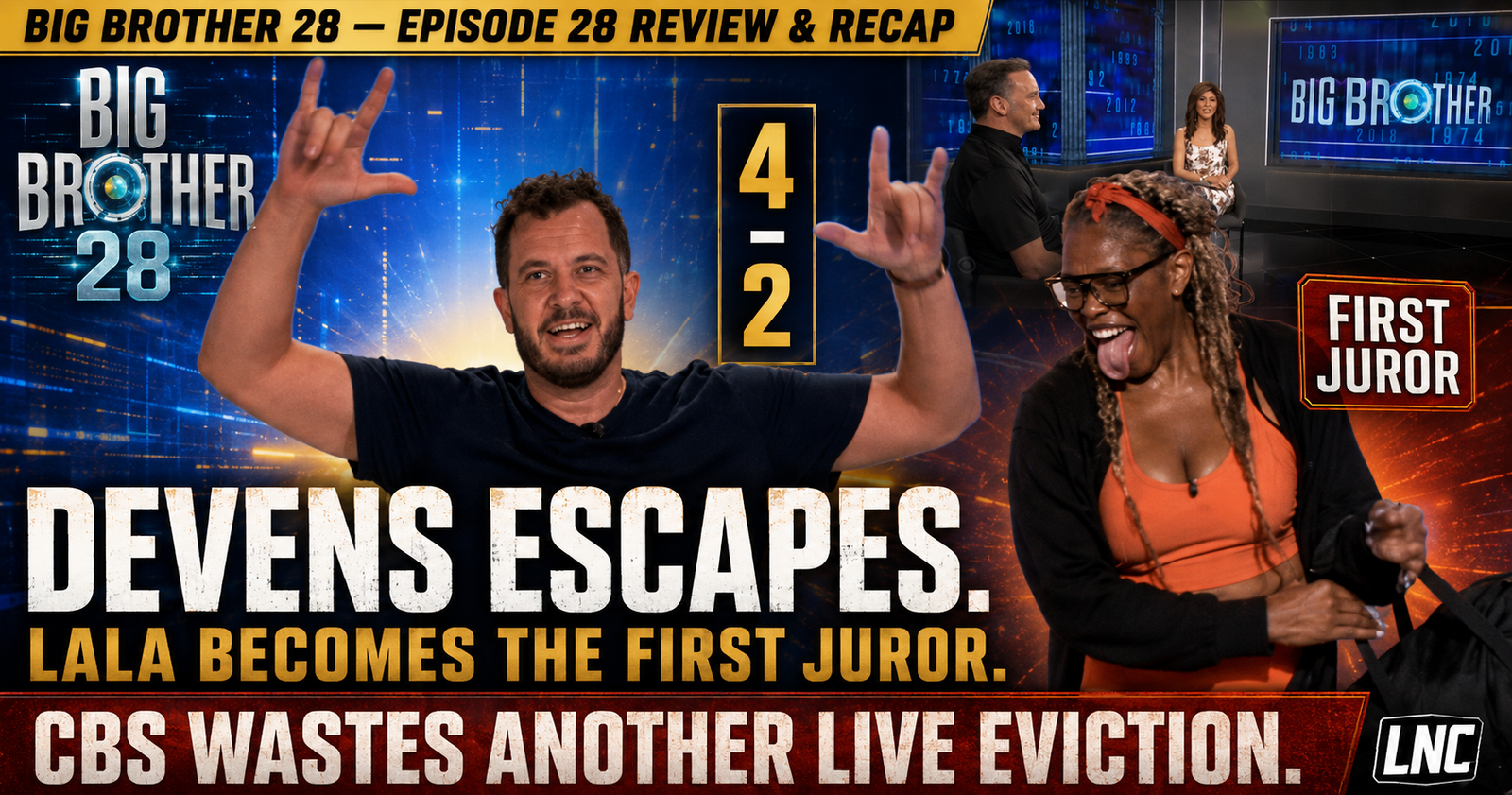
    The Big Brother 28 finale gave Rick Devens the championship, America’s Favorite Player and $810,000 in announced cash prizes. It gave Drew Campbell the final betrayal he had spent weeks helping make possible. It gave Taylor Brown a second-place finish after a last-minute campaign that earned her a seat beside the winner but could not persuade the jury to put her ahead of him. And it gave CBS two more seasons to decide whether this summer’s dependence on familiar reality stars becomes the permanent direction of the show.

    Devens beat Brown 6–1. That result was deserved against the opponent sitting beside him. His competition record, relationships, willingness to make consequential decisions and ability to keep people voting for him after using them formed a stronger winning case. Recognizing that does not require forgetting how the Icons entered, who could compete for the first HOH or what his Diamond Power of Veto allowed him to do to someone else’s game.

    Tonight’s finale resolved the winner. It did considerably less to resolve the complaints about the competition that produced him. A successful player and an uneven format can exist in the same season. Big Brother 28 finished with both.

    Here Are the Full Big Brother 28 Finale Results

    • Final HOH Part 1: Taylor Brown won.
    • Final HOH Part 2: Rick Devens defeated Drew Campbell.
    • Final HOH Part 3: Rick Devens defeated Taylor Brown 5–3.
    • Final eviction: Rick Devens evicted Drew Campbell, who finished third.
    • Final two: Rick Devens and Taylor Brown.
    • Winner: Rick Devens, by a 6–1 jury vote.
    • Runner-up: Taylor Brown, who received $75,000.
    • America’s Favorite Player: Rick Devens, who received $50,000.
    • Rick Devens’ announced cash-prize total: $810,000, including the $750,000 championship and his earlier $10,000 Pharaoh’s Curse prize.
    • The show’s future: Julie Chen Moonves announced that CBS had ordered two more seasons, carrying the numbered series forward to Big Brother 29 and Big Brother 30.

    Part 1: Taylor Brown Earned Her Opportunity

    The first stage of the Final HOH put the three remaining houseguests into the season’s historical dress-up machinery again, this time with a Benjamin Franklin theme. They had to maintain their footing on a rotating log while holding the handle above them. Drew Campbell fell at 15 minutes and 21 seconds. Rick Devens lasted until 50 minutes and eight seconds, when he slipped and Taylor Brown secured the win.

    Brown deserved credit for that performance. After winning the Final Four HOH, she had now won a second competition that directly improved her position. The first guaranteed her survival. The second put her into the only remaining competition that could give her the final eviction vote.

    That distinction is essential to evaluating her endgame. Winning Part 1 did not make her the final HOH, and it did not give her authority to remove Devens. It created the opportunity to do those things. She still had to finish it.

    For Campbell, the loss exposed the fragility of the route he had chosen at Final Four. He had kept Devens partly because of the promise that their partnership would reach the final two. An arrangement involving someone throwing a competition could only help him if he remained in that competition long enough to benefit. Once he fell, his path required a recovery in Part 2 or another player honoring an agreement.

    The Big Brother 28 finale began with Brown improving her chances through an earned win and Campbell discovering how little control his preferred ending actually gave him.

    Parts 2 and 3: Rick Devens Finished the Competition Route

    Part 2 required Devens and Campbell to identify houseguests from clues about the season and knock down the appropriate targets. Incorrect selections forced another attempt. Campbell took the opening stage, but Devens won the next three and advanced to face Brown.

    Campbell had won several competitions that kept him alive during the season. None could substitute for winning one of these last two opportunities. Once Part 2 ended, he had no remaining competition through which to choose his opponent or guarantee his own seat.

    Part 3, “Back In My Day,” gave Brown and Devens a final test of their knowledge of the season. Devens won 5–3. He had secured the authority to decide whether Campbell or Brown would face the jury with him.

    There was no secret power involved in that final result. Devens had to beat Campbell to qualify and Brown to take control. Those victories belong in his winning record. They also underline why keeping him at Final Four was so dangerous: Campbell preserved a competitor with both the ability to reach the last decision and the incentive to make it for himself.

    Brown’s late competition surge gave her a plausible route to the championship. Losing Part 3 left the most important decision with the player she needed to eliminate. The Big Brother 28 finale had reached the point at which campaigning could earn her survival, but it could no longer give her the final eviction as a move she controlled.

    The Finalists’ Competition Records Need Consistent Counting

    The comparison also needs to distinguish ordinary HOHs and Vetos from special challenges and qualifying stages. Before the completed Final HOH is added, the finalists’ records break down this way:

    FinalistEarlier HOHsRegular VetosBlockbustersOther challenge winsFinal HOH stages won
    Rick Devens222Diamond Power of Veto challengeParts 2 and 3
    Drew Campbell132Medieval safety challenge; Never-Not Pass challengeNone
    Taylor Brown110NonePart 1

    Counting each successful challenge or Final HOH stage separately produces nine wins for Devens, eight for Campbell and three for Brown. Devens’ Part 3 victory also completes his third HOH reign; it should not be counted again as an additional tenth competition win.

    The stakes of those victories were different. A Never-Not Pass did not carry the replacement authority of the Diamond Veto. Part 1 created access to another competition; Part 3 granted the final eviction vote. Devens’ Medieval safety was given to him by Valladares, so it does not belong in his challenge-win total. The Pharaoh’s Curse cash prize is also separate from this competition ledger.

    Campbell’s three regular Veto wins were an important part of his survival. Devens’ final victories gave him the last decision. Brown’s fewer wins still included two that directly secured her endgame opportunities. An accurate Big Brother 28 finale review should keep both the totals and their consequences visible.

    Taylor Brown’s Last Pitch Worked—Until the Jury Had to Vote

    Brown’s late campaign was one of her clearest successful social moves. She challenged Devens’ belief that bringing Campbell would be the safest way to finish. Her argument included the votes he could lose by sending her out and the vote Campbell could give him only if Campbell joined the jury.

    She raised the possibility that her own vote, LaTrice Verrett’s vote and Yash Patel’s vote would go against Devens if he evicted her. That was campaign pressure. Brown could promise her own ballot, but she could not cast the other two. Their actual decisions remained theirs.

    The pitch still addressed a real weakness in Devens’ reasoning. He had spent the final stretch treating loyalty to Campbell as both a personal obligation and a workable winning plan. Brown made him examine whether those two things still pointed toward the same choice.

    Devoting that conversation to jury arithmetic was far more useful than waiting for him to remember a promise to her. She gave him a reason to change his preference. He did.

    But getting chosen and getting elected are different achievements. Brown’s pitch delivered the first. The Big Brother 28 finale jury rejected the second by a wide margin. A successful final campaign cannot retroactively turn every earlier failed campaign into a completed move, and it cannot make the person choosing her responsible for proving her whole winning case.

    Her best argument was that she changed a consequential decision when her competition route closed. That was worth owning. It also needed to sit beside an accurate account of the rest of her game.

    Drew Campbell Protected the Person Who Finally Cut Him

    Devens’ final eviction was the most revealing moment of the night. He became emotional, acknowledged the betrayal and explained that his deepest obligation was to his family. Then he evicted Campbell.

    The emotion could be sincere. The choice was still calculated. Devens had won the authority to select the opponent he believed offered the better chance at $750,000. His affection for Campbell did not make maintaining their agreement his best competitive decision.

    Campbell had repeatedly treated their relationship as something stronger than its practical limits. He carried information toward the Icons, repaired alliances that endangered him and kept Devens when he held the sole Final Four vote. He knew Devens had a substantial winning case. He also knew a promise was the main protection attached to keeping him.

    His concern about Dee Valladares and Brown choosing each other was not imaginary. There were reasons to doubt that either would prioritize him in every final configuration. That explains why he was tempted by Devens’ assurances. It does not resolve the larger problem: the player Campbell considered hardest to beat was also the player he left with the ability to decide whether he reached the final two at all.

    The Big Brother 28 finale exposed the cost of that trade. Campbell preserved the harder opponent, lost both qualifying stages and then needed that opponent to keep choosing loyalty over another winning calculation.

    Devens did not owe him a championship. Campbell did owe himself a plan that accounted for Devens wanting one.

    There is also no basis for pretending that evicting Valladares guaranteed Campbell would lose or that evicting Devens would have guaranteed a win. The alternative game was never played. What can be judged is the actual decision and the dependence it created.

    Campbell’s strongest successes were keeping himself in the house through competition wins and staying connected to people after his divided loyalties became apparent. His recurring failure was making those relationships serve someone else’s preferred ending. At Final Four, the two tendencies finally collided. He earned the deciding vote and used it to preserve the person who later cast him out.

    Drew Campbell’s Exit Was Better Than His Final Four Decision

    Campbell was hurt, but he recognized the strategic logic of the eviction. That response deserves credit. He did not have to enjoy the betrayal to understand why Devens made it.

    His eventual vote for Devens also complicates any attempt to reduce the finale to an angry jury settling scores. The player who had just lost a promised final seat still voted to reward the person who removed him. Their relationship survived its last competitive consequence long enough to produce a ballot.

    That was a final example of Devens’ social effectiveness. He made a move that could have cost him Campbell’s vote and retained it anyway.

    It was also an example of Campbell separating disappointment from his evaluation of the finalists. Whatever problems he created for himself inside the game, he did not use the last vote to erase the stronger case sitting in front of him.

    The Big Brother 28 finale left Campbell with a painful ending and a useful lesson: being valued by a powerful partner does not mean that partner will keep valuing the agreement more than the prize.

    The Jury Roundtable Had to Separate Activity From Results

    Chelsie Baham returned to host the jury roundtable. Her presence gave the discussion a former winner who understood that competitions, relationships and influence have to be evaluated together.

    The central comparison was more complicated than counting wins. Campbell had been active across several groups and repeatedly won safety. Brown had meaningful relationships, survived vulnerable positions and gained late power. Devens combined social influence with major decisions and necessary competition victories.

    Each case also had a weakness. Campbell needed to explain how protecting the Icons advanced a plan to beat them. Brown needed to distinguish the decisions she influenced from the ones she actually delivered. Devens needed to acknowledge the advantages and partners that helped make his achievements possible.

    An alliance list cannot settle those questions. Joining several named groups means little if their information keeps benefiting a different finalist. Surviving nominations can demonstrate resilience without demonstrating control over the vote. Winning a competition can be valuable while leaving open the question of what the winner did with the authority.

    The roundtable was useful because these finalists had overlapping games. Their claims had to be separated by decisions, consequences and ownership. Its edited uncertainty should also be treated with restraint. The final ballots tell us where the jurors landed; a short roundtable segment does not establish every step by which they got there.

    Rick Devens Had a Winning Case He Could Explain

    Devens’ jury presentation benefited from having concrete outcomes to discuss. He could identify the relationships he maintained, the threats he removed and the moments when winning a competition kept his game alive.

    His answer about whom he influenced pointed toward Chuk Anyanwu, Kamuela Kirk and Haley Thogmartin rather than simply presenting Campbell as someone he had controlled all summer. That was a sensible way to explain his reach without unnecessarily diminishing the person who had just become the seventh juror.

    It also suited the broader record. Devens often benefited from people who believed they could keep working with him while weakening the structure around him. His place in overlapping alliances made him accessible to opponents and useful to allies. Those relationships did not prevent every nomination, but they repeatedly gave him another route to safety or influence.

    His final argument emphasized active play and a willingness to take risks. Against Brown, he could support that argument with results. He had participated in the season’s major power decisions and finished by winning the authority to choose the final pairing.

    The presentation was strongest when it remained specific. He did not need to claim sole authorship of every eviction. Valladares performed substantial strategic and social work. Campbell supplied information and helped restore votes. Angela Murray contributed relationships and protection. Devens’ ability to benefit from those contributions was part of his game, but their work remained theirs.

    The Big Brother 28 finale rewarded an argument that could connect a résumé to identifiable consequences. Brown needed the same level of precision to challenge it.

    Taylor Brown’s Lyric Medeiros Claim Did Not Hold Up

    Brown had real accomplishments available to her. Taking ownership of the Lyric Medeiros eviction flip as if she had driven it weakened her credibility instead of strengthening her résumé.

    The sequence matters. Haley Thogmartin nominated Campbell, Melody Morris and Brown. Brown won Veto and saved herself. Medeiros became the replacement. Valladares helped redirect the Icons toward preserving Campbell, while Morris’ campaign and her relationships changed the remaining choices. Campbell then won the Blockbuster, leaving Medeiros against Morris.

    Brown cast one of the eight votes to evict Medeiros. That gave her a place in the majority. It did not make the flip her invention.

    Her Veto win was something she could claim cleanly: she escaped danger and forced a replacement nomination. Turning that earned achievement into ownership of the house’s eventual vote blurred two separate parts of the week.

    Valladares was central to organizing the change in direction. The campaign also involved Murray, Devens, Morris, Mallory Aurichio and Campbell’s competition escape. Brown could explain what she contributed without rewriting who moved the votes.

    The exchanged look between Morris and Murray, which stood out during Brown’s claim, made the moment land even worse. Both had direct knowledge of the week she was describing. A facial expression cannot tell us exactly what either woman was thinking, but the underlying timeline already supplies the reason to question the claim.

    Calling that eviction Brown’s flip was résumé inflation. The jury did not need another grand version of a week several members had personally played. It needed an accurate explanation of her part in it.

    This was a missed opportunity because Brown’s game did include social work beyond the competitions. She influenced discussions with Verrett, maintained her partnership with Patel and ultimately persuaded Devens to change his final selection. Those claims were stronger than borrowing control of the Medeiros vote.

    Taylor Brown’s Survival Story Needed More Than Survival

    Brown emphasized resilience and her repeated nominations. She had reasons to make that argument. She began in danger, lost important allies and won competitions that allowed her to reach the final stretch.

    However, the winning argument required more than proving that the summer was difficult. She needed to show how her choices changed the outcome, why her relationships were stronger than Devens’ and which results should persuade a juror to put her first.

    Her relationship with Verrett had substance. Her partnership with Patel gave her information and protection. Winning the Final Four HOH secured her place in the final three. Winning Part 1 gave her access to the last competition. The final pitch changed Devens’ selection. Those were the useful foundations.

    The weaker part was treating survival as evidence that she had been directing more of the game than the results showed. Several campaigns she participated in failed. Keeping Devens as an exception in plans against the Icons also helped preserve the opponent who eventually beat her.

    Brown was right to question the advantages. She still needed to show why her own body of work deserved the majority against the finalist in front of her. The Big Brother 28 finale did not give her an opponent whose case could be dismissed with a description of an easier starting position.

    A sharper presentation would have owned the successful actions, admitted the limits and avoided expanding a defensible contribution into an indefensible claim. Her final campaign proved she could persuade. Her jury pitch needed to prove that the persuasion had produced the best game.

    Julie Chen Moonves’ Commentary Came Across as Rooting for Taylor Brown

    Julie Chen Moonves’ acknowledgment that Brown had made a convincing pitch before the show was a moment worth questioning. The pitch was consequential. The host’s assessment of it also put an approving voice into the presentation of one finalist’s argument.

    To me, that came across as rooting for Brown. A presenter can explain that a last-minute campaign has changed the stakes without sounding as though she is helping sell the campaign herself.

    That does not establish that Chen Moonves altered the jury’s decision or that production arranged an outcome. The actual result went overwhelmingly to Devens. It does establish why the tone could be frustrating: viewers were supposed to evaluate competing cases, while the host was offering her own favorable description at a pivotal moment.

    Brown’s pitch deserved analysis on its merits. It successfully helped get her into the final two, and it failed to turn that position into a championship. Those outcomes provide a more useful assessment than enthusiasm from the person guiding the broadcast.

    The Big Brother 28 finale would have benefited from a little more distance between hosting the decision and endorsing an argument within it.

    The 6–1 Vote Was a Broad Rejection of Taylor Brown’s Winning Case

    JurorVote to win
    LaTrice VerrettTaylor Brown
    Angela MurrayRick Devens
    Barrett PfeifferRick Devens
    Yash PatelRick Devens
    Melody MorrisRick Devens
    Dee ValladaresRick Devens
    Drew CampbellRick Devens

    Verrett gave Brown her only vote. The other six chose Devens.

    The significance goes beyond the margin. Patel had been Brown’s closest strategic partner. Morris and Pfeiffer had strong connections to Campbell. Valladares had worked beside Devens and knew how dangerous he was. Campbell had just been evicted by him. These jurors arrived with different relationships and different reasons to be disappointed.

    They still reached the same choice.

    That does not reveal every juror’s private reasoning. It does make it difficult to explain the result as one narrow alliance voting in lockstep while everyone else preferred Brown. Devens’ support extended across people whose games and loyalties had diverged.

    Patel’s ballot is particularly useful when evaluating Brown’s final pitch. Her warning about votes was a plausible campaigning argument, but the actual jury did not operate as a bloc she could command. Campbell’s ballot illustrates the other half of the calculation: Devens added his former partner to the jury and kept his support after breaking their agreement.

    The Big Brother 28 finale produced a decisive verdict against the final pairing. It cannot prove how Devens would have fared against Campbell, because that vote never happened. It can prove that the opponent Devens chose did not come close to assembling the majority she needed.

    Rick Devens Won a Real Game. The Advantages Remain Part of It

    My asterisk belongs in the assessment of the conditions under which Devens won. His title is official, and the six jury votes are real. The record also includes a format that gave the Icons opportunities the rest of the cast did not receive on equal terms.

    The opening HOH was restricted to Murray, Valladares and Devens. Fourteen other contestants helped participate in the setup without having the same opportunity to win the authority. Devens did not win that first HOH—Valladares did—but he belonged to the privileged group allowed to compete for it.

    That arrangement mattered even to the Icon who did not take the key. It immediately established the veterans as the people around whom opening power would be organized. New contestants had to negotiate protection inside a structure they could not initially lead.

    The existing television profiles also mattered. Returning and crossover contestants arrived with recognition and experience of living under reality television production. A familiar person can attract trust, fascination or suspicion before a new contestant has had time to establish any of those things. Prior fame is not an automatic win, but it is part of the starting position.

    Devens’ Diamond Power of Veto created a more concrete advantage. America selected him for the Time Capsule opportunity, and he won the challenge that awarded it. He then used it to save Valladares and name Kirk as the replacement during Patel’s HOH.

    Patel had won both HOH and the regular Veto. He still lost control of the replacement nomination. The special power let Devens protect his closest partner while putting an opposing organizer on the block.

    Devens deserves credit for executing the move. The assessment also has to include the opportunity, the unusually powerful reward and the authority it took away from another player. Recognition helped put him in position to receive an audience-selected chance; winning the challenge and choosing the replacement completed the operation.

    The season’s Time Capsule rewards were uneven enough to make that criticism more than a general complaint about twists. Campbell’s later challenge produced a Never-Not Pass. Other players received punishments. Those outcomes did not offer equivalent ways to reshape somebody else’s HOH.

    Devens also won two Blockbusters that removed him from danger before eviction votes. Those were earned wins in a competition available to the nominees. They should not be treated as the same kind of exclusive advantage as the restricted opening HOH or the special replacement power. They do belong in the broader evaluation of a format that repeatedly allowed another contest to interrupt the vote a week’s campaigning had built toward.

    By Final Four, there was no special power saving him. Campbell chose to preserve him. Devens’ relationships had kept working after the extra authority was gone. Then his final competition victories and jury presentation completed the win.

    That is why the criticism has to be precise. “Plant” is the label I use for production’s specially installed crossover stars. It describes a casting objection; it does not establish that Devens was secretly acting under instructions or that the winner was predetermined.

    The Big Brother 28 finale crowned the strongest finalist in the pairing it produced. The asterisk is that his game cannot be evaluated honestly by listing the successes and omitting the unequal opportunities that helped create them.

    Rick Devens’ $810,000 Breaks Taylor Hale’s Cash-Prize Record

    Announced prizeAmount
    Big Brother 28 championship$750,000
    America’s Favorite Player$50,000
    Pharaoh’s Curse prize$10,000
    Total$810,000

    Taylor Hale left Big Brother 24 with $800,000 from the championship and America’s Favorite Player. Devens’ additional $10,000 puts his announced cash-prize total above that mark.

    The accurate record is the largest announced cash-prize haul from a single season of the regular U.S. Big Brother series. That keeps the comparison clear: one season’s prizes, before taxes, rather than career earnings across multiple shows, international editions or undisclosed appearance arrangements.

    Devens also becomes the second regular U.S. Big Brother winner to win the audience favorite award in the same season, following Hale. He surpasses her cash total. He does not replace her place in history as the first person to achieve the championship-and-favorite double.

    That distinction matters because Brown and Hale should not be folded into the same story simply because they share a first name and an underdog argument. Their seasons, relationships, winning cases and outcomes were different.

    The Big Brother 28 finale delivered a financial record for Devens. It also gave CBS a particularly marketable image: a crossover star winning the jury’s prize and the audience’s prize in the same night.

    America’s Favorite Player Made the Casting Argument Harder to Ignore

    The AFP result supplied a second endorsement of Devens, through a different electorate. Seven jurors decided the game. Viewers who participated in the public vote decided the favorite award.

    Those decisions should not be treated as interchangeable. A juror can respect someone’s game without finding him the most entertaining contestant. A viewer can enjoy someone without believing he made the best strategic choices. Devens won both contests for approval.

    The result also strengthens the commercial incentive behind crossover casting. CBS can point to a recognizable Survivor contestant winning the main competition and attracting enough public support to win another $50,000. For a network deciding how to promote future seasons, that is an appealing outcome.

    It does not tell us how many voters supported him because of Survivor, because of Big Brother or because of both. The result alone cannot separate those groups. It also cannot establish that every person who watched the season approved of the format.

    Still, familiar television exposure is an obvious part of the discussion. The audience-selected Time Capsule opportunity and the favorite award both took place in a season where some contestants arrived with existing fan recognition and others had to build it entirely through this show.

    The Big Brother 28 finale gives production a success story it can use to defend the experiment. Viewers questioning that experiment now have to contend with its winner also winning the public vote.

    Yash Patel Had a Plausible AFP Case, but an Edit Is Not a Ballot

    Patel often received the kind of underdog presentation that makes an AFP campaign feel possible: competition success, frustration with the dominant structure and an accessible personality. He also had genuine reasons for viewers to sympathize with him when special rules interfered with his power.

    I would not blame him if losing the favorite award stings. That is different from claiming we know he is furious. His private reaction belongs to him until he describes it.

    A favorable edit also cannot guarantee a public-vote result. Viewers respond to different players, existing audiences participate and the people voting are not necessarily a representative sample of everybody watching. The show can make a contestant look like an AFP contender without being able to promise him the prize.

    Patel’s vote for Devens to win the game belongs in a separate conversation. He could support Devens’ résumé as a juror while wanting the audience award for himself, or while favoring somebody else for it. One ballot does not tell us what he wanted from the other contest.

    The Big Brother 28 finale ended Patel’s possible AFP run without diminishing the reality that he was one of the season’s more credible challengers to the central structure. His failed plans and controversial choices still need evaluating, but he gave the opposition actual competition power. The format did not always let him keep the authority he earned.

    A Five-Season Winner Streak Ends, and Rick Devens Finally Wins

    Devens’ championship ends the regular U.S. series’ five-season run of winners of color: Xavier Prather in Big Brother 23, Taylor Hale in Big Brother 24, Jag Bains in Big Brother 25, Chelsie Baham in Big Brother 26 and Ashley Hollis in Big Brother 27.

    That is a meaningful historical change. It does not make Brown entitled to a win or Devens disqualified from one. Their games still had to be evaluated through what they achieved and what they could explain to the jury.

    For Devens, tonight also ends a different wait. His reality competition story included returning from the Edge of Extinction and finishing fourth on Survivor, followed by another Survivor appearance without a championship. Big Brother finally gave him the winning finish.

    The decisive moment was not merely surviving another late round. He obtained the last authority, used it against a close partner and retained that partner’s vote. That is a more substantial explanation of his success than treating the confetti as the inevitable conclusion of being a popular reality veteran.

    The Big Brother 28 finale added Devens to the winners’ list. How highly his game should be ranked remains a discussion that has to include both his execution and his starting conditions.

    The Reunion Offered Updates, but Little Room to Settle the Season

    The return of the evicted cast supplied the familiar finale combination of personal updates, revelations and reactions. Rome Seymour and Lyric Medeiros remained together, with a move toward living together among the developments discussed. Jason De Puy’s Salina EsTitties identity gave the cast another reveal.

    Those moments had a place in the show. A finale should acknowledge the people whose summer ended before the last competition, and relationships formed inside the house can continue to matter after eviction.

    The more useful competitive revelation was Valladares saying she would not have taken Devens to the end had she controlled the last selection. That reinforced the obvious assessment of his threat level. His closest partner understood that working with him and beating him required different decisions.

    Campbell’s ending made that distinction painful. He had kept the same threat and trusted the promise attached to him. Valladares’ hypothetical intention does not prove what would have happened in another final three, but it demonstrates that loyalty to Devens was not the only way his partners could imagine finishing their games.

    The Big Brother 28 finale had enough interpersonal history to fill a much longer reunion. Its limited space left much of that history unresolved. Personal updates can be enjoyable without answering the harder questions about failed coalitions, unequal powers or who kept making the same player their exception.

    What Being Picked Up for Big Brother 29 and Big Brother 30 Actually Means

    Chen Moonves announced a two-season order. In this context, “picked up” means renewed: CBS has decided to commission more of an existing series. Big Brother 29 and Big Brother 30 are planned installments under that decision.

    That means something. Producers have a clearer basis for planning future editions, organizing casting and preparing production. The network is publicly committing to continue a property rather than leaving its next season unresolved.

    It does not mean the show can never be canceled. A renewal announcement is a programming decision, not a guarantee that circumstances will remain unchanged until every ordered episode airs. Networks can reverse decisions. What obligations or costs would accompany such a reversal depends on agreements that the announcement does not disclose.

    We should therefore avoid both extremes. Calling the pickup meaningless understates a real decision to continue the series. Treating it as an unbreakable promise overstates what a television renewal can guarantee.

    The two-season order also does not announce a cast, a theme, a competition format, a live-feed policy or a reform of the advantages. It does not tell us whether returning players will appear, whether new contestants will get equal access to opening power or whether production will reduce the rules that interrupt ordinary nominations and votes.

    Nor does ordering through season 30 establish that season 30 will be the last one. It identifies the next announced commitment. Decisions beyond it remain separate.

    For the show as a whole, the practical meaning is continued business confidence in Big Brother. CBS sees enough value to plan two more editions. That value can coexist with an audience frustrated by the direction of the competition.

    The Big Brother 28 finale ended with a promise of more television. It did not end with a promise to address why parts of this television have become harder to enjoy.

    The Missing Casting Promo Has No Confirmed Explanation

    The absence of the familiar finale-night casting promo is worth noticing, particularly when the same broadcast announced two more seasons. The usual invitation reinforces the premise that somebody watching at home could become part of the next cast.

    There is no confirmed explanation available for why that familiar promo was omitted. A timing decision, a change in promotion or another production choice would each be possible explanations. None should be presented as the reason without confirmation.

    The omission also does not prove that applications are closed or that a returning-player season has been selected. Those claims would require an actual announcement about casting.

    The concern is about presentation. After a season built around three specially introduced Icons, the finale had an obvious opportunity to reassure prospective new players that the next edition still had room for them. The missing customary promo made that reassurance less visible.

    The Big Brother 28 finale cannot answer the casting question through an absent segment. CBS can answer it through what it announces and whom it actually casts next.

    Big Brother 30 Could Become “Plant Mania”—If CBS Repeats the Formula

    The fear of more CBS reality veterans is reasonable. Devens supplied a championship, an AFP win and a record cash total. The crossover experiment now has a highly promotable ending.

    Chen Moonves has herself acknowledged the commercial appeal of familiar contestants bringing new viewers, alongside the advantage created when new players become starstruck. That tension is already visible within the show’s own discussion of the format.

    What follows is still a prediction. No announced Big Brother 29 or Big Brother 30 cast establishes that both seasons will be packed with returning CBS personalities.

    If production keeps choosing recognizable veterans, giving them special entrances and organizing opening authority around them, “Plant Mania” would be a fitting description of where the milestone season could land. The complaint would be especially justified if ordinary applicants once again helped set up power they were not equally allowed to win.

    There are better ways to use the franchise’s history. Former contestants can host competitions, contribute to a roundtable or appear in a celebration without becoming the center of an uneven opening game. An all-returning cast would also create a different competitive starting point from a small, privileged veteran group inserted among newcomers.

    The Big Brother 28 finale gave CBS an incentive to repeat the most marketable parts of this summer. The next two seasons will show whether production recognizes the difference between a successful casting attraction and a fairer competition.

    Final Thoughts

    Rick Devens deserved to beat Taylor Brown in the final two. He brought the stronger collection of outcomes, explained more of them convincingly and retained support from people whose games he had damaged. Winning the final HOH and cutting Drew Campbell supplied the last decision his résumé needed.

    Campbell’s eviction was a harsh finish to a game in which he repeatedly earned opportunities and then used them to preserve the structure limiting him. Brown’s late pitch was effective enough to change the final pairing. Her jury presentation was less convincing, particularly when she expanded her role in the Medeiros eviction beyond what the week’s decisions supported.

    The Big Brother 28 finale worked best when the game supplied its own drama: the last competition, the broken promise, the final juror’s response and a vote that crossed several relationships. It was less satisfying as an accounting of the season’s uneven rules or as reassurance about the series’ direction.

    Devens leaves with $810,000. CBS leaves with two more seasons and a crossover success it can promote. Viewers who spent the summer questioning the advantages leave with the same reason to question them.

    The next cast deserves a chance to establish its own hierarchy through the game. Big Brother 29 and Big Brother 30 will have to show whether production is willing to let that happen.

    Make sure to subscribe to our Late Night Crew Youtube Channel. Follow @yorkjavon, @kspowerwheels, @MS_MISCHA & @LateNightCrewYT on X.

  • Big Brother 28 Season Review, Recap & Finale Preview: The House Kept Protecting Its Biggest Threats

    Big Brother 28 Season Review, Recap & Finale Preview: The House Kept Protecting Its Biggest Threats

    Fourteen people entered Big Brother 28 before the Time Trip delivered Angela Murray, Rick Devens and Dee Valladares. By the end of the opening round, seventeen people were competing for $750,000, three of them had been handed exclusive access to the first HOH, and the house was already building alliances whose members understood their promises very differently.

    That misunderstanding survived almost the entire summer. Ashley Trail thought naming the people saving her would strengthen her campaign. Rome Seymour thought the people he loved would remain the people protecting him. Kamuela Kirk thought the larger majority would repay the work he did for it. Mallory Aurichio thought her friendships could survive an eviction that threatened somebody else’s preferred ending. They each discovered the price of those assumptions in a different round.

    There were also earned wins, successful negotiations and genuine attempts to take control. LaTrice Verrett beat Kamu on the wall. Yash Patel won HOH and Veto before a secret power took his replacement decision away. Barrett Pfeiffer put all three Icons on the block. Melody Morris won twice during the double and then entrusted the next eviction to the wrong voter. Drew Campbell kept winning safety and collecting relationships. Taylor Brown kept looking for a structure that could make those relationships deliver more than reassurance.

    This season deserves to be reviewed through those decisions, in the order they happened. The episodes supplied the competition formats, Diary Room explanations and eviction results. The feeds supplied the bargaining, reversals and competing accounts that often made the television explanation look incomplete. The blackouts left holes in both the viewing experience and the evidence available to judge it.

    Tonight, Rick, Drew and Taylor reach the last test. Their positions make sense only after following the game that put them there.

    Move-In and the Premiere: Fourteen New Players, Three Icons and a Restricted First HOH

    The July 9 premiere began by asking the original fourteen houseguests to find numbered vials totaling 28. Twelve qualified for the opening safety competitions. Ashley Trail and Barrett Pfeiffer missed the qualification, meaning they lost the opportunity to compete for that protection before the social game had properly begun.

    The dining table became the Time Machine. One group traveled to a 1980s mall, where Rome Seymour won safety and Angela Murray entered. Another traveled to Fiji, where Chuk Anyanwu secured protection and Rick Devens arrived. Jason De Puy won the slime-filled Eavesdropping competition attached to Rachel Reilly’s appearance. Rachel’s dinosaur-and-volcano exit was a television stunt; Dee Valladares became the actual final addition. There were seventeen competitors.

    The franchise callbacks were not inherently the problem. Big Brother can survive being ridiculous. A time laser, an absurd dining table and an overcommitted costume are perfectly capable of coexisting with a coherent competition.

    The meaningful rule was that the fourteen players outside the Icons could not win the first HOH. Their opening travel groups helped stabilize platforms while Angela, Rick and Dee completed the challenge. Dee finished the puzzle, built her fire and burned through her rope first. Rick’s group—Chuk, Drew, Haley and Taylor—became Have-Nots along with him.

    The newcomers were being asked to help someone else win the authority they were forbidden to hold. Yash helped Dee’s group and still became one of her nominees. A competition that looked impressive on television established a lopsided relationship before anybody had voted: the helpers needed protection from the person their effort had empowered.

    Angela brought previous Big Brother experience. Dee and Rick brought Survivor experience, public recognition and an immediate reason to compare notes. They were not three returning Big Brother players, but the house treated them as familiar figures worth approaching rather than ordinary strangers to be evaluated independently. Production concentrated the opening authority; the cast helped turn that authority into relationships.

    Dee’s early pitch that her nominations represented the original travel groups gave a tidy explanation for putting Mallory Aurichio, Taylor Brown and Yash Patel up. Her preferences were less tidy. Mallory was the initial target. Yash had helped her during the opening HOH process and still found himself nominated. That resentment became part of his later willingness to oppose her.

    The feeds began July 10, after important opening action had already happened. Viewers did not see every relationship form, every conversation after Dee’s arrival or the full first nomination process. Big Brother: Unlocked was used to carry opening information while the core live-feed audience waited. The show began a season supposedly built around watching relationships develop by asking viewers to accept parts of the development after the fact.

    The July 12 episode then expected viewers to arrive knowing Dee had replaced Rachel. The companion show had handled that reveal; the main broadcast moved into her HOH without giving it the reintroduction it needed. Anyone watching only the regular episodes could understand the competition and still be missing the explanation for the seventeenth player competing in it. That was a scheduling and storytelling failure before the season’s first eviction.

    Week One’s Social Game: How the First Alliances Divided the House

    Dee Valladares and Rick Devens became the strongest partnership within the Icons, also called the Plants, with Angela Murray completing the trio. Crossovers added Drew Campbell and Barrett Pfeiffer. Red Corner connected Dee and Rick to Kamuela Kirk, Chuk Anyanwu and Haley Thogmartin.

    That overlap gave Dee and Rick protection from two sets of people who did not share the same understanding of their priorities. Drew and Barrett could offer the Icons information from outside conversations. Kamu, Chuk and Haley could offer competition ability, votes and a belief that their connection to the Survivor pair was meaningful. Dee and Rick did not have to tell either group that the other arrangement mattered more.

    Dee also discussed a developing inner three with Drew and Barrett. That gave the two men another reason to believe their place within Crossovers extended beyond providing information. The Survivor duo still had its own priorities within the same five. Different members could therefore picture different three-person endings while agreeing to work together in the present.

    Kamu, Chuk and Haley’s own three-person relationship was described as the Core Three and given the Nutty Buddies name. Chuk had Final Two relationships with both Kamu and Haley. Those smaller commitments made the trio real to its members. They also made it visible to the people using the larger Red Corner arrangement for protection.

    Outside that structure, Rome Seymour, Jason De Puy and LaTrice Verrett formed Mama’s Angels. Rome, Jason and Lyric Medeiros had the Love Triangle. Rome and Lyric’s showmance complicated both arrangements because personal affection did not follow the same boundaries as an alliance chart. Rome also maintained a relationship with Yash Patel.

    Melody Morris and Lyric had Harmony Hotties, with Sirens later floated as an alternative duo name. Their closeness overlapped with Mallory Aurichio, producing the perceived Not a Trio cluster and the Giggle Girls relationship. Being seen together gave those women a shared reputation before they consistently offered each other shared protection.

    Drew’s early Final Two with Melody was Upside Down. Court Jesters brought them together with Jason. Jason intended to use that channel while keeping his stronger loyalties with Mama’s Angels; Drew repeatedly took information from it toward the Icons. Both men believed they could benefit from the same conversation without making the same commitment.

    Ashley, Melody and Haley discussed Powerpuff Girls. It never became the independent rescue bloc Ashley needed. Taylor and LaTrice’s less elaborately named partnership did something more practical: it gave two vulnerable players someone willing to discuss their safety and defend their interests.

    There were larger ideas that never acquired the commitment their size suggested. An early hot-tub grouping involved Mallory, Drew, Barrett, Ashley, Lyric and Melody. Yash explored a seven with Taylor, Jason, Barrett, Rome, Lyric and LaTrice. The people could count one another without agreeing on how to protect one another. Neither proposal became the organized opposition needed to challenge Dee’s connected numbers.

    That is why a full alliance history has to follow behavior. Powerpuff Girls did not rescue Ashley. Court Jesters did not keep Jason’s information inside its three. The proposed seven did not supply a unified first-week vote. Naming a group could make its members feel less alone while leaving the person in danger with exactly the same problem.

    The first week was therefore not a clean division between two organized sides. It was one well-connected center surrounded by smaller relationships that were already competing with each other. The distinction determined whose information could travel safely and whose campaigning would be treated as evidence of disloyalty.

    Week One: Ashley’s Rescue Became the Reason to Evict Her

    Dee’s first plan did not begin with Ashley Trail. Mallory Aurichio was the priority in early feed conversations, and Melody Morris was discussed as a replacement. Mallory won the first Veto, a tube puzzle presented with Howie Gordon and Dr. Will, and removed herself. Dee ultimately chose Ashley over Melody, leaving Ashley beside Taylor Brown and Yash Patel.

    Ashley tried to redirect the nomination toward Barrett Pfeiffer. That ran straight into Crossovers: Barrett belonged to the HOH’s five; Ashley did not. Her failure to qualify for the premiere’s safety contests had made her available, and her lack of a committed group made her easier to nominate.

    Yash had become a serious eviction possibility. Dee’s overlapping Crossovers and Red Corner connections then considered keeping Ashley as an available number. If Yash won the Blockbuster, Taylor could leave instead. Ashley’s recovery was real enough to make naming her supporters feel reassuring.

    She told Melody Morris who intended to save her. That revealed that the people attached to Dee were coordinating. Melody carried the information toward Rome Seymour and Lyric Medeiros. Drew Campbell and Barrett Pfeiffer denied their positions while trying to protect the arrangements Ashley had just described. Haley Thogmartin confronted Ashley about exposing names. Rick Devens persuaded Kamuela Kirk that Ashley could not be trusted as a number.

    The same relationships that could have supplied Ashley’s majority now supplied the argument against her. Keeping her would no longer be a quiet recruitment. It would reinforce a structure the rest of the house had just been shown.

    Ashley made a costly mistake. The people abandoning her also made a strategic choice: secrecy and their existing partners were worth more than the extra person they had considered adding. Powerpuff Girls did not override Melody and Haley’s other loyalties. Ashley’s friendly conversations did not turn into a bloc prepared to defend her once the rescue created inconvenience.

    Jason made one final argument for preserving Ashley: an exposed number attached to Haley, Chuk and Kamu could keep attention on that cluster and provide a shield for his own partners. He was identifying a use for her after the leak, but the people abandoning her had already chosen to protect themselves. His pitch never became another majority.

    Yash won the first Blockbuster, “Do Over,” by tracking appearances across video screens. Ashley faced Taylor and left 14–0 on July 16. Taylor had responded to nomination by talking to Dee about working together and keeping LaTrice close. Those conversations helped her remain a tolerable survivor. Yash supplied his own escape through the competition; Ashley could no longer persuade either connected side that saving her was worth the trouble.

    The unanimous vote concealed an actual reversal. The next majority was built from the people Ashley had exposed, after removing Ashley herself.

    The episode and the early feed record also presented Dee’s priorities at different points. The July 15 broadcast used her Diary Room explanation to frame Yash as the target and Mallory as the backup. Earlier feed conversations had put Mallory first, before her Veto made that preference unusable. The eviction show delivered Ashley’s unanimous exit; the changing conversations explain how the original nominees, the replacement choice and the proposed Taylor vote each became a different version of the same week.

    The opening broadcasts supplied another important piece of Jason’s game. He used an emotional conversation about his mother to approach Angela, then described the encounter to Drew and Melody as manipulation. Drew carried that account to Angela and Rick. Jason had given a member of Crossovers the explanation for how he intended to manage another member of Crossovers. The confrontation the following week had already been prepared by his choice of confidant.

    Week Two: Toolshed Had the Votes; Rome’s Allies Had Conflicting Priorities

    Rick Devens won HOH and the eight-person Toolshed formalized: Angela Murray, Dee Valladares, Rick, Drew Campbell, Barrett Pfeiffer, Kamuela Kirk, Chuk Anyanwu and Haley Thogmartin. Julie Chen had previously been floated as a possible name for this developing eight; it was not an additional alliance operating alongside Toolshed.

    Rick nominated Jason De Puy, Lyric Medeiros and Melody Morris with Rome Seymour intended as the backdoor. Seven Toolshed members could cast eviction votes while Rick held HOH. That was a majority of the thirteen available votes. The group did not need the outsiders to agree with its target.

    The Veto was the obstacle. Rome recognized the danger, received a warning from Yash Patel and confronted Rick. The backdoor had ceased to be a secret before it became a nomination.

    Four Seasons formed around Rome, Lyric, Melody and Drew. Drew disclosed it to the other side. The alliance gave the outsiders a connection to a majority member, but that connection gave the majority a clearer picture of the outsiders.

    Rome’s separate safety bargaining exposed another weakness. When pressed to narrow whom he wanted protected, he prioritized Lyric and Jason. Melody could see where that placed her despite their Four Seasons arrangement. LaTrice Verrett also had reason to feel the limits of being one of his closest personal relationships. A person can be important to someone and still be omitted when a deal has fewer available seats.

    Rome and Lyric attempted to make their showmance appear over, then returned to the closeness they were supposedly disguising. Rome’s emotional investment became increasingly obvious. Lyric understood that her own safety could require a separate game, yet the performance did little to convince the house that the pair had truly separated. His men-only campaign added another leak when Chuk reported it to his allies.

    Angela Murray and Jason’s confrontation produced the week’s other major rupture. She believed an emotional conversation had been used to manipulate her. Jason defended the feelings while acknowledging he had intensified the approach. The dispute damaged a relationship he needed with someone already inside the majority. Dee’s Café Con Leche duo with Jason gave him another line into that core, but it did not make her willing to sacrifice stronger commitments for him.

    Rick won Veto. He considered saving Melody before Angela and Dee argued for Lyric. Saving Lyric preserved someone whose relationship with Rome was about to be severed and left Melody exposed. Rick used the medallion on Lyric, then nominated Rome. His competition victory created the option; the surrounding persuasion changed which nominee benefited.

    The two options had different consequences if Rome won the Blockbuster. Saving Melody would have left Rome, Lyric and Jason competing for safety; a Rome win would still leave his showmance partner available for eviction. Saving Lyric guaranteed that both members of the showmance could survive if Rome won. Rick’s choice achieved the intended result only after somebody else won the final safety contest.

    Melody had offered Rick future protection and her vote. Drew and Kamu argued for accepting that offer. Angela and Dee questioned her usefulness and Drew’s attachment to her. Rick made the official choice after the negotiation. A recap that gives him the Veto and the Rome eviction without that fight over the medallion misses how several players shaped his HOH.

    Taylor Brown tried to assemble a conditional vote to keep Jason if Rome won the Blockbuster and the final nominees became Jason and Melody. She counted reassurance as support more firmly than the conversations justified. Honor Society—Angela, Dee, Taylor and LaTrice—connected the women socially without producing the eviction commitment Taylor believed she might have.

    Drew, meanwhile, kept adding personal arrangements. The Handymen connected him to Kamu. The Jugglers gave him a named Final Two with Barrett. Drew and Barrett’s Inbetweeners positioning, alongside Melody, let them sound available to people who did not know their Crossovers obligations. Their middle-player explanation hid how much information they were supplying to Crossovers.

    Rick, Drew and Barrett also joked about being Yash’s Angels. It was cover language and social bonding rather than a separate bloc executing a vote, but it showed why Yash could feel welcome around men whose strongest obligations were elsewhere. Drew could joke about wanting Yash to win, maintain a Final Two with Kamu and remain committed to the people targeting the outsiders. The warmth was real. Its terms were much less generous than the people receiving it sometimes understood.

    Jason won the Towers of Hanoi-style Blockbuster. The conditional Jason vote never reached the ballot. Rome left 12–1 against Melody on July 23, with Taylor casting the lone vote to keep him. Lyric, Jason and LaTrice all voted Rome out.

    Rome professed his love for Lyric on the way out. Julie then told him that the person who had tried to keep him was Taylor. The television moment was an efficient punch line to his assumptions about the house; the feeds afterward turned the stray vote into another investigation. Taylor’s ballot had not supplied a rescue coalition. It created uncertainty and drew attention toward her while leaving the majority’s position untouched.

    LaTrice lost a Mama’s Angels partner, Lyric lost her showmance and Four Seasons lost the member the majority had targeted. The surviving outsiders had fewer partners and more reason to question Drew’s place among them. The July 22 episode showed the fight, the attempted showmance separation and Rick’s Veto choice. The feed conversations added the competing offers, the men’s meeting, the false vote assurances and the choice between saving Melody and saving Lyric. The 12–1 result was the end of that process, not an explanation of it.

    Week Three: Kamu Won HOH, Then Turned Jason’s Backdoor Into a Public Trial

    Kamuela Kirk won HOH and nominated LaTrice Verrett, Lyric Medeiros and Mallory Aurichio. Jason De Puy was his intended replacement. The move repeated Rick Devens’ method of putting people around the target on the block and waiting for Veto to create the opening.

    The physical HOH that carried over from the live eviction gave Kamu an earned victory. The July 26 episode showed his competition win and the nomination plan. His personal negotiations were less secure: Lyric had received reassurance, Jason was trying to enter Veto, and the supposed partners inside Toolshed were already checking one another’s information. Winning the key gave Kamu the replacement authority. It did not settle those relationships.

    Lyric had cooperated through Rome Seymour’s eviction and received reassurance that made another nomination feel like betrayal. Kamu tried to make the target’s identity compensate for the danger he had put her in. Being told that someone else is supposed to leave offers limited comfort when that person has a path into the Veto.

    Jason pursued Houseguest’s Choice by promising to save the nominee who selected him. LaTrice chose him. If Jason won and used Veto on her, he could protect her while preventing his own backdoor.

    He had also made an agreement with Kamu giving the HOH a say over his Veto use in exchange for avoiding the initial block. Those commitments did not fit neatly together. Jason was bargaining for survival with people who wanted different things from the same potential win.

    The pickle-themed competition rendered that argument hypothetical. Kamu eliminated Jason. Lyric defeated Haley Thogmartin, Mallory defeated Kamu and Lyric beat Mallory in the final. Jason did not hold Veto. Kamu still had the replacement decision he wanted. The house called the plan a backdoor, although Jason had actually competed for the Veto that could have stopped it.

    That should have been enough to complete the nomination plan. Instead, Kamu prepared to expose Jason’s promises in front of the house.

    Taylor Brown was working on a different response to the majority. She used M&M’s to map a Tethers framework of smaller protected relationships linked across the house. She also explored a group involving herself, Kamu, Rick, Mallory and a fifth person drawn from Drew, Barrett or Yash. These were organizing proposals, not a confirmed alliance executing votes. Their limit was already visible: a plan to create another power structure still made room for Rick, one of the people the outsiders needed leverage against.

    The Tea Party Was the Season’s Best Argument and One of Its Worst HOH Decisions

    Mallory Aurichio’s tea party was supposed to involve costumes, stories and a shared social evening. Kamuela Kirk rehearsed turning it into a confrontation. He planned the congratulations for Lyric Medeiros, the reference to Jason De Puy seeming calmer and the pause before challenging that appearance.

    Dee Valladares knew about the idea. Jason leaving helped her. Taking public ownership of an attack on him offered much less benefit. Kamu supplied the visible aggression while the people protected by the move could keep more distance from its consequences.

    His central accusation was not invented: Jason had offered different people different targets and Veto promises. The problem was the assumption that exposing those contradictions would also establish Kamu as the house’s trustworthy authority.

    Jason disputed the agreements and the need to litigate his campaigning in front of everyone. LaTrice corrected the supposed clarity of a promise involving her. Jason then widened the argument, naming the Toolshed, questioning Drew Campbell and Barrett Pfeiffer’s positions, pointing to Kamu’s closeness with Haley Thogmartin and Chuk Anyanwu, and challenging the Icons’ influence.

    He asked Rick Devens about the secret power. Rick had it. America had selected him for a Time Capsule opportunity, he had won the Diamond Power of Veto challenge and Dee knew the secret. Angela Murray did not. The most protected trio in the house already contained a more privileged pair.

    Every conversation Kamu introduced as proof against Jason also showed whom Kamu had been comparing notes with. He was surrounded by people carrying multiple deals while attacking the nominated outsider for trying to secure multiple routes to safety. Jason’s answer exposed the double standard without making his own promises suddenly reliable.

    Taylor Brown walked away from the confrontation. Afterward, Kamu looked for reassurance upstairs while Jason spent time alone outside. The house meeting had not produced a stronger partnership between the HOH and the people he had publicly implicated.

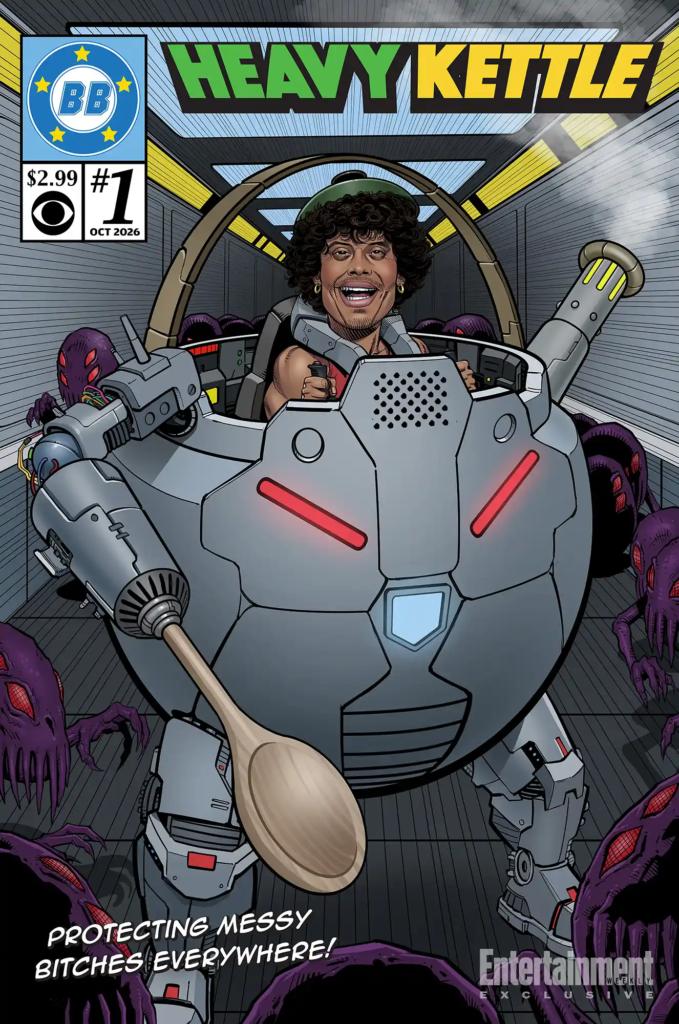
    Jason’s kettle-and-wooden-spoon campaign supplied the ridiculous aftermath. He banged the equipment, interrupted conversations and followed Kamu. The absurdity worked on television because the conflict behind it was real. The tea party had a buildup, a reversal, a damaged HOH and a target who refused to supply the quiet exit his opponents wanted.

    It also had a vote count that Jason could not fix merely by winning the argument. Melody Morris explored a seven-person rescue involving herself, Lyric, Yash Patel, Mallory if she won safety, Drew, Barrett and Taylor. Drew and Barrett would have needed to choose that group over their Crossovers and Toolshed commitments. They reported the plan. Taylor would not evict LaTrice.

    Court Jesters had provided a channel to Drew, not a commitment to keep Jason. Harmony Hotties and the women’s surrounding relationships could provide sympathy without replacing the missing majority votes. The most active possible rescue still depended on people whose other alliances benefited from the intended eviction.

    Lyric used Veto. Jason became the replacement. Mallory won the Blockbuster, leaving Jason beside LaTrice. Jason went 12–0 on July 30.

    Kamu got his target out and paid more than necessary to do it. He broke reassurance to Lyric, angered LaTrice, exposed information channels and made himself the public face of a move that left the Icons intact. Jason’s loose bargaining had earned distrust; Kamu’s performance gave the rest of the house reasons to distrust him too.

    This was a week when the episode actually had a story worth staying with. The July 29 broadcast connected Kamu rehearsing to Mallory preparing the party, allowed Jason to answer and showed why the exchange escaped the HOH’s control. The July 30 eviction delivered the competition and unanimous vote. Between those broadcasts, the feeds followed Melody’s rescue work, Barrett and Drew passing it along, Taylor and Yash comparing what Drew had said, and Taylor refusing to sacrifice LaTrice. Jason could win the public argument while losing every private condition needed to survive the ballot.

    Week Four: Haley Exposed Drew, but the Lyric Vote Broke Her Own Majority

    Haley Thogmartin won the fourth HOH. Every HOH so far had belonged to a Toolshed member, but the fourth winner no longer wanted the same arrangement preserved.

    She nominated Drew Campbell, Melody Morris and Taylor Brown. Drew’s information-sharing had finally become visible enough that members of his own majority considered removing him. Mallory Aurichio warned him about the danger. Barrett Pfeiffer knew more than he readily told his Final Two.

    Taylor won Veto and removed herself. Haley replaced her with Lyric Medeiros, despite the reassurance Lyric had received. Drew remained vulnerable, but the Icons began asking whether an angry Drew could be more useful than an evicted one. Dee Valladares saw a route through his resentment toward Haley, Kamuela Kirk and Chuk Anyanwu.

    Taylor’s Veto was a poison-and-bluff competition: the players had to read the person offering two drinks and choose the safe one. The August 5 episode gave her an actual success to show, after weeks of trying to influence choices made by other people. She made herself safe, gained an eviction vote and forced Haley to nominate a fourth person.

    The replacement choice exposed another set of priorities. Lyric tried to preserve herself by using Mallory’s name. Kamu and Chuk wanted Lyric protected. Haley chose Lyric anyway. Mallory could now see one member of the Giggle Girls treating another as the expendable seat. Melody’s loyalty was going to be tested against a woman whose campaign was damaging the trio it needed.

    FAP formalized around Drew, Barrett, Mallory and Melody during the week. The group gave Drew another place to belong after learning that his old majority could put him up. For Mallory and Melody, it offered something more defined than being counted as available outsiders whenever the Icons needed a vote.

    Taylor and Yash’s partnership was also operating as Toysha. It would become much more consequential later, but at this point they still had different priorities around the block. Yash wanted Lyric kept. Taylor had her own relationship with LaTrice and a much less secure path through the majority. Their duo gave them a place to compare information; it did not make every ballot identical.

    Lyric’s campaign further damaged her relationships with the women. She used Mallory’s name while seeking safety and gave different people different descriptions of her intentions. The Giggle Girls relationship was being asked to survive a vote against another member of the women’s own social circle. Melody offered protection to people deciding her fate. Lyric offered attacks on members of the lower Red Corner.

    The vote took several turns before it reached Lyric. Dee first sold Rick and Angela on keeping Drew and removing Melody. The argument was that Drew knew who had nominated and endangered him, while Melody understood the broader structure too clearly. Haley began repeating the case for separating Drew and Melody. Chuk and Kamu’s investment in Lyric then made Melody look like the compromise everyone could accept.

    Melody stopped treating Drew’s target status as her protection. She offered Angela, Dee and Rick safety, while Mallory worked to preserve her. On Waffle Wednesday, Chuk was still telling Yash that Drew remained the target, Barrett was struggling to obtain a straight answer, and different rooms were discussing different final matchups. The supposed flip away from Drew had created another argument rather than one settled vote.

    Rick finally warned Drew that Haley, Kamu and Chuk wanted him gone against Lyric. That warning left out the Icons’ own earlier involvement in targeting him. Drew received enough truth to feel rescued and enough omission to direct his retaliation elsewhere. Keeping him became useful partly because the people who had helped endanger him could now present themselves as his protectors.

    Drew won the Blockbuster, removing the original focal point from the final vote. Lyric and Melody remained. The house evicted Lyric 8–3 on August 6.

    Kamu, Chuk and Yash were the three votes to evict Melody. Haley was HOH and did not vote. The eight against Lyric were Drew, Barrett and Mallory; Angela Murray, Dee and Rick Devens; and Taylor and LaTrice Verrett. Melody could not vote from the block.

    That arithmetic explains the alliance damage. Red Corner’s Dee and Rick voted opposite Kamu and Chuk. Wolf Pack—Kamu, Yash, Dee and Rick—split the same way. Mallory chose her FAP partner over Lyric and the Giggle Girls connection. Toolshed had stopped supplying one agreed eviction.

    Haley’s nominations had touched four people by the end of Veto. None was an Icon. Her HOH ended with Drew safe, Melody retained and the disagreement concentrated among the people who believed the larger majority was theirs too.

    Lyric’s early social reach had not become durable voting protection. Her showmance disappeared, the majority repeatedly nominated her and her final campaign helped sever relationships she needed. The blindside was dramatic television because the result contradicted what Kamu and Chuk believed their allies intended. Its significance lasted beyond the reaction shots: the players outside the inner core could no longer assume the alliance’s name described a shared plan.

    The August 6 episode captured the payoff: Drew winning his way off the block, Lyric hearing eight votes against her and Haley watching her HOH finish without the target she had exposed. The feed story had spent days moving through Drew, Melody and the conditional Lyric vote. It also showed why the blindside mattered beyond the surprise. Mallory chose Melody over their old trio; Drew gained a grievance he would keep using; Kamu, Chuk and Yash publicly separated themselves from Dee and Rick; and Taylor voted opposite her Toysha partner without losing that partnership.

    Week Five: LaTrice Won the Wall, Angela and Haley Exploded, and Chuk Lost His Protection

    LaTrice Verrett’s wall victory gave the season one of its strongest earned competition moments. She outlasted the field and beat Kamuela Kirk at the end. Drew Campbell made the final three competitors; Yash Patel trying to manage a drink while hanging on supplied the kind of accidental comedy the show rarely improves by scripting more around it.

    LaTrice had considered targeting Rick Devens. Taylor Brown questioned that direction and helped move attention toward Haley Thogmartin. The eventual nominations were Barrett Pfeiffer, Haley and Chuk Anyanwu.

    Taylor’s relationship with LaTrice changed a nomination discussion before Taylor held an HOH of her own. Yash added a practical argument for nominating Chuk if Haley was the target, while Kamu worked to move himself out of danger. LaTrice’s eventual board—Barrett, Chuk and Haley—came from those conversations, with Haley the first choice to evict and Chuk the backup.

    Primary Colors, also called the Primaries, began around Taylor, Kamu and Rick during this stretch. Yash then joined, expanding it to four. Taylor’s Tethers concept had acquired an actual arrangement, but it still made Rick an exception while members discussed weakening the Icons. The pact developed after the opening nomination discussion; it should not be credited with directing a board before it existed.

    The Bermuda Triangle linked Rick, Kamu and Yash. Together with Wolf Pack, which also included Dee, it gave Rick several relationships with men who were increasingly willing to question the other Icons. Rick could hear the opposition’s thinking as somebody they hoped to work with. Kamu and Yash could mistake that access for protection from his more important partnership.

    Meanwhile, the Lyric vote had not stopped producing consequences. Angela Murray had let Haley believe she voted differently, then admitted the lie. Haley pressed the question of Dee Valladares’ involvement. Their gym confrontation became a fight over what Angela had said, whether Haley was misrepresenting it and who had introduced Dee’s name.

    The episode showed shouting, tears and the rupture. Feed cuts prevented an uninterrupted record of the whole exchange. Haley’s complaint began with a real deception about the vote. The confrontation widened until the house was debating her account of the conversation as much as the deception itself.

    Angela’s ability to remain socially supported through that argument was part of her game. She had relationships with Mallory, Barrett and Dee that gave her people willing to listen and comfort her. Her emotional swings could damage trust without immediately removing her from the group. Haley’s anger came with less protection and more existing suspicion.

    Angela and Haley also moved back toward affection. Haley gave her an early birthday Snickers with a bow because she did not know whether she would be there for the actual birthday. They cried and hugged. That reconciliation did not revive Red Corner, but it made Angela more willing to imagine Haley surviving. Dee’s separate endgame understanding with Angela coexisted with the stronger Survivor partnership, giving Angela another reason to remain near the people she sometimes suspected.

    Kamu won Veto and left it unused. His Handymen connection to Drew contributed to that choice: he feared using the medallion could put Drew in the replacement seat. Saving one older ally might endanger another partner. He preserved the nominations, leaving Haley and Chuk together on the block.

    Chuk’s Final Twos with Kamu and Haley had once supplied overlapping security. Now one partner held Veto and declined to use it; the other needed to win her own safety. Barrett’s FAP connections gave him a different set of people willing to preserve him. Chuk continued counting support that other conversations did not confirm.

    The body-odor ridicule directed at Chuk added ugliness to his isolation. His vote-counting and failure to build a replacement structure were fair subjects for criticism. Turning a strategically vulnerable person into a recurring personal joke did not make the house’s reasoning more sophisticated.

    Haley explored a five with Chuk, Kamu, Mallory and Yash. A broader rookie revolt developed around LaTrice’s HOH. Confidentiality was requested. Barrett reported the conversation to Dee; Drew independently reported it to Rick; Angela received information too. The proposed opposition’s plans reached its targets through the same two men who kept describing themselves as available partners.

    The rookie discussions were more specific than generic anti-Icon frustration. The emerging coalition around LaTrice, FAP and Yash discussed removing the surviving Haley-or-Chuk nominee, then taking two Icons out before jury. Taylor was connected to that movement while also building around Rick in the Primaries. FAP’s four could provide an important bloc, but Drew and Barrett had already made its secrecy impossible by carrying the plans outward.

    The eviction-day fight was also more complicated than simply waiting for Haley to lose. Dee revived a plan to keep Haley against Chuk if Barrett won the Blockbuster. She and Rick could begin with Drew and Barrett’s votes; Angela’s reopened relationship could supply another. A five-vote tie would still leave LaTrice choosing against Haley, so the plan needed a sixth. Dee sought Kamu while describing the votes as available.

    Drew and Barrett saw Haley as a target who might spend another HOH fighting LaTrice and Taylor. That was a plausible shield argument, with an obvious defect: Haley had just nominated Drew and could threaten Melody again. They were considering saving her without a dependable promise covering those risks. The deal never reached the test they were preparing for, because Haley won the Blockbuster herself.

    Haley won the Blockbuster. Chuk left 9–1 on August 13, with Haley voting Barrett out. The Nutty Buddies lost a member. LaTrice’s earned power removed another person from the broken majority while the Icons stayed together.

    Mallory’s Time Capsule punishment attached her to Melody in Adam-and-Eve costumes. It gave television a visual gag and kept two FAP partners together. Elsewhere, Taylor and Yash were becoming more coordinated. The season’s next phase would turn those smaller relationships into an actual attempt against the central players.

    The August 9 episode showed the wall and, usefully, Taylor’s influence on LaTrice without requiring a Taylor HOH to make her game visible. The August 12 broadcast centered the gym fight and Kamu’s unused Veto. The feeds added the reconciliation, the Primaries growing to four, the Bermuda Triangle, the compromised rookie meetings and the final Haley-over-Chuk contingency. Haley’s safety win and Chuk’s 9–1 eviction were decisive because they closed all those conditional routes at once.

    Week Six: Yash Earned Control, Then the Diamond Veto Took the Replacement Away

    Yash Patel won the knockout HOH, beating Barrett at the end after Dee and Rick Devens had selected each other into earlier matchups. In a competition where winners choose who faces whom, the selections expose relationships as much as the answers test memory. The Survivor pair helped weaken its own available protection and left Yash with the key.

    Yash nominated Angela Murray, Dee Valladares and Haley Thogmartin. Kamuela Kirk helped him distinguish Angela’s obvious volatility from Dee’s less conspicuous influence. Their renewed Final Two gave the conversation a purpose: stop allowing the same people to remain everyone’s preferred exception.

    Yash’s preference for a woman leaving, based on the house’s gender numbers, was a much weaker part of his reasoning. The women did not constitute one alliance. That framing helped keep several men comfortable, including people whose actual loyalties did not match his. His useful attack on Dee should be assessed alongside the blind spots that left those men available to reorganize against him.

    Wolf Pack had connected Yash and Kamu to Dee and Rick Devens without giving the four equal protection. Primary Colors had connected Taylor Brown and Kamu to Rick, then added Yash, while leaving Rick’s relationship with Dee stronger. The Covenant—Kamu, Yash, Taylor and LaTrice Verrett—offered an alternative four that could work against the Icons.

    Dee attempted to use the $5,000 BB Bribe. Yash rejected it. As HOH, he did not need to buy safety from his own nominations by surrendering future authority. His circumstances would change the following week, but this refusal was sound.

    The house’s personal divisions kept developing alongside the nominations. LaTrice attempted to address the earlier conflict with Haley; Haley described a broader experience of mistreatment, and LaTrice rejected the bullying characterization. Angela’s involvement did not resolve it. The confrontation left Haley more isolated rather than repairing a relationship that might have given her protection.

    Taylor was also willing to discuss LaTrice as a replacement with Yash. Their bond was substantial without being an unconditional agreement to preserve each other in every possible scenario. Taylor was willing to use the relationship while considering a route that sacrificed its partner.

    Yash won OTEV and kept his nominations intact. He had now won both regular competitions required to hold his plan. Rick used the Diamond Power of Veto to save Dee and nominate Kamu himself.

    An ordinary Veto would have returned the replacement choice to Yash. This power transferred that authority to Rick. He could remove the person organizing the opposing side while preserving his closest partner. The Covenant lost control of the nominee it wanted out despite its HOH winning Veto.

    Rick had been selected by America for the Time Capsule opportunity and won the challenge awarding the power. Both parts of that process mattered. His audience recognition helped put him into the opportunity; his competition performance secured the reward; his decision supplied the replacement. Crediting the execution does not require pretending the opportunity was distributed equally.

    Rick had disclosed the secret to Dee while leaving Angela uninformed. His use confirmed the relationship hierarchy. Kamu could be in Red Corner, Wolf Pack and Primary Colors connections that included Rick, yet still become Rick’s replacement when saving Dee required one.

    Mosh Pit combined the Icons with FAP: Angela, Dee, Rick, Drew Campbell, Barrett Pfeiffer, Mallory Aurichio and Melody Morris. Its seven members offered the numbers to complete the eviction. Drew helped organize the target, carrying resentment over Kamu’s earlier involvement in the pressure against him.

    The Diamond Veto changed the block. Holding the resulting vote required another campaign.

    The Kamu Countercampaign Nearly Split FAP Before Drew Pulled It Back

    Kamuela Kirk did not spend the remainder of the week simply waiting to leave. Yash Patel and Taylor Brown argued that keeping him would preserve a competitor capable of targeting the Icons. Taylor worked on Mallory Aurichio. Mallory and Melody Morris began questioning whether Mosh Pit protected all seven members or merely supplied four people to support the existing three.

    That question had a practical basis. Drew Campbell and Barrett Pfeiffer had continued giving information to the Icons while the women had endured nominations and uncertainty. Keeping Kamu could provide a counterweight. Removing him could leave FAP’s women depending more heavily on men whose preferred partners were elsewhere.

    Mallory and Melody were not committing to Kamu forever. They could view him as useful for a round and removable later. Yash and Kamu’s relationship was more substantial; they discussed a Final Two and floated the Mafia name. The partnership was real enough to affect their plans. The name remained a proposal.

    Those different expectations made the rescue unstable even as it gained support. A temporary weapon for one person was a long-term partner for another. Taylor wanted the opposition preserved. Drew wanted the person he distrusted removed. Barrett wanted his other relationships intact.

    Drew worked to bring Mallory and Melody back toward evicting Kamu. Rick threatened severe fallout if his new arrangement were betrayed or if the Icons became expendable pawns. Dee applied pressure. Angela supplied reassurance. The eventual result required persuasion and resistance inside a seven that had only recently promised unity.

    Angela won the Blockbuster. Kamu and Haley Thogmartin remained. Kamu left 8–1 on August 20, with LaTrice Verrett casting the lone vote to keep him.

    The seven Mosh Pit members all voted Kamu out. Taylor supplied the eighth vote. Her campaign had created movement without delivering the final outcome. Yash could not vote as HOH. Neither his two regular competition wins nor the Covenant’s plan could overcome the combination of replacement authority, Angela’s safety win and the larger electorate.

    Kamu’s exit completed the collapse of the early Nutty Buddies core after Chuk’s departure and left Haley without that structure. It also damaged the emerging opposition. His own earlier conduct helped produce those conditions: protecting Drew over his old nominees, publicly antagonizing people at the tea party and trusting unequal arrangements until their consequences reached him.

    Rick can claim the Diamond operation as a major move. Drew can claim work in restoring the votes. Taylor and Yash can claim an attempted countercampaign that identified an actual fracture. LaTrice can claim she followed through on the vote she preferred. The 8–1 vote came from those different decisions, including several failed attempts to change it.

    The collapse reached Rick’s smaller arrangements too. The Primaries had put Taylor and Yash beside Kamu and Rick; the Bermuda Triangle had put the three men together; Wolf Pack had included Dee. The Bad Boys connection among Rick, Yash, Kamu, Drew and Barrett provided another overlap. None required Rick to sacrifice Dee when the actual choice arrived. He nominated Kamu himself, then kept the votes needed to remove him.

    The August 16 episode supplied the knockout selections and Dee’s failed Bribe pitch. The August 19 broadcast supplied OTEV, Rick’s secret authority and the replacement. The days on the feeds explained the contest that followed: Mallory and Melody wavering, Taylor trying to turn that doubt into votes, Yash arguing for his ally and Drew pulling his own group back. Angela winning safety then left Kamu against Haley, making the final majority’s choice much easier. The twist created the nomination; people still chose the eviction.

    Week Seven: Dee Used Mosh Pit’s Protection, Then Targeted the People Inside It

    Dee Valladares won her second HOH after Kamuela Kirk’s eviction. Yash Patel, Taylor Brown and LaTrice Verrett were available targets outside Mosh Pit. The alliance that had just preserved her appeared to have a straightforward next round.

    Instead, the house compared stories from the Kamu campaign. Taylor supplied information that helped Melody Morris question Drew Campbell’s account. Yash challenged Drew’s disclosures. Mallory Aurichio and Melody had already demonstrated that their acceptance of Mosh Pit could be conditional.

    Dee offered the Bribe again. This time, Yash accepted. He received $5,000 and immediate protection while agreeing to keep Dee, Angela Murray and Rick Devens safe on his next HOH wherever the rules allowed.

    The change in circumstances explains the different answer. Yash was vulnerable under Dee’s power and could gain immediate safety. Accepting under his own HOH would have bought much less. The price remained substantial: a player who had just nominated Icons accepted a restriction on his next opportunity to do it again.

    Dee initially had Yash, Taylor and LaTrice available as an obvious nomination set. Yash accepted the Bribe and gave her further reasons to distrust Drew. She replaced the outside target in her plan with someone who had just supplied Mosh Pit’s vote.

    Dee nominated Drew, Taylor and LaTrice. The ceremony became a confrontation over the anti-Icon conversations and who had actually proposed the targets. The feeds were cut during the ceremony. The broadcast later showed the confrontation, and the returned feeds supplied the aftermath: Drew receiving congratulations from the people who had put him up, LaTrice arguing that hypothetical answers had been recast as her personal targets, and Taylor resisting the suggestion she had been sitting around doing nothing.

    Drew spread the accountability. If Dee was punishing him for passing stories between groups, he could identify other people participating in the same conversations. Her confidence in him softened afterward. Taylor and LaTrice remained exposed; Drew began recovering inside the relationships he had just challenged.

    LaTrice won the “Feel the Burn” Veto and saved herself. Mallory became the replacement. The medallion stopped being a possible Drew escape and became the opening Rick and Dee could use to attack another member of FAP.

    That nomination was a deliberate attack on a group within Dee’s own alliance. FAP’s four could choose one another when their interests no longer matched the Icons’. Removing Mallory would reduce their numbers and leave Drew’s individual relationship with Rick more important. The promise of seven-person protection had lasted through one shared eviction.

    The question of how to reveal the target became its own negotiation. Rick and Dee considered approaching Drew and Barrett about evicting Mallory, reassuring them if they objected, then doing it anyway. Rick saw another benefit to a concealed flip: votes against Taylor would leave the two men having damaged a relationship they might need outside Crossovers. The planned betrayal was meant to remove a partner and narrow their alternatives in the same move.

    Barrett eventually told Mallory and Melody that he and Drew had worked with the Icons since the beginning. The admission gave their suspicions a concrete answer. Yash also carried Rick’s argument for removing Mallory back to Barrett: Rick thought losing her could bring Barrett closer to him. That turned an abstract alliance concern into evidence that a supposed partner was planning to manage Barrett by stripping away someone he valued.

    The FAP response was not uniform. Barrett became willing to evict Drew. Melody told Mallory and Barrett she would do the same. Her attachment to Drew had not prevented her from recognizing how often his other loyalties put the women in danger.

    Mallory and Taylor also discussed helping each other in the Blockbuster. Dee worried about Drew’s willingness to fight for himself rather than giving Mallory an opening. Mallory increasingly understood that the eviction plan favored her departure. This was not a week in which everyone remained unaware until Julie announced the vote.

    Barrett and Yash counted a counter-blindside if Taylor won safety and left Drew beside Mallory. Yash, Barrett, Melody, LaTrice and Taylor would provide the five votes they discussed. Melody had become willing to cut the man whose protection she had repeatedly sought. Her anger had a specific cause: Drew had kept asking her to trust a relationship while withholding the larger group that kept deciding her future.

    The smaller house disputes reinforced the split. Taylor hid Drew’s hairbrush, and his search became another reason to stay angry with her. Melody hid LaTrice’s Have-Not bedding, adding another belongings dispute when nominees already felt targeted. FAP still held rock ceremonies, wished for Drew’s Veto win and tried to recover the feeling of being a four. The ritual supplied comfort; it could not reconcile the different plans its members were making outside the room.

    Drew won safety. The final nominees were Mallory and Taylor. Mallory left 6–2 on August 27. Barrett and Melody voted to keep her; Drew joined the majority evicting her. Angela voted her out despite the personal connection Mallory had believed could help.

    Mallory had won the first Veto, survived Jason’s eviction through the Blockbuster and become a real swing participant in the Kamu campaign. Her problem was treating her individual relationships as stronger protection than the people around her were willing to provide when the choices narrowed. FAP could not preserve her once Drew escaped and voted the other way.

    Drew’s later regret did not change his ballot. Melody lost her closest female partner. Barrett had another reason to distrust the Icons and Drew’s willingness to comply with them. The surviving FAP trio would keep the name, but the four-person group that had supplied Mosh Pit’s votes was gone.

    Drew won the final Time Capsule challenge and received the Never-Not Pass. Relief from Have-Not restrictions had some value to the person receiving it. Beside a Diamond Veto and a binding Bribe, it exposed how uneven the feature’s possible rewards were. The audience was voting people into opportunities that did not offer comparable ways to change the game.

    The August 23 episode ended with Dee’s nomination ceremony cracking the alliance in public. The August 26 episode showed LaTrice’s Veto and Mallory replacing her; its workout gag presentation distracted from a consequential win. The feeds followed Drew rebuilding with Dee, Mallory realizing the danger, Barrett confessing Crossovers and Melody agreeing she could vote Drew out. Those developments explain why his Blockbuster victory mattered beyond personal safety: it removed the ballot on which his own FAP partners were prepared to cut him.

    The Thousandth Episode and Medieval Elimination: Four Contests Replaced the Normal Game

    Mallory Aurichio’s eviction had enough consequence to anchor the thousandth-episode celebration. Her alliance had split its votes, her closest friend had become willing to cut Drew Campbell and Barrett Pfeiffer was approaching a more direct break with the Icons.

    The broadcast wrapped that current story in returning legends, franchise awards and nostalgia. Celebrating a long-running show is understandable. Letting the celebration consume the explanation of the live game was frustrating. The house had supplied an alliance betrayal, and the episode kept turning attention toward the show’s own history.

    The next Time Trip replaced the conventional HOH, Veto and Blockbuster cycle with a Medieval elimination sequence. The decisive action occurred during the feed blackout. When the feeds returned, Haley Thogmartin had left, Drew held HOH and the following nominations were already established.

    The August 30 broadcast supplied the first three stages. Dee won the opening contest, saved Rick and sent Drew and Haley into the next. Drew beat Haley, gave Angela safety and selected Barrett to face her. Barrett then beat Haley and earned the right to select her final two opponents. His choice put Yash Patel and LaTrice Verrett in the last contest, instead of the LaTrice-and-Taylor pairing Dee preferred.

    The September 2 episode completed that cliffhanger. Yash, LaTrice and Haley assembled crowns from pieces in three bags and raced to grab the scepter. Yash recovered after pieces fell, finished his crown and received the sole elimination decision. He removed Haley. Dee, Drew and Barrett had won earlier safety contests; Yash won the contest that actually determined who left.

    That sequence revealed the hierarchy as clearly as a nomination ceremony. Dee protected Rick. Drew protected Angela before Melody. Barrett refused to give the Icons their preferred field against Haley. Yash took out the person they wanted preserved. The time-travel packaging was elaborate, but the choices were ordinary alliance decisions with extraordinary immediate authority.

    Haley had volunteered into danger believing she would not become the final sacrifice. Her failure to win the available escapes turned that calculation against her. She left before jury, losing the ordinary nomination-and-vote route through which she might have campaigned for another week.

    Her season had included an HOH that exposed Drew, a Blockbuster that saved her and a long conflict with the people whose votes she had once expected. She recognized parts of the majority’s deception sooner than Chuk, but struggled to convert that recognition into a reliable replacement alliance. Moving back toward the Icons after the earlier fights did not restore the protection she had imagined at the start.

    The Medieval sequence also left Melody questioning why Drew had given Angela safety before her. His ranking in a twist became another demonstration that their personal bond did not consistently outrank Crossovers. The episode could show an elimination mechanism; it could not restore every negotiation and reaction lost during the blackout.

    The feed blackout matters to how this round is described. Viewers learned Haley had left when the feeds returned; they did not watch the overnight contests or all the decisions preceding them live. Television then delayed the final result across two broadcasts. The episodes established the mechanism and the shown choices. The returning feed conversations established the changed house and the resentment that continued afterward. Combining those records explains more of the round without pretending the missing hours were available to watch.

    Zingbot’s return then grew into an extended memory presentation around the next HOH. The roast had entertaining material. The surrounding self-celebration crowded a much more useful story: Yash surviving the Medieval danger, managing the Bribe’s restriction and forcing Drew’s nomination plan to change.

    Week Eight: Drew Won HOH, Yash Forced His Hand and Rick’s Pawn Offer Nearly Ended His Game

    Drew Campbell won his only regular HOH with nine people left. He nominated LaTrice Verrett, Taylor Brown and Yash Patel. After spending weeks complaining about other people’s priorities, he used his first nomination authority on players outside the Icons.

    Yash won Veto and saved himself. That required Drew to decide whether his relationships with the Icons would absorb any of the risk he had placed elsewhere. Rick Devens volunteered as a pawn.

    The offer depended on Crossovers supplying the votes Rick expected. Barrett Pfeiffer and Yash were considering something different. Drew tried to revive the Dapper Dans connection among himself, Barrett, Yash and Rick, while two of those partners were preparing to remove the fourth.

    Barrett’s proposed blindside was more than routine weekly indecision. He was willing to use Drew’s own pawn plan against Rick while telling Drew enough to maintain the appearance of cooperation. Yash had another opportunity to remove someone the Bribe would make harder to nominate on his own next HOH.

    The Icons were not incapable of imagining one another leaving either. Dee Valladares and Angela Murray discussed the possible vote and their positions afterward. Rick’s pressure about the consequences of betraying Crossovers did not supply a secure majority. The alliance had become something he needed to enforce rather than something he could comfortably trust.

    Barrett’s working plan could produce four votes against Rick from Barrett, Yash, Melody and whichever woman won safety. Dee and Angela separately explored a 6–0 exit and a cover story that could distribute the responsibility. These were developing plans contingent on Rick remaining nominated, not completed eviction votes.

    The conversations make two things clear about the supposed dominant core. Rick was imagining a later Final Three with Drew and Barrett while Barrett was preparing to remove him. Dee and Angela could discuss abandoning Rick while still reassuring the larger alliance. His pawn offer had endangered a real competitor inside a structure whose members were already shopping for different endings.

    Melody Morris confronted Drew over how long he had been hiding his full relationship with Rick. Mallory’s eviction had sharpened the issue. A Final Two with Melody meant little if the larger structure Drew protected repeatedly decided which of her partners left. Drew called losing Mallory his biggest regret; Melody was entitled to ask why he had helped make it happen.

    Rick won the Blockbuster. The prospective blindside no longer had him on the ballot. LaTrice faced Taylor and left 4–2 on September 3, becoming the first juror. Angela and Melody voted Taylor out; Barrett, Dee, Rick and Yash evicted LaTrice.

    LaTrice’s game had been consequential. Mama’s Angels gave her early partners; Taylor gave her a lasting personal and strategic relationship; Honor Society gave her access to women at the center. She won the wall and the Veto under Dee’s second HOH. She also let other people redirect her nominations, lost both Mama’s Angels men early and struggled to turn emotional loyalty into enough dependable votes when she finally needed them.

    Rick escaped a mistake of his own making. Volunteering had allowed a genuine campaign against him to form. Drew got his intended eviction through Rick’s competition win while missing how seriously Barrett was considering another outcome. The week supplied reasons to credit Rick’s survival and criticize both men’s reads.

    The September 2 broadcast gave Yash an unusually coherent individual story: the Medieval win, an attempt to let Melody catch up in the Zingbot HOH because his own next reign remained restricted by the Bribe, a direct challenge to Drew’s nominations and the “Gold, the Bad and the Ugly” Veto win. Carrying twenty-five nuggets across the balance apparatus let him force the replacement decision he had promised to force.

    The feeds followed what that opening produced: Barrett maintaining a blindside while hiding it from Drew, Yash reassuring Rick while preparing to vote against him, and Dee and Angela considering their own version of the exit. The September 3 live episode settled it through “Your Game in Ruins,” a four-ball tube challenge Rick won. LaTrice’s 4–2 eviction then exposed another limit of the relationships: Yash chose Taylor over the woman he had discussed protecting. His vote alone could not have saved LaTrice—changing it would have produced a tie Drew could break—but he still chose which relationship to support.

    Week Nine: Barrett Nominated All Three Icons, but Cease Fire Split Over the Eviction

    Barrett Pfeiffer won HOH and nominated Angela Murray, Dee Valladares and Rick Devens. He broke with Crossovers publicly and made the nomination move the opposition had been discussing for weeks.

    It deserves credit. Once all three remained nominated after Veto, the Blockbuster could save only one. Barrett had guaranteed that an Icon would leave. He had also made himself an immediate target for the survivors and needed his newer partners to treat that exposure as a shared responsibility.

    The nominations also put the later Final Three Barrett had discussed with Drew and Rick in jeopardy. Rick was his preferred eviction, so that three-person ending no longer guided his HOH. Barrett chose to act on the threat he saw, then depended on a different combination of partners to protect him afterward.

    Yash Patel won BB Comics and declined to use the Veto. He was not nominated; this was not a self-rescue. Keeping the nominees intact preserved Barrett’s guarantee and avoided exposing Taylor Brown as a possible replacement.

    Cease Fire linked Barrett, Drew Campbell, Melody Morris, Taylor and Yash. Its five could remove one Icon and enter the next round with a numerical advantage. Their discussions quickly revealed that the same five were imagining different endings.

    Barrett and Melody wanted a firmer break. Drew continued reassuring Rick and Dee. Drew also wanted Melody to rank him above Barrett while relying on Barrett’s willingness to protect him. The Jugglers and Upside Down relationships could not both dictate every late vote.

    Yash and Taylor increasingly saw the Drew–Melody–Barrett grouping as an obstacle to their own endgame. Yash explored a Final Four with Barrett, Taylor and Melody that omitted Drew. Rick and Dee explored a different four with Yash and Taylor that omitted Angela. Each conversation offered selected people a future while quietly excluding somebody who thought they still belonged.

    Taylor and Yash’s interest in Dee was not inexplicable. Staying with three closely linked FAP players could leave the two of them outside that trio’s preferred ending. Working with the Survivor pair offered an alternative arrangement in which they could imagine reaching four together. The risk was retaining players capable of beating them in the competitions and jury vote required afterward.

    Rick remained the preferred eviction if he lost the Blockbuster. The backup shifted toward Angela as Dee worked on Taylor and Yash. Rick won his second consecutive Blockbuster. Drew and Melody voted Dee out. Rick, Taylor and Yash voted Angela out, 3–2, on September 10.

    Barrett could not vote as HOH. His four Cease Fire partners had split 2–2. Rick’s safety victory supplied a fifth voter, and his ballot joined the two votes Dee had secured through her separate relationships.

    Barrett achieved an Icon eviction while failing to separate the Survivor pair. Dee’s social work determined which Icon became expendable after Rick won. Angela’s relationships were strong enough to carry her through fights and weeks of protection, but not strong enough to outrank Dee when Rick, Taylor and Yash made the actual choice.

    Dee’s pitch was that her danger could become Taylor and Yash’s weapon against FAP. That appealed to people who did not want to reach the end behind Drew, Melody and Barrett. Angela could promise affection and loyalty, but Dee offered the more useful immediate campaign. Honor Society did not require Taylor to keep Angela; Cease Fire did not require Yash to preserve Barrett’s preferred backup target. The personal offers underneath both labels beat the group plan.

    The September 6 episode showed Barrett winning the rainbow-and-pots-of-gold HOH and making the three-Icon board. The September 9 episode showed the consequences, BB Comics and the conflicting conversations with Drew. The feed record carried the developing Final Fours, Drew continuing to protect his route through Rick, and Taylor and Yash moving toward Dee. The September 10 broadcast made that social work visible in the live plea and the 3–2 ballots. Barrett had forced an eviction. The people choosing the survivor supplied its direction.

    Angela’s season should not be reduced to either being carried or constantly erupting. She correctly suspected information was being kept from her, sometimes including Rick’s secret power. She could rebuild personal connections after conflict. She also supplied distrust, emotional pressure and votes that helped the central structure remain intact. At the end, the internal hierarchy she worried about became visible in three ballots against her.

    Drew and Melody were left on the wrong side of the vote. Barrett’s newer majority had lost its common direction before the next HOH even began. The smaller arrangements would now decide what happened to Cease Fire’s members.

    Week Ten: Yash’s Second HOH Turned the Bribe Into a Nomination Trap

    Yash Patel won HOH after Angela Murray’s eviction. The Bribe protected Dee Valladares and Rick Devens on that HOH while the numbers allowed its terms to apply.

    The available initial nominees were Drew Campbell, Melody Morris, Barrett Pfeiffer and Taylor Brown. Yash preserved Taylor, his closest remaining partner, and nominated the three surviving FAP members. The five-person Cease Fire had become a group arranging which of its own people could leave.

    Yash and Taylor’s developing four-person arrangement with Dee and Rick was described through Culture. They wanted a plan for the coming double eviction and discussed working together. The label did not mean the four had agreed on every target. Yash could imagine removing Barrett and then Drew; Rick was privately maintaining routes that removed Yash instead.

    The Bribe mattered independently of those preferences. Even if Yash reconsidered keeping the Survivor pair, his nomination authority was restricted. A safety purchase under Dee’s HOH now helped determine the nominations under an HOH he had earned himself.

    Drew entered the Veto needing to protect himself from the people who had just nominated his entire smaller group. The resulting competition and deal created the season’s next collision of promises.

    The Pressure Cooker Deal Had Two Terms, Not Unlimited Protection

    The Circle of Trust Pressure Cooker was a Veto competition. After nearly thirteen hours, Yash Patel and Drew Campbell remained. Drew had endured long enough to make his need for safety something Yash could negotiate over.

    Yash agreed to drop in exchange for protection from nomination or replacement nomination on Drew’s next HOH, and Drew’s vote to keep Taylor Brown against Barrett Pfeiffer or Melody Morris if she remained vulnerable at the upcoming eviction. The bargain addressed a possible future HOH and one immediate vote. It did not promise Yash safety from Drew’s vote under another HOH.

    The endurance deserves credit. Drew could only obtain the agreement because he stayed in the competition. Yash’s decision also had a rationale: protect himself from a potential Drew HOH and secure support for Taylor. The cost was allowing the current target to escape and keeping a player capable of making choices against him.

    Drew used Veto on himself. With Dee and Rick Devens protected by the Bribe, Taylor was the only available replacement. Drew and Yash staged an argument to conceal the agreement from people trying to understand why the HOH had let his target win safety.

    For his movie reward, Drew selected Melody, Barrett and Rick. The invitation brought his damaged FAP relationships and his preferred Icon into the same benefit. It did not establish a new four-person alliance. It showed how determined he remained to keep both sets of relationships available after winning his way off the block.

    Melody asked Drew to use the Veto on her. That would have left him nominated and forced him to depend on the Blockbuster or votes after hours spent earning his escape. Their bond gave the request emotional weight; it did not make risking his own eviction a sound requirement for proving he cared.

    Barrett campaigned and received a direct promise that Drew would keep him. Drew also pitched an eventual Final Two as the Middlemen. The idea revived the Jugglers’ hope of ending together, but already conflicted with Drew’s other obligations. Barrett wanted a route toward targeting Yash; Drew had promised Yash protection on his next HOH. Drew had an older promise to Melody and the immediate obligation to preserve Taylor.

    The Middlemen pitch was an aspirational ending attached to a vote assurance. It had not become a tested new bloc. The final Blockbuster would decide which two people Drew actually had to choose between.

    These promises were not all interchangeable. The Bribe was a restriction enforced by the game’s rules. The Pressure Cooker agreement was a personal bargain with specific wording. The Middlemen ending was a proposal. Treating them all as a generic list of deals would miss why one constrained nominations, another shaped a vote and the last dissolved when those obligations collided.

    The September 16 episode supplied the “Circle of Trust” needle-and-balloon endurance format, family messages, the long contest and the bargain that gave Drew Veto. The feeds supplied the continuing attempt to keep the terms private, Barrett campaigning without knowing the Taylor obligation, Melody asking Drew to save her, and Rick preparing double-eviction voting configurations.

    Those conversations are essential to reviewing the deal. Drew did not acquire blanket loyalty from Yash, and Yash did not acquire blanket safety from Drew. The two bought specific actions from each other. The next HOH would decide which unprotected choice became available.

    The Double Eviction Gave Melody Two Wins and Drew the Vote That Saved Dee

    Melody Morris won the last Blockbuster, “Crash Site Cover-Up,” on September 17. Her first competition victory left Barrett Pfeiffer and Taylor Brown as the first eviction nominees of the double.

    Rick Devens, Dee Valladares and Drew Campbell voted Barrett out. Melody voted Taylor out. Barrett left 3–1.

    Drew broke his assurance to Barrett while honoring the Taylor term of his Pressure Cooker agreement. His ballot was not the sole reason Barrett left: a vote against Taylor would have created a 2–2 tie, with Yash Patel positioned to keep her. Drew can claim a choice and a promise honored. He cannot turn that choice into an eviction that lacked another route without him.

    Barrett’s season had included sustained social access, information work for Crossovers, an attempted Rick blindside and the HOH that guaranteed an Icon’s departure. His weakest assumption was that Drew and Melody’s relationships with him would supply a united response after he took the public risk. Drew’s Middlemen vision did not survive the next ballot.

    Melody then won “Bleeping Through Time,” the seven-question double-eviction HOH, and nominated Dee and Rick. The consecutive victories gave her an immediate chance to separate the Survivor pair after weeks spent questioning everyone else’s willingness to act.

    Rick won the puzzle-and-ball “Great Ball of China” Veto. Melody nominated Yash as the replacement. Taylor voted Dee out; Rick and Drew voted Yash out. Yash left 2–1.

    The replacement gave Drew the choice Melody needed him to make against a relationship he had repeatedly protected. Nominating Drew instead would have left Taylor and Yash with two of the three votes and a direct route to remove Dee. That was an available voting configuration, not a guaranteed counterfactual result. It nevertheless gave Melody a route that did not depend on Drew choosing the way she hoped.

    Taylor warned about his loyalties. Melody trusted him with the decision anyway. Her two competition wins were substantial; her use of the second left both original targets in the house.

    Drew’s vote against Yash was decisive. He did not violate the future-HOH term of their agreement, because Melody held HOH and he was voting. The bargain had never covered this choice. Yash could still feel betrayed by a person he had helped survive. A narrow promise kept does not make the wider relationship satisfying to the person evicted.

    Rick had studied double-eviction vote configurations before the show, including combinations that would leave Taylor and Yash controlling the electorate. That preparation helped him understand the danger. Melody made the replacement, Rick won his own safety and Drew supplied the ballot preserving Dee. Credit belongs to those separate actions.

    Culture did not deliver the four Yash imagined. His partners within it kept Drew over him when the vote offered that choice. Taylor lost her strongest coordinated ally. FAP lost Barrett, and its remaining two players helped preserve both Survivor contestants through a double in which one of them had held HOH.

    Yash left with two HOHs, regular Veto victories including OTEV and BB Comics, his Veto under Drew’s HOH, the first Blockbuster and the Medieval elimination win. His activity was not the problem. He won repeatedly without building enough protection against a rule restriction, a replacement choice and other people’s preferred relationships. Few players worked harder to change the direction; several of his own decisions made the final change harder to survive.

    The live double needed no manufactured suspense. The competitions kept producing new decisions: Melody escaped, won power, lost one target to Rick’s Veto and selected the replacement who left. The feed preparation explains why that live sequence finished with both Survivors safe. Culture had never given Yash the same ending Rick was preparing; Middlemen did not override Drew’s vote obligation to Taylor; and Upside Down left Melody believing Drew would make the choice she needed when he had repeatedly preferred an Icon.

    Final Five: The Pharaoh’s Curse Changed the Schedule; Rick’s Nominations Changed Drew’s Options

    The Egyptian phase introduced a secret button, $10,000 for pressing it and an accelerated eviction. Rick Devens took the money and activated the Pharaoh’s Curse. Dee Valladares initially suspected Drew Campbell. Rick received the reward while the house tried to work out who had shortened the round.

    He then won the Tiny HOH and nominated Drew and Melody Morris. The pairing addressed a precise Veto problem. An off-block Drew could win, save Melody and retain his own safety. Putting both up required a Drew victory to become a choice between rescuing himself and rescuing her.

    Drew tried to keep himself out of the initial nomination. He cited his vote preserving Dee in the double, promised not to save Melody if he won and offered personal collateral, including his mother’s letter and a necklace from his grandmother. Rick would not base the board on Drew declining a chance to save his other closest partner.

    Taylor Brown said she would leave the nominations alone if she won Veto. That assurance helped her avoid the initial block. It was a prospective promise; the competition did not put her in a position to carry it out.

    Dee had her own competing offers. She discussed saving Drew, then privately told Melody she intended to save her if she could. Those promises suggested different replacements and different preferred Final Fours. Drew’s Veto victory prevented Dee from having to reveal which offer would survive the actual decision.

    Drew won the Egyptian obstacle-course Veto with fifteen strikes and saved himself. Taylor became the replacement. Melody finally pitched Dee directly, including a possible women’s route through the remaining game. Dee chose to remove the Drew–Melody pair instead. She voted Melody out, Drew voted Taylor out and Rick broke the tie against Melody, 2–1. The eviction occurred on September 21 and was shown September 23.

    The curse provided the speed. Rick’s HOH, nomination pairing and tiebreak supplied the result. Dee’s vote was required to create that tie. Drew tried to keep Melody and could not. Calling this another occasion when he voluntarily discarded her would misstate what he actually did.

    Melody’s season had included constant campaigning, early information-sharing, the Upside Down bond, loyalty to Mallory Aurichio and a willingness to question Drew when his stories failed. She had also become willing to evict him under Dee’s HOH, won the final Blockbuster and won the double HOH. Her personal attachment did not make her inactive. It did help preserve a relationship she later trusted with a vote he used against the person she needed kept.

    Rick removed Drew’s remaining FAP partner and his oldest competing Final Two. One round later, Rick needed Drew to choose him over Dee. The Final Five eviction had narrowed the relationships available to the man who would cast that vote.

    The September 20 episode spent its hour on the curse and Tiny HOH without reaching the nominations needed to understand the imminent eviction. By the time the September 23 broadcast showed the Veto and the vote, the feeds had already tracked the competing promises, Drew’s refusal to leave himself exposed and Melody’s late pitch to Dee. The mummy and accelerated schedule supplied atmosphere. The nominations made Drew unable to save Melody without sacrificing his own safety, and Dee’s vote gave Rick the tie he needed to remove her.

    Final Four: Taylor and Drew Won Safety; Rick Won the Decision

    Taylor Brown won the Final Four HOH and nominated Dee Valladares and Drew Campbell. The win secured Taylor’s place in the final three. It did not, by itself, guarantee an Icon would leave; a different Veto result could still have put Drew in danger.

    The HOH used missing faces and a puzzle. Dee left the opening stage, and Taylor beat Drew for the guaranteed seat. It was the clearest answer Taylor could give to the people who had spent weeks treating her as an available nominee. She had taken herself out of the next eviction before the sole voter was known.

    Drew won the final Veto. With both newcomers now safe, Rick Devens became the automatic replacement beside Dee. Those two competition results together forced the Icons apart. Drew had the sole eviction vote.

    Taylor wanted Rick out and tried to persuade Drew that keeping him would sacrifice the clearest remaining opportunity to remove the jury threat. She also reassured Rick directly while pursuing that outcome. Her late game included the same combination of comfort and targeting that she criticized elsewhere.

    Dee argued that Rick was harder to beat. She was right to identify the risk. Her assurances to Drew carried a different problem: she privately discussed a Final Two with Taylor while promising Drew that she would choose him.

    Drew’s fear that Dee and Taylor could take each other was therefore grounded in an actual conversation. He asked whether Dee would throw a stage of the Final HOH to strengthen her guarantee. She entertained the idea and qualified it. No completed competition sacrifice existed for him to rely on.

    Rick offered the promise Drew preferred. He would take Drew, and he discussed dropping in Part 1 if Taylor fell first. He encouraged Drew to see his late Veto wins and newcomer status as a case against an Icon. Rick could portray himself as the person Drew might beat while telling him the women would exclude him entirely.

    Rick also used the jury as leverage. Drew wanted to know whether an evicted Rick would vote for him against Dee. Rick made that choice sound difficult; his private planning showed the concern was useful pressure on the person holding the ballot. Their affection was real, but the campaign still used it to shape a $750,000 decision.

    Drew understood the optics of Melody’s eviction. Keeping Rick would appear to validate the removal of his other closest partner. He could describe cutting Dee as taking Rick’s number one after Rick took his. That symmetry made the choice easier to narrate. It did not make Rick an easier opponent to beat.

    Drew evicted Dee on September 24.

    Dee’s season ended with two HOHs and sustained influence across rounds she did not win. She helped shape Rick’s early Veto choice, built protection through overlapping groups, bought Yash’s next-HOH restriction, targeted Mallory from within Mosh Pit and secured the votes to survive Angela’s eviction. She repeatedly rebuilt her position after an older alliance stopped working.

    Her weakness was the shrinking value of that social control when the endgame required a competition or one person’s preferred promise. Drew no longer needed a majority to act. Dee could persuade him that Rick was dangerous without persuading him that her own invitation was safer. Her conflicting offers to Taylor and Drew undermined the assurance she needed him to accept.

    Taylor won the HOH that secured her place. Drew won the Veto that secured his and forced an Icon eviction, then chose which Icon went. Rick persuaded the sole voter to keep him. Dee failed to close the decision despite accurately identifying the competitive danger.

    Keeping Rick might improve Drew’s chance to reach the final chairs if Rick honored the agreement. It also preserved the opponent Drew considered hardest to defeat. His decision addressed the fear of finishing third more convincingly than the goal of finishing first.

    The September 24 episode delivered all three necessary facts: Taylor’s HOH, Drew’s Veto and Drew’s sole vote against Dee. The feeds explain the incompatible Final Twos surrounding that ballot. Dee was offering Drew a place while privately discussing the end with Taylor. Rick was offering Drew an invitation and a conditional competition sacrifice. Taylor wanted Rick removed but could not make the vote herself. Drew’s competition victory gave him the choice; Rick’s social work influenced what he did with it.

    Final HOH: Drew’s Competition Route Closed, and the Promises Became His Only Protection

    The Benjamin Franklin-themed Part 1 returned the season to another historical setting. Drew Campbell dropped first. Taylor Brown outlasted Rick Devens and advanced to Part 3.

    Rick’s proposed drop had depended on Taylor falling before Drew. That condition never occurred. His failure to hand Drew the competition was not evidence that he had broken that particular promise; the agreement had required an outcome Drew failed to produce.

    Rick beat Drew in Part 2 on September 25. Taylor and Rick now control the final competition. Drew has no remaining way to select his own opponent.

    Afterward, Rick reaffirmed that he intended to take Drew, including away from him in camera talk. Taylor also indicated that Drew was her intended choice. Drew’s plan had not immediately failed socially. Both potential final HOHs had described an ending that included him.

    Taylor nevertheless challenged his reasoning. She said keeping Dee would have offered different competition prospects, while also acknowledging that her own preferred ending with Dee would have left Drew out. That admission gave his fear of the women’s pair more substance. It did not settle whether sitting beside Rick was the best route to a winning vote.

    The remaining days mixed study, jury-speech practice, backyard laps, private worries and Taylor’s birthday. The routine made their relationships visible in a different way. Drew and Rick’s easy father-and-son shorthand was comforting to the pair and dangerous to Drew’s claim that his game should be evaluated independently. Taylor’s quieter time in the pod gave the men material for dismissing her involvement while she prepared for the competition they still needed to beat her in.

    That endgame cannot be judged through temperament alone. Drew’s visible activity did not restore competition power. Taylor’s quieter hours did not erase her two recent victories. Rick’s relaxed connection with Drew did not prevent him from exploring whether another selection could be better.

    The September 27 broadcast showed Part 1 and revisited the summer around the final three’s table. The feeds continued beyond that episode: Rick’s Part 2 result, Drew relying on repeated promises, Taylor studying while the men discussed older versions of the final quiz, and her September 30 attempt to change Rick’s preferred opponent. The season’s recap episode could not supply the final answer because the last campaign was still happening.

    Big Brother 28 Competition Results and Departures, Round by Round

    |Round          |HOH           |Regular Veto                                                              |Blockbuster   |Departure                                                          |
    |—————|————–|————————————————————————–|————–|——————————————————————-|
    |Week 1         |Dee           |Mallory; used on herself, Ashley replaced her                             |Yash          |Ashley, 14–0, July 16                                              |
    |Week 2         |Rick          |Rick; used on Lyric, Rome replaced her                                    |Jason         |Rome, 12–1, July 23                                                |
    |Week 3         |Kamu          |Lyric; used on herself, Jason replaced her                                |Mallory       |Jason, 12–0, July 30                                               |
    |Week 4         |Haley         |Taylor; used on herself, Lyric replaced her                               |Drew          |Lyric, 8–3, August 6                                               |
    |Week 5         |LaTrice       |Kamu; not used                                                            |Haley         |Chuk, 9–1, August 13                                               |
    |Week 6         |Yash          |Yash; not used; Rick separately used the Diamond on Dee and nominated Kamu|Angela        |Kamu, 8–1, August 20                                               |
    |Week 7         |Dee           |LaTrice; used on herself, Mallory replaced her                            |Drew          |Mallory, 6–2, August 27                                            |
    |Medieval round |No regular HOH|No regular Veto                                                           |No Blockbuster|Yash’s final-contest win eliminated Haley, August 28               |
    |Week 8         |Drew          |Yash; used on himself, Rick replaced him                                  |Rick          |LaTrice, 4–2, September 3                                          |
    |Week 9         |Barrett       |Yash; not used                                                            |Rick          |Angela, 3–2, September 10                                          |
    |Week 10        |Yash          |Drew; used on himself, Taylor replaced him                                |Melody        |Barrett, 3–1, September 17                                         |
    |Double eviction|Melody        |Rick; used on himself, Yash replaced him                                  |None          |Yash, 2–1, September 17                                            |
    |Final Five     |Rick          |Drew; used on himself, Taylor replaced him                                |None          |Melody, 2–1 after Rick’s tiebreak, September 21; aired September 23|
    |Final Four     |Taylor        |Drew; used on himself, Rick replaced him                                  |None          |Dee, Drew’s sole vote, September 24                                |

    The premiere safety winners were Rome, Chuk and Jason. In the separate Medieval sequence, Dee, Drew and Barrett won the first three safety contests; Yash won the final contest and chose Haley’s elimination. Those events carry different authority from a regular HOH or Veto, and they belong on the record without being silently folded into the regular competition totals.

    The Jury-House Fight Showed That Eviction Had Not Ended the Season’s Personal Conflicts

    The September 27 episode’s jury segment became a confrontation when Melody Morris arrived with footage. Angela Murray challenged her game and comparisons involving Taylor Brown. LaTrice Verrett joined the dispute against Melody. A supposed welcome turned into an argument between people who still carried the house’s grievances.

    Melody’s double-eviction replacement deserved examination. So did her complicated relationship with Drew Campbell. She was nevertheless a juror arriving after eviction, not a finalist obliged to defend every part of her summer to the people greeting her. The insults did little to establish how any of them intended to assess the actual finalists.

    The relationships remained relevant. Angela and LaTrice had grown close. Melody retained bonds with Barrett Pfeiffer and Yash Patel. Dee Valladares entered with a long strategic relationship with Rick Devens and the disappointment of Drew’s vote.

    Those connections can influence which parts of the finalists’ histories people remember and whose explanations they believe. They do not establish a fixed voting bloc. Angela’s dislike of Melody is not proof she will vote against Drew. LaTrice’s closeness to Taylor is not proof she will ignore the other finalist. Dee can advocate for Rick without controlling three additional ballots.

    Tonight’s questioning will ask players to fit months of contradictions into brief answers. The jury-house argument suggested that some jurors will arrive ready to dispute those explanations rather than politely accept the finalists’ preferred versions.

    Big Brother 28 Season Review: The Cast Supplied Better Stories Than the Format Allowed

    The strongest parts of this season had clear human causes. Ashley Trail disclosed the people saving her. Rome Seymour ranked his partners when his safety depended on narrowing them. Jason De Puy fought a public confrontation rather than accepting the role assigned to him. Haley Thogmartin discovered the difference between winning an HOH and directing its vote. Mallory Aurichio and Melody Morris wanted an alliance that would protect them as seriously as it protected its men’s other partners.

    Those stories were interesting because the people did not all understand the same relationship in the same way. Chuk Anyanwu saw overlapping loyalty where his partners saw competing choices. Kamuela Kirk mistook being useful to the Icons for being equally valued by them. Barrett Pfeiffer saw a reason to break a structure Drew Campbell still believed could carry him forward. Yash Patel and Taylor Brown saw a route around FAP through the Survivor pair; the Survivor pair saw another way to retain options.

    The episodes could communicate those contradictions when they stayed with the actual events. The tea party had genuine buildup and fallout. LaTrice Verrett’s wall win was satisfying because viewers could watch the effort produce power. The Pressure Cooker had endurance, family emotion and a bargain with immediate consequences. The double had two first wins, a successful Veto escape and a replacement that explained an eviction. Dee Valladares’ tears and her embrace with Rick Devens at Final Four reflected the end of a relationship that had shaped the summer.

    Several broadcasts weakened that material by rushing the explanation and stretching the packaging. The premiere loaded the vial search, time destinations, famous entrances and Rachel Reilly stunt into a crowded opening while withholding essential game information. The thousandth episode gave franchise celebration more room than Mallory’s alliance fracture. Zingbot’s appearance became an extended exercise in remembering Zingbot. The September 20 episode devoted so much time to the Egyptian setup and HOH that the nominations needed to understand the accelerated eviction were left for later.

    The feeds made the missing connections harder to ignore. Drew’s disclosures were a repeated habit, not a single twist revealed when he was finally nominated. Taylor’s unsuccessful countercampaigns were part of her game alongside her influence on LaTrice. Dee’s private offer to Taylor changed how her promise to Drew should be assessed. The exact Pressure Cooker terms changed what Drew’s vote against Yash meant.

    Reducing a player to a television label made those distinctions disappear. Drew was active and repeatedly shortsighted. Taylor was quieter and still involved in several consequential campaigns. Angela Murray was volatile and socially integrated. Melody was emotionally attached and willing, at one point, to evict Drew. Rick could have a powerful social game and still need multiple competition escapes from people who had genuinely turned against him.

    The twists also did different kinds of damage. The restricted first HOH concentrated opening authority. The Diamond Veto reassigned another HOH’s replacement power. The Bribe bound a later nomination decision. Medieval Times replaced an ordinary campaigning round and removed Haley through a competition largely hidden from live viewers. The Pharaoh’s Curse accelerated the schedule and paid Rick for pressing the button, while the ordinary HOH, Veto and vote still determined Melody’s departure.

    The Time Capsule’s disparity was particularly difficult to defend. Rick obtained a power capable of taking over a replacement nomination. Dee obtained a binding safety transaction. Angela wore an egg costume after losing her challenge. Mallory was attached to Melody in a costume punishment. Melody later became a bathroom attendant, announcing and facilitating access as part of another punishment. Drew received Have-Not relief. The same audience-selected feature could reshape someone else’s HOH or merely reorganize a contestant’s daily inconvenience.

    The Blockbuster created a different problem: it repeatedly interrupted the eviction the week’s social work had been built around. Drew escaped campaigns under Haley and Dee. Rick escaped the pawn blindside and Barrett’s nominations. Those were earned wins. They also changed who could vote and which two people the house had to choose between immediately before eviction, allowing a new competition result to supersede days of bargaining.

    That mechanism supplied occasional immediate excitement at the expense of letting a campaign reach its natural vote. It encouraged players to leave the difficult choice to a competition. The season had enough people doing that voluntarily without the format doing it for them.

    Production did not cause every failed coalition. Drew and Barrett chose to leak opposition plans. Kamu chose not to use Veto on his older partners. Taylor chose to make Rick a repeated exception. Melody chose Yash as her replacement. Drew chose to keep Rick at Final Four. Those choices shaped the season just as surely as the rule changes did.

    Tonight’s Big Brother 28 Finale: The Competition, the Jury and the Prize

    The season finale airs tonight, Thursday, October 1, at 8 p.m. ET on CBS. The 90-minute finale will finish the Final HOH, send the third-place houseguest to jury, give the finalists their last opportunity to explain their games and award the $750,000 grand prize. The runner-up receives $75,000, and America’s Favorite Houseguest receives $50,000.

    Taylor Brown won Part 1. Rick Devens won Part 2. They face each other in Part 3, and the winner casts the sole vote choosing the other finalist. Drew Campbell has finished competing for that authority.

    Six jurors are already outside the house: LaTrice Verrett, Angela Murray, Barrett Pfeiffer, Yash Patel, Melody Morris and Dee Valladares. Tonight’s final evictee joins them to make seven. Four votes win.

    There is no confirmed winner, no completed final eviction and no awarded Part 3 victory entering the show. The finalists’ own vote counts are campaign assumptions. Tonight’s questions and the last eviction can still alter the arguments the jury hears.

    The Final Three’s Competition Records Before Part 3

    |Finalist     |Regular HOH wins|Regular Veto wins|Blockbuster wins|Other competition wins                           |Final HOH stage   |
    |————-|—————:|—————-:|—————:|————————————————-|——————|
    |Rick Devens  |2               |2                |2               |Diamond Power of Veto challenge                  |Won Part 2        |
    |Drew Campbell|1               |3                |2               |Medieval safety contest; Never-Not Pass challenge|Lost Parts 1 and 2|
    |Taylor Brown |1               |1                |0               |None before Final HOH                            |Won Part 1        |

    Rick’s regular HOHs were Week Two and Final Five. His regular Vetos were Week Two and the double eviction. His Blockbusters came under Drew and Barrett. He separately won the Time Capsule challenge awarding the Diamond Power of Veto. Dee gave him Medieval safety; he did not win one of that sequence’s four contests.

    Drew’s HOH came after the Medieval elimination. His Blockbusters came under Haley and Dee’s second HOH. His Vetos came at Final Seven, Final Five and Final Four. He won three of the last four Vetos, with Rick winning the double-eviction Veto in between; they were not three consecutive wins. Drew also beat Haley in the second Medieval safety contest and won the final Time Capsule challenge for the Never-Not Pass. Those two additional wins belong beside his regular six, even though the pass carried far less strategic value than Rick’s Diamond reward.

    Taylor’s regular Veto came under Haley. Her regular HOH came at Final Four. Part 1 has given her an opportunity to win the completed Final HOH tonight, but it is not already another regular HOH on her record.

    Rick and Drew each have six wins across regular HOHs, regular Vetos and Blockbusters. Counting the Diamond challenge and Part 2 brings Rick to eight competition victories; the Medieval safety contest and Never-Not Pass challenge bring Drew to eight. Taylor has three when Part 1 is included. Those totals describe wins with very different stakes. A Have-Not exemption did not carry the authority of a replacement nomination or the opportunity to compete in Part 3.

    Rick Devens’ Journey and Winning Case: His Relationships Survived Their Own Consequences

    Rick Devens’ strongest social achievement was remaining the person several partners wanted to preserve even while they opposed the structure around him. Kamuela Kirk protected him through an HOH and multiple overlapping arrangements. Taylor Brown repeatedly left room for him in plans aimed at creating another center of power. Drew Campbell continued treating him as a viable ending after nominations, Mallory Aurichio’s departure and Melody Morris’ eviction.

    The benefits were measurable. Drew supplied information about outsiders. Kamu supplied an HOH in which the Icons stayed safe. Dee Valladares supplied a trusted partner who helped shape targets, knew the secret power and later secured the votes needed to survive beside Angela Murray. Drew’s Final Four ballot supplied survival when Rick had lost Veto and had no twist left to intervene.

    Rick also used a smaller piece of social pressure that deserves attention alongside the flashy power. He bluffed to Drew and Barrett that he had overheard their doubts about trusting the Icons. The men disclosed a conversation he had not actually heard. That gave him the information needed to repair those relationships before their doubts became a completed break. Getting allies to reveal their dissatisfaction is less visible than a Diamond ceremony, but it helped him keep treating suspicious people as reachable partners.

    His competition record covers the places that social game failed. The voluntary pawn nearly got him evicted. Barrett Pfeiffer really wanted him out. Two Blockbusters removed him from votes that could have ended his season. The double Veto gave him another escape, and the Tiny HOH allowed him to nominate Drew and Melody together. Part 2 restored his chance to decide the last selection.

    His strongest strategic claims are the Diamond operation against Kamu and the Final Five removal of Melody. The first protected Dee while attacking the organizer of the opposition. It required the awarded replacement authority and the work to keep the resulting votes. The second used a regular HOH to make Drew’s Veto win serve self-preservation rather than a rescue of his partner. Rick then benefited from having fewer competing relationships between himself and Drew.

    The critique is not that the advantages erase his game. It is that he should own both the advantages and the work. His opening position was easier than Ashley Trail’s. His Diamond Veto supplied authority Yash Patel could not cancel by winning OTEV. His partner Dee performed social work that made several rounds safer for both of them. A jury pitch claiming he independently directed every useful outcome would diminish people whose votes he needs.

    Rick is my favorite in either Final Two he reaches. His case combines sustained influence, necessary competition victories and the persuasion that preserved him at Final Four. It is still a case he must make to four people. Being the favorite does not provide a ballot in advance or excuse him from answering for the allies he used and discarded.

    Drew Campbell’s Journey and Winning Case: Six Regular Wins, Many Partners and the Decision He Must Defend

    Drew Campbell can demonstrate involvement from the first week. Crossovers, Court Jesters, Four Seasons, Upside Down, the Handymen and the Jugglers placed him in conversations that did not otherwise reach the same people. He passed information that helped expose Ashley Trail’s rescue, Jason De Puy’s possible vote flip and the rookie revolt. FAP gave him another set of partners when the old majority put him in danger.

    His best social skill was keeping people in conversation after they knew his loyalties were divided. Mallory Aurichio warned him. Melody Morris became willing to evict him, then continued trying to build around their relationship. Barrett Pfeiffer distrusted his attachment to the Icons while still accepting a Middlemen ending. Rick Devens repeatedly found enough value in him to offer another deal.

    That recovery skill was substantial. It was also being used to repair damage Drew kept creating. His information work protected people who nominated him. His vote removed Mallory. His assurance to Barrett failed. His narrow agreement with Yash Patel preserved room for a vote that ended Yash’s game. His relationship with Melody did not stop him from protecting the players who later nominated them together.

    His clearest persuasion claim is helping pull Mallory and Melody back toward evicting Kamuela Kirk. His clearest decisive eviction vote is keeping Dee Valladares over Yash in the double. His Barrett vote belongs on the record as a broken assurance and an agreement with Yash honored, without being inflated into the only possible reason Barrett left.

    The competition case is easy to substantiate. Drew won two Blockbusters after allies put him in danger, beat Haley for Medieval safety and earned the regular HOH that followed. His Time Capsule win provided the Never-Not Pass. He endured the Pressure Cooker and negotiated safety. His Final Five and Final Four Vetos gave him control over his own survival. At four, he held the one ballot that could remove either remaining Icon.

    That is where the winning argument becomes harder. Keeping Rick addressed the fear of Dee and Taylor Brown choosing each other. Their private discussion and Taylor’s later admission gave that fear a basis. Drew nevertheless identified Rick as the hardest opponent to beat, kept him and lost both remaining competition opportunities to remove him himself.

    If Rick takes him tonight, Drew can argue that his Final Four choice succeeded in securing the invitation. He must then explain how he intended to turn that invitation into first place. If Taylor takes him, he can compare his broader information role and six regular wins with her quieter stretches and fewer regular victories. In either pairing, a long list of people who trusted him will be persuasive only if he explains what those relationships accomplished for his own game.

    Taylor Brown’s Journey and Winning Case: Real Social Work, Failed Campaigns and Late Power

    Taylor Brown survived the first week on the block, cast the lone vote to keep Rome Seymour and won the Week Four Veto that saved her from Haley Thogmartin’s nominations. Between those events and her Final Four HOH, she attempted to build the conditional Jason De Puy vote, mapped Tethers, maintained Honor Society relationships, influenced LaTrice Verrett’s HOH and helped work Mallory Aurichio toward keeping Kamuela Kirk. Toysha gave her the partnership with Yash Patel that later delivered actual protection, while the Primaries linked them to a Rick relationship they eventually needed to oppose.

    Those actions establish involvement beyond waiting for the endgame. Their limits belong in the same account. The Rome vote produced suspicion without changing the eviction. The Jason count included people who had not committed. Tethers remained a proposal before elements of it acquired a place in the Primaries. Steering LaTrice away from Rick Devens preserved someone Taylor later needed removed. The Kamu campaign created a fracture but ended with Taylor voting him out.

    Her relationships with LaTrice and Yash Patel supplied different benefits. LaTrice gave her access to an HOH and a durable personal bond. Yash kept the Week Nine Veto unused, preserved her off his initial nominations at seven and negotiated Drew Campbell’s vote to protect her. Taylor returned information and shared targets with him. They were a coordinated pair even while their broader alliances deteriorated.

    She also pursued alternatives. Working with Dee Valladares offered a route outside the surviving FAP trio. Voting Angela Murray out protected that possibility. Her discussion of sacrificing LaTrice as a replacement showed she was willing to distinguish a close relationship from an obligation that covered every scenario.

    The weakness was execution. Her alliances often lacked the votes or authority to deliver what she wanted. Yash’s eviction removed the partner best positioned to coordinate with her. She survived Final Five because Dee and Rick preferred separating Drew from Melody Morris, not because her own Veto win forced the result.

    The late victories changed that dependence. Final Four HOH secured her place. Part 1 secured a place in tonight’s final competition. Drew’s Veto and vote decided which Icon accompanied her; she cannot take credit for those actions. Winning Part 3 and cutting Rick would give her an eviction she directly controls, against the strongest remaining overall case.

    If she reaches the final through Rick choosing her, her last-night persuasion becomes another social action worth presenting. If she wins and chooses Drew, she can connect her early survival, relationship work and late victories to a final move with an unmistakable result. Her argument will be stronger if she acknowledges the campaigns that failed instead of describing every unsuccessful week as deliberate restraint.

    The Last-Night Pitch Put Drew’s Final Two Promise Back in Play

    Taylor Brown approached Rick Devens on the last night with a mutual Final Two proposal. Each could finish third if the other won Part 3 and chose Drew Campbell. An agreement to choose each other offered both a guaranteed final seat if the winner followed through.

    She also challenged Rick’s jury arithmetic. Drew could vote for him from jury but could not supply that ballot while sitting beside him. Taylor raised Barrett Pfeiffer’s connection to Drew and argued that the pairing could affect which votes Rick needed. She was selling a different way to assess the risk, not demonstrating control over anyone else’s ballot.

    Rick entertained the proposal. Later camera talk showed him weighing the fear of another late loss against his attachment to Drew and his obligation to his family. His response left the decision under consideration. The last-night record does not establish a completed final agreement.

    Taylor’s campaign is consequential even before the answer. She is trying to change the preference protecting Drew after his competition route closed. Drew’s Final Four decision depended on Rick’s promise enduring; tonight’s last campaign tests that dependence directly.

    Rick Devens vs. Drew Campbell: The Jury Would Have to Separate a Partnership

    Rick can point to the Diamond operation, the Final Five separation, competition escapes and the relationship that kept him through Final Four. Drew can point to the information he supplied, the Kamu votes he helped restore, his three regular Vetos and his decisive choice against Yash Patel.

    The overlap is the problem Drew must resolve. He needs examples in which helping Rick also advanced a plan to beat him, rather than merely extending both games until Rick held the stronger argument. Rick needs to acknowledge what Drew and Dee Valladares contributed without surrendering credit for the decisions he actually made.

    Melody Morris and Barrett Pfeiffer have important relationships with Drew; both also have betrayals and conflicting loyalties to weigh. Dee has a sustained partnership with Rick. Angela Murray spent the season within their central structure. Those relationships make Rick the favorite in my assessment without establishing a predetermined vote.

    Rick Devens vs. Taylor Brown: Her Path Would Change the Case She Could Make

    If Rick chooses Taylor, she can present the final campaign as persuasion that delivered an actual seat. If Taylor wins and chooses Rick, she gives up the clearest remaining chance to remove him and must explain why that opponent improved her prospects.

    Taylor’s relationships with LaTrice Verrett and Yash Patel are assets. Her influence on LaTrice’s nominations and her role in the Kamu campaign give substance to a quieter game. Rick brings a broader record of outcomes and survival wins. He must answer for the advantages and damaged partners that helped produce it.

    Drew would become the seventh juror. The emotion of that last eviction could affect his assessment, especially if Rick cuts him after repeated assurances. Neither finalist can safely treat the final juror as a guaranteed vote merely because a previous conversation sounded loyal.

    Taylor Brown vs. Drew Campbell: The Closest Pairing, With Rick’s Eviction Potentially Central

    If Taylor wins Part 3 and removes Rick, she arrives with a final eviction that she can claim without borrowing another player’s ballot. Her last three competition opportunities would have secured survival, access to the final decision and authority to choose the opponent.

    Drew brings more regular competition victories and a more continuous role in the house’s information flow. He can argue that his Final Four choice preserved an invitation from either remaining competitor while Dee and Taylor’s preferred ending could exclude him. Taylor can counter that she made the last decision against the threat Drew declined to remove.

    LaTrice and Yash have strong reasons to understand Taylor’s game. Melody and Barrett have close relationships with Drew and specific disappointments he must address. Dee and Angela have histories with both. Rick, if evicted, would judge a partner who kept him and the player who finally removed him.

    I would not call this pairing settled. Cutting Rick would sharply strengthen Taylor’s case. It would not erase Drew’s relationships, make every earlier campaign successful or supply four votes automatically. The quality of their answers could matter because each has a record the other can challenge with concrete events.

    What the Finalists Need to Explain Tonight

    Rick Devens needs to distinguish the power he was given from the decisions he made with it, acknowledge the partners who supplied votes and information, and defend the times he chose Dee over people who thought they had the same claim to his loyalty.

    Drew Campbell needs to explain why the many relationships he maintained formed a winning plan. The most important answer concerns keeping Rick, but the jury will also remember Mallory Aurichio, Barrett Pfeiffer, Yash Patel and Melody Morris. Calling every contradiction intentional will be less convincing than identifying which risks worked and which did not.

    Taylor Brown needs to make the middle of her season recognizable: what she tried, whom she moved, which outcomes she achieved and which campaigns failed. Her late wins give that history a finish. If she controls tonight’s eviction, her selection will either strengthen the argument or create its hardest question.

    All three need to answer the person asking rather than dismiss the question through a preferred label. A juror who supplied the deciding vote, believed a Final Two or lost a partner through the finalist’s choice has a specific history to evaluate. The short format does not make that history disappear.

    Final Thoughts

    My Big Brother 28 grade entering tonight’s finale is a C-minus.

    The cast produced enough conflict, campaigning and consequential decisions for a stronger season. The tea party, Lyric’s blindside, LaTrice’s wall win, Kamu’s countercampaign, Mallory’s fractured eviction, Barrett’s nominations, the Pressure Cooker and the double all supplied episodes worth examining. The disappointment was how often their consequences were interrupted, underexplained or followed by another private exception for the same people.

    The newcomers were not uniformly passive. Several won, organized and took real risks. They also repeatedly asked unreliable relationships to deliver outcomes those relationships had already failed to protect. The Icons exploited that behavior, benefited from major rule advantages and still had to recover when the house finally forced them into competition danger.

    Rick has the strongest overall case entering tonight. Drew has a substantial season to explain and one final decision that could overwhelm the rest of it. Taylor has an uneven record with real work behind it and the opportunity to finish by making the move the house kept postponing.

    The people casting those votes have spent the summer hearing promises about where they belonged. The last test is whether the finalists can explain where they actually put them.

    Make sure to subscribe to our Late Night Crew Youtube Channel. Follow @yorkjavon, @kspowerwheels, @MS_MISCHA & @LateNightCrewYT on X.
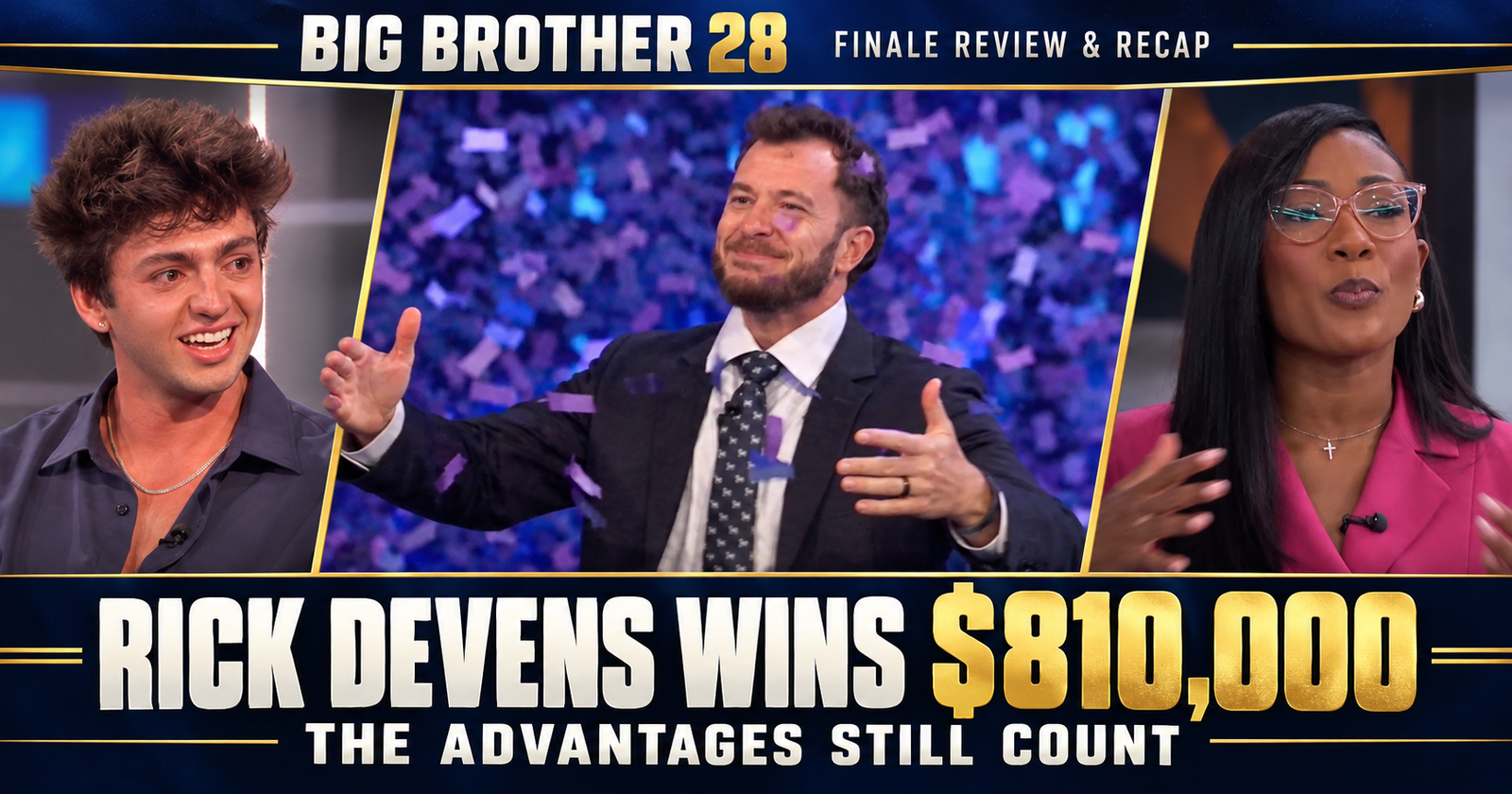
  • Big Brother 28 BB Comics Review: Zesty, Lazy and Empty

    Big Brother 28 BB Comics Review: Zesty, Lazy and Empty

    The Big Brother 28 BB Comics arrived during the first week all three Icons were finally forced to fight for their lives together. Barrett nominated Angela, Dee and Devens, Yash won his third Power of Veto by beating Devens in BB Comics by only 26 seconds, and he left the nominations unchanged.

    The game finally produced a comic-book confrontation worthy of the tradition.

    Unfortunately, most of the actual comics are not worthy of the season.

    This year’s collection is polished, colorful, exaggerated and extremely zesty. There are enormous tongues, spanking threats, romantic pirates, lightning-powered beds, exposed legs, tight costumes, suggestive taglines and enough double entendres to fill a late-night CBS schedule.

    There is nothing wrong with BB Comics being campy. Camp is part of the fun. The problem is that camp cannot replace wit, and zestiness cannot replace an actual observation.

    The strongest BB Comics exaggerate something true. They capture a houseguest’s personality, strategic reputation, embarrassing mistake, major competition win or defining relationship. They roast the player while reminding viewers why that player mattered.

    Most of the Big Brother 28 BB Comics reduce their subjects to hair, food, hometowns, occupations, punishments and whatever random visual joke production could finish quickly.

    Hair. Bed. Toilet. Burger. Plaid. Austin. Tongue.

    Those are not character studies. They are emergency puns.

    The artwork is not the problem. The artists delivered energetic and technically impressive illustrations. The failure happened before anyone started drawing. The concepts feel like production assigned one random noun to each houseguest and refused to learn a verb.

    That is why this is not merely a weak collection. It is a convincing argument that BB Comics should stop being an automatic annual tradition.

    The Big Brother 28 Season These Comics Barely Noticed

    Big Brother 28 began with 17 actual houseguests: 14 rookies and three designated Icons in Angela, Dee and Devens. Those additions immediately changed the social structure because everyone else had to compete against three people who already understood reality television, fan voting and the value of rapidly building protection.

    Chuk, Jason and Rome won safety during the opening move-in competitions. Dee then became the first Head of Household, placing the Icons in control before most of the rookies understood how the house had divided.

    The Crossovers connected the Icons with Drew and Barrett. The Red Corner centered on Haley, Kamu and Chuk. Those groups were stitched together through the Tool Shed, an oversized majority that controlled the opening month while Rome, Lyric, Jason and the other outsiders failed to establish a stable opposition.

    That original structure eventually collapsed, but its early power shaped every eviction that followed.

    Week 1: Ashley Campaigns Herself Out

    Dee nominated Mallory, Yash and Taylor. Yash was the original target, but Mallory won the first Power of Veto and removed herself. Dee named Ashley as the replacement nominee.

    Yash won the BB Lackluster, leaving Ashley and Taylor as the final choices.

    Ashley entered the block as a backup option who still had room to survive. Instead, her campaign exposed information, created distrust and gave everyone an easier reason to keep Taylor.

    Ashley was unanimously evicted 14-0.

    Her most memorable personal moment was trying her first hamburger inside the house. That eventually became her entire comic.

    Week 2: Devens Declares War and Rome’s Empire Collapses

    Devens won Head of Household and initially considered a safer week. Angela pushed him toward the aggressive move of eliminating Rome before Rome could organize the opposing side.

    Devens nominated Melody, Jason and Lyric. He then won the Power of Veto, used it on Lyric and named Rome as the replacement nominee.

    Jason won the BB Lackluster, leaving Rome against Melody.

    Rome had played too loudly and too quickly. He positioned himself as the leader of an opposition before that opposition had the loyalty required to protect him. His showmance with Lyric made both of them more visible.

    Rome was evicted 12-1. Taylor cast the only vote to keep him.

    Lyric voted against Rome after he encouraged her to protect her own game. Rome walked out publicly declaring his love while learning that his showmance had joined everyone else in evicting him.

    Angela also lost the first Time Capsule challenge and received the Egg Detective punishment. That costume eventually became the only thing her comic cared about.

    Week 3: Kamu Hijacks Mallory’s Tea Party

    Kamu won Head of Household and nominated Lyric, Mallory and LaLa while planning to backdoor Jason.

    Lyric won the Power of Veto and saved herself. Kamu followed through by naming Jason as the replacement nominee.

    The week became memorable because of Mallory’s Tea Party. What was supposed to be a playful house event became a public confrontation when Kamu attempted to expose Jason in front of everyone.

    Jason responded by becoming the kettle instead of merely spilling the tea. He fought back, banged kitchenware and delivered one of the season’s few genuinely unforgettable confrontations.

    Kamu succeeded in making Jason the target, but he also showed the entire house how aggressively he could weaponize private conversations.

    Mallory defeated Jason by one point in the BB Lackluster. Jason was unanimously evicted 12-0.

    During the same period, Devens completed his Time Capsule challenge and won the Diamond Power of Veto. The power allowed him to remove a nominee and personally select the replacement during one of the next six Veto meetings.

    Unlike Angela’s punishment, Devens received something capable of changing the season.

    Week 4: Haley Wins Power and Loses Control

    Haley won Head of Household and nominated Taylor, Melody and Drew. Taylor was her primary target, and much of the week was driven by personal frustration instead of a clean strategic objective.

    Taylor won the Power of Veto and saved herself. Haley named Lyric as the replacement nominee after previously giving Lyric reasons to believe she was safe.

    Drew won the BB Lackluster, leaving Melody and Lyric as the final nominees.

    The target moved from Drew to Melody and finally to Lyric. The Icons helped redirect the vote at the last moment, blindsiding Haley during her own Head of Household.

    Lyric was evicted 8-3. Kamu, Chuk and Yash voted to keep her.

    The Tool Shed technically continued to exist, but it stopped functioning as a real alliance. Angela initially lied about her vote, Haley became determined to expose the betrayal and the original majority splintered into smaller groups.

    Dee also completed her Time Capsule challenge and won the BB Bribe, giving her $5,000 to offer another houseguest in exchange for a binding game action.

    Week 5: LaLa Wins the Wall While Taylor Directs the Attack

    LaLa shocked the house by winning the Wall at 58 years old, becoming the oldest winner of the famous endurance competition on the flagship Big Brother series.

    That should have been the defining image of her comic.

    With substantial strategic guidance from Taylor, LaLa nominated Haley, Chuk and Barrett. Barrett was being used as a pawn while Haley was the intended target. Taylor also helped keep Kamu off the initial block, giving him room to separate from the collapsing Red Corner.

    Kamu won the Power of Veto but refused to save either Haley or Chuk. The decision was an understandable attempt to reposition himself, but it confirmed that he had abandoned his original allies.

    Haley won the BB Lackluster. Chuk was left against Barrett and evicted 9-1, with Haley casting the only vote to keep him.

    Angela also admitted her role in Lyric’s eviction to Haley. Their conversation escalated into one of Angela’s biggest explosions, turning what could have been a strategic reconciliation into another emotional disaster.

    Mallory lost her Time Capsule challenge and received the Adam and Eve punishment. She selected Melody as her partner, forcing them to wear fig-leaf costumes while connected to one another.

    LaLa’s Wall victory broke the original majority. Taylor’s strategic influence shaped the nominations. Neither story became their comic.

    Week 6: Yash Wins Everything, but Devens Steals the Move

    Yash won Head of Household and nominated Dee, Angela and Haley. He then won the Power of Veto, giving him control over the nominations.

    Devens used the Diamond Power of Veto to save Dee and personally name Kamu as the replacement nominee.

    It was one of the season’s biggest moves. Devens protected his closest strategic ally, exposed the Icons and turned Yash’s Head of Household into someone else’s signature moment.

    Angela won the BB Lackluster. Kamu was evicted 8-1, with LaLa casting the only vote to keep him.

    Kamu had moved away from Haley and Chuk, avoided LaLa’s nominations and positioned himself as a valuable free agent. None of it mattered once Devens could rewrite the block.

    Melody also lost her Time Capsule challenge and became Lady of the Latrine, spending 24 hours servicing and cleaning the bathroom in a royal costume.

    Production eventually decided that punishment was the complete story of her summer.

    Week 7: Dee Takes Control and Drew Betrays Mallory

    Dee won her second Head of Household and nominated Drew, Taylor and LaLa.

    LaLa won the Power of Veto during a sexually suggestive, 1980s exercise-themed competition. She saved herself, and Dee named Mallory as the replacement nominee.

    Drew won his second BB Lackluster, leaving Taylor and Mallory as the final nominees.

    Mallory was evicted 6-2. Only Barrett and Melody voted to keep her. Drew voted against his own F.A.P. ally, sacrificing Mallory to preserve his wider position with the Icons and Mosh Pit.

    The vote exposed the limits of Drew’s loyalty. Melody was furious, but she remained personally and strategically tied to him.

    Dee eventually offered her BB Bribe to Yash. He accepted $5,000 in exchange for not nominating Angela, Dee or Devens the next time he became Head of Household. The agreement did not stop him from winning Veto, refusing to use it or voting against them.

    Drew received the final Time Capsule reward, a Never-Not Pass. It improved his living conditions but had no meaningful strategic impact.

    The 1,000th-Episode Twist: Haley Leaves Without a Vote

    After Mallory’s eviction, Big Brother suspended the normal Head of Household, Veto and BB Lackluster format for a medieval chain of safety competitions.

    The houseguests were pushed through successive challenges in which safety and elimination decisions passed from one person to another. Dee earned early safety and helped Devens avoid the most dangerous part of the chain.

    Haley repeatedly failed to escape.

    Yash eventually gained the final authority and eliminated her.

    Haley left without a traditional nomination ceremony, campaign or eviction vote. It was an unsatisfying ending to a game that had already unraveled after her disastrous Week 4 Head of Household.

    Her exit also kept her out of the jury despite reaching the same stage as Mallory.

    Week 8: Drew Nominates Devens, but LaLa Pays the Price

    Drew won Head of Household and nominated Yash, LaLa and Taylor.

    Yash won the Power of Veto and removed himself. Drew spent far too much time debating the replacement nominee before finally placing Devens on the block.

    Devens won the BB Lackluster, leaving LaLa against Taylor.

    LaLa was evicted 4-2 and became the first juror on Day 59.

    Her eviction was a major strategic failure for the rookies. LaLa had been one of the loudest voices demanding that they remove the Icons. Within 24 hours of losing her, Barrett finally gained the power required to take the shot she had been calling for.

    Week 9: Barrett Finally Puts All Three Icons in Danger

    Barrett won Head of Household and nominated Angela, Dee and Devens together.

    It was the most direct attack on the Icons all season. There was no pawn, complicated backdoor plan or attempt to hide what was happening. At least one Icon would have to win safety or face the vote.

    Yash and Taylor joined Barrett and the nominees in the BB Comics Power of Veto competition.

    Yash won, defeating Devens by 26 seconds and collecting his third Veto.

    He did not use it.

    Devens remains the primary target if he loses the BB Lackluster. Dee is Barrett’s preferred backup target. However, if Devens wins safety, Yash and Taylor have discussed keeping Dee and evicting Angela. Drew and Melody independently reached the same conclusion.

    Barrett opposes that outcome because evicting Angela instead of Dee or Devens would waste the most important opportunity of his Head of Household.

    That is the season entering the BB Comics episode: one Icon must leave, but the rookies still cannot agree on which one.

    Now compare that story with what production chose to draw.

    Every Big Brother 28 BB Comic Compared With the Actual Game

    Angela — The Eggsecutioner

    Comic-to-game score: 5.5/10

    Angela’s cover transforms her into The Eggsecutioner, an egg-shaped medieval warrior carrying a battle axe beneath the tagline “She’s Cracked!”

    Visually, it is one of the cleaner covers. The egg body, castle backdrop and executioner theme create a coherent image. It is campy, dramatic and immediately recognizable.

    It is also based entirely on a punishment Angela received after failing the first Time Capsule challenge.

    Angela has not played an elite game. She has not won Head of Household or the regular Power of Veto. She has been protected by the Icons, benefited from Devens’ Diamond Veto and sometimes allowed her emotions to create unnecessary damage.

    She has still done considerably more than wear an egg costume.

    Angela helped redirect Devens toward backdooring Rome. She participated in the Lyric vote flip that destroyed Haley’s Head of Household. She survived Yash’s nominations by winning the BB Lackluster. Her relationships repeatedly helped the Icons gather information and soften potential opposition.

    Her biggest weakness has been dependence. Angela entered Week 9 with protection because other players viewed Dee and Devens as larger threats. That is useful positioning, but it is not independent control.

    The moment Devens began presenting himself and Dee as shields, several rookies began discussing Angela as the expendable Icon.

    The Eggsecutioner captures a memorable costume but ignores that strategic contradiction.

    “She’s Cracked” is also predictable. It leans on the same Angela caricature the franchise already used instead of discovering anything new about her second game.

    This is not a terrible cover. It is simply the easiest available joke.

    Yash — The Skullet

    Comic-to-game score: 2/10

    Yash becomes The Skullet, a sinister barber wielding scissors over a terrified customer. The tagline promises “One Grim Trim.”

    That is apparently the entire concept. His comic is about hair.

    Yash entered Week 9 with one Head of Household victory, three Veto wins, a Week 1 BB Lackluster victory and the decisive win in the medieval elimination chain.

    He has won more meaningful competitions than anyone remaining.

    His Week 6 Head of Household placed three heavily connected players in danger. Devens needed the Diamond Veto to rescue Dee and redirect the week onto Kamu. Although the power undermined Yash’s intended nominations, forcing the Icons to publicly expose themselves was still important.

    Yash later won the Week 8 Veto and forced Drew to name a replacement nominee. He followed that performance by winning BB Comics while all three Icons were on the block.

    His strategic game is more complicated. Accepting Dee’s $5,000 bribe restricted his next Head of Household nominations, but it did not prevent him from leaving Barrett’s nominations unchanged.

    Yash has also recognized that both groups need him. The Icons see him as a shield and temporary asset. The rookies need his competition ability to finish removing the Icons.

    His plan is to let the two sides attack each other while he collects safety and waits for a clearer path to the finale.

    Production had competition wins, clocks, money, calculations and Veto necklaces available as concepts.

    It stared at his haircut and stopped working.

    The Skullet is one of the collection’s clearest failures. The season handed production a superhero. Production made him a barber.

    Dee — The Dee-stroyer

    Comic-to-game score: 4/10

    Dee becomes The Dee-stroyer, a medieval attacker launching projectiles toward a castle while the tagline warns, “Watch out! Dee’s nuts!”

    The title accidentally describes her game better than the actual joke.

    Dee has been one of the season’s central strategic players. She won the first Head of Household and the Week 7 Head of Household. Her early power helped establish the Icons, create the Crossovers and turn the Tool Shed into the opening majority.

    Her first Head of Household did not remove her intended target. Yash escaped through the BB Lackluster, and Ashley’s collapsing campaign gave the house an easy unanimous eviction.

    Even so, Dee used the week to build a structure that protected her for more than a month.

    Her most important move came during Haley’s Head of Household. The late vote shift onto Lyric damaged the Red Corner, exposed the Tool Shed’s internal distrust and started the chain that eventually removed Chuk and Kamu.

    Dee also won the BB Bribe. Her first offer to Yash failed, but she eventually convinced him to accept the deal. It did not stop Barrett’s current nominations, but it could still protect the Icons from a future Yash Head of Household.

    Her weaknesses are equally visible. Dee becomes forceful when she feels control slipping. Devens had to use the Diamond Veto to save her, and her closeness to him has made her one of Barrett’s preferred targets.

    The Dee-stroyer could have involved flipped votes, two Head of Household keys, broken alliances or the BB Bribe.

    Instead, the comic exists to make a “Dee’s nuts” joke.

    That is zesty middle-school humor attached to one of the season’s most important players.

    Drew — Rebel Without a Comb

    Comic-to-game score: 1.5/10

    Drew becomes Rebel Without a Comb, riding a motorcycle with exaggerated hair beneath the tagline “Hairdo or Die.”

    It looks like a rejected advertisement for hair gel.

    Drew’s game has been frustrating, self-protective and occasionally effective. He built relationships with the Icons through the Crossovers while maintaining F.A.P. with Mallory and Melody.

    He repeatedly occupied the middle, moving information between groups and avoiding firm commitments until competitions forced him to choose.

    Drew also bluffed about possessing the Coin of Destiny despite not having that power. The lie made his position look more dangerous and confusing than necessary.

    His greatest skill has been surviving the damage caused by his own indecision. He won the BB Lackluster during Haley’s Head of Household, removing himself before the vote landed on Lyric. He won again during Dee’s second Head of Household, saving himself while Mallory became the replacement casualty.

    His decision to evict Mallory exposed the limits of F.A.P. Drew chose his wider position over his closest named alliance, angering Melody and proving that his promises could disappear when they became inconvenient.

    Drew finally won Head of Household in Week 8. He nominated Yash, LaLa and Taylor, then reluctantly named Devens after Yash used the Veto. Devens won the BB Lackluster, and LaLa left instead.

    Drew took a partial shot while preserving enough ambiguity to claim he had not completely turned against the Icons.

    That balancing act is collapsing. Barrett took the direct shot Drew avoided, and the remaining rookies have less reason to tolerate somebody who wants access to every plan without accepting responsibility for one.

    Production could have made Drew a man standing on a collapsing fence, an alliance escape artist, a Blockbuster survival machine or a rat moving information between rooms.

    It chose a comb.

    Melody — Lady of the Latrine

    Comic-to-game score: 0.5/10

    Melody becomes Lady of the Latrine, a royal bathroom attendant responsible for ensuring the kingdom can flush.

    The cover recreates her Time Capsule punishment. She wears a medieval costume outside an occupied toilet while servicing the royal bathroom.

    It is colorful. It is theatrical. It is zesty.

    It is also an admission that production could not identify a game for her.

    Melody has not won Head of Household or Veto. She was nominated during Devens’ Week 2 reign and again during Haley’s Week 4 Head of Household. She survived because larger targets emerged.

    Her most important strategic structure was F.A.P. with Drew and Mallory. The alliance offered her a potential path between the early power blocs, but it never became an organized opposition.

    Drew remained connected to the Icons. Mallory became an expendable replacement nominee. Melody was left reacting to decisions instead of directing them.

    Melody and Barrett cast the only votes to save Mallory. That showed more loyalty than Drew displayed, but it happened too late to matter.

    Her relationship with Drew has been more visible than her independent strategy. It has provided information and protection, but it has tied her future to a player who repeatedly sacrifices allies when threatened.

    Only now, with Barrett controlling Week 9, has Melody begun discussing a genuine rookie ceasefire and the need to remove the Icons. She has also recognized that keeping Dee over Angela could leave a shield and weapon in front of her.

    That is more active thinking than she displayed earlier, but it does not erase two months of passivity.

    Lady of the Latrine is both unfair and revealing. It reduces Melody to a punishment, but production selected that punishment because her actual season provided very little that was undeniable.

    The cover should not have been about a toilet.

    The fact that it was says everything.

    Barrett — The Austin Gangler

    Comic-to-game score: 2.5/10

    Barrett becomes The Austin Gangler, an oversized, lanky creature standing outside a Texas home. He is described as “lanky,” “cranky” and prepared to give someone a “spanky.”

    This comic is aggressively zesty without being particularly clever.

    Barrett spent most of the season attached to powerful players while insisting he would eventually act against them. He was connected to the Icons through the Crossovers, became part of the Tool Shed and later occupied the Mosh Pit.

    His relationship with Drew gave both men access to multiple sides of the house.

    That position protected Barrett, but it also made him frustrating. He talked about taking shots, questioned the Icons and repeatedly delayed the confrontation.

    LaLa nominated him as a pawn during Week 5. He survived Chuk’s eviction and returned to the middle. During Mallory’s final week, Barrett was one of only two votes to keep her, separating himself from Drew without completely ending their relationship.

    LaLa’s eviction finally forced Barrett to confront the numbers. He won Week 9 Head of Household and made the season’s most decisive nominations by placing Angela, Dee and Devens on the block together.

    That move matters. Barrett guaranteed that the three-person Icon structure would end unless another twist interfered.

    He has also resisted treating Angela’s eviction as a successful result, correctly recognizing that losing the least strategically powerful Icon would weaken the value of his Head of Household.

    His problem is timing. Barrett waited until the final eight to make a move that should have begun several weeks earlier.

    The Austin Gangler was likely designed before Barrett won Head of Household, but his season already contained “Sharpie it,” his delayed rebellion, middle position and partnership with Drew.

    The comic chose “spanky.”

    Taylor — Pod Almighty

    Comic-to-game score: 1/10

    Taylor becomes Pod Almighty, wrapped in a blanket on her pod bed while electricity puts the men around her to sleep. The tagline promises, “She’ll make you go nighty night!”

    The cover appears intended to present Taylor as a supernatural sleep queen. There is a slightly dominant and zesty edge to the image, but the joke lands much more simply: Taylor stayed in bed all summer.

    Taylor has spent plenty of time in the bed and pod. That is fair material for a quick joke. It should not become the only statement made about her season.

    Taylor has been nominated four times, more than anyone remaining. She survived the opening eviction against Ashley, cast the only vote to keep Rome and won the Week 4 Power of Veto when Haley made her the primary target.

    Her most influential week came during LaLa’s Head of Household. Taylor helped direct the nominations toward Haley and Chuk while protecting Kamu from the initial block.

    That advice changed the season by breaking the remaining Red Corner and creating space for Kamu to reposition.

    Taylor’s game has not been dominant. She has never won Head of Household. She has often been isolated, allowed other people to define her position and struggled to build a large structure around herself.

    Her relationship with LaLa did not save LaLa in Week 8, and Taylor has spent much of the season requiring someone else to hold power.

    Still, repeatedly surviving the block is a game. Winning Veto under direct pressure is a game. Influencing LaLa’s nominations is a game. Building a functional partnership with Yash is a game.

    Pod Almighty erases all of it.

    There is also an ugly visual consequence to reducing a Black woman’s season to laziness while the collection ignores inactivity from several other players. Whether intended or not, the effect deserves criticism.

    Taylor’s comic could have featured four nomination chairs, a Veto necklace and an underdog refusing to leave.

    Instead, production drew a bed and called the assignment complete.

    Devens — Diamond Devens

    Comic-to-game score: 8.5/10

    Devens becomes Diamond Devens, flying over a city in a glittering diamond suit while aircraft surround him. The tagline promises “24 Carats of Kickass.”

    This is the best game-based concept in the collection.

    The name directly references the Diamond Power of Veto that allowed Devens to rewrite Yash’s nominations. The diamond body turns that power into a superhero identity without requiring a complicated explanation.

    Devens has played one of the season’s most visible games. He won the Week 2 Head of Household, nominated three members of Rome’s side, won the Veto and completed the Rome backdoor.

    That week divided the house but established Devens as the strategic voice of the Icons.

    He won the Diamond Veto through the Time Capsule and held it until Week 6. When Yash nominated Dee, Angela and Haley, Devens saved Dee and personally nominated Kamu.

    Angela won the BB Lackluster, and Kamu was evicted.

    That move preserved all three Icons, removed a dangerous free agent and became the most consequential use of a twist this season.

    Devens also helped manage vote flips, build the Mosh Pit and keep the Icons coordinated whenever Angela’s emotions or Dee’s intensity threatened to create cracks.

    The cost is that everyone recognizes his influence. Drew nominated him in Week 8. Devens escaped by winning the BB Lackluster. Barrett nominated him again as Week 9’s primary target.

    He came within 26 seconds of winning BB Comics but lost to Yash. His survival now requires another BB Lackluster victory or a vote that appears unlikely while he remains beside Angela or Dee.

    Diamond Devens does what BB Comics should do. It takes a defining game action and turns it into an immediately understandable character.

    The rest of the gallery needed this level of attention.

    LaLa — The Tongue Thrasher

    Comic-to-game score: 1.25/10

    LaLa becomes The Tongue Thrasher, swinging an enormous tongue through an exaggerated 1980s workout scene. The tagline calls her “A Real Tongue Twister.”

    This is the zestiest comic in the collection.

    It is also one of the worst.

    LaLa won the Wall at 58 years old. She defeated younger, more conventionally athletic competitors in the franchise’s signature endurance challenge and became its oldest winner on the flagship series.

    Production ignored that and based her comic on the sexually suggestive exercise Veto she won several weeks later.

    That decision cannot be excused by claiming there was no material. The Wall happened first. It was historically significant. It directly changed the game.

    LaLa used her Head of Household to nominate Haley, Chuk and Barrett, breaking the Red Corner and ending the Tool Shed’s illusion of unity.

    Taylor provided substantial strategic guidance, but LaLa still had to make the nominations and absorb the consequences. Chuk left angry with her. Haley remained in conflict with her. The Icons recognized that LaLa could no longer be treated as harmless.

    LaLa was also a major personality. She cooked, cleaned, complained about the house’s mess, argued with people half her age and attempted to begin a rookie rebellion against the Icons.

    She was emotional, loud, funny, stubborn and frequently more aware of the house’s main problem than the rookies who outlasted her.

    Her game had weaknesses. She depended heavily on Taylor’s strategic interpretation. She sometimes allowed personal conflicts to blur her objectives. She believed she had votes that did not exist when she faced Taylor in Week 8.

    None of that erases what she accomplished.

    The Tongue Thrasher takes a historic Wall victory and buries it beneath a giant sexualized tongue. It does not celebrate LaLa’s competitiveness. It turns her into the punchline of one suggestive competition.

    This should have been The Wall Mother, The Brick House or anything built around endurance, authority and how she finally cracked the majority.

    Production chose tongue.

    Haley — The Flannimal

    Comic-to-game score: 5/10

    Haley becomes The Flannimal, a giant plaid-covered rocker stomping through a 1993 grunge concert. The tagline says she is “having a plaid week.”

    The comic references the grunge-themed Head of Household Haley won. That gives it more connection to the game than most of this collection.

    The problem is that Haley’s Head of Household cannot be celebrated without acknowledging how badly it ended.

    Haley began in one of the safest positions. She was central to the Red Corner, protected by the Tool Shed and personally close to Angela.

    Winning Head of Household should have strengthened that position. Instead, Haley targeted Taylor for personal reasons, nominated Drew as a pawn and eventually placed Lyric on the block.

    Drew won the BB Lackluster. The Icons flipped the vote onto Lyric and blindsided Haley during her own reign.

    Haley never recovered. She became consumed with identifying the votes, initially blamed Kamu and Chuk, fought with Angela after Angela confessed and entered LaLa’s Head of Household as the primary target.

    Haley saved herself by winning the BB Lackluster, causing Chuk’s eviction. Yash nominated her again the following week, but Kamu became the target after Devens used the Diamond Veto.

    Haley eventually reconnected with the Icons and believed she had found another path. The medieval twist removed her without a vote after she repeatedly failed to secure safety.

    The Flannimal captures the beginning of Haley’s collapse without understanding the collapse.

    A stronger comic would have turned her Head of Household into a plaid monster she could not control—one destroying its own alliance.

    Instead, the cover gives us oversized pants and a plaid pun.

    Mallory — The Pipe Queen

    Comic-to-game score: 6.5/10

    Mallory becomes The Pipe Queen, sitting on a throne made of pipes beneath the tagline “No Hype, All Pipe.”

    This is one of the more defensible covers because the Pipe Queen identity came from a meaningful moment.

    Mallory won the first Power of Veto after assembling the competition’s pipe structure, saved herself and avoided becoming an easy Week 1 target.

    She later won the Week 3 BB Lackluster by one point, defeating Jason at the buzzer. That gave her two direct survival victories before several houseguests had won anything.

    Her social and strategic game never matched those moments.

    Mallory formed F.A.P. with Drew and Melody, but the trio remained loosely attached to larger structures instead of becoming its own power center. Mallory frequently sensed danger without converting that awareness into stable votes.

    Her most memorable personality contribution was organizing the Tea Party that Kamu and Jason transformed into the defining confrontation of the early season.

    America selected Mallory for the Time Capsule, but she failed and received the Adam and Eve punishment with Melody.

    Her fatal error came during Dee’s second Head of Household. Mallory surrendered an opportunity to win power, then watched LaLa win Veto and force Dee to name a replacement nominee.

    Dee chose Mallory.

    Drew saved himself through the BB Lackluster and then voted Mallory out. Only Barrett and Melody kept their word.

    The Pipe Queen does not capture the betrayal, F.A.P. or Mallory’s habit of winning safety only after danger was directly in front of her.

    It is still rooted in a legitimate achievement and a nickname the house used.

    In this collection, that is enough to make it one of the better comics.

    Kamu — The Mixed-Martial Artist

    Comic-to-game score: 3/10

    Kamu becomes The Mixed-Martial Artist, combining his MMA career with literal painting.

    It is a clean occupational pun with almost nothing to do with Big Brother.

    Kamu entered as one of the best-positioned rookies. He was protected by the Red Corner, connected through the Tool Shed and physically capable enough to become an obvious long-term threat.

    His Week 3 Head of Household removed Jason exactly as planned. However, the Tea Party confrontation made Kamu look needlessly aggressive and showed everyone that he would turn private conversations into public weapons.

    The collapse of Haley’s Head of Household forced Kamu to reconsider his position. Haley and Chuk suspected him after the Lyric blindside even though he voted to keep her.

    He correctly recognized that his original group was becoming dangerous to his survival.

    During LaLa’s Head of Household, Taylor helped keep Kamu off the block. Kamu then won Veto and refused to use it on Haley or Chuk.

    That choice was strategically understandable because using the Veto would have publicly tied him back to a sinking alliance. It also left him without a firm home.

    Kamu attempted to work with Yash and develop new options, but Devens’ Diamond Veto destroyed that transition. He went from unnominated to replacement nominee without an opportunity to save himself through the regular Veto.

    Angela won the BB Lackluster, and Kamu was evicted 8-1.

    The Mixed-Martial Artist could have worked if the paintings represented the alliances Kamu built, exposed and abandoned.

    Instead, the idea is simply “MMA fighter who paints.”

    It is not offensive. It is barely an observation.

    Chuk — Chuk Wagon

    Comic-to-game score: 3.5/10

    Chuk becomes Chuk Wagon, a Western hero surrounded by line dancing, mechanical horses and dynamite. The tagline says he is “drawing a line dance in the sand.”

    The artwork contains movement, color and personality.

    The game connection is nearly nonexistent.

    Chuk won safety during the premiere and used the protected opening to build the Red Corner with Haley and Kamu. Through the Tool Shed, he spent the first several weeks inside the majority.

    That comfort became his largest problem.

    Chuk trusted the alliance more than the evidence. When the Icons flipped the vote onto Lyric, he was blindsided but failed to create an effective counterstructure.

    His loyalty to Haley made them appear inseparable, while Kamu began moving away from both.

    LaLa nominated Chuk during Week 5. Kamu won Veto and refused to save him. Haley won the BB Lackluster, leaving Chuk beside Barrett.

    Chuk expected considerably more support than he received. Yash abandoned him. The Tool Shed did not protect him. Kamu’s repositioning left him exposed.

    Only Haley voted to keep him, producing a 9-1 eviction.

    Chuk later defended his quieter style and rejected Taylor’s criticism, but the results remain difficult to dispute. He won opening safety, never won Head of Household or Veto and failed to adapt when his alliance collapsed.

    Chuk Wagon is entertaining to look at, but it says more about a line-dancing joke than his season.

    A comic about a loyal soldier discovering everyone else had abandoned the fort would have been more accurate.

    Lyric — The One Hit Wonder

    Comic-to-game score: 6/10

    Lyric becomes The One Hit Wonder, wearing a bright 1980s superhero outfit and punching opponents. The tagline transforms “Nothing’s Gonna Change My Love for You” into “Nothing’s Gonna Change My Glove for You.”

    It references her father’s famous song and the single major competition she won.

    The joke is obvious, but it at least contains multiple layers.

    Lyric’s game became inseparable from Rome almost immediately. Their showmance was fast, emotional and highly visible. It helped turn Rome into the house’s most convenient opposition leader and made Lyric an extension of his threat.

    Devens nominated her in Week 2. Lyric convinced him to use Veto on her, allowing Rome to become the replacement nominee.

    She then voted Rome out after he advised her to protect her game.

    That decision could have created a second life for Lyric. Instead, she remained associated with Rome’s side while losing the relationship that provided her emotional stability.

    Kamu nominated Lyric in Week 3. She won Veto and saved herself, proving she could perform under pressure.

    Haley then named Lyric as the Week 4 replacement nominee. Lyric tried to survive by throwing Mallory under the bus and making new promises, but too many players compared information.

    The vote moved late, and Lyric was evicted 8-3.

    The One Hit Wonder is harsh because Lyric influenced multiple weeks. She convinced Devens to use Veto, survived another nomination through her own victory and became the center of the vote flip that shattered the Tool Shed.

    Still, the title works as a musical pun and a reference to her single Veto victory.

    Compared with the rest of the collection, that qualifies as thoughtful.

    Jason — Heavy Kettle

    Comic-to-game score: 8/10

    Jason becomes Heavy Kettle, operating an enormous armored tea kettle while protecting “messy bitches everywhere.”

    This is the strongest personality-based comic in the collection.

    Jason entered with premiere safety but immediately created strategic danger by discussing the need to target the Icons. That information reached the people he wanted to remove while they controlled the house.

    He also attempted to build a sincere-looking relationship with Angela before admitting to others that parts of it were performative. That information reached Angela and helped produce an explosive Week 2 nomination ceremony.

    Devens nominated Jason, but Jason won the BB Lackluster and survived Rome’s eviction.

    Kamu targeted him during Week 3. The Tea Party should have been a complete strategic disaster for Jason. Instead, it became his defining moment.

    When Kamu tried to expose him publicly, Jason answered with confidence, humor and raw anger.

    The confrontation did not save his game. Mallory defeated him by one point in the BB Lackluster, and Jason was unanimously evicted.

    His gameplay was messy, emotionally reactive and too open.

    Memorable television, however, is not the same thing as perfect strategy.

    Heavy Kettle understands Jason better than most covers understand their subjects. The kettle references the confrontation. “Messy bitches” reflects his humor and self-awareness. The oversized machinery captures how his personality could consume an entire room.

    It is loud, zesty and based on something that happened.

    That is what a BB Comic should be.

    Rome — The Rome-ancer

    Comic-to-game score: 7.5/10

    Rome becomes The Rome-ancer, fighting like a pirate while carrying a sword and pickleball equipment. The tagline describes him as “a lover and a fighter.”

    The cover combines three actual pieces of Rome’s identity: his relationship with Lyric, athletic background and confrontational approach.

    Rome won premiere safety and immediately began positioning himself as a leader. He attempted to organize players outside the Icons’ structure but made the group visible before it became strong enough to protect him.

    His showmance with Lyric intensified his exposure. The relationship provided emotional security while making it easier for the Icons to describe him as the head of a dangerous pair.

    When Devens became Head of Household, Rome attempted to negotiate protection for Lyric, Melody and Jason. Those conversations instead confirmed how many people looked to him for direction.

    Devens nominated Rome’s allies, won Veto, saved Lyric and placed Rome on the block.

    Jason’s BB Lackluster victory left Rome against Melody. Rome was evicted 12-1. Lyric voted with the house, while Taylor cast the only vote to keep him.

    Rome played too fast, too visibly and too confidently. He behaved like the leader of an empire before constructing one capable of surviving an attack.

    The Rome-ancer captures that personality. It incorporates romance, swagger, conflict and pickleball without requiring a complicated explanation.

    It is ridiculous because BB Comics should be ridiculous. It is specific because good comedy requires specificity.

    Ashley — Burger Kong

    Comic-to-game score: 4.5/10

    Ashley becomes Burger Kong, a giant woman destroying a city with a hamburger stuck between her teeth. The tagline promises “Destruction with Cheese!”

    It is ridiculous and visually funny.

    Ashley’s game provided limited material. She failed to establish strong strategic relationships during the opening cycle and became Dee’s replacement nominee after Mallory won Veto.

    Ashley still had a chance to survive against Taylor. Her campaign exposed information and made the other houseguests believe keeping her could create unnecessary problems.

    Yash’s BB Lackluster victory removed the original target. The house chose the easier option and evicted Ashley 14-0.

    Trying her first hamburger became one of the few memorable personal stories from her ten days in the house.

    Burger Kong therefore makes sense in a way several other covers do not.

    The comic does not represent Ashley’s game because she never had enough time to build one. First boots frequently receive covers based on one random moment, and Burger Kong at least embraces the absurdity.

    It remains a food joke attached to someone who played ten days, but it accomplishes more with less than several comics made for players who reached the final eight.

    Complete Big Brother 28 BB Comics Ranking

    RankHouseguestBB ComicScoreVerdict
    1DevensDiamond Devens8.5/10A defining strategic power turned into a legitimate superhero identity
    2JasonHeavy Kettle8/10Funny, zesty and rooted in the season’s best confrontation
    3RomeThe Rome-ancer7.5/10Romance, conflict and pickleball combined into a coherent concept
    4MalloryThe Pipe Queen6.5/10Based on a legitimate competition win and house nickname
    5LyricThe One Hit Wonder6/10A layered musical pun connected to her Veto victory
    6AngelaThe Eggsecutioner5.5/10Strong visual but an easy punishment joke
    7HaleyThe Flannimal5/10References her Head of Household but ignores its collapse
    8AshleyBurger Kong4.5/10Random but funny, with limited game material available
    9DeeThe Dee-stroyer4/10A fitting title buried beneath a juvenile joke
    10ChukChuk Wagon3.5/10Energetic artwork with almost no strategic meaning
    11KamuThe Mixed-Martial Artist3/10An occupation pun pretending to be character analysis
    12BarrettThe Austin Gangler2.5/10Zesty body and hometown jokes disconnected from his game
    13YashThe Skullet2/10The season’s top competitor reduced to a haircut
    14DrewRebel Without a Comb1.5/10A hair joke that ignores his entire middle game
    15LaLaThe Tongue Thrasher1.25/10Suggestive Veto imagery replaces a historic Wall victory
    16TaylorPod Almighty1/10A bed joke erases four nominations, a Veto and strategic influence
    17MelodyLady of the Latrine0.5/10A toilet punishment used because production found no better story

    The Best Big Brother 28 BB Comics

    Diamond Devens is the strongest game-based comic because it immediately connects Devens with the Diamond Power of Veto. It takes his most important move and transforms it into a superhero identity.

    Heavy Kettle is the strongest personality-based comic. Jason did not play a successful game, but the Tea Party became one of the season’s signature moments. The cover understands why Jason was memorable.

    The Rome-ancer is the most complete character concept. It combines Rome’s romance, conflict and pickleball background without feeling forced.

    The Pipe Queen and The One Hit Wonder are not exceptional, but they connect to real competition victories and recognizable stories.

    That is enough to place them above most of the collection.

    The Worst Big Brother 28 BB Comics

    Lady of the Latrine is the weakest because it is not a character concept. It is a punishment recap.

    Pod Almighty is barely better. Taylor has spent plenty of time in bed, but reducing her entire season to laziness erases her Veto victory, four nominations, survival record and influence over LaLa’s Head of Household.

    The Tongue Thrasher is the most insulting missed opportunity. Production knew LaLa won the Wall at 58. It still chose to define her through an enormous tongue and a sexually suggestive exercise competition.

    Rebel Without a Comb and The Skullet reveal the same creative laziness. Drew and Yash played completely different games, yet both were reduced to hair.

    Those are not sharp roasts. They are placeholders.

    Why BB Comics Should Stop Being an Annual Tradition

    Big Brother does not need to permanently retire BB Comics. It needs to stop treating the competition as mandatory.

    The tradition currently works backward. Instead of asking whether a season has earned a BB Comics episode, production assumes the episode must happen and searches for 17 puns whether the material supports them or not.

    That is how viewers end up with multiple hair jokes, occupation jokes, hometown jokes, food jokes and punishment recaps.

    A BB Comic should reveal something about a houseguest. It should exaggerate an identity the audience already understands.

    When the show must explain that someone once discussed a haircut, hometown or first hamburger, the concept has failed.

    The annual requirement also freezes players into shallow jokes even after their games develop.

    Yash had already won Head of Household and multiple Vetoes. Drew had survived two BB Lacklusters and betrayed Mallory. LaLa had won the Wall and another physical competition. Taylor had survived four nominations. Dee had won two Head of Household competitions and controlled a major vote flip.

    Those were stories.

    The comics simply did not use them.

    Skipping a year could restore value to the tradition. Bring BB Comics back when the cast provides enough memorable material. Rotate it with movie posters, wrestling cards, tabloid covers, video-game characters or political campaign advertisements.

    Allow viewers to vote on several comic identities. Let evicted houseguests submit concepts. Give the artists strategic briefs instead of random nouns.

    The competition can survive without appearing every summer. Traditions become more meaningful when their returns feel special.

    Right now, BB Comics operates like a production checklist:

    Create 17 puns.

    Draw 17 covers.

    Insert a timed memory course.

    Declare it a fan favorite.

    Repeat next year.

    That routine is why the Big Brother 28 BB Comics feel polished, zesty and completely exhausted at the same time.

    Final Thoughts

    The Big Brother 28 BB Comics did not fail because they were too campy. They failed because most of their camp was empty.

    Diamond Devens works because the comic understands Devens’ most important move. Heavy Kettle works because it captures Jason’s personality and the Tea Party confrontation. The Rome-ancer works because it combines Rome’s romance, conflict and pickleball identity.

    The worst comics do the opposite.

    Lady of the Latrine reduces Melody to a punishment. Pod Almighty reduces Taylor to a bed. The Tongue Thrasher replaces LaLa’s historic Wall victory with a giant sexually suggestive tongue. Rebel Without a Comb ignores Drew’s entire middle game. The Skullet turns the season’s strongest competitor into a barber joke.

    Those are not sharp roasts. They are evidence that the format has run out of observations.

    BB Comics should make viewers laugh because the joke is true. This year, too many covers make viewers wonder whether production watched the same season.

    The artwork deserved better concepts. The houseguests deserved better satire. The audience deserved more than 17 emergency puns arranged around a Veto competition.

    The Big Brother 28 BB Comics are colorful, zesty and technically polished.

    They are also lazy, empty and a convincing argument that this tradition needs to take next summer off.

    Make sure to subscribe to our Late Night Crew Youtube Channel. Follow @yorkjavon, @kspowerwheels, @MS_MISCHA & @LateNightCrewYT on X.

  • Big Brother 28 Episode 28 Review & Recap: Devens Escapes, LaLa Becomes the First Juror and CBS Wastes Another Live Eviction

    Big Brother 28 Episode 28 Review & Recap: Devens Escapes, LaLa Becomes the First Juror and CBS Wastes Another Live Eviction

    DAY 59 · WEEK 8 · HOH: Drew · BB BLOCKBUSTER WINNER: Devens · EVICTED: LaLa · FIRST JUROR: LaLa

    Big Brother 28 Episode 28 should have been the night Devens learned what happens when a pawn volunteers for the block and mistakes confidence for control.

    Instead, Devens won one competition, LaLa became the first juror, and CBS spent the rest of the live show reminding us that BB Unlocked still exists.

    That was the problem with tonight.

    The entire week only had one genuinely dangerous outcome: Devens losing the BB Blockbuster. Every strategic conversation, every nervous glance, every possible betrayal and every crack forming inside the Icons depended on Devens remaining vulnerable.

    Once Devens dropped four balls into place before LaLa or Taylor, the episode lost the only ending that could have justified the buildup.

    LaLa went home 4-2.

    Devens escaped the consequences of his unnecessary decision.

    Yash chose predictability over competitive value.

    Barrett got all the benefits of planning a betrayal without having to expose himself by committing one.

    Angela proved that her instincts were better than the people dismissing them.

    Julie conducted another uncomfortable post-eviction interview before CBS turned the remainder of the live episode into an advertisement for a companion show that has not earned this level of promotion.

    There were pieces of a much better episode buried inside Big Brother 28 Episode 28.

    CBS simply failed to assemble them.

    Big Brother 28 Episode 28 Had One Story and Lost It in the BB Blockbuster

    Julie opened the episode by connecting Devens’ current predicament to the way he played Survivor.

    He takes risks. He creates danger. He convinces himself that stepping closer to the fire gives him control over where it spreads.

    Sometimes that produces exciting television.

    Sometimes it is just bad strategy wearing an adventurous costume.

    Devens was two days away from surpassing the total number of days he spent across both of his Survivor appearances. That should have made this a fascinating crossroads for his game. He had survived long enough to prove that he could adapt, but he was still repeating the habit that kept him from reaching the end elsewhere.

    He volunteered for the block when he did not need to be there.

    That was not bravery.

    It was not some brilliant display of loyalty.

    It was a player becoming so comfortable with his position that he started treating unnecessary danger like a résumé move.

    The episode understood the irony. It repeatedly emphasized the possibility that Devens had finally taken one risk too many.

    The house understood it too.

    Unfortunately, the competition erased the consequences before the vote could deliver them.

    Angela Read the House Correctly and Devens Told Her to Stop

    Angela could feel that something was wrong.

    She warned Drew, Dee and Devens that the people outside their immediate group were moving differently. Conversations felt suspicious. Barrett’s behavior did not feel natural. The house did not have the relaxed energy it should have had if LaLa were still the unquestioned target.

    Angela did not possess every detail, but she understood the temperature of the room.

    That is a valuable Big Brother skill.

    Players rarely receive a complete confession before a blindside. They have to recognize changes in body language, altered routines, missing information and the sudden appearance of conversations that supposedly mean nothing.

    Angela recognized those signs.

    Devens responded by telling her to stop making people nervous.

    That exchange captured Devens’ problem better than any dramatic Diary Room narration could have.

    Angela was not creating the danger. She was detecting it.

    Devens was not calming the alliance. He was dismissing information because it contradicted the comfortable version of the week he preferred to believe.

    The episode then gave us the confirmation Angela needed.

    Devens admitted that Dee was not his ideal Final Two partner. He wanted to move forward with Drew and Barrett because he believed that combination gave him a better opportunity to win.

    So while he was treating Angela’s concern like unnecessary paranoia, he was secretly imagining an endgame that excluded one of the people supposedly protecting him.

    Angela was right that the alliance was unstable.

    She just did not realize how unstable it had already become.

    Devens Wanted a Final Three With a Man Preparing to Evict Him

    Devens’ preferred Final Three with Drew and Barrett became even worse when the episode showed exactly what Barrett was planning.

    Barrett was ready to vote Devens out.

    He understood that eliminating Devens would weaken the Icons, strengthen his relationship with the other side of the house and prevent him from being dragged into a predictable Final Five.

    Barrett did not want to sit quietly inside someone else’s structure until it became too late to escape.

    That was the right instinct.

    More importantly, Barrett intended to disguise the move.

    He spent time around Yash, Melody and the other players outside the Icons so the house would see those relationships as normal. If Devens lost the BB Blockbuster, Barrett could vote him out. If Devens won, Barrett could return to the Icons without publicly exposing what he had considered doing.

    It was a nearly perfect position.

    Barrett could prepare the betrayal without paying for it.

    Devens, meanwhile, was describing Barrett as someone he wanted beside him near the end.

    That is not a small misread.

    Devens was willing to reduce Dee’s importance because he trusted a player who was waiting for the first clean opportunity to remove him.

    His BB Blockbuster victory protected him from the eviction vote.

    It did not correct his understanding of the house.

    Dee’s Paranoia Finally Became Useful

    Dee also began considering whether it was time to evict Devens.

    Her concern was partly strategic and partly personal. She could see the growing closeness between Devens, Barrett and Drew. She could feel herself becoming less central to a structure she had helped maintain.

    For once, her paranoia was not creating an imaginary betrayal.

    It was identifying a real one.

    Dee spoke with Angela about taking the shot. Angela questioned whether the move might be happening too early, but the important part was that two members of Devens’ own group were discussing a future without him.

    That should have been the episode.

    A volunteer pawn slowly discovering that the alliance he trusted was preparing to use his vulnerability against him is exactly the kind of self-created disaster Big Brother should allow to unfold.

    Devens did not need to be nominated.

    He placed himself in danger.

    Barrett was prepared to turn.

    Dee was considering it.

    Angela knew something was wrong.

    Yash and Melody understood that Devens leaving would completely reshape the house.

    Production finally had the ingredients for a live eviction that could change the season.

    Then the BB Blockbuster turned all of it into deleted potential.

    “Your Game in Ruins” Saved Devens From His Own Decision

    The BB Blockbuster competition, “Your Game in Ruins,” placed Devens, LaLa and Taylor behind a stone railing. They had to drop balls into narrow tubes and become the first player to land four successfully.

    The competition itself was simple enough to follow.

    It had visible progress, missed opportunities and legitimate stakes. Every successful drop mattered because the entire vote depended on whether Devens could save himself.

    That is more than can be said for several competitions this season.

    But the importance of the result also exposed a larger problem with the BB Blockbuster format.

    Nearly every strategic storyline developed during the week was conditional.

    Barrett would only betray Devens if Devens lost.

    Dee would only have to choose if Devens lost.

    Angela’s warning would only receive immediate validation if Devens lost.

    Yash and Melody would only have a realistic opportunity to break the Icons if Devens lost.

    LaLa and Taylor would only avoid sitting beside each other if Devens lost.

    The episode put all its dramatic weight on one competition result.

    Devens won.

    The interesting version of the night disappeared immediately.

    He deserves credit for performing when his game required it. Pressure is part of the competition, and Devens delivered.

    That does not make volunteering for the block intelligent.

    A bad decision rescued by immunity does not become a good decision afterward.

    It becomes a mistake without consequences.

    Devens Won Safety and the Episode Ran Out of Television

    Once Devens won, LaLa and Taylor became the final nominees.

    The house started whispering. People moved quickly. Production tried to create the impression that another major decision was forming.

    It was difficult to believe.

    LaLa was the larger competitive threat.

    Taylor was the easier player to manage.

    Drew had already made his preference clear through his nominations.

    The Icons no longer had to decide whether they were willing to sacrifice one of their own.

    Barrett no longer had to expose his real intentions.

    The vote returned to the safest available option.

    That does not mean the final minutes were strategically meaningless. The individual votes revealed where people wanted to stand. They simply did not create a result strong enough to match the episode’s earlier possibilities.

    The tension went from potentially season-changing to mostly procedural.

    That is why this week felt so boring.

    The house talked constantly, but almost every important conversation depended on a single competition outcome. Once that outcome disappeared, there was no second story waiting underneath it.

    The episode had nowhere else to go.

    LaLa Had Proven She Could Win When Taylor Had Not

    Between LaLa and Taylor, the decision should have been more complicated for the players outside the dominant structure.

    LaLa had won the Wall.

    She had won a veto.

    At 58, she delivered one of the season’s most memorable competition performances by refusing to fall when younger players around her could not continue.

    LaLa was not a perfect player.

    She could be reactive. Her reads were inconsistent. She occasionally understood the danger after the opportunity to prevent it had already passed.

    But nobody could honestly say she was useless.

    She had demonstrated that she could win power and change the direction of a week.

    Taylor had not provided Yash or the opposition with that same evidence.

    Taylor may have offered predictability. She may have felt easier to influence. She was also less likely to attract immediate attention than LaLa.

    Those are legitimate reasons to keep someone.

    They are not the same as having a player capable of winning power for your side.

    The dominant players benefited from removing LaLa because she was dangerous.

    The outsiders helped them do it.

    That is where the vote becomes difficult to defend.

    Yash Chose the Ally He Could Manage Over the Ally Who Could Win

    The obvious question is why Yash did not try harder to save LaLa.

    LaLa had already proven that she could defeat Taylor in competitions. She had won the Wall and a veto. She could have served as a shield, an offensive weapon and a player capable of putting two Icons on the block.

    What had Taylor done specifically for Yash’s game that was more valuable than that?

    The answer appears to be predictability.

    Taylor was easier for Yash to manage.

    LaLa was more independent, more visible and more likely to make decisions based on her own interests. Taylor represented a relationship Yash could maintain. LaLa represented power he could not completely control.

    Yash chose the ally he believed he could manage over the ally who had demonstrated that she could win.

    That decision makes sense if Yash believes he has time.

    It becomes dangerous if the Icons continue winning power.

    There is also an important piece of vote math that cannot be ignored.

    Yash changing his vote by himself would not have saved LaLa.

    The actual vote was 4-2 to evict her. Dee, Barrett, Yash and Devens voted against LaLa. Angela and Melody voted against Taylor.

    If Yash had voted to evict Taylor, the count would have been 3-3. Drew would have broken the tie, and everything about his HOH suggested that he still would have evicted LaLa.

    Yash needed another vote.

    He needed to move Barrett, Dee or Devens before the live decision. That work had to happen before Julie began calling names.

    The failure was not simply that Yash wrote LaLa’s name down.

    The failure was that he recognized LaLa’s value without building the coalition required to keep her.

    By the time he reached the Diary Room, the decision had already been made for him.

    The 4-2 Vote Revealed Fractures Without Changing the House

    Dee voted to evict LaLa.

    Angela voted to evict Taylor.

    Barrett voted to evict LaLa.

    Yash voted to evict LaLa.

    Devens voted to evict LaLa.

    Melody voted to evict Taylor.

    LaLa was evicted 4-2 and became the first member of the jury.

    The split revealed that Angela and Melody understood the value of keeping LaLa, even if they arrived there for different reasons.

    It also allowed Barrett to remain hidden.

    Barrett had been willing to evict Devens, but Devens’ safety win removed that option. Barrett could vote LaLa out, return to his relationships and pretend the night had confirmed his loyalty.

    That is an excellent outcome for Barrett.

    He participated in planning a major move, earned trust from the people who wanted Devens gone and never had to expose himself to the people he planned to betray.

    Devens received the opposite type of outcome.

    He survived, but he left the episode without realizing how close Barrett was to ending his game.

    He also voted against LaLa after the two had discussed protecting each other if one of them won the BB Blockbuster.

    That is sloppy jury management.

    LaLa is no longer a disposable pre-jury vote. She is the first person who may eventually help decide whether Devens wins the game.

    There was little value in making her feel unnecessarily betrayed after he had already won safety.

    LaLa Left With More of a Legacy Than the Episode Gave Her

    LaLa’s game had visible flaws.

    She did not always possess the information she needed. She could become locked into an emotional reaction before carefully examining the board. Her strategic urgency sometimes arrived after another player had already seized control.

    But LaLa contributed something this season desperately needs.

    She fought.

    Her Wall victory mattered because it was not handed to her by an alliance. She endured and earned it.

    Her veto victory proved the Wall was not an isolated moment.

    She became a legitimate competition threat at an age when reality competition casting often treats women as if their physical relevance has an expiration date.

    That should be part of how her game is remembered.

    LaLa was not simply the person eliminated at the end of Drew’s HOH.

    She was a player the house decided it could no longer afford to leave available for another competition.

    That is a stronger exit than several players remaining in the house have earned.

    The Goodbye Messages Made Yash’s Vote Feel Personal

    LaLa’s post-eviction interview initially carried the usual mixture of disappointment, processing and forced composure.

    The goodbye messages changed the temperature.

    When Yash’s message played, LaLa’s expression appeared to harden. It looked like the moment she understood that Yash had not merely failed to save her. He had actively voted her out.

    We cannot know every thought that crossed her mind from one facial reaction.

    But it did not look like indifference.

    It looked like recognition.

    LaLa knew that Yash understood her competitive value. She knew they had discussed the possibility of working together. Hearing his goodbye message likely confirmed that when the moment arrived, he chose the safer structure over whatever she might have offered him.

    That matters because LaLa is now on the jury.

    Yash may eventually need her vote.

    Goodbye messages are one of the few opportunities players receive to explain betrayal before bitterness becomes permanent. A strong message can frame a move as respect, necessity or strategic admiration.

    A poor one can turn disappointment into resentment.

    LaLa did not leave that stage looking convinced by Yash’s explanation.

    Julie’s Mirroring of Black Evictees Remains Uncomfortable

    There was another uncomfortable element to LaLa’s interview.

    Julie once again appeared to change her cadence, gestures and delivery while speaking with a Black evictee.

    The issue is not that an interviewer should remain emotionally flat. Matching someone’s energy can create comfort and produce a more natural conversation.

    The issue is selectivity.

    Julie does not need to borrow a houseguest’s mannerisms to connect with them. When that mirroring becomes especially noticeable with Black evictees, it stops feeling like ordinary rapport and begins to read like a performance of how she thinks she should communicate with them.

    Whether it is deliberate or unconscious does not change how it lands.

    It can feel forced.

    It can feel patronizing.

    At its worst, it can move dangerously close to caricature.

    LaLa deserved a direct interview about her game, her relationships and the vote that made her the first juror. Julie could have matched LaLa’s emotion without appearing to imitate her delivery.

    Connection does not require mimicry.

    The Jay Interview Was Separate but Still Interrupted the Episode

    Julie’s interview with Jay came after LaLa’s eviction interview and goodbye messages.

    It was a separate segment.

    That distinction matters because Jay did not interrupt LaLa’s actual eviction conversation. LaLa received her interview, watched the messages and completed the immediate process of leaving the game.

    The placement was still frustrating.

    After evicting the first juror, CBS had a live audience, eight houseguests remaining and a new HOH competition waiting to begin.

    Instead of starting that competition, the show pivoted into another promotion for BB Unlocked.

    Julie also appeared eager to get the idea of Celebrity Big Brother moving again.

    There is nothing wrong with interviewing Jay or discussing Celebrity Big Brother in the correct setting.

    BB Unlocked is supposed to be that setting.

    The live eviction episode should not weaken its own ending to advertise the program that exists to discuss the main show.

    CBS keeps treating Unlocked like an event the audience needs to be trained to appreciate. The harder the network pushes, the more the segment feels like homework assigned after the episode fans actually wanted to watch.

    Julie looked more energized trying to restart Celebrity Big Brother than the episode looked trying to begin the next HOH.

    That says everything about the priorities tonight.

    CBS Had Time for BB Unlocked but Not a Live HOH Competition

    Big Brother desperately needs to restore live HOH competitions to eviction nights.

    The absence of the HOH was especially irritating tonight because the episode had enough time to promote BB Unlocked and interview Jay.

    After LaLa left, the game needed forward movement.

    Who would win power?

    Would Angela’s instincts influence the next set of nominations?

    Would Barrett finally make a move against the Icons?

    Could Yash recover after helping remove one of the few remaining players capable of winning power for his side?

    Would Devens recognize how vulnerable he had become?

    Those were the questions that mattered.

    Instead, the broadcast ended before the game restarted.

    Big Brother once understood that eviction night should contain both an ending and a beginning. One player leaves, and the remaining houseguests immediately fight for control.

    That structure creates momentum.

    Even when the competition cannot finish during the episode, beginning it live gives viewers a reason to turn on the feeds and continue watching.

    Production now treats the HOH like material it can save for Sunday, even though feed watchers will know the result long before then.

    That is not suspense.

    It is delayed television.

    The BB Blockbuster consumes time, but production controls the length of recaps, rule explanations, promotional segments and filler. If the franchise wants the live show to feel important again, it has to prioritize the live game.

    Tonight, CBS chose an Unlocked commercial over the competition that actually unlocks the next week.

    BB Comics Is Arriving Before the Season Has Earned It

    CBS also announced that BB Comics will be part of Wednesday’s veto episode.

    Why are we already doing BB Comics?

    There are still eight players in the house and nearly a month of season remaining. BB Comics is traditionally presented like a late-game event: a major set piece that reflects the season, turns the houseguests into exaggerated characters and helps mark the beginning of the endgame.

    Bringing it out now makes the season feel as if production is rushing through a checklist.

    The Wall has happened.

    OTEV has happened.

    Now BB Comics is coming.

    Instead of each competition feeling like an event, they increasingly feel like obligations placed on a production calendar before the cast ever enters the house.

    BB Comics arriving this early also limits what the comic characters can represent.

    Some of the season’s most important moments have not happened yet. Major betrayals are still theoretical. The jury has only just begun. Several players have not established a clear enough identity to inspire a memorable comic.

    Production is using a late-season retrospective before the season has produced its final shape.

    That is not exciting.

    It feels premature.

    The Wall, OTEV and BB Comics Have Become an Annual Checklist

    The problem is larger than the timing of BB Comics.

    Big Brother has become too dependent on repeating the same competitions every year.

    The Wall.

    OTEV.

    BB Comics.

    Fans can predict them before the houseguests start talking about them.

    Traditions can be valuable. The Wall mattered this season because LaLa’s victory created a genuinely memorable moment. OTEV can still work when the rounds produce unexpected decisions. BB Comics can reveal who handles pressure, memory and physical exhaustion.

    But traditions stop feeling special when they become mandatory.

    Production should not eliminate every recognizable competition. It should rotate them.

    Use the Wall one year and replace it the next.

    Let OTEV disappear long enough for viewers to miss it.

    Save BB Comics for seasons when the cast has created enough material to justify it.

    The current approach makes each summer feel as if a new cast has been dropped into the same production template.

    Different faces run through familiar sets while CBS insists the repetition itself is nostalgia.

    It is not nostalgia anymore.

    It is creative stagnation.

    Bring Back Slip ’N Slide

    If production wants a recognizable endurance competition, bring back Slip ’N Slide.

    Yes, its traditional design often favors tall, athletic players.

    That is a design problem, not a reason to abandon the entire concept.

    Change the lane lengths.

    Adjust the size of the containers.

    Add a precision element after the liquid is transferred.

    Create strategic rewards that force players to choose between safety and power.

    Use smaller cups, obstacles or staggered advantages to prevent the winner from being obvious after five minutes.

    The basic competition remains perfect for Big Brother television.

    It is visual.

    It is exhausting.

    Players fall, recover, change strategies and reveal how badly they want power.

    Most importantly, it can begin during the live eviction episode and continue on the feeds.

    That would give Thursday night an actual ending.

    LaLa could have left, the houseguests could have walked into the backyard, Julie could have explained the competition, and viewers could have watched the next week begin in real time.

    Instead, CBS promoted BB Unlocked and told the audience to come back later.

    Big Brother should never be in a hurry to stop showing Big Brother.

    This Week Was Boring Because Nothing Could Survive the Expected Outcome

    This was not a boring week because the houseguests refused to play.

    Barrett considered betraying Devens.

    Dee questioned her position.

    Angela accurately detected the instability.

    Yash explored the value of keeping LaLa.

    Melody wanted Taylor out.

    Devens revealed that his preferred endgame did not include Dee.

    There was activity.

    The week was boring because none of that activity produced a move capable of surviving the expected result.

    Everything depended on Devens losing the BB Blockbuster.

    When he won, every crack closed just enough for the house to return to the original target.

    Good Big Brother strategy should create multiple possible endings.

    This week created one exciting ending and one obvious ending.

    The obvious ending won.

    Production then stretched it across an hour and acted as if whispering before a 4-2 vote restored the suspense.

    It did not.

    What the Episode Got Right

    The episode correctly emphasized Angela’s instincts.

    Her warning created tension because the audience knew she was detecting a real plan. Devens dismissing her became meaningful once Barrett’s intentions were revealed.

    The edit also exposed Devens’ contradictory thinking.

    He wanted to remove Dee from his preferred endgame while trusting Barrett, the person most prepared to evict him. That was the most important strategic information presented tonight.

    The BB Blockbuster had understandable rules and legitimate consequences.

    Devens performed when his game required it. LaLa and Taylor had opportunities to save themselves. The visual progress made the competition easy to follow.

    LaLa’s departure also received enough time to acknowledge that she had accomplished something this season.

    She did not leave as a forgotten pawn.

    She left as the first juror and a proven competition winner whom the house considered dangerous enough to remove.

    Those pieces prevented the episode from becoming a complete failure.

    They did not compensate for everything that followed.

    Where the House Actually Stands

    Devens survived, but his position is weaker than he realizes.

    Barrett was ready to evict him.

    Dee considered turning against him.

    Angela knows the group is unstable.

    Winning the BB Blockbuster preserved Devens’ game without repairing any of those relationships.

    Barrett may have the best position coming out of the episode.

    The Icons still have no proof that he planned to betray them. The opposing players know he was willing to make the move. He can continue moving between groups until someone finally forces him to choose publicly.

    Dee and Angela now possess justified reasons to distrust the structure around Devens and Drew.

    Whether they act on that information is another question.

    Angela’s vote to evict Taylor showed that she was willing to keep LaLa, but LaLa is gone. That option has disappeared.

    Yash kept Taylor, but he lost a player who had already proven capable of winning the exact power his side needs.

    If Taylor does not begin winning or providing useful information, Yash’s decision will become increasingly difficult to defend.

    Melody also lost the vote she wanted. She and Angela were the only two people willing to evict Taylor, leaving them exposed as the minority without receiving the benefit of keeping LaLa.

    Drew completed his HOH by removing a legitimate competitor.

    That is good for Drew in the immediate future.

    It is also another week in which the power structure survived without having to openly settle its internal disagreements.

    The next HOH could determine whether those cracks finally become a split.

    Viewers should have been allowed to see that competition begin tonight.

    Final Thoughts

    Big Brother 28 Episode 28 had the outline of a great live eviction.

    A confident player volunteered for the block.

    His closest allies began questioning him.

    A supposed endgame partner planned his eviction.

    Angela sensed the danger.

    Dee considered taking the shot.

    LaLa and Taylor fought for survival.

    That should have produced an episode filled with consequences.

    Instead, Devens won the BB Blockbuster, LaLa left 4-2 and everyone who had considered making a move received permission to pretend it never happened.

    Yash’s vote was not the single reason LaLa was evicted. He could not save her alone. But he still chose the easier relationship over the stronger competitor and failed to build the additional vote necessary to change the result.

    LaLa’s reaction to his goodbye message suggested that she understood exactly what that choice meant.

    Julie’s shifting mannerisms during another interview with a Black evictee were distracting and uncomfortable.

    The separate Jay interview felt less like bonus content and more like CBS using its flagship program to prop up BB Unlocked.

    The network had time to promote a companion show and tease Celebrity Big Brother but apparently did not have time to begin the HOH competition viewers actually wanted.

    Now BB Comics is arriving while the season still feels trapped in the middle, joining the Wall and OTEV on a yearly checklist that has become far too predictable.

    Bring back Slip ’N Slide.

    Rotate the classics.

    Start the HOH live.

    Allow eviction night to create momentum instead of ending with a commercial for another show.

    Most importantly, stop mistaking familiar production habits for exciting television.

    Episode Grade: D

    The strategic setup surrounding Devens was strong enough to keep the episode from earning an F.

    Everything else worked against it.

    The only dangerous outcome disappeared in the BB Blockbuster. LaLa’s eviction became predictable. The post-eviction interview was uncomfortable. The Jay segment promoted BB Unlocked instead of advancing the game. The live show ended without an HOH competition, and the announcement of an early BB Comics reinforced how dependent production has become on recycling the same events.

    Devens survived the night.

    The episode never escaped its own formula.

    Make sure to subscribe to our Late Night Crew Youtube Channel. Follow @yorkjavon, @kspowerwheels, @MS_MISCHA & @LateNightCrewYT on X.

  • Big Brother 28 Day 59 Live Feeds Update: 28 More Brutal Truths as Barrett Spills Yash’s Backup Plan and Devens Still Thinks He’s Voting Tonight

    Big Brother 28 Day 59 Live Feeds Update: 28 More Brutal Truths as Barrett Spills Yash’s Backup Plan and Devens Still Thinks He’s Voting Tonight

    DAY 59 · WEEK 8 · HOH: Drew · NOMS: LaLa, Taylor, Devens

    The Big Brother 28 Day 59 live feeds reached eviction morning with the house preparing for two completely different votes and Devens somehow still preparing for only one of them.

    Wednesday night ended with Barrett, Melody and Yash privately confirming that they were ready to evict Devens if he lost BB Lackluster. Dee and Angela had independently spent the day moving toward the same conclusion. Drew wanted Devens safe. Devens believed Drew, Dee, Angela and Barrett were enough to keep him safe. By Thursday morning, that primary structure had not meaningfully changed.

    What changed was everything underneath it.

    LaLa tried to make a conditional safety deal with Devens. Angela openly questioned why Devens was not doing damage control. Barrett began carrying Yash’s plan to evict Taylor over LaLa from room to room. Drew briefly entertained taking Taylor out to weaken Yash, then started hoping for a 3–3 tie so he could personally evict LaLa. Devens continued discussing whom he wanted gone after BB Lackluster as though his own eviction were merely the least interesting scenario on the board.

    The strangest part of the Big Brother 28 Day 59 live feeds is no longer that Devens could be blindsided. It is that the house has become comfortable discussing the next decision directly in front of him because he has been convinced there is no reason to seriously investigate the current one.

    Feeds went down for live-show preparations before BB Lackluster. No safety winner was known at the cutoff. No eviction had happened. One nominee will earn safety tonight, the remaining two will face the vote, and whoever is evicted will become the first member of the Big Brother 28 jury.

    Drew keeps talking like his HOH still ends with Devens voting.

    Nearly everyone else has spent the last 24 hours deciding whether Devens should get that chance.

    Big Brother 28 Day 59 Live Feeds: Current Status Before Tonight’s Eviction

    • Day: 59
    • Week: 8
    • Head of Household: Drew
    • Original nominees: LaLa, Taylor and Yash
    • Power of Veto winner: Yash
    • Veto decision: Yash used the Power of Veto on himself
    • Replacement nominee: Devens, who volunteered for the block
    • BB Lackluster players: LaLa, Taylor and Devens
    • One nominee wins safety
    • The other two nominees remain eligible for eviction
    • Six votes are available after the safety winner is determined
    • Four votes are required to evict
    • Drew only votes if the house reaches a 3–3 tie
    • If Taylor wins safety: Devens versus LaLa
    • If LaLa wins safety: Devens versus Taylor
    • If Devens wins safety: LaLa versus Taylor
    • Current primary target if Devens remains nominated: Devens
    • Current backup vote if Devens wins safety: genuinely unsettled between Taylor and LaLa
    • Tonight’s evictee becomes the first juror
    • BB Lackluster winner at the cutoff: unknown
    • Eviction result at the cutoff: unknown
    • Feeds went to animals at approximately 11:30 a.m. PT for live-show preparations
    • Morning game window covered: early Day 59 through the live-show shutdown Thursday afternoon

    Here Are 28 More Brutal Truths From the Big Brother 28 Day 59 Live Feeds

    1. Eviction morning did not reopen the Devens vote

    This is the most important distinction entering tonight.

    The morning produced plenty of conversation about LaLa and Taylor. That does not mean the house suddenly abandoned the plan to evict Devens.

    Barrett discussing Taylor does not erase Barrett saying “Hell yeah” when Melody asked whether they were ready to evict Devens shortly after midnight. Yash discussing LaLa and Taylor does not erase the fact that Devens remains the larger immediate target. Melody considering the backup vote does not mean she stopped supporting the primary vote.

    The house is discussing Taylor and LaLa because it needs an answer if Devens wins safety.

    Devens hears those conversations and understandably treats them as evidence that the house expects him to survive.

    That assumption is exactly what makes the blindside possible.

    2. LaLa made Devens a deal that only matters if one of them survives the competition

    Around 10:09 a.m. PT, LaLa approached Devens with a straightforward proposal.

    If Devens won BB Lackluster, he would keep LaLa. If LaLa won BB Lackluster, she would keep Devens.

    They fist-bumped.

    It sounds significant until the incentives are examined.

    If LaLa wins safety, she becomes a voter in a Devens-versus-Taylor eviction. Devens would be the larger strategic threat, and LaLa already has relationships on the other side encouraging his removal.

    If Devens wins safety, he becomes a voter in a LaLa-versus-Taylor eviction. Minutes later, Devens made his actual preference clear: he would rather evict LaLa.

    The agreement therefore accomplished something socially without resolving much strategically. Both nominees bought themselves a little reassurance before a competition that could give either one the power to break the promise immediately.

    3. Devens is still campaigning for a vote he may never cast

    This has become the defining irony of his eviction morning.

    Devens continues spending strategic energy on LaLa versus Taylor.

    He wants LaLa gone.

    He discusses what Angela might do.

    He talks through what the Crossovers should decide.

    He considers the numbers as though BB Lackluster will determine whether he becomes one of the six voters.

    The rest of the house is considering whether BB Lackluster determines whether he becomes the first juror.

    Both discussions are happening inside the same building.

    Only one side knows both versions exist.

    4. Angela can no longer understand why Devens looks this comfortable

    Angela’s morning conversation with Dee may have been the most revealing emotional beat before the feeds went down.

    She questioned how Devens could possibly believe he was good and wondered why he was not out doing damage control.

    That is almost cruelly circular.

    Devens believes he is good because Angela is one of the people he trusts.

    Angela interprets his comfort as evidence that Devens is failing to recognize the danger.

    The person helping create his false sense of security is now confused by the false sense of security.

    That does not make Devens’ read good. A nominated player entering a live safety competition should be checking every vote regardless of assurances.

    But his complacency did not appear out of nowhere.

    It was constructed.

    5. Dee’s response was colder than her Wednesday hesitation

    Dee spent Wednesday wrestling with whether she could personally vote out Devens.

    Thursday morning, when Angela pointed out that Devens should be doing damage control, Dee’s response was essentially that it was on him.

    That is a notable shift in tone.

    It does not prove Dee has emotionally settled every part of the vote. She has spent too much time acknowledging how difficult cutting Devens would be for that conclusion to be automatic.

    But she is no longer behaving like someone searching for reasons to save him.

    She increasingly sounds like someone who has accepted the strategic case and is waiting to see whether she can make herself execute it.

    There is a major difference.

    6. Barrett started carrying Yash’s backup plan around the house

    At approximately 10:37 a.m. PT, Barrett told Devens that Yash wanted Taylor out over LaLa.

    Then he told Drew.

    That was not random information.

    Yash had spent the previous day constructing the LaLa-over-Taylor contingency. By Thursday morning, Barrett was making sure other people knew whose idea it was.

    This is where Barrett’s week becomes more sophisticated than simply “Barrett flipped on Devens.”

    He wants Devens out.

    He also does not want Yash leaving this week with unchecked control of the remaining structure.

    Exposing Yash’s backup plan helps Barrett do both things at once.

    7. Barrett can betray Devens and still give Devens real information

    That is one reason this blindside has held.

    Not every conversation between Barrett and Devens has to be a lie.

    Barrett can truthfully tell Devens that Yash is pushing Taylor as the backup target.

    He can truthfully discuss the LaLa-versus-Taylor scenario.

    He can truthfully complain about Yash having too much influence.

    None of those truths answer the question Devens actually needs answered:

    What does Barrett do if Devens is still on the block?

    A good blindside does not require someone to lie about everything.

    Sometimes it survives because the person being blindsided keeps asking questions about the wrong scenario.

    8. Drew immediately recognized why Taylor could be valuable to remove

    Once Barrett brought Yash’s backup plan upstairs, Drew began examining Taylor as a piece of Yash’s structure.

    Taylor has value to Yash.

    Melody has value to Yash.

    If Yash becomes next week’s target, removing one of the people positioned around him has obvious strategic appeal.

    For a moment, that pushed Drew and Barrett toward keeping LaLa and evicting Taylor.

    The problem is that the logic produced the same result Yash already wanted.

    That bothered Barrett.

    9. Barrett wants to weaken Yash so badly that he threatened to oppose Yash on principle

    Barrett eventually said they should talk to Yash, find out what Yash wanted and then do the complete opposite.

    That is not a stable voting philosophy.

    It is an emotional description of how badly Barrett wants to prevent Yash from controlling him.

    And it creates the central contradiction of the backup vote.

    If Taylor is one of Yash’s numbers, evicting Taylor weakens Yash.

    But Yash also wants Taylor evicted.

    So does Barrett hurt Yash by removing Yash’s number, or does he hurt Yash by denying Yash the outcome he wants?

    Those are two different forms of opposition.

    Barrett had not reconciled them before the feeds went down.

    10. Barrett’s anti-Yash game is now almost as important as his anti-Devens vote

    The previous article showed Barrett imagining a board where Devens could leave first and Yash could become the next major target.

    Thursday morning strengthened that interpretation.

    Barrett is not behaving like someone who wants to leave Devens and simply attach himself permanently to Yash.

    He is trying to remove Devens without replacing one boss with another.

    That makes Barrett dangerous.

    It also makes him difficult to count in any future vote based solely on alliance labels.

    11. The backup vote is actually fluid

    This is where the language needs to remain precise.

    The Devens vote appears comparatively stable if he remains nominated.

    The Taylor-versus-LaLa vote does not.

    Yash prefers keeping LaLa.

    Melody has entertained the same reasoning.

    Barrett has entertained keeping LaLa because Taylor strengthens Yash while simultaneously threatening to oppose whatever Yash wants.

    Drew wants LaLa gone.

    Devens wants LaLa gone.

    Drew believes Angela could vote Taylor out.

    The six-voter configuration after Devens wins safety could become chaotic very quickly.

    Calling Taylor “locked” as the backup target would be stronger than the feeds justify.

    She is in real danger.

    That is different from being gone.

    12. Drew is already dreaming about a tiebreaker he may never receive

    Around 10:42 a.m. PT, Drew said he hoped the LaLa-versus-Taylor vote reached a tie so he could evict LaLa and keep Taylor.

    That says everything about how disconnected the HOH remains from the primary vote.

    Drew is mentally preparing for his most visible act of power tonight to be breaking a 3–3 tie between LaLa and Taylor.

    He may instead spend the live eviction watching six people vote on Devens while having no vote at all.

    The HOH who created the replacement nominee could become the least powerful person during the actual eviction.

    13. Drew’s desired tie requires people to cooperate with a plan they have not agreed to

    A 3–3 tie is not something the HOH can summon.

    Six voters have to divide evenly.

    If four people independently decide Taylor should leave, Drew never gets to break the tie.

    If four people decide LaLa should leave, the same is true.

    Drew is planning for a level of control the numbers do not automatically give him.

    That has been the recurring weakness of his HOH.

    He keeps imagining the final configuration before confirming that everyone else shares the route to get there.

    14. Devens thinks Angela will follow the Crossovers

    Minutes later, Devens said he hoped Angela would vote with whatever the Crossovers collectively decided.

    That may be the single most damaging read he carried into the feed shutdown.

    Angela is not waiting for a unified Crossovers instruction on Devens.

    She has been one of the people pushing hardest toward taking the shot.

    Devens is treating alliance consensus as a protective mechanism after members of the supposed structure have already begun redefining what benefits them individually.

    The Crossovers can only protect Devens if the people inside it still believe protecting Devens protects them.

    Angela no longer appears convinced of that.

    15. Devens still wants LaLa gone

    At roughly 10:46 a.m. PT, Devens reiterated that LaLa was his preference if he earned safety.

    Again, he is not thinking irrationally inside the scenario he understands.

    LaLa has competition ability.

    She has survived dangerous weeks.

    She has relationships that do not neatly fit Devens’ preferred structure.

    Removing her could make sense.

    The fatal problem is that Devens has accepted his own survival as the starting condition.

    The rest of his strategy is being calculated from an assumption the house may be preparing to destroy.

    16. Drew told Devens the best-case scenario was Devens winning BB Lackluster

    Drew still wants Devens there.

    That matters.

    Not everybody is pretending.

    Drew’s encouragement is genuine, which makes the fake reassurance surrounding Devens even more effective.

    When someone hears enough sincere support mixed with strategic deception, separating the real relationships from the false ones becomes harder.

    Drew is Devens’ strongest evidence that his read is correct.

    Drew may also be the person most shocked if it is wrong.

    17. Drew wants Devens to be able to vote tonight

    Drew told Devens that his hope was Devens would get to vote.

    That sentence captures the two versions of eviction night perfectly.

    Drew is imagining Devens walking back inside after winning safety, taking a seat with the voters and helping decide between LaLa and Taylor.

    Angela, Dee, Barrett, Melody and Yash have all spent meaningful portions of this week considering a night where Devens never reaches that chair.

    One safety competition decides which version becomes possible.

    18. Drew then spread Barrett’s information to Dee and Angela

    By late morning, Drew told Dee and Angela that Barrett had said Yash and Melody were planning to evict Taylor over LaLa.

    The backup plan was no longer confined to Yash, Barrett and Melody.

    That matters even if Devens loses BB Lackluster and the backup never becomes necessary.

    Information leaves residue.

    Dee and Angela now know Yash has been planning around a post-Devens board.

    Drew knows Barrett has enough access to Yash’s planning to report it.

    Barrett knows exactly which pieces of Yash’s game he has exposed.

    Tonight can remove one person, but it cannot put that information back in the box.

    19. The house is leaking the backup plan while protecting the primary one

    This may be the most impressive part of the morning.

    People are openly discussing Taylor versus LaLa.

    They are naming preferences.

    They are exposing Yash’s position.

    They are debating numbers.

    Yet Devens still does not appear to have received the one piece of information that would radically alter his behavior: Barrett, Melody and Yash explicitly agreed overnight that Devens should leave if he remained vulnerable.

    The less important secret is leaking everywhere.

    The important secret is still holding.

    20. Dee can tease Devens about being evicted because Devens thinks it is a joke

    Before lockdown, Dee teased Devens about being the person voted out.

    Devens played along and jokingly begged.

    Outside the actual context of the week, it is harmless house banter.

    Inside this week, it is almost absurd.

    Dee has spent real strategic conversations discussing whether Devens should be removed.

    Angela has pushed the move.

    Barrett has committed to it.

    Yash has lied to Devens about Barrett’s vote.

    And Devens can still laugh about being evicted because the people around him have successfully made the possibility feel unserious.

    That is how comfortable the blindside has become.

    21. Devens’ lack of campaigning is a mistake, but it is not happening in a vacuum

    It would be easy to reduce the story to Devens getting too comfortable.

    He has.

    A nominee should campaign.

    A nominee should check every vote.

    A nominee who literally jokes that comfort can precede a blindside should probably investigate the people producing the comfort.

    But good analysis cannot stop there.

    Multiple people have independently reinforced his safety.

    Drew genuinely wants him safe.

    Yash directly gave him misleading information.

    Barrett has discussed backup scenarios without revealing his primary vote.

    Dee and Angela have maintained enough normalcy for Devens to continue believing the relationship structure remains intact.

    Devens is misplaying the danger.

    The house is also playing him.

    Both can be true.

    22. The vote is more dangerous because several betrayals developed independently

    There was never one mastermind who assembled six people and ordered them to evict Devens.

    That would actually be easier to detect.

    Instead, Yash had his reasons.

    Melody had hers.

    Barrett had his.

    Angela reached the conclusion from another direction.

    Dee intellectually understands the move even while struggling emotionally with it.

    The safe nominee will have the clearest incentive of all.

    Separate roads are arriving at the same destination.

    That is why the blindside can look disorganized behind the scenes while still being structurally strong.

    23. If Devens loses BB Lackluster against Taylor, four votes exist without Dee or Angela

    Suppose LaLa wins safety.

    The final nominees become Devens and Taylor.

    LaLa can vote.

    Yash can vote.

    Melody can vote.

    Barrett can vote.

    Those four alone can evict Devens.

    Angela and Dee are not required for the move to succeed.

    Their decisions determine whether the vote becomes uglier, cleaner or more unanimous.

    They do not necessarily determine whether Devens leaves.

    That is a major difference from the way Dee and Angela discussed needing to create a last-minute push Wednesday.

    24. If Devens loses BB Lackluster against LaLa, the same basic problem exists

    Suppose Taylor wins safety.

    The final nominees become Devens and LaLa.

    Taylor becomes a voter.

    Yash, Melody and Barrett remain available.

    Again, there is a four-vote path to remove Devens before Angela or Dee must be counted.

    That is why Devens winning BB Lackluster is not merely helpful to him.

    It may be necessary.

    25. A unanimous vote could create the ugliest jury-management problem

    Tonight’s evictee becomes the first juror.

    That changes the cost of every unnecessary lie.

    If Devens leaves 6–0 and later learns that Dee, Angela and Barrett were not forced into the move but actively participated in it, each will eventually have to explain why.

    If Yash’s false reassurance reaches Devens, Yash will have to own it.

    If Barrett is exposed as someone who reassured Drew and Devens while helping coordinate the eviction, he will have to defend the strategic value.

    None of that makes the move wrong.

    Jury management does not mean never betraying anyone.

    It means understanding that the person betrayed is eventually going to compare notes somewhere you cannot control.

    26. Drew could accidentally inherit the cleanest relationship with an evicted Devens

    Drew put Devens on the block.

    That should theoretically make him vulnerable to the most anger.

    Instead, the week may end with Devens understanding that Drew actually wanted him to survive.

    Drew told him the best-case scenario was his safety win.

    Drew wants him voting.

    Drew prefers LaLa gone.

    If the rest of the house blindsides Devens, Drew can truthfully say his desired outcome was different.

    That does not erase the decision to nominate Devens.

    But it could matter once Devens has days in jury to reconstruct the week.

    27. If Devens wins, the house immediately exposes its next power struggle

    This is why a Devens BB Lackluster victory would be fascinating beyond merely saving him.

    The hidden anti-Devens coalition would not have to reveal itself through a vote.

    Instead, LaLa and Taylor would remain nominated and every unresolved relationship would come into the open.

    Does Yash get his way?

    Does Barrett remove Taylor because she strengthens Yash?

    Does Barrett oppose Yash simply because Yash wants Taylor gone?

    Does Angela join the anti-Taylor side?

    Can Drew manufacture his preferred tie?

    Does Devens vote out LaLa as promised by his actual stated preference rather than the fist-bump deal she proposed?

    A Devens win would not cancel the fractures of this week.

    It would postpone one explosion and force another one first.

    28. The feeds shut down with one stable target and one unstable backup plan

    That is the cleanest description of where Big Brother 28 Day 59 stood when the house disappeared for live-show preparation.

    Devens is still the primary target if he remains vulnerable.

    Taylor has become a very real backup target if Devens wins.

    LaLa remains vulnerable because Drew and Devens both prefer her gone and Barrett has not displayed a stable enough backup position to make the other result certain.

    The house has not completed the eviction.

    BB Lackluster has not been decided.

    Nobody has entered jury yet.

    But the architecture is clear.

    For Devens, tonight is not really about whether he can survive a six-person vote.

    It is about whether he can avoid needing that vote in the first place.

    The Vote Map Going Into Tonight’s Big Brother 28 Eviction

    If LaLa wins BB Lackluster: Devens vs. Taylor

    Devens remains the clear danger.

    Yash, Melody, Barrett and LaLa provide a viable four-vote eviction coalition by themselves.

    Angela has spent the week arguing for the move.

    Dee has articulated why Devens is dangerous even while struggling with whether she can personally cast the vote.

    A 4–2, 5–1 or 6–0 Devens eviction all remain plausible depending on how Dee and Angela ultimately handle the live scramble.

    The important part is that the move does not require them.

    If Taylor wins BB Lackluster: Devens vs. LaLa

    The basic structure barely changes.

    Taylor becomes the safe nominee with an obvious reason to evict Devens.

    Yash, Melody and Barrett have already supported taking the shot.

    That again creates four without needing Dee or Angela.

    Devens’ danger is therefore not dependent on which woman wins safety.

    It is dependent on whether Devens wins it himself.

    If Devens wins BB Lackluster: LaLa vs. Taylor

    This is the real unresolved vote.

    Yash has pushed to keep LaLa and remove Taylor.

    Melody has entertained that position.

    Barrett has carried the information around the house and sees strategic value in weakening Yash by removing Taylor, but he has also openly resisted giving Yash control.

    Drew wants LaLa gone and hopes he can break a tie.

    Devens has said he prefers LaLa gone.

    Drew believes Angela may vote Taylor out.

    That is not a finalized six-person vote.

    It is a live fight waiting for the competition result.

    What Tonight Actually Decides

    BB Lackluster determines far more than which nominee gets safety.

    If Devens loses, the house has to decide how openly it is willing to betray him.

    A 6–0 result would tell Drew that the structure he thought he rebuilt never existed in the form he imagined. It would tell Devens that several relationships he treated as protection were already working against him. It would send the first juror out of the house with an entire week of false assurances to reconstruct.

    If Devens wins, the house gets to postpone that reckoning.

    But it does not escape it.

    Taylor versus LaLa would expose the secondary battle that has been developing underneath the blindside: Yash trying to shape the board, Barrett trying to keep Yash from owning it, Drew attempting to preserve his preferred structure and everyone else deciding which woman is more useful going forward.

    One competition decides which war the house has to fight tonight.

    Final Thoughts

    The Big Brother 28 Day 59 live feeds did not give Devens the dramatic warning that normally precedes a blindside.

    They gave him something more dangerous.

    Normalcy.

    LaLa asked him for a vote.

    Drew discussed how he hoped Devens would vote.

    Barrett told him about Yash’s backup plan.

    Angela talked casually with him.

    Dee joked about him being evicted.

    Every conversation allowed Devens to continue treating his own survival as the premise instead of the question.

    Meanwhile, Barrett was spreading Yash’s plans without withdrawing from the Devens eviction. Angela was wondering why Devens was not scrambling. Dee was sounding increasingly resigned to the strategic logic of cutting him. Yash and Melody remained positioned to take the shot. Drew was preparing to break a LaLa–Taylor tie that may never exist.

    That is what makes tonight more interesting than a simple blindside.

    Drew put Devens on the block believing the pawn could survive.

    Devens volunteered believing his relationships could protect him.

    Angela and Dee reached the conclusion that protecting him may no longer protect them.

    Barrett decided removing Devens did not require becoming loyal to Yash.

    Yash built a second eviction plan before the first one had even happened.

    And now the entire week comes down to BB Lackluster.

    If Devens wins, the house has to fight over Taylor and LaLa.

    If Devens loses, he may finally discover that the vote he spent all morning preparing to cast was never guaranteed to belong to him.

    Whoever leaves tonight will become the first member of the jury.

    That means the lies no longer disappear when the door closes.

    They leave the house with the evictee.

    Make sure to subscribe to our Late Night Crew Youtube Channel. Follow @yorkjavon, @kspowerwheels, @MS_MISCHA & @LateNightCrewYT on X.

  • Big Brother 28 Day 58 Going Into Early Day 59 Live Feeds Update: 28 More Brutal Truths as Yash Lies to Devens and Barrett Says “Hell Yeah” to Evicting Him

    Big Brother 28 Day 58 Going Into Early Day 59 Live Feeds Update: 28 More Brutal Truths as Yash Lies to Devens and Barrett Says “Hell Yeah” to Evicting Him

    The Big Brother 28 Day 59 live feeds began with six voters living inside two different versions of the same eviction. Devens and Drew believed the Crossovers would protect Devens if he lost BB Lackluster. Dee and Angela believed they might have to spend the two-minute scramble after the competition convincing everyone to take the shot. Barrett, Melody and Yash already wanted the shot, but they were letting both sides think they still needed to be persuaded.

    The previous Big Brother 28 Day 58 live feeds update ended at approximately 2:37 p.m. PT Wednesday, after Angela had pushed Dee toward a possible 6–0 Devens eviction and started building the cover story they could use afterward. The rest of Day 58 did not weaken that plan. It exposed how many different people had reached it without comparing the lies they were telling along the way.

    Dee privately called Devens her biggest threat, then admitted that casting the vote herself still felt difficult. Devens openly joked that feeling comfortable would normally make him expect a blindside, then listed Dee, Angela, Drew and Barrett among the people making him comfortable. Yash later promised Devens conditional support and claimed Barrett was keeping him. Just after midnight, Yash asked Barrett and Melody whether they were prepared to evict Devens. Barrett answered, “Hell yeah.”

    If Devens loses BB Lackluster tonight, the five noncompeting voters now have separate reasons to remove him, and the newly safe nominee supplies the clearest sixth. If Devens wins, Barrett, Melody and Yash have moved toward saving LaLa and evicting Taylor instead, with Angela as their most obvious fourth vote. Drew wants Devens safe and LaLa gone. By early Day 59, his HOH is in danger of producing neither result.

    Big Brother 28 Day 59 Live Feeds: Current Status Before Tonight’s Eviction

    • Day: 58 going into early Day 59
    • Week: 8
    • Head of Household: Drew
    • Original nominees: LaLa, Taylor and Yash
    • Power of Veto winner: Yash
    • Veto decision: Yash used the Power of Veto on himself
    • Replacement nominee: Devens, who volunteered for the block
    • BB Lackluster players: LaLa, Taylor and Devens
    • Votes available after the safety winner is determined: six
    • Votes needed to evict: four
    • Drew votes only if the house reaches a 3–3 tie
    • If Taylor or LaLa wins safety: Devens is the clear target and a possible 6–0 eviction
    • If Devens wins safety: Taylor has become the late backup target, but that vote still needs to be finalized
    • First juror: whoever is evicted tonight
    • Double Eviction status: not confirmed; Barrett only discussed it as a hypothetical
    • Tonight’s live eviction episode: 8/7c on CBS
    • Live-feed window covered: approximately 2:37 p.m. PT Wednesday, September 2, through 3:03 a.m. PT Thursday, September 3
    • BB Lackluster and eviction results: not known at the cutoff

    Here Are 28 More Brutal Truths From the Big Brother 28 Day 58 Going Into Day 59 Live Feeds

    1. Waffle Wednesday ended with fewer waffles than liars

    The earlier Day 58 update left Dee emotionally uncertain, Angela actively pushing the betrayal and Barrett already willing to evict Devens. What happened afterward was not another complete reversal. It was a series of separate conversations that made the same outcome easier while allowing almost everyone to believe they were still hiding it from someone else.

    The Big Brother 28 Day 59 live feeds turned Waffle Wednesday into something even messier: a house in which nearly everybody held a useful piece of the truth and almost nobody shared the whole thing.

    Dee and Angela thought the Crossovers might protect Devens. Drew and Devens thought the Crossovers would protect Devens. Yash told Devens that Barrett would protect him. Barrett then confirmed to Yash and Melody that he wanted Devens out. The plan became more stable while the shared understanding of it became less stable.

    2. Yash started building the backup vote before the main vote was finished

    Around 3:30 p.m. PT, Yash pitched Barrett on keeping LaLa over Taylor if Devens won BB Lackluster. His argument was practical: LaLa has proved she can win competitions, while Taylor has not inspired the same confidence. He believed he could assemble Barrett, Melody and Angela with him.

    That was not the immediate priority because Devens remained available. It was contingency planning. Yash understood that one competition would erase one nominee from the ballot, so he began preparing a second eviction before the house had publicly settled the first. That preparation became much more important after midnight.

    3. Barrett wants Devens out without becoming Yash’s permanent soldier

    Barrett’s afternoon camera talk clarified the part of his game that a simple “flip” does not explain. He wants to evict Devens, but he does not want that vote to permanently place him underneath Yash. In a hypothetical Double Eviction, Barrett imagined Devens leaving first and Yash leaving second—a “perfect middle man move” that would remove one major piece from each side.

    That is the difference between Barrett taking a shot and Barrett joining a side. He is not volunteering to become the bottom of another structure. He is trying to destroy enough structure that the middle becomes the safest place left.

    4. Barrett’s Double Eviction plan was a scenario, not an announcement

    Nothing in the verified late-night feeds confirmed that tonight is a Double Eviction. Barrett was thinking aloud about what he would do if it happened. His ideas included combinations involving Dee, Angela, LaLa and a possible Yash backdoor, but even Barrett admitted the route would be risky.

    That distinction matters. A hypothetical can reveal priorities without revealing the television schedule. Barrett’s priorities were clear: remove Devens when the current opening exists, then prevent Yash from owning the board that remains. The Double Eviction itself was speculation.

    5. Devens walked into the room while Barrett was imagining the game without him

    Barrett’s camera talk ended when Devens joined him in the gym. The timing captured the entire week in one image: Devens physically entered a conversation that had just been planning his exit, and Barrett immediately returned to talking with him like a trusted ally.

    Devens asked whether LaLa was still the preferred eviction if he won safety. Barrett could answer that question without exposing the real one. As long as Devens focused on the LaLa–Taylor vote, Barrett never had to explain where his vote would go if Devens remained nominated.

    6. Drew, Barrett and Devens diagnosed Angela as paranoid instead of asking why

    The three men later discussed Angela believing she would be the first of their five to leave. Barrett called her paranoid. Devens said he did not want her bringing that paranoia to him and noted that she had avoided him.

    Angela was paranoid, but that does not mean every fear was imaginary. She was accurately detecting that the relationships around her had changed. The irony is that her reaction to that fear was not to protect Devens. It was to prepare to evict him before his relationship with Drew and Barrett could leave her exposed. The men recognized her anxiety and missed the decision growing underneath it.

    7. Dee finally said the strategic part without the cover story

    During a private camera talk, Dee identified Devens as her biggest threat. She did not need Angela’s embellished story to reach that conclusion. She was worried about his competition ability, his résumé and the uncertainty surrounding his real closeness with Drew and Barrett.

    That is the cleanest justification Dee has produced. Devens is not dangerous because of a rumor they can invent after the vote. He is dangerous because Dee cannot confidently map the loyalty of a player who can beat her and may already have two younger allies positioned around him. The strategy is stronger than the excuse.

    8. Dee’s heart and Dee’s game are still arguing

    Minutes after explaining why Devens should leave, Dee admitted that she did not know whether she could cast the vote herself. She said Angela could do it and questioned whether Barrett had the nerve to follow through.

    That hesitation is real. Dee has spent the season treating Devens as her closest strategic relationship, and cutting him at the first jury vote is not emotionally small. But emotional difficulty is no longer the same as strategic indecision. Dee keeps returning to the reasons he should go. She is struggling with owning the betrayal, not discovering its value.

    9. Barrett laughed when Devens asked the right question

    After Angela noticed Devens spending more time with Drew and Barrett, Devens wondered whether he needed to campaign to her. Barrett laughed.

    That laugh was small, but it carried the hidden structure of the week. Devens finally asked whether one of his votes might require work, and the person already planning to evict him treated the concern like a joke. Devens did not follow the discomfort into a real campaign. Barrett did not have to lie with a speech. He only had to make the danger feel unserious.

    10. The Big Brother 28 Day 59 live feeds captured Devens describing his own blindside

    Devens later told Dee and Angela that, on Survivor, feeling this comfortable would make him nervous because comfort can be the warning sign before a blindside. Then he said he felt highly confident in Dee, Angela, Drew and Barrett.

    He recognized the pattern and exempted his own situation from it. That is more revealing than simple ignorance. Devens understands how blindsides feel from the inside; he just believes his relationships are strong enough to make this one impossible. At least three of the four names he trusted were actively considering or planning his eviction. Drew was the only one still trying to preserve him.

    11. The Icons could not agree on the backup vote because they no longer agree on the game

    When the conversation turned to LaLa versus Taylor, Devens saw LaLa as the larger competition threat and the less useful vote. Angela saw LaLa as someone who could be influenced and Taylor as someone likely to nominate the Icons. Dee questioned whether removing LaLa was still the right move.

    Those are not minor differences. Devens was evaluating raw competitive danger. Angela was evaluating control. Dee was measuring both while worrying about where the men stood. The alliance could still vote together, but it was no longer processing information from the same set of priorities.

    12. Dee and Angela sensed that something was wrong and blamed the wrong secret

    By early evening, Dee and Angela agreed that something felt off. They worried about Devens going upstairs with Drew and Barrett and believed the men might be tightening around one another. Their instinct was directionally correct: Barrett was not loyal to the five-person structure they thought existed.

    Their specific read was backward. Barrett was not becoming too committed to Devens. He was preparing to evict him. Dee and Angela were planning to cut Devens because they feared his bond with Barrett, while Barrett was planning to cut Devens because he feared what keeping that bond would do to his own game.

    13. Dee and Angela’s two-minute plan is already late

    Late Wednesday night, Dee and Angela still discussed using the brief scramble after BB Lackluster to tell everyone that Devens had to go. They believed they might need to create urgency if he lost.

    The urgency already existed. Barrett, Melody and Yash did not need to be recruited. They needed Dee and Angela to remain unaware that the recruitment had happened without them. If Devens loses, those two minutes may become six voters pretending to convince one another of a decision most of them carried into the live show.

    14. The house hid in Drew’s shower while his HOH disappeared

    The strategic fracture did not produce an evening of visible warfare. The house spent hours laughing, playing games and eventually hiding together in Drew’s HOH shower. Drew searched the house, returned upstairs and discovered everyone only after he began using the bathroom and they burst out laughing.

    It was genuinely fun and also perfectly cruel television. Drew had everyone packed inside the room that symbolized his power while several of them were preparing to reject both outcomes he wanted from that power. The house looked closer than it had all week because the vote no longer required open conflict.

    15. LaLa campaigned to the man she may help send to jury

    Around 9:20 p.m. PT, LaLa asked Devens for his vote if he won safety. Devens said she had it and joked that he knew he would not receive hers. LaLa answered that it was not necessarily true because they were playing a game and Taylor had already reached her goal of making jury.

    LaLa did not promise Devens safety. She kept the door cracked while reminding him that loyalty to Taylor was not automatically stronger than self-preservation. If LaLa wins BB Lackluster, however, the ballot becomes Taylor versus Devens. Every strategic incentive still points toward LaLa keeping Taylor and removing the larger threat.

    16. Yash gave Devens a promise that barely survived two hours

    At approximately 9:53 p.m. PT, Yash told Devens that he would keep him if the final nominees were Devens and LaLa, but would keep Taylor if Devens sat beside her. Yash also claimed he had checked with Drew and Barrett and that they were keeping Devens.

    That reassurance did two jobs. It made Yash sound honest by admitting one scenario in which he would vote against Devens, and it borrowed Barrett’s name to make the favorable scenario feel secure. Barely two hours later, Yash was asking Barrett and Melody to confirm that Devens was the target whenever he remained available. The conditional promise had become a lie.

    17. Yash’s actual hierarchy became much simpler at midnight

    The public version Yash gave Devens was complicated: Devens over LaLa, Taylor over Devens and different assurances from different allies. The private version was cleaner. If Devens loses BB Lackluster, take the shot. If Devens wins, compare LaLa and Taylor.

    That hierarchy makes sense for Yash. Devens is the strongest player he can remove tonight. LaLa is a proven competitor who could win power against the Icons. Taylor is closer to Yash, but her limited competition record makes it harder for her to change the board. Yash is choosing active weapons over passive loyalty.

    18. Melody coached Taylor and then helped build her eviction

    Melody spent time explaining a possible rope-style BB Lackluster to Taylor and helping her think through how to win it. Soon afterward, Melody became receptive to Yash’s argument that LaLa should stay over Taylor if Devens saved himself.

    That is not friendship turning into cruelty. It is Melody separating the competition from the vote. She can want Taylor to have a fair shot and still decide that Taylor is the better person to remove if both women remain nominated. What makes it ruthless is the speed. Taylor received useful advice from someone already preparing for the ballot that could end her game.

    19. The midnight bathroom meeting locked the primary target

    Just before midnight, Yash waited for a window to pull Barrett and Melody together in the bathroom. They first discussed saving LaLa over Taylor. Then Melody asked the direct question: were they willing to evict Devens?

    This was the most consequential conversation of the Big Brother 28 Day 59 live feeds because it forced the three-person anti-Devens core to stop communicating through assumptions.

    Barrett said, “Hell yeah.” Yash agreed that they should take the shot. This was not a loose morning idea or one person’s camera talk. Three voters compared the plan face-to-face and confirmed the same priority. The vote can still change, but it no longer lacks a coordinated core.

    20. Barrett’s answer removed the last honest reason to call him undecided

    Barrett had already camera-talked about evicting Devens. He had already treated the decision as part of a larger middle-game strategy. The bathroom meeting forced him to confirm it to the two people who need his vote.

    “Hell yeah” is not hesitation. It is not a sympathy vote, a temporary lean or a threat designed to scare Drew. Barrett wants the move. His uncertainty concerns what happens after Devens leaves, not whether the opportunity is valuable enough to take.

    21. A 6–0 vote would not mean six people suddenly formed one alliance

    Dee and Angela want protection from a Devens–Drew–Barrett structure they fear. Barrett wants to break the power center and preserve the middle. Yash wants the strongest available opponent removed. Melody has little reason to protect a man who supported putting her in danger. Taylor or LaLa would be voting for immediate survival.

    Those motives can produce the same name without producing the same side. A unanimous vote would be numerical agreement, not strategic unity. The moment Devens leaves, the people who signed the eviction could begin targeting one another.

    22. Drew’s threatened tie-breaker no longer scares the vote

    Barrett warned that Drew might publicly announce his intention to save Devens in a 3–3 tie. Melody laughed and called that a terrible move for Drew. They were right, because announcing it would only tell the anti-Devens voters that four is the minimum they must protect.

    The current structure reaches beyond four. Barrett, Melody and Yash form three. Dee and Angela were independently preparing to join them. The newly safe nominee has the strongest reason of all. Drew can only rescue Devens if enough people abandon the plan to manufacture a tie. He cannot break unanimity from the HOH chair.

    23. If Devens wins, Taylor has become the backup target

    The afternoon began with Barrett preferring LaLa to leave if Devens won. By midnight, Yash had persuaded Barrett and Melody that LaLa’s competition ability and target size made her more useful to keep. Their three votes are not enough by themselves, but Angela had independently argued that LaLa was more workable and less likely than Taylor to nominate the Icons.

    That gives the anti-Taylor side a realistic fourth vote. Dee had also questioned Taylor’s value and the case for removing LaLa. Devens still prefers LaLa out, and Drew agrees with him. The backup vote is not final, but LaLa is no longer the automatic casualty she appeared to be earlier Wednesday.

    24. LaLa’s biggest weakness became the argument for saving her

    For weeks, LaLa’s unpredictability and competition ability made her an easy nomination and an obvious target. On eviction eve, those same traits became useful. Yash wants someone capable of winning HOH. Melody sees LaLa as a shield. Barrett sees a player who can take heat and possibly fire at the Icons.

    Taylor presents the opposite problem. She has survived the block repeatedly, which makes everyone nervous about sitting beside her, but she has not converted that survival into sustained power. The house is beginning to fear Taylor as a pawn while valuing LaLa as a weapon.

    25. Melody leaked the backup plan to Drew and still hid the main one

    When Melody returned to the HOH room, she told Drew that Yash had approached her about keeping LaLa and that Barrett had agreed. That was unnecessary information to give the outgoing HOH and could make the backup vote harder to execute.

    Yet Melody paired the leak with reassurance that Devens had the votes to stay. She exposed the secondary plan while protecting the primary blindside. Drew learned that LaLa might be saved over Taylor, but he did not learn that the same three people were prepared to evict Devens first.

    26. Drew received enough warning to be nervous but not enough truth to act correctly

    Drew admitted in a camera talk that the game felt unpredictable. He wondered whether Dee and Angela trusted him, feared sitting beside Barrett and recognized that he needed a Crossovers HOH—or perhaps Melody—to survive the next round. He also said he was not especially worried about Devens leaving.

    That is Drew’s week in one contradiction. He can feel the structure slipping without identifying the vote that proves it. Even if Melody’s leak pushes him to campaign for LaLa’s eviction, that effort addresses the branch in which Devens has already won safety. It does nothing to repair Barrett’s primary betrayal.

    27. Melody can hold Drew’s hand and still plot against him

    Early Day 59 ended with Drew and Melody spending hours together in the HOH room. He asked again whether she was plotting against him because of Mallory. They held hands, joked, flirted and eventually hugged goodnight. Melody is still plotting against him.

    Their closeness is real, but closeness is not absolution. Melody has not forgotten that Drew helped remove Mallory, and Drew has not stopped needing Melody as protection. The relationship is becoming warmer while the game underneath it remains cold. That is more dangerous for Drew than open anger because affection keeps convincing him he has repaired what he only softened.

    28. The Big Brother 28 Day 59 live feeds leave the first juror to one competition

    Whoever is evicted tonight goes to the jury house. If Taylor or LaLa wins BB Lackluster, Devens becomes the target and could leave unanimously. If Devens wins, the vote shifts to LaLa and Taylor, with Taylor now facing a late coalition that did not exist in this form Wednesday morning.

    The competition determines which two names remain. The vote determines the first juror. The damage afterward depends on who discovers what: Drew learning Barrett betrayed him, Devens learning Dee and Angela were ready to sign the eviction, or Taylor learning that the people coaching her were also calculating her value as the backup casualty.

    Final Thoughts

    The Big Brother 28 Day 59 live feeds did not produce one clean alliance overthrowing another. They produced something messier and more dangerous: six potential voters reaching the same primary target from different corners while allowing each corner to believe it was still hiding the decision from the others.

    Devens came closest to saying the truth aloud. He admitted that feeling safe can be the clearest warning before a blindside. Then he placed his trust in Dee, Angela and Barrett—the three people whose late-Day 58 conversations did the most to keep that blindside alive. His read on the atmosphere was right. His exemption for his own relationships was wrong.

    Yash’s lie mattered because it gave Devens a believable piece of bad information instead of empty reassurance. Barrett’s midnight “Hell yeah” mattered because it turned private intent into a coordinated commitment. Dee and Angela’s lingering plan mattered because it showed the proposed 6–0 vote survived their emotional hesitation. Melody’s conversation with Drew mattered because she warned him about the backup eviction while keeping him blind to the main one.

    Drew wanted this HOH to rebuild the Crossovers, protect Devens and remove LaLa. By the time he went to sleep around 3:03 a.m. PT, Barrett was prepared to evict Devens, Melody and Yash were prepared to help him, Dee and Angela were preparing to join them, and the late backup plan had shifted toward evicting Taylor over LaLa.

    Tonight, BB Lackluster decides which betrayal becomes available. It does not decide whether Drew lost control of the week. That part already happened.

    Make sure to subscribe to our Late Night Crew Youtube Channel. Follow @yorkjavon, @kspowerwheels, @MS_MISCHA & @LateNightCrewYT on X.
  • Big Brother 28 Episode 27 Review & Recap: Yash Goes Wire to Wire as Devens Volunteers His Way Into Danger

    Big Brother 28 Episode 27 Review & Recap: Yash Goes Wire to Wire as Devens Volunteers His Way Into Danger

    Big Brother 28 Episode 27 should have been Yash’s showcase. He survived the final medieval contest, personally eliminated Haley, maneuvered around an HOH competition he had no strategic reason to win, confronted Drew about his cowardly nominations, won the Power of Veto and forced an Icon onto the block.

    Yash went wire to wire. The episode still dragged like it was being paid by the minute.

    CBS had two hours and somehow made the night feel both overstuffed and underdeveloped. The show had to finish the medieval twist, send Haley home, bring in Zingbot, crown a new Head of Household, show an entire nomination cycle, play the veto competition and reach the veto meeting.

    That is enough story for a strong episode. It is also enough story to expose every bad editing decision when the production keeps stopping to repeat rules, recycle Diary Room explanations and manufacture suspense that has already expired.

    The episode should have been ninety focused minutes. Cut the filler, trust the audience to remember what a balance beam does and give the actual strategy room to breathe.

    Instead, viewers watched Melody and Barrett transform into Diary Room gangstas while remaining cautious in front of Drew. They watched Drew win power and confirm what should have been obvious since Day 1: he has been attached to the Icons for most of this game, no matter how often the house pretends he is floating somewhere else.

    They watched Devens acknowledge that volunteering for the block is one of the dumbest things a Big Brother player can do and then convince himself it would become a résumé move because he was the one doing it.

    By the time Yash had one gold nugget left in the veto competition, fewer than thirty minutes remained and the veto meeting was still ahead. Big Brother went to commercial anyway. They might as well have pulled a WWE, put “Veto Competition Continues” in the bottom-right corner and promised to finish the match after the break.

    The night contained a great individual performance. It was trapped inside a bad television episode.

    Big Brother 28 Episode 27 Tried to Be Three Episodes at Once

    The structural problem started before anybody touched a crown, watched a Zingbot documentary or carried a gold nugget.

    This broadcast had to complete three different stories. The first was the ending of the medieval twist from Day 53, including the final elimination contest. The second was the Week 8 HOH competition and Drew’s nominations. The third was the veto draw, veto competition, campaign conversations and replacement nomination.

    That amount of material demanded discipline. Production responded with bloat.

    Every competition received the usual layers of rules, repeated rules, contestant narration and reaction shots. The Zingbot visit became a full museum package and then an extended memory competition built around another video package. Conversations with genuine strategic value were placed beside scenes that repeated information viewers had already received in the Diary Room.

    The problem was not that the episode had too much game. The problem was that it did not trust the game.

    Yash’s path alone supplied a natural beginning, middle and end. He entered the night in danger, won the right to eliminate somebody, managed the restrictions created by Dee’s $5,000 bribe, pressured Drew and then won the veto that changed the nominations. That story did not need artificial help. It needed a cleaner edit.

    Barrett Finally Made a Decision for Barrett

    The medieval twist resumed with Barrett holding the power to select the two houseguests who would compete against Haley in the final contest.

    Dee wanted LaLa and Taylor. Haley remained an important number for the Icons, and putting her against that pairing gave her a field they considered more manageable. Barrett understood what they wanted. He simply decided their preferred outcome was no longer automatically his responsibility.

    He selected LaLa and Yash.

    That was the most important decision Barrett made in the episode because it was one of the first times he openly chose his own relationships over the Icons’ instructions. He protected Melody, gave Yash the chance he wanted and knowingly increased the odds that Haley would leave.

    Barrett even asked Dee whether he had made the wrong decision. Her reassurance did not change the truth. She hated the move because Yash was the strongest person Barrett could have sent against Haley.

    The choice also carried the residue of Mallory’s eviction. Barrett had watched the Icons prioritize themselves while he lost an ally. When Haley’s safety became their concern, he was no longer interested in sacrificing his game to solve it. His Diary Room response was cold and completely understandable: he had to lose Mallory, so Dee and Angela could experience losing their friend.

    That is not petty side drama. That is alliance damage becoming a decision.

    Yash Eliminated Haley and Ended the Medieval Twist Himself

    Yash, LaLa and Haley had to build crowns using pieces divided among three bags. Once every piece was placed, the first player to grab a scepter would win safety and receive the sole power to eliminate one of the other two competitors.

    Haley started well. Yash struggled with falling pieces and had to rethink his base. LaLa knew Haley would likely eliminate her, while Yash understood that Haley could view him as the greater competitive threat. Nobody could pretend second place offered protection.

    Yash recovered, completed his crown and won.

    There was no committee, no house vote and no convenient majority behind which he could hide. The twist gave him the decision, and he eliminated Haley.

    Haley’s exit was abrupt because the format denied her the normal goodbye. She had volunteered to enter the medieval danger early because she did not believe she would become the final sacrifice. That assumption aged about as well as these volunteer plans usually do. She later admitted that she had failed to win several chances to save herself and was left with the what-ifs.

    It was a rough way for her game to end, but Yash did exactly what the moment required. He eliminated a number attached to the Icons and guaranteed his own place in the jury phase.

    The House’s 5–4 Math Was Built Around a Drew-Sized Truth

    After Haley left, Taylor described the house as five against four: Taylor, LaLa, Yash, Melody and Barrett on one side, with Dee, Angela, Devens and Drew on the other.

    That was a more honest count than the version the Icons wanted to believe.

    Dee and Devens still discussed Drew and Barrett as solid Crossovers numbers who had to be managed carefully. Barrett privately described the game as five against three because he had mentally left the Icons behind. The missing person in that formulation was Drew, and that omission captured the entire problem. Drew kept being treated as a movable middle even while his actions repeatedly protected the same trio.

    Why does this house keep acting surprised that Drew is close to the Icons?

    He has been their homie since the beginning. His own preferred final six was the Crossovers plus Melody. When he received power, he immediately protected the Crossovers. When he had the chance to nominate an Icon directly, he chose Yash, LaLa and Taylor. When the veto forced a replacement nominee, he searched for the option that would create the least resistance.

    Taylor saw it. Melody saw it. Barrett saw enough of it to call Drew the Icons’ puppy dog in the Diary Room. Yash saw it and challenged Drew to his face.

    The mystery was never Drew’s behavior. The mystery was why people kept waiting for a different version of him to appear.

    Melody and Barrett Became Diary Room Gangstas

    Melody learned that Drew had spent weeks lying to her. Drew admitted that she mattered to him but was not inside the Crossovers. His ideal ending included her only after his established alliance had already received its seats.

    Melody responded correctly in one respect: she stopped trusting him. She said her walls were up and planned to smile, flirt and make him believe they remained completely solid.

    Barrett delivered his own declaration. He said his fanboy era with the Icons had worked until their moves stopped benefiting him. He wanted $750,000, not a certificate for riding behind three people who had enjoyed comfort and safety. If he won HOH, he said, the Icons should be nervous.

    Those were good Diary Rooms. They were also Diary Rooms.

    In front of Drew, Melody kept playing the fun, flirty ally. Barrett admitted that he could not tell Drew to nominate the Icons because Drew might immediately carry the information back to them. Both had strategic reasons to maintain cover, but the episode kept presenting private toughness as though the move had already happened.

    Melody talked especially hard for somebody who had not won anything in fifty-eight days. She warned Drew that he would not like what happened if she won the veto, promised to use it and spoke as if the medal were already around her neck. The confidence was entertaining. It was not leverage.

    Zingbot would soon point directly at her empty competition résumé. The joke landed because the scoreboard was doing most of the writing.

    Zingbot Did His Job, but the Episode Did Not Know When to Move On

    Zingbot arrived after the medieval twist and delivered a mostly solid round of insults.

    Barrett’s chest became a dirty hairball with two pepperoni slices. Devens became a wrinkled, leathery old heavy bag in need of sunscreen. Melody’s competition ability and comedy were placed in the same tragedy. Dee was called a major downgrade from Rachel Reilly. Taylor was sent to the Book of Boring.

    Angela’s “MILF” label became “moron I’d like to forget.” Drew’s crush on Melody became a song about the friend zone and dying alone. LaLa was accused of desperately clinging to her youth. Yash’s haircut received the punishment Zingbot thought Big Brother had forgotten to give him.

    Some hit harder than others. Barrett’s pepperoni reaction, Drew’s friend-zone song and Angela’s acronym were the easiest laughs. LaLa rejected hers in real time, which was more entertaining than the insult. Devens tried to turn his zing into a speech before remembering that crying might create more wrinkles.

    This segment was not the episode’s problem by itself. Zingbot is a seasonal tradition, and the cast gave production usable reactions.

    The issue was scale. Zingbot roasted nine people, introduced the HOH setup, disappeared through the time machine and then remained the subject of a two-part documentary memory competition. A fun visit became an entire programming block while the strategic week waited behind it.

    The episode needed punctuation. Production gave it a paragraph that refused to end.

    Yash Was Smart Enough Not to Win an HOH He Could Not Use

    The Head of Household competition asked the players true-or-false questions about two Zingbot history videos. After seven questions, Melody, Yash and Drew reached a numerical tiebreaker.

    Yash’s approach mattered more than the trivia.

    Because he had accepted Dee’s bribe, his next HOH could not be used to nominate Dee, Angela or Devens. Winning this particular competition would force him to take power while protecting the three people he most wanted to see on the block. That is not power. That is a week of doing their work and accepting the backlash.

    Yash therefore tried to create a better outcome. On the final true-or-false question, he intentionally answered incorrectly so Melody could catch him and reach the tiebreaker. Melody was the ideal winner because she could nominate all three Icons without his restriction.

    Drew also answered correctly, creating a three-way tie. The final question asked how many minutes had passed between the opening trumpet of the medieval twist and LaLa and Yash’s return. The answer was 378 minutes. Drew won.

    Yash did not fail by avoiding that HOH. He recognized that a title is only useful when the rules allow the winner to pursue the correct target. His plan to hand power to Melody failed because Drew survived the same tiebreaker, not because Yash misunderstood his position.

    Drew Won Power and Immediately Confirmed Everyone’s Read

    Drew celebrated the HOH as the week he had dreamed about since childhood. He had survived Dee nominating him, won the BB Block Buster, lived through the medieval twist and now controlled the next nominations.

    Then he used that power to take the easiest available route.

    His plan was to protect the Crossovers and Melody. That left exactly three initial options: Yash, LaLa and Taylor. He nominated all three and identified Yash as the target because Yash was the largest competition threat.

    Targeting Yash had a defensible logic. He had just won the medieval contest, had already accumulated multiple competition victories and openly wanted the Icons vulnerable. Drew did not invent that threat.

    The weakness was everything around the target. Drew’s nominations asked none of the people closest to the center of power to experience risk. He selected three players outside the structure he had protected, then described Yash as guilty by association. That was not an independent HOH. It was a comfortable one.

    Melody called the nominations embarrassing and spineless. LaLa and Taylor called Drew a coward. Barrett wanted to shake him but knew that challenging the Icons too openly could make Drew expose him.

    Their criticism was right. Their surprise was not.

    Devens Volunteered as a Pawn and Mistook Exposure for a Résumé

    Devens looked Drew in the face and offered to go on the block as a pawn.

    He knew the history. He said himself that every Big Brother fan understands how stupid volunteering can be and how often pawns leave. Then he built a personal exception around the exact same danger.

    His explanation was that volunteering would protect Angela, Dee and Barrett, keep Drew happy and account for Drew’s unwillingness to nominate Melody. He called it a big play that could help his résumé.

    That logic was backwards.

    A résumé move increases a player’s control over the game. This offer surrendered control. Devens could not guarantee the veto result, the replacement nomination, the BB Block Buster or the eviction votes. He was relying on Drew and Barrett not to turn while handing both of them the cleanest opportunity they had received to remove an Icon.

    Dee understood immediately. She called the idea stupid and warned that Barrett or Drew could flip because neither had much on his résumé. Her analysis was sharper than Devens’s because she separated loyalty from incentive. An ally can like you and still recognize that removing you is the biggest move available.

    Devens did not create an impressive risk. He created unnecessary exposure and hoped the audience would reward him for announcing it first.

    Yash Told Drew What Everyone Else Saved for the Diary Room

    After the nominations, Yash went to the HOH room and told Drew that the choices were disappointing.

    He reminded Drew that Dee had nominated him and argued that larger moves were available. Drew answered with the familiar promise that somebody would probably win the veto and create another opportunity. He also made clear that Barrett and Melody were not going up.

    Yash did not need the conversation to change Drew’s mind. He needed the veto.

    He told Drew that winning it would finally force him to get blood on his hands. That was the most honest description of the week. Drew had built an initial nomination set designed to avoid choosing among the people he actually valued. Remove Yash, and the hiding place disappeared.

    This is where Yash separated himself from the episode’s Diary Room gangstas. He said the relevant part to the HOH’s face and then entered the competition capable of making it real.

    Melody Talked Like a Veto Holder Before Winning a Veto

    The random draw added Dee and Melody to the veto field alongside Drew and the three nominees.

    Dee wanted nominations to remain the same. Melody told Drew that, if she won, he would not like what happened because she planned to remove somebody. She considered saving Taylor or LaLa while leaving Yash exposed to the BB Block Buster.

    Her willingness to use the veto was strategically useful. Forcing Drew to reveal another priority would have been better for her than protecting the HOH’s comfortable week.

    The comedy was how hard she spoke before securing the power. Melody treated a hypothetical win like a scheduled appointment even though she had gone the entire season without one. Drew compared their position to Romeo and Juliet. Melody talked about ruining his future if he nominated her. The episode wanted all of that to feel dangerous.

    Without a win, it was flirtation wrapped around a threat.

    The Gold, the Bad and the Ugly Was Buried Under Awful Pacing

    The veto competition sent the players to 1849 for “The Gold, the Bad and the Ugly.” Each competitor had to transport twenty-five gold nuggets, one at a time, across a teetering balance apparatus and place them in a prospecting pan. If a nugget fell or touched the ground, the player had to reset.

    It was a legitimate pressure competition. Balance, pace and placement mattered. Moving too quickly risked destroying an entire run; moving too slowly gave another player time to finish.

    Yash built the best performance. Dee and Drew remained close enough to supply pressure, while LaLa and Taylor suffered resets. Devens watched from the sideline after volunteering for the block and visibly shook as the people most likely to keep nominations intact fell behind.

    That image told the whole story. Devens wanted credit for being fearless until somebody else’s victory could make the danger real.

    Then Yash reached his final nugget.

    There were fewer than thirty minutes left in the broadcast. Production still needed to show the result, reactions, replacement-nominee campaigns and the veto meeting. Big Brother cut to commercial.

    For what?

    The edit had already established that Yash was one clean crossing away. The commercial did not create a new strategic question. It interrupted the answer. This is where the episode’s pacing stopped being merely slow and became self-parody.

    Yash Won the Veto and Forced the Only Decision That Mattered

    Yash placed the final nugget, hit the button and won the Power of Veto. It was his fourth competition win across his previous six appearances.

    More importantly, it did what he promised.

    Yash could remove himself. Drew would then have to choose between Melody and somebody inside the Crossovers. Barrett was Drew’s closest ally and never appeared to be a serious option. That left Melody, Dee or Devens.

    For the first time in the week, Drew could not maintain every relationship at once.

    Barrett loved the opening because Devens had volunteered. Dee feared the same opening because she understood that Drew and Barrett could use it to remove an Icon. Devens hoped he would receive résumé credit for volunteering without ever having to touch the block.

    That last part captured the absurdity perfectly. He wanted ownership of the risk and insulation from the consequences.

    The Campaign Talk Added Motion Without Movement

    Melody went to work on Drew with wine, flirting and jokes about his missing redemption arc. She said that working her magic on men might as well become her competition if she could not win the actual ones.

    The segment had personality. Strategically, it went in a circle.

    Drew already wanted to protect Melody. Melody already knew that keeping herself safe required maintaining their relationship. Neither revealed a new alliance, offered a vote Drew did not have or changed the replacement options.

    Drew’s cam talk briefly became more interesting. He questioned why Dee had barely spoken to him after nominating him the previous week and wondered why he should protect somebody who had been selfish toward him. He considered matching her move by putting her on the block.

    That thought was the episode’s best chance to show Drew making a decision with actual consequences.

    It remained a thought.

    The Icons Ran Down on Drew Because They Finally Saw the Trap

    Dee told Devens to push harder for Melody as the replacement nominee. Devens refused to overplay because he was the one at risk, but Dee’s fear was accurate: if Devens touched the block, Drew and Barrett would have the opportunity to cut an Icon.

    The conversation became the Icons running down on Drew while pretending the demand was simple alliance logic.

    They told him they were his team. They argued that, if he applied the same logic Dee had used the previous week, no Crossovers member should go up. They promised that Melody would be safe while simultaneously insisting that she was the only acceptable nominee.

    Drew saw the contradiction. Putting Melody up could allow the Icons to evict her on his HOH. Putting Dee up invited retaliation from someone who had already nominated him. Putting Devens up was dangerous, but Devens had volunteered and would create less immediate conflict.

    That is why the conversation mattered. The Icons were not calmly controlling the week. They were nervous because Yash had removed Drew’s easy target and forced them to ask for protection directly.

    Devens’s response was still ridiculous. He remained willing to go up, but he openly hoped Drew would nominate Melody so he could receive credit for being a team player without taking the risk.

    That is not how credit works.

    Drew Chose the Least Blood and Put Devens on the Block

    At the veto meeting, Yash used the Power of Veto on himself. Drew named Devens as the replacement nominee.

    Drew explained that Devens had volunteered and therefore gave him the easiest path with the least blood. He considered Dee more selfish and acknowledged that she had put him up, but he feared her response. Devens was loyal, agreeable and already offering cover.

    So much for the giant résumé move.

    The replacement nomination was not Drew suddenly standing up to the Icons. It was Drew accepting the safest option an Icon had handed him. He still expected Devens to remain. He still avoided targeting Dee. He still protected Melody and Barrett.

    The strategic consequence was real anyway.

    Yash noted that he might be restricted from nominating an Icon, but nothing stopped him from voting one out. Barrett celebrated that Devens was vulnerable. LaLa predicted that, if she or Taylor won the BB Block Buster, Devens would be choosing a room in the jury house.

    Devens finished the episode trusting the Crossovers to keep him and promising to win the BB Block Buster if necessary. He described the gamble as “no risk, no reward.” That slogan sounds much better before the votes are counted.

    Yash Put Belt to Ass From Beginning to End

    Yash was the only houseguest whose decisions consistently altered the episode.

    Barrett selected him for the medieval contest, and Yash won. The victory gave him sole authority, and he eliminated Haley. Dee’s bribe made the next HOH strategically useless to him, so he tried to steer the win toward Melody. Drew took power instead, nominated him and called him the target. Yash confronted Drew, entered the veto, led the field and saved himself.

    Every time the episode placed a real obstacle in front of him, he responded with either a win or a deliberate strategic choice.

    That is what going wire to wire looks like. It does not mean he won every competition. It means his game shaped the episode from the opening twist through the final ceremony.

    The broadcast tried to spread attention across Zingbot, Drew’s childhood dream, Melody’s flirting, Devens’s pawn speech and repeated competition explanations. Yash kept dragging the story back to the only thing that mattered: who could force the Icons to experience actual danger.

    He did it.

    What the Episode Got Right

    Yash received the strongest edit of the season at exactly the moment he earned it. His medieval win, Haley decision, HOH calculation, confrontation with Drew and veto victory formed a coherent story of a player understanding both competitions and consequences.

    Barrett’s decision to send Yash against Haley also received the context it needed. The episode connected Mallory’s loss to his refusal to protect the Icons’ number, allowing an alliance fracture to produce an observable result.

    The veto competition itself was easy to understand and appropriately punishing. Yash’s lead, Dee and Drew’s pursuit and Devens’s nervous reaction created genuine stakes.

    Several Zings landed. Melody and Barrett gave strong confessionals. Taylor’s five-against-four count was an unusually direct acknowledgement that Drew belonged with the Icons in practice.

    The veto meeting ended on the correct cliffhanger. Devens volunteered because he believed the risk was manageable, and the episode closed by letting Yash, Barrett and LaLa explain why that assumption could destroy him.

    There was a good episode inside these two hours.

    Where the House Actually Stands

    Haley is out of the game, and nine houseguests remain: Angela, Barrett, Dee, Devens, Drew, LaLa, Melody, Taylor and Yash.

    Drew is the Week 8 Head of Household. His initial nominees were LaLa, Taylor and Yash, with Yash as his intended target. Yash won the Power of Veto and used it on himself. Drew selected Devens as the replacement nominee.

    The final three nominees entering the BB Block Buster are Devens, LaLa and Taylor. One will win safety before the eviction vote.

    The Icons remain Dee, Angela and Devens, but their control is no longer the same as their safety. Devens is exposed. Dee understands that Barrett has reason to turn. Angela has lost Haley. Drew continues to protect much of their structure, but his choice of Devens shows that he will take the low-conflict option even when it puts an Icon in danger.

    Barrett has privately committed to playing against the Icons and sees Devens’s nomination as an opportunity. Melody no longer trusts Drew but continues to use their personal connection for protection. Taylor and LaLa are still on the block. Yash is safe and has become the most proven competition threat remaining.

    Yash’s next HOH remains restricted by the bribe agreement he accepted from Dee. That limitation influenced his decision not to pursue this HOH aggressively. It does not prevent him from winning other competitions, casting eviction votes or forcing other players to reveal themselves.

    The episode ended before the BB Block Buster and vote. Devens is in danger; his eviction was not completed or guaranteed by anything shown here.

    Final Thoughts

    Big Brother 28 Episode 27 had the material for one of the season’s most important broadcasts.

    Barrett finally rejected the Icons’ preferred plan. Yash eliminated Haley. The house drew battle lines. Drew won HOH and exposed his priorities. Devens volunteered for danger. Yash won veto and forced the replacement nomination everyone else had been avoiding.

    That is a full story.

    The episode buried it beneath an edit that confused length with importance. Zingbot stayed too long. The HOH documentary stayed too long. The veto competition stayed too long. The commercial break arrived with one nugget remaining and the entire strategic ending still waiting backstage.

    Melody and Barrett sounded fearless in the Diary Room, but Yash was the person who converted intent into consequence. Drew received the power he had dreamed about and used it to protect the same people he has protected all season. Devens volunteered for the block, shook while watching the veto and still insisted the danger belonged on his résumé.

    No. Yash forced this ending. Devens merely made himself available for it.

    The episode should have been ninety minutes, stripped of filler and built around the player who put belt to ass from the first contest to the last. Instead, CBS used two hours to make a decisive night feel exhausting.

    Episode Grade: D

    Yash’s performance, Barrett’s medieval decision and the strategic consequence of the veto kept the episode from failing completely. Zingbot also produced several good jokes, and the final nominations created legitimate anticipation for the eviction.

    But a strong player story cannot excuse terrible pacing. The repeated explanations, bloated competition packages, unnecessary commercial cliffhanger and shallow campaign segment turned a consequential week into a drag.

    Yash owned the night. The episode wasted it.

    Make sure to subscribe to our Late Night Crew Youtube Channel. Follow @yorkjavon, @kspowerwheels, @MS_MISCHA & @LateNightCrewYT on X.
  • Big Brother 28 Day 58 Live Feeds Update: 28 More Brutal Truths as Angela Builds a 6–0 Devens Blindside—and Its Cover Story

    Big Brother 28 Day 58 Live Feeds Update: 28 More Brutal Truths as Angela Builds a 6–0 Devens Blindside—and Its Cover Story

    The Big Brother 28 Day 58 live feeds update began with Devens feeling safe and turned into Angela telling Dee that they should both vote him out—and embellish a story to survive it.

    The previous live feed update ended after Barrett had privately planted his flag against Devens, Dee and Angela had discussed joining the strike, and Melody and Drew had repaired just enough of their damaged relationship to keep working together. That was the loud part of the night. Wednesday morning delivered the quieter sequel.

    Devens told Drew that he felt good about their side. LaLa finally began making the rounds. She tried to secure Barrett if BB Lackluster left her beside Taylor, reminded Dee and Angela that she has lived on the bottom rung, and treated the upcoming competition like the point where the season could split open. Meanwhile, the house offered Devens the most seductive lie Big Brother ever tells a comfortable nominee: if nobody is scrambling in front of you, maybe nobody is scrambling against you.

    Then Angela stopped speaking in hypotheticals. She proposed that she and Dee both vote to evict Devens and tell the boys that he had bragged about having them wrapped around his finger. Angela openly called it embellishment. Dee did not think the explanation was strong enough and asked for a bigger plan, but her question was not whether cutting Devens was possible. It was whether their story would be enough for her to claim the cut.

    If Taylor or LaLa wins BB Lackluster and nobody retreats, the anti-Devens side now has a working path to all six votes. If Devens wins, he escapes the ballot completely and LaLa becomes the expected casualty. Wednesday’s conversations did not change his only reliable escape route. They changed how openly two of his closest allies were preparing to explain his eviction.

    Current status entering Wednesday afternoon

    • Day: 58
    • Week: 8
    • Feed phase: Waffle Wednesday
    • Head of Household: Drew
    • Original nominees: LaLa, Taylor and Yash
    • Power of Veto winner: Yash
    • Veto decision: Yash used the Power of Veto on himself
    • Replacement nominee: Devens, who volunteered for the block
    • BB Lackluster players: LaLa, Taylor and Devens
    • Votes needed to evict: four
    • Drew votes only if the house reaches a 3–3 tie
    • First juror: whoever leaves Thursday
    • Live-feed cutoff for this update: approximately 2:37 p.m. PT on Wednesday, September 2
    • BB Lackluster result: not yet known at the cutoff

    Here are 28 more brutal truths from the Big Brother 28 Day 58 live feeds update

    1. The quiet Big Brother 28 Day 58 live feeds became Devens’s trap

    Wednesday morning was slow. The house slept late, drifted through ordinary conversations and spent long stretches behaving as if eviction night were still far away. That atmosphere matters because nominees often read the room through visible urgency. Nobody cornering you can feel like nobody targeting you.

    But the anti-Devens vote was not invented Wednesday morning. Barrett, Melody and Yash had already moved there, and either LaLa or Taylor would become the fourth available vote if that person won safety. Silence did not dissolve that structure. It merely allowed Devens to sit inside it without hearing the walls close. By 2:36 p.m., Angela was designing the story she and Dee could tell after helping evict him.

    2. Devens is treating comfort as information

    In the Have-Not room, Devens told Drew that he felt good about their side. That sentence would make sense if the house were still deciding whether to take a shot. It makes considerably less sense when several people have already realized that volunteering gave them permission to do it.

    Devens is a strong social player, but confidence becomes a weakness when it stops him from checking the assumptions underneath it. The current threat is not that everyone suddenly dislikes him. The threat is that people who like him can still recognize the cleanest chance they may ever get to remove him.

    3. “We need to keep winning HOH” skips the most important competition

    Devens and Drew talked about their side needing to keep winning Head of Household before the game flips. Strategically, that is true. Chronologically, it is backward.

    Devens does not get to plan the next HOH until he survives BB Lackluster and the vote. His immediate season is compressed into one competition. If he wins, the future opens again. If he loses, the next HOH becomes a problem for Drew, Dee and Angela while Devens watches from the jury house.

    Planning beyond the danger is not the same as neutralizing it.

    4. Drew’s power has already expired in every useful way

    Drew still wears the HOH title, but his nominations no longer guarantee his desired outcome. He cannot play in BB Lackluster, cannot cancel the replacement nominee and cannot vote unless the house divides exactly 3–3.

    That makes his influence psychological rather than procedural. He can reassure Devens, lobby the voters and try to punish betrayal later. He cannot stop four people from writing Devens’s name if either LaLa or Taylor wins safety and the anti-Devens four remain intact.

    The HOH room belongs to Drew. The week may no longer belong to him.

    5. Devens has one reliable escape route

    The cleanest read has not changed: Devens must win BB Lackluster.

    He cannot bank on Dee and Angela controlling the vote because the anti-Devens side may not need them. He cannot bank on Drew breaking a tie because four votes avoid a tie. He cannot bank on Barrett backing down because Barrett already treated the decision as settled. He cannot bank on personal loyalty from Melody after helping place her in repeated danger.

    The competition is not an extra layer of insurance. It is the policy.

    6. LaLa finally began campaigning like the competition might not save her

    LaLa spent Wednesday doing what a nominee should do before a three-person safety competition: preparing for more than one ending.

    She spoke with Barrett about the possibility that she and Taylor remain nominated. She later made her case around Dee and Angela. She did not abandon the belief that winning would solve the immediate problem, but she stopped behaving as if winning were the only conversation worth having.

    That matters because LaLa has frequently waited for the house to tell her where she stands. On Day 58, she started forcing people to reveal at least part of it.

    7. LaLa’s pitch to Barrett was carefully contradictory

    LaLa told Barrett that she was not going after Taylor, then asked him to keep her if BB Lackluster left LaLa and Taylor together. That sounds contradictory because, on paper, it is. Asking for the vote is campaigning against the person beside you even if you refuse to dress it up as an attack.

    The emotional distinction still matters to LaLa. Taylor is her closest remaining relationship, and LaLa does not want survival to look like disloyalty. Her pitch tried to separate “choose me” from “I am betraying Taylor.” Big Brother rarely grants nominees that luxury, but the attempt shows exactly where LaLa’s head is.

    8. Barrett can reassure LaLa without promising to save her

    Barrett’s real priority is not choosing LaLa over Taylor. It is removing Devens if Devens remains available.

    That gives him room to sound open with LaLa while preserving his actual plan. If Devens wins safety, Barrett can revisit the LaLa–Taylor decision. If Devens loses, Barrett’s vote has a much clearer destination. LaLa is campaigning to a voter whose preferred ballot may be completely different from the one she is discussing.

    The conversation helps her gather information. It does not establish that Barrett would rescue her from Taylor.

    9. LaLa knows the next HOH could break the season open

    LaLa told Barrett that the next HOH would be huge because the four-person power structure could begin falling apart. She is right, although the fracture is already visible.

    Drew nominated three people outside his protected core, then accepted Devens as the replacement. Barrett is prepared to evict Devens. Melody and Yash have their own reason to strike. Dee and Angela have privately entertained the same move. The alliance does not need a formal breakup ceremony when its members are already planning incompatible futures.

    Thursday’s vote can make the private fracture public. The next HOH will decide who gets punished for it.

    10. “Bottom rung” was LaLa’s most revealing phrase

    LaLa told Dee and Angela that she has always been on the bottom rung. That was not simply a plea for sympathy. It was an indictment of the structure she helped protect.

    LaLa survived inside groups that offered her numbers but rarely offered her control. When the power moved, she became expendable before the people who had benefited more from the same arrangement. Her campaign now asks those people to value her after a season spent demonstrating that they did not have to.

    She is not wrong about her placement. She may only be late in using it as evidence.

    11. Taylor was preparing for the wrong eviction

    LaLa said Taylor mainly wanted to make jury. That argument carried its own risk because it reduced her closest ally’s game to a milestone while LaLa needed votes. Then Taylor supplied evidence for the larger point.

    At approximately 2:10 p.m., Taylor asked Dee what would happen if Taylor sat beside LaLa, said Devens would stay regardless and considered whether LaLa could receive a sympathy vote. Taylor was preparing to beat LaLa on a ballot that may never exist while the votes to evict Devens were forming around her.

    The blindside is not only hidden from Devens. One of the four people positioned to execute it does not appear to understand that she may already be part of it.

    12. Dee’s earlier reassurance was not enough to certify the vote

    An earlier account of the conversation described Dee as saying that she and Angela were “locked in” while suggesting that LaLa sell Yash on her competition wins. The phrase sounded decisive until the obvious questions arrived: locked in together, locked into which vote, and under which final pairing?

    At that moment, the visible game talk did not answer all three questions clearly enough to convert the wording into a guaranteed anti-Devens ballot. Waiting for clearer language mattered because the clearer language arrived roughly an hour later. The early phrase was ambiguous. Angela’s later plan was not.

    13. Angela moved the 6–0 discussion from possibility to active plan

    Angela told Dee that they should both vote for Devens to leave. Not one of them. Both.

    That does not make the votes irrevocable; the competition has not happened and the ballots have not been cast. It does, however, eliminate the excuse that a 6–0 result exists only in outside arithmetic. Angela is actively planning her vote as part of the unanimous strike if Devens remains nominated.

    The woman who spent the week helping Drew manage the replacement plan is now preparing to help erase it.

    14. Angela’s cover story says more than the vote

    Angela proposed telling the boys that Devens had bragged that they were wrapped around his finger and would do whatever he wanted. She also said they could embellish the stories.

    That is not vote whipping. It is post-eviction damage control before the eviction has even happened. Angela is not merely deciding whether Devens should leave. She is trying to create a version of events that makes her betrayal sound like a response to his arrogance instead of a strategic choice she wanted to make.

    The cover story is proof that she knows the real decision will be difficult to defend to the people left behind.

    15. Dee’s objection was that the story was not big enough

    Dee said the plan did not feel right and asked what else they could add. She said Devens had a three with the boys, then pushed for a bigger plan.

    That hesitation should not be erased. Dee is less settled than Angela and may still recoil once the competition determines the real nominees. But the substance of her concern matters. She did not respond by defending Devens or rejecting the eviction. She challenged whether the proposed explanation could justify the move.

    Dee is not searching for permission to consider the cut. She is searching for language large enough to live with it.

    16. Dee is already thinking about who receives credit

    Dee asked whether Angela’s proposed story was enough for Dee to say that she cut Devens. That wording turns the conversation from pure self-preservation into résumé management.

    If Devens leaves, Dee does not want to look like a passenger on Barrett’s move or Angela’s plan. She wants a reason she can present as her own decision. That is especially revealing before the first juror leaves, because the houseguests are no longer making moves only for the people who remain. They are beginning to narrate those moves for the jury.

    The vote has not happened, but the credit negotiation has started.

    17. Six votes are now the plan, while four remain the floor

    If Taylor or LaLa wins safety, Barrett, Melody, Yash and the winner can still evict Devens without Dee or Angela. That four-vote structure is the floor as long as nobody in it defects.

    Angela’s proposal adds the fifth and sixth votes. If Dee follows through, the result becomes 6–0. If one woman backs away, it becomes 5–1. If both retreat to Drew, Devens can still leave 4–2. The outcome may already be protected from their hesitation; the margin is not.

    A unanimous vote would destroy any plausible claim that one rogue player hijacked the week. It would also let Dee and Angela share a move they can no longer stop.

    18. Barrett remains the load-bearing vote

    Nothing in Wednesday’s verified game talk showed Barrett retreating from his prior commitment. That matters because his vote transforms an obvious opposition bloc into a cross-house majority.

    Melody and Yash wanting Devens out can be dismissed by Drew as outsiders protecting themselves. LaLa or Taylor voting out the man who volunteered beside them is self-preservation. Barrett joining them is different. He has been close enough to the power structure to know what he is breaking, and he has decided the break may be necessary.

    The blindside works because Barrett makes it broader than revenge.

    19. Melody does not need another dramatic meeting to prove her position

    Melody’s late-night repair with Drew was not evidence that she suddenly wanted Devens to stay. It was evidence that she understood the value of keeping a working relationship with the outgoing HOH after voting against his preferred result.

    Her position is strategically clean. Devens has contributed to her repeated exposure, remains more insulated than LaLa or Taylor, and becomes harder to remove if he survives this volunteer nomination. Melody can smooth things over with Drew and still write Devens’s name.

    Social repair is not strategic surrender.

    20. Yash has almost nothing to gain from rescuing Devens

    Yash already won the veto and removed himself. His next best outcome is watching a major player leave without Yash having to win another competition.

    Keeping Devens would preserve a powerful trio around Drew, Dee and Angela while leaving Yash available as a target next week. Evicting Devens weakens that structure, rewards the voters who were willing to work with him and gives Yash a move he can explain later.

    The house would need to offer Yash a substantial reason to reverse course. Wednesday did not reveal one.

    21. The BB Lackluster winner becomes more than safe

    This week’s twist does not merely remove one nominee. It manufactures the fourth vote.

    Taylor cannot vote while she remains nominated, but she can vote if she wins safety. LaLa operates under the same rule. That means the competition decides both who leaves the block and whether the anti-Devens coalition has its self-interested fourth member.

    The winner gains safety, a ballot and immediate leverage. The loser remains vulnerable and powerless. Few competitions have separated two allies this sharply without forcing them to nominate each other.

    22. A Taylor win produces the clearest anti-Devens four

    If Taylor wins BB Lackluster, the final nominees become LaLa and Devens. Taylor can vote with Barrett, Melody and Yash to evict Devens.

    That is four without Dee or Angela and without Drew’s tie-breaking vote. Dee and Angela can expand the margin, but they cannot rescue Devens unless one of the four abandons the plan. No verified Wednesday conversation showed such a defection.

    For Taylor, the decision is almost insultingly simple: keep LaLa, her closest ally, or keep the stronger man who volunteered into the seat and belongs to Drew’s protected structure.

    23. A LaLa win creates the same result through a more painful choice

    If LaLa wins, the final nominees become Taylor and Devens. LaLa then joins Barrett, Melody and Yash as the likely fourth vote against Devens.

    That ballot allows her to protect Taylor without asking anyone to choose between them. It also gives LaLa the cleanest possible answer to every concern about betraying her closest ally: she would be saving Taylor and herself with the same decision.

    Her Wednesday campaign is insurance. Winning would make most of that insurance unnecessary.

    24. A Devens win is the only scenario that actually resets the week

    If Devens wins BB Lackluster, he leaves the block and gains a vote. LaLa and Taylor remain nominated, and the anti-Devens plan disappears because its target is no longer eligible for eviction.

    LaLa would then be in severe danger. Devens, Barrett, Melody, Yash, Dee and Angela all have reasons to view her as the more expendable nominee, even if one person considers a sympathy vote. A Devens victory does not prove he read the house correctly. It simply makes the read irrelevant.

    That is why the competition is his entire week.

    25. Drew’s tie-breaking vote is mostly decorative

    The possibility of a 3–3 tie sounds powerful because Drew would decide the eviction. The current structure makes that outcome difficult.

    If either woman wins safety and Barrett, Melody, Yash and the winner vote together, Devens leaves 4–2 at worst. To reach 3–3, one person from that group must defect. Dee and Angela staying loyal to Drew is not enough. Drew needs an additional crack in the anti-Devens four.

    An HOH tiebreaker only matters if the voters first give the HOH a tie.

    26. Drew may be managing Devens instead of informing him

    Drew’s calm conversations with Devens protect the HOH from an uncomfortable possibility: admitting that volunteering may have ended his closest ally’s game.

    Perhaps Drew genuinely believes the votes can be controlled. Perhaps he is avoiding panic before the competition. Either way, Devens is receiving reassurance from the person with the strongest emotional incentive to believe the plan still works.

    Good allies can provide bad information without lying. Sometimes they are simply trapped inside the same assumption.

    27. “Petty Dee” is not a vote count

    Dee told Yash that “petty Dee” was coming out and that he should wait. It was a memorable line with no verified strategic explanation attached to it.

    At the time, that made the line tempting and useless. It could have concerned the vote, a personal irritation, a joke or something that never affects Thursday. Turning the comment itself into proof of Dee’s target would still be fan fiction wearing a timestamp; the later vote conversation is the evidence, not a retroactive guess.

    The line belongs in the Day 58 record. It does not belong in the tally until Dee supplies the missing context.

    28. Day 58 has a simple outcome and a complicated aftermath

    The immediate game can be reduced to one line: if Devens wins BB Lackluster, LaLa is in the most danger; if LaLa or Taylor wins, Devens is in the most danger and all six voters now have a plausible route to evict him.

    The aftermath cannot be reduced so easily. A 4–2 vote isolates Dee and Angela beside Drew. A 5–1 vote splits them. A 6–0 vote makes the betrayal collective and leaves Drew to decide whom he can still trust. Barrett, Melody and Yash may agree on Thursday without agreeing on Friday. LaLa and Taylor can survive the week together only if one of them wins.

    The competition decides whether the shot exists. The final vote count decides who has to own it.

    Final Thoughts

    The most revealing part of the Big Brother 28 Day 58 live feeds update was the distance between Devens’s comfort and Angela’s preparation.

    Devens discussed future HOHs as if his present safety were an administrative detail. Less than two hours later, Angela was not debating whether a Devens eviction was strategically imaginable. She was proposing two votes, an embellished accusation and a justification Dee could use after the damage was done.

    That does not mean Devens is already evicted. BB Lackluster can erase every vote against him, and he is capable of winning it. But if he loses, the path is brutally clear. Barrett, Melody, Yash and the newly safe woman can reach four without Dee, Angela or Drew. Angela wants to make it five. Dee is looking for a reason to make it six.

    Devens wanted the block to prove trust and protect his side. By Wednesday afternoon, two members of that side were workshopping the lie they might tell after signing his eviction notice.

    Make sure to subscribe to our Late Night Crew Youtube Channel. Follow @yorkjavon, @kspowerwheels, @MS_MISCHA & @LateNightCrewYT on X.

  • Big Brother 28 Day 57 Live Feeds Going Into Day 58: 28 More Brutal Truths as Barrett Says “Sharpie It” and Dee and Angela Plot a 6–0 Devens Betrayal

    Big Brother 28 Day 57 Live Feeds Going Into Day 58: 28 More Brutal Truths as Barrett Says “Sharpie It” and Dee and Angela Plot a 6–0 Devens Betrayal

    DAY 57 INTO DAY 58 · WEEK 8 · HOH: DREW

    WEDNESDAY, SEPTEMBER 2 · WAFFLE WEDNESDAY

    The Big Brother 28 Day 57 live feeds going into Day 58 did not kill the Devens blindside.

    They split it into two different blindsides.

    The previous update ended with Barrett continuing to conceal a possible 4–2 vote, Angela correctly sensing danger around him and Drew remaining convinced that Devens would either win BB Lackluster or receive enough support to give Drew a tie to break.

    This continuation begins after Barrett stopped hiding the most important part from the cameras.

    If Devens remains on the block Thursday, Barrett intends to vote him out.

    “Sharpie it.”

    That was the line.

    It was not another vague conversation about exploring options. It was not Barrett telling Melody and Yash what they wanted to hear before crawling back to the Crossovers. It was Barrett alone, explaining why he would rather risk leaving next week than remain loyal until the Icons discarded him in fifth place.

    Barrett wants the move.

    He wants the résumé.

    He wants a game that belongs to him.

    And he does not want a Survivor player walking out of Big Brother 28 with the money.

    Then the week became even stranger.

    Dee and Angela began considering whether they should evict Devens too.

    They did not reach that conclusion because Barrett recruited them. They do not know how fully committed Barrett has become. They arrived there independently because Dee believes Devens is becoming closer to Drew and Barrett, potentially pushing the women beneath a three-man structure.

    The original 4–2 blindside therefore has a new ceiling.

    If Devens loses BB Lackluster, Barrett, Melody, Yash and whichever of LaLa or Taylor wins safety can produce the four votes needed to remove him without Drew receiving a tie.

    If one of Dee or Angela joins them, it becomes 5–1.

    If both do it, Devens leaves 6–0.

    Six people could evict the same man while believing they participated in two separate moves.

    Drew would be the only person excluded from both.

    While all of this sat beneath the surface, Drew spent most of the night alone with Melody. They discussed loyalty, jury management, Barrett’s social game, old betrayals, future moves and the possibility of staying together deep into the game.

    Drew may be losing Devens while rebuilding the relationship most likely to keep him safe afterward.

    That is what makes Wednesday, September 2 a genuine Waffle Wednesday.

    The votes are available.

    The motives are established.

    The nominee is confident.

    The HOH is distracted.

    And one live competition can still erase the entire story.

    Current Big Brother 28 Week 8 status

    • Day: 57 going into Day 58
    • Head of Household: Drew
    • Houseguests remaining: Nine
    • Original nominees: LaLa, Taylor and Yash
    • Power of Veto winner: Yash
    • Power of Veto decision: Yash used it on himself
    • Replacement nominee: Devens
    • BB Lackluster nominees: LaLa, Taylor and Devens
    • Drew’s intended target: LaLa
    • Barrett’s conditional target: Devens
    • Barrett’s position: Firmly intends to evict Devens if Devens loses BB Lackluster
    • Established anti-Devens path: Barrett, Melody, Yash and whichever of LaLa or Taylor wins safety
    • Dee and Angela’s position: Leaning toward evicting Devens but not locked
    • Possible anti-Devens results: 4–2, 5–1 or 6–0
    • Drew’s rescue path: Devens wins safety or one of the established four defects and creates a 3–3 tie
    • Backyard status: Locked for the BB Lackluster setup
    • Current reality: Two separate groups are considering the same eviction without coordinating with each other

    Here are 28 more brutal truths from the Big Brother 28 Day 57 live feeds going into Day 58

    1. Barrett finally said the part Drew cannot afford to hear

    Barrett is no longer merely considering evicting Devens.

    He said he would do it.

    That does not make the eviction official. Devens still has BB Lackluster, Wednesday still has an entire day of conversations ahead and Barrett will not physically cast a vote unless the competition produces the correct final nominees.

    But this is the strongest commitment Barrett can make before Thursday.

    The previous version of the story required interpreting his conversations with Melody and Yash. It required connecting his frustration with the Crossovers, his desire to pull Drew away from the Icons and his willingness to imagine a future without Devens.

    That interpretation is no longer necessary.

    Barrett gave the answer himself.

    If Devens is still sitting there, Barrett is voting him out.

    2. “Sharpie it” was Barrett placing his own credibility on the line

    Big Brother players say plenty of things to cameras that they later abandon.

    The importance of Barrett’s declaration is not that it makes him legally incapable of changing his mind. The importance is how deliberately he framed it.

    He did not say he was leaning.

    He did not say he would see how Wednesday felt.

    He did not say it depended on another conversation.

    He told viewers to write it permanently.

    That increases the cost of retreating.

    If Barrett reverses course, Melody and Yash will know he walked away from the move after allowing them to build around him. LaLa and Taylor will know his promises were situational. Barrett himself will know he surrendered the opportunity he spent two days describing as necessary for his game.

    The commitment is not irreversible.

    It is simply expensive to reverse.

    3. Barrett is not joining another side as much as he is escaping his ceiling

    Reducing this move to Barrett choosing the “newbies” over the Crossovers misses the larger strategy.

    Barrett does not completely trust Melody.

    He knows Yash can beat him.

    He does not feel closely connected to both LaLa and Taylor.

    He still wants Drew.

    This is not a clean alliance transfer.

    It is Barrett refusing to accept fifth place.

    The Crossovers protected him long enough to reach jury, but the structure never gave Barrett equal ownership. Drew, Devens, Dee and Angela had deeper relationships, more established trust and clearer paths to protect one another.

    Mallory’s eviction made the hierarchy impossible for Barrett to ignore.

    Staying loyal might keep him comfortable for another round.

    Removing Devens gives him a chance to become necessary.

    4. The Crossovers’ sudden trust arrived after Barrett stopped believing in it

    Barrett has not forgotten how often the alliance questioned him.

    He saw them prioritize other people during the medieval twist.

    He watched them distrust his relationships.

    He knew Devens worried he might flip before the veto ceremony.

    Then Devens went on the block and everyone suddenly needed Barrett to understand how deeply they trusted him.

    Barrett sees the timing.

    That does not mean every expression of affection was fake. Drew clearly cares about him. Devens enjoys him. Angela and Dee have invested socially in him.

    But trust that becomes loudest when somebody needs your vote does not feel the same as trust demonstrated when nobody requires anything.

    The Crossovers waited until Barrett possessed the deciding ballot to tell him he was indispensable.

    He heard urgency where they wanted him to hear loyalty.

    5. Barrett’s refusal to let a Survivor player win is emotional and strategic

    Barrett specifically said he would be disappointed if a Survivor player won Big Brother 28.

    That is not the most sophisticated argument he gave.

    Devens playing Survivor does not automatically make him undeserving. Barrett still has to beat everyone left, and Yash may be a more immediate competition problem than some of the remaining Icons.

    But the statement explains Barrett’s emotional investment.

    He does not want the season remembered as another game controlled by experienced crossover players. He does not want his role to become helping them reach the end and then hoping they reward him for it.

    The strategic argument is that Devens is powerful, connected and difficult to beat.

    The emotional argument is that Barrett wants this season reclaimed by somebody who began it as a Big Brother player.

    Both motivations lead to the same ballot.

    6. Barrett would rather lose loudly than finish fifth quietly

    Barrett repeatedly returned to one idea.

    He would rather make the move and leave soon afterward than remain obedient, reach fifth and realize he never played a game capable of winning.

    That is dangerous thinking when it becomes an excuse for recklessness.

    Here, it is also honest.

    Barrett’s middle position has been useful. People on both sides talk to him. Multiple players imagine his future HOH helping them. He has avoided exposing his cards.

    But the middle only remains valuable if it eventually becomes a route to power.

    If Barrett continues protecting a four-person structure that ranks him fifth, his excellent positioning becomes an elegant path to losing.

    He is choosing risk because the safe version no longer contains enough upside.

    7. Barrett’s best move will also destroy the easiest version of his game

    If Devens loses BB Lackluster and Barrett votes him out, Barrett cannot return to pretending he is equally loyal to everyone.

    Drew will know Barrett lied.

    Angela will know her suspicion was correct.

    Dee will know the Crossovers were penetrated.

    Melody and Yash will know Barrett can betray somebody close to him while maintaining the relationship until the final moment.

    LaLa and Taylor will know he made the move because he needed them.

    Barrett gains agency.

    He loses ambiguity.

    That does not make the vote wrong. It means the vote requires a second move immediately afterward.

    Removing Devens is only the beginning.

    Barrett still has to survive everyone understanding what he just proved capable of doing.

    8. A Devens BB Lackluster victory may secretly be Barrett’s safest outcome

    Barrett wants Devens evicted.

    He has also admitted that Devens winning BB Lackluster would not be the worst result for him.

    That sounds contradictory until the cost of the vote is considered.

    If Devens wins safety, Barrett never has to expose his ballot.

    Drew can continue trusting him.

    Angela can remain suspicious without receiving proof.

    Melody and Yash know Barrett was willing to act, which still earns him strategic credit with them.

    LaLa and Taylor become the final nominees.

    Barrett retains nearly every relationship.

    A Devens victory would deny Barrett the résumé move he wants, but it would preserve the middle position he has used so effectively.

    The result Barrett says he wants most is not necessarily the result that leaves him safest.

    9. Devens keeps campaigning to the voter who has already chosen the ending

    Devens repeatedly asked Barrett for reassurance.

    He joked about needing Barrett’s vote.

    He told Drew and Barrett that if he survived after losing BB Lackluster, it would be because of them.

    He treated the conversation lightly enough to suggest he still believed the alliance could be restored through familiarity.

    Barrett did not expose the plan.

    That is the brutal part.

    Devens has identified the correct voter and selected the wrong approach.

    He does not need Barrett to feel loved.

    He needs Barrett to believe keeping Devens offers a better winning path than removing him.

    So far, Devens has not supplied that argument.

    He has reminded Barrett of the alliance Barrett is trying to escape.

    10. Devens’ jury threat has failed as a deterrent

    Devens previously helped establish the idea that anyone betraying the alliance would lose the Crossovers’ jury votes.

    That threat only works if Barrett values the promise more than he fears the alternative.

    Barrett does not.

    He believes Devens is bluffing.

    He can imagine Devens reaching jury, cooling down and eventually respecting the move. Barrett may be wrong. Devens could remain bitter. Angela and Dee could punish the betrayal. Drew could view the vote as unforgivable.

    But Barrett understands the central problem.

    A future jury vote is useless if staying loyal prevents him from reaching the final two.

    Devens offered Barrett a punishment for betraying fifth place.

    Barrett decided fifth place was already a punishment.

    11. Barrett wants to remove Devens without removing Drew

    Barrett has repeatedly distinguished Drew from the Icons.

    He said he would keep Drew over an Icon.

    He believes Drew may return to him, Melody and Yash after Devens leaves instead of retreating fully toward Angela and Dee.

    That makes this a restructuring move rather than a personal attack on Drew.

    Barrett is not trying to evict Drew’s ally because he wants Drew destroyed.

    He wants Drew weakened.

    A Drew with Devens, Dee and Angela can treat Barrett as an accessory.

    A Drew without Devens may need Barrett as a bridge to the rest of the house.

    Barrett is using betrayal to create dependency.

    If Drew forgives him, it could be brilliant.

    If Drew recognizes the manipulation and refuses, Barrett may have destroyed his closest relationship for nothing.

    12. Drew keeps giving Barrett reasons to believe fifth place is real

    Drew discussed wanting LaLa, Yash and Taylor removed.

    When Barrett raised the possibility of targeting the Icons, Drew hesitated.

    That hesitation supplied Barrett with the answer.

    Drew imagines a future where the opposite side disappears first and the Icons remain protected deep into the game.

    Where does Barrett fit once LaLa, Taylor, Yash and Melody are gone?

    He fits beneath Drew, Devens, Dee and Angela.

    Drew may not have intended to communicate a final-five hierarchy. He probably believes Barrett is personally closer to him than several people inside that structure.

    But plans matter more than affection.

    Every time Drew describes an endgame filled with Icons, he confirms why Barrett needs to break it now.

    13. Taylor securing Barrett’s vote strengthened the anti-Devens structure

    Taylor asked Barrett about her safety.

    Barrett told her she had his vote.

    Taylor immediately identified that she would still have Barrett, Yash and Melody.

    That exchange mattered because it showed the alternative voting coalition is not theoretical.

    Taylor understands which relationships can protect her.

    Barrett is willing to verbalize that protection.

    Yash and Melody are already positioned beside them.

    If Taylor wins BB Lackluster, she becomes the fourth anti-Devens vote.

    If LaLa wins, the same basic structure exists with LaLa replacing Taylor as the eligible voter.

    The coalition does not need a formal name.

    It needs one safety winner and four matching ballots.

    14. Barrett’s uncertainty about Melody proves this is not a stable alliance

    Barrett openly wondered whether Melody might be playing him.

    He has given her significant information.

    He hopes she trusts him more than Drew.

    He does not know whether she would take him to the end.

    Those doubts are not side notes.

    They show that Barrett is not flipping because he believes Melody provides unconditional security. He is flipping because the current structure provides a clear ceiling.

    That makes the move more rational and more dangerous.

    Barrett is abandoning a known fifth-place path for an undefined path with greater winning potential.

    He may gain power without gaining safety.

    15. Barrett knows Yash may become the next problem

    Barrett did not ignore Yash’s threat level.

    He said Yash would beat most people at the end.

    He questioned whether he could defeat Yash himself.

    He considered whether a future double-eviction HOH should target Yash or an Icon.

    That is important because it prevents the Devens move from becoming blind worship of the other side.

    Barrett understands that evicting Devens does not solve the game.

    It changes which threat needs to be solved next.

    He cannot eliminate every dangerous player Thursday.

    He is prioritizing the threat attached to the structure that currently limits him.

    Yash can become tomorrow’s problem.

    Devens is available now.

    16. Dee and Angela independently arriving at the same vote is the real twist

    Barrett spent days building an anti-Devens option.

    Dee and Angela did not know the full plan.

    Then they began considering the same eviction.

    That is more dangerous for Devens than Barrett recruiting them would have been.

    A recruited voter can blame the recruiter and retreat.

    An independent voter has already supplied her own motivation.

    Dee believes Devens is moving closer to Drew and Barrett.

    Angela believes the balance around the men is becoming uncomfortable.

    Neither needs Barrett to convince her Devens is dangerous.

    Barrett created one blindside.

    Dee and Angela began creating another.

    The two plans happen to share a target.

    17. Dee’s fear is that the Icons are becoming a women’s pair beneath a men’s trio

    Dee described herself and Angela as sitting below Devens, Drew and Barrett.

    That is a harsh read of an alliance she helped control for much of the season.

    It is not completely irrational.

    Devens has spent significant time with Drew and Barrett.

    Drew is HOH.

    Barrett occupies the middle and receives information from everywhere.

    Dee and Angela remain close to Devens, but closeness does not guarantee final priority.

    Dee is asking whether Devens protects her because she is his most important ally or because she is useful while he builds additional routes.

    Her possible answer is to remove him before she receives proof.

    That is either excellent anticipation or an unnecessary act of self-destruction.

    There may be no middle ground.

    18. Angela’s paranoia has progressed from observation to temptation

    Angela spent the previous update watching Barrett.

    She was right.

    Barrett was considering the betrayal she feared.

    The new problem is what Angela wants to do with that information.

    Instead of exposing Barrett and pulling him back, Angela began considering whether she should join the move and let him absorb the consequences.

    That is a significant transformation.

    Angela is no longer merely afraid of losing control.

    She is tempted to use the loss of control as cover.

    The irony is vicious.

    Angela may vote out Devens because she correctly realized Barrett was planning to vote out Devens.

    Her paranoia found the correct target and then inspired her to help him.

    19. Dee’s emotion proves the decision is not casual

    Dee appeared emotional while thinking about evicting Devens.

    That does not make the move strategically correct.

    It does prove she understands what she would be destroying.

    Devens has been a loyal partner.

    He has protected her.

    He has provided competition strength, strategic aggression and a shield large enough to keep attention away from her.

    Removing him would reduce the Icons to Dee and Angela.

    It would also prevent Dee from becoming trapped beneath Devens, Drew and Barrett if her read is accurate.

    Dee is not choosing between loyalty and disloyalty in the abstract.

    She is choosing which future frightens her more.

    20. Angela may have accidentally painted Devens a goodbye present

    Angela made one of her M&M paintings for Devens.

    Devens joked that it looked like a going-away gift.

    At the time, it was a darkly funny observation from a nominee who still believed his alliance could protect him.

    Hours later, the joke looked different.

    Angela began considering whether she should help send him away.

    The painting does not prove intent.

    It does capture the surreal emotional contradiction of the week.

    Angela can care about Devens.

    She can create something personal for him.

    She can fear losing him.

    And she can still decide that evicting him is better for her game.

    Big Brother does not require betrayal to be emotionless.

    It only requires the ballot.

    21. The original 4–2 blindside can now become unanimous

    The previous mathematics remain intact.

    If Devens loses BB Lackluster, Barrett can join Melody, Yash and the safe LaLa or Taylor.

    Four votes evict Devens.

    Angela and Dee keeping him would make the final count 4–2.

    If one of them defects, the count becomes 5–1.

    If both defect, it becomes 6–0.

    That is an extraordinary change because the nomination was supposed to be safe.

    Drew placed Devens on the block expecting his alliance, his tie-breaking vote and Devens’ competition ability to protect him.

    The week has moved from a safe pawn plan to a possible unanimous eviction.

    Nobody forced that progression.

    Drew and Devens volunteered for it.

    22. Dee and Angela cannot blame a unanimous vote entirely on Barrett

    The proposed cover story has a basic mathematical flaw.

    If the vote is 6–0, there is no hidden vote to keep Devens.

    Everyone knows Angela and Dee evicted him too.

    If the vote is 5–1, Drew knows one of them defected. They may argue about which one, but they cannot make the extra anti-Devens vote vanish.

    Barrett can still absorb the emotional blame because he lied directly to Drew and represented the decisive break from the Crossovers.

    He cannot absorb all the numerical responsibility if Dee and Angela join him.

    The women may hide their individual ballots briefly.

    They cannot hide the count.

    If they make the move, they should prepare to own it.

    23. Two separate blindsides make Devens’ danger more stable and the aftermath less stable

    The anti-Devens vote is stronger because it no longer depends on one person’s courage.

    If Barrett wavers, Dee and Angela could still push the result in the same direction.

    If one of the women retreats, Barrett’s original four-vote structure remains available.

    Different motives are protecting the same eviction.

    The aftermath is much less stable.

    Barrett wants Drew pulled away from the Icons.

    Dee and Angela may expect Drew to blame Barrett and return to them.

    Melody and Yash want the power structure weakened.

    LaLa and Taylor want survival and leverage.

    Everyone can agree on Devens without agreeing on what his eviction means.

    The vote can be unified.

    The house afterward will not be.

    24. Drew’s tie-breaking vote is becoming increasingly irrelevant

    Drew has repeatedly treated the tie as his emergency protection.

    At 3–3, he can save Devens.

    That power sounds enormous until the vote becomes 4–2.

    It becomes completely decorative at 5–1.

    At 6–0, it becomes embarrassing.

    Drew built his pawn plan around the assumption that Barrett would remain loyal and the other side could produce no more than three votes.

    Barrett’s defection destroys the tie.

    Dee and Angela’s possible defection buries it.

    Drew possesses the formal power to decide a deadlock.

    Everyone else may decide not to give him one.

    25. Drew identified Barrett’s excellent social game and did nothing with the information

    Drew told Melody that Barrett has the best social game.

    He also acknowledged Barrett’s memory for dates.

    Those are not small observations.

    They describe a player with broad relationships, strong endgame knowledge and enough trust to operate between opposing groups.

    Drew understands the résumé.

    He has not understood the threat.

    That is the defining weakness of his HOH.

    Drew can describe why Barrett is dangerous and still treat him as unquestionably loyal.

    He can recognize Barrett’s middle position and still believe the middle exists to protect Drew.

    He can see every component of the move except Barrett’s willingness to make it.

    26. Drew’s late-night repair with Melody may be the only part of his HOH that works

    Drew and Melody spent hours alone.

    They discussed loyalty.

    Melody made him reaffirm it.

    Drew trusted her with “Project Scorched Earth.”

    Their personal closeness continued.

    Most importantly, Melody told Drew that Yash, Taylor and LaLa remain focused on opposing the Icons.

    That information supports Barrett’s prediction.

    If Devens leaves, Drew may not automatically become the other side’s next target. Angela and Dee remain visible Icons. Barrett may still want Drew. Melody clearly maintains an emotional and strategic connection with him.

    Drew may lose his intended target, lose Devens and lose trust in Barrett.

    He may still leave the week with Melody positioned to protect him.

    That does not rescue the HOH.

    It may rescue Drew.

    27. Melody sees Drew’s value and the résumé attached to removing him

    Melody told Drew that evicting him would be a major move.

    Then she reassured him that she would not do it.

    Both parts matter.

    Melody is emotionally connected to Drew.

    She is also thinking about jury votes, endgame perception and how she can build a winning case after a quiet competition résumé.

    She understands Drew has made moves, survived danger, lied effectively and accumulated reasons for a jury to respect him.

    Keeping Drew can protect her and give her a close ally.

    Removing Drew later could become the move that defines her game.

    Her current promise may be sincere.

    It is not permanent immunity.

    28. Waffle Wednesday is no longer about finding votes against Devens

    The votes exist.

    Barrett has four if the correct person wins safety.

    Dee and Angela could raise the count to five or six.

    The Wednesday question is whether anyone loses the nerve to use them.

    Barrett could reconsider the damage to his relationship with Drew.

    Dee could decide removing her strongest ally leaves her too exposed.

    Angela could panic about becoming the next pawn.

    Melody could prioritize Drew’s wishes.

    Yash could see another route.

    LaLa or Taylor could make a different post-competition calculation.

    And Devens can erase all of it by winning BB Lackluster.

    That is Waffle Wednesday.

    Not a house searching for a move.

    A house staring at several versions of the same move and deciding how brutal it wants the final count to become.

    Final Thoughts on the Big Brother 28 Day 57 live feeds going into Day 58

    The Big Brother 28 Day 57 live feeds going into Day 58 turned Drew’s HOH into a demolition permit for his own alliance.

    Drew wanted LaLa evicted.

    Barrett wanted a résumé.

    Dee wanted to avoid becoming disposable.

    Angela wanted to act before the men controlled her future.

    Melody and Yash wanted the power structure broken.

    LaLa and Taylor wanted another week.

    They may all get Devens instead.

    Barrett’s choice is the most dangerous move he has considered and the clearest argument that he is finally playing to win. Staying loyal probably takes him deeper. It does not necessarily take him anywhere valuable. Removing Devens gives him a chance to reclaim Drew, work with the opposite side and become more than the fifth person attached to a four-person core.

    The price is exposure.

    Dee and Angela face a more complicated judgment.

    They may be correctly detecting that Devens is becoming too close to Drew and Barrett. They may also be preparing to remove the one shield preventing the rest of the house from looking directly at them.

    If they vote Devens out, they cannot stop at the ballot.

    They need replacement relationships, a clear next target and a believable explanation for why cutting their own number improved their position.

    Blaming Barrett will not be enough.

    The vote count will speak.

    Drew’s failure remains the least defensible part of the week.

    He accepted Devens as a volunteer.

    He protected Barrett from the block.

    He planned around a tie Barrett could prevent.

    He cannot compete in the next HOH.

    He recognized Barrett’s social game without recognizing Barrett’s agency.

    And while two separate groups prepared to hijack his HOH, Drew spent the night with Melody discussing loyalty and the future.

    That relationship may save him.

    It does not make this a successful reign.

    Devens still controls the only guaranteed answer.

    Win BB Lackluster.

    If he does, Barrett never casts the revealing vote, Dee and Angela never have to choose betrayal, Drew never needs a tie and the entire anti-Devens structure disappears.

    If Devens loses, the question will not be whether he made a terrible decision by volunteering.

    That answer is already obvious.

    The question will be how many people decide to punish it.

    Four votes would expose Barrett.

    Five would expose a crack inside the Icons.

    Six would reveal that Devens was not blindsided by one side of the house.

    He was abandoned by all of it.

    Make sure to subscribe to the Late Night Crew YouTube channel. Follow @yorkjavon, @kspowerwheels, @MS_MISCHA and @LateNightCrewYT on X.
  • Big Brother 28 Day 57 Live Feeds Update: 28 More Brutal Truths as Barrett Keeps the Devens Blindside Alive and Angela’s Paranoia Finds the Right Target

    Big Brother 28 Day 57 Live Feeds Update: 28 More Brutal Truths as Barrett Keeps the Devens Blindside Alive and Angela’s Paranoia Finds the Right Target

    DAY 57 · WEEK 8 · HOH: DREW

    The Big Brother 28 Day 57 live feeds began with something potentially worse for Devens than another aggressive campaign against him.

    Almost nothing changed.

    Barrett went to sleep having lied directly to Drew about the vote. Melody and Yash went to sleep knowing a Devens eviction could be sitting there if BB Lackluster gives them the right result. Angela and Dee went to sleep worried enough about Barrett to keep talking about him. Drew went to sleep still believing his alliance would hold and Devens would probably win the competition anyway.

    Then everyone woke up.

    The blindside was still there.

    That is where the previous update ended and this continuation begins.

    The late-night story was about Barrett crossing the line from considering a move to actively concealing one. Day 57 is about whether that plan survives daylight once Devens has time to think, Angela has time to watch and Drew has time to realize that the week he created no longer belongs entirely to him.

    So far, Drew has not solved the problem.

    Devens has started asking the right question about Barrett, but he is asking it after volunteering for the block and after Barrett already built an escape route from the Crossovers. Dee understands that a blindside is possible, yet she is still reassuring Devens more than dismantling the vote. Angela is watching who talks to whom closely enough that Barrett himself has noticed.

    Meanwhile, Barrett keeps moving.

    Nothing about the eviction is finished. Devens can still erase the entire plan by winning BB Lackluster. LaLa or Taylor still has to win safety for the clean 4–2 anti-Devens path to exist. One voter changing course could still produce the 3–3 tie Drew believes he can break.

    But Day 57 has already made one thing clearer.

    The people who are most worried about Barrett have more reason to worry than the people trusting him seem willing to admit.

    Current Big Brother 28 Week 8 status

    • Head of Household: Drew
    • Houseguests remaining: Nine
    • Original nominees: LaLa, Taylor and Yash
    • Power of Veto winner: Yash
    • Power of Veto decision: Yash used it on himself
    • Replacement nominee: Devens
    • BB Lackluster nominees: LaLa, Taylor and Devens
    • Drew’s intended target: LaLa
    • Devens’ cleanest path to safety: Win BB Lackluster
    • Hidden anti-Devens structure if Devens loses: Barrett, Melody, Yash and whichever of LaLa or Taylor becomes safe
    • Expected Devens-saving votes: Angela and Dee
    • Possible anti-Devens result: 4–2
    • Drew’s emergency path: An anti-Devens voter defects, the vote falls to 3–3 and Drew breaks the tie
    • Current reality: The blindside remains possible, but it is not locked

    Here are 28 more brutal truths from the Big Brother 28 Day 57 live feeds

    1. The most important thing Barrett did overnight was wake up without changing his mind

    Big Brother blindsides are often more exciting at midnight than they are the next afternoon.

    People get emotional. Somebody floats a huge move. Everyone whispers about résumés. Then the house wakes up, eats breakfast, remembers the consequences and spends the next two days walking backward.

    That has not happened here yet.

    Barrett did not wake up and immediately run back to the Crossovers looking for a way out of what he had set in motion. The relationships supporting the anti-Devens option remain available, and Barrett is still talking comfortably with Melody while managing the suspicion coming from Angela and Dee.

    The vote is conditional.

    Barrett’s positioning is not.

    That distinction is becoming the entire story of Day 57.

    2. A quiet morning was better for Barrett than it was for Devens

    Nothing exploding before noon can look like good news for the nominee.

    In this case, it is not automatically good news.

    Devens needs disruption if he loses BB Lackluster. He needs somebody to expose the structure, frighten Barrett back into line, make Melody or Yash reconsider, or convince the eventual competition winner that keeping him serves that person better than joining the move.

    Barrett needs almost the opposite.

    He needs Drew comfortable.

    He needs Devens suspicious enough to seek reassurance but not suspicious enough to blow up the arrangement.

    He needs Angela worried without producing evidence.

    And he needs the other side to remain confident without broadcasting the vote.

    Silence therefore does not mean the blindside disappeared.

    It means nobody has forced it into daylight yet.

    3. Angela’s paranoia is becoming harder to dismiss because the thing she fears is real

    Angela is watching conversations.

    She is questioning why people are moving around the house the way they are.

    She is worried about Barrett.

    And Barrett knows it.

    Normally that combination would be an easy setup for another story about Angela spiraling herself into a problem that does not exist.

    This time, the problem exists.

    Barrett has privately discussed evicting Devens. Barrett has lied to Drew about that possibility. Barrett has spent time strengthening the relationships necessary to make the vote happen.

    Angela may not possess the complete blueprint, but she is looking in the correct direction.

    That makes dismissing her as merely paranoid one of the most dangerous things the Crossovers can do.

    4. Barrett noticing Angela’s suspicion is more important than Angela expressing it

    The advantage has shifted because Barrett knows he is being watched.

    That allows him to adjust.

    He can shorten conversations.

    He can rotate rooms.

    He can make sure he still gives Drew enough attention.

    He can reassure Devens.

    He can spend time with Angela and Dee without giving them anything concrete enough to confront him over.

    Once a deceptive player knows what behavior is creating suspicion, the suspicious side has lost part of its informational advantage.

    Angela has identified the smoke.

    Barrett has noticed her staring at it.

    Now he gets to decide how carefully he hides the fire.

    5. Devens finally asking whether Barrett could evict him is progress arriving very late

    Devens has started asking the question that should terrify him.

    Would Barrett actually vote him out?

    That is a much healthier question than simply assuming the Crossovers’ numbers remain intact.

    It is also painfully late.

    The ideal time to interrogate Barrett’s loyalty was before Devens volunteered to become Drew’s replacement nominee. The next-best time was before the veto ceremony made the nomination permanent.

    Now Devens can identify danger, but he cannot remove himself from it through strategy alone.

    He needs BB Lackluster or he needs to dismantle votes.

    Recognition still matters.

    It just no longer comes with the same range of solutions.

    6. Dee is holding pieces of the correct read without fully acting like she believes them

    Dee has already entertained the possibility that Devens could leave.

    She understands the résumé incentive.

    She understands that placing an ally on the block was an unnecessary risk.

    She understands that Barrett matters.

    Yet when Devens asks whether Barrett could actually vote against him, Dee still leans toward believing it will not happen.

    That gap is enormous.

    It is possible to identify every ingredient in a blindside and still fail to believe anybody will actually cook it.

    Dee is closer to the truth than Drew.

    She is not yet behaving like somebody certain enough of the truth to tear the house apart looking for the fourth vote.

    7. Saying “I’ll work with the other side if Devens leaves” is a recovery plan, not a rescue plan

    If Barrett defects and Devens goes, Dee can absolutely pivot.

    She may have to.

    But talking about what happens after the eviction does nothing to protect Devens before it.

    That is the strategic trap surrounding the Icons right now.

    Angela is worried.

    Dee can see the danger.

    Devens is asking questions.

    Yet too much of their energy is still aimed at reassurance, emotional management and contingency planning.

    The week requires prevention.

    A post-blindside pivot can help Dee survive the wreckage.

    It cannot put Devens back in the house.

    8. Drew is still treating a Devens BB Lackluster victory like part of his strategy

    Drew keeps returning to the belief that Devens can win the competition.

    Maybe he will.

    Devens is perfectly capable of saving himself.

    But competition ability is not a substitute for vote management.

    Drew chose to create a situation in which an ally must potentially win a three-person safety competition to prevent the HOH’s preferred voting structure from collapsing.

    That is not control.

    That is outsourcing.

    The more Drew talks as if Devens winning is the obvious outcome, the clearer it becomes that he has mentally skipped over the version of Thursday where Devens loses and Barrett gets to make the decision Drew thinks he owns.

    9. Drew’s tie-breaker remains powerful only if Barrett allows Drew to use it

    Nothing about the morning changes the central mathematics.

    If Devens remains nominated and Barrett votes with Angela and Dee, Drew can potentially receive the 3–3 tie he expects and save Devens.

    If Barrett joins Melody, Yash and the newly safe LaLa or Taylor, there is no tie.

    There is no dramatic HOH decision.

    There is no Drew rescue.

    There is a 4–2 vote.

    Drew has constitutional power over a tie.

    Barrett has practical power over whether the tie exists.

    Day 57 has done nothing to change that imbalance.

    10. Barrett is no longer merely deciding whether Devens should leave

    The more revealing part of Barrett’s conversations is what he thinks happens afterward.

    He has envisioned Devens leaving and Drew moving back toward him, Melody and Yash instead of simply falling deeper into Angela and Dee.

    That transforms the blindside from a one-night résumé move into a potential restructuring move.

    Barrett is not necessarily trying to destroy Drew.

    He may be trying to weaken Drew enough that Drew needs him more.

    That is considerably more sophisticated than flipping a vote because Devens is dangerous.

    Remove Devens.

    Separate Drew from the Icons.

    Keep a relationship with Drew.

    Then become the bridge Drew has to cross to rebuild.

    If Barrett can actually execute all four stages, the vote changes his entire game.

    11. Barrett’s relationship with Drew is exactly why betraying Drew’s plan can work

    A weaker bond would make the blindside harder.

    Drew trusts Barrett because he believes Barrett prioritizes him.

    That confidence protected Barrett from the replacement nomination.

    It made Drew comfortable asking Barrett questions without treating every answer like an interrogation.

    It allows Drew to imagine Barrett as part of his future.

    And it gives Barrett room to betray one part of Drew’s structure without necessarily believing the personal relationship has to die with it.

    This is what makes the move dangerous.

    Barrett is not exploiting the absence of trust.

    He is monetizing an abundance of it.

    12. Devens blaming Barrett for some of his uneasiness gave Barrett another reason to detach

    Barrett has now talked about how Devens was rattled and how suspicion began turning toward him.

    That matters emotionally and strategically.

    If Barrett already believed Devens was too dangerous to keep, discovering that Devens is questioning him does not make loyalty easier.

    It reinforces the fear that keeping Devens means keeping a powerful player who no longer completely trusts Barrett.

    Big Brother players often make the mistake of demanding unconditional loyalty from somebody they are simultaneously investigating.

    Devens needs Barrett’s vote.

    Barrett knows Devens has doubts about him.

    That is not the combination that naturally produces renewed trust.

    It is the combination that can turn a contemplated betrayal into self-preservation.

    13. The Crossovers are trying to repair trust after putting trust itself on the block

    There is an absurdity underneath this week.

    Devens volunteered.

    Drew accepted.

    Then the alliance started worrying about whether everyone would vote correctly.

    The entire structure assumes that being allies should be enough to make the pawn safe.

    But if the alliance were secure enough to guarantee the vote, Angela would not be panicking, Devens would not be asking Dee whether Barrett might evict him and Barrett would not be hiding an alternative plan.

    The replacement nomination did not create every crack.

    It placed the alliance directly on top of them.

    Now everybody gets to find out how deep they go.

    14. Reassuring Barrett is not the same thing as securing Barrett

    The Crossovers can make Barrett feel included.

    They can hug him.

    They can talk about future HOHs.

    They can call him family.

    They can tell him they trust him.

    None of those actions forces his ballot.

    That distinction should have become obvious the moment Barrett started operating between both sides.

    A player does not need to hate an alliance to betray it.

    He only needs to believe the betrayal improves his position.

    The Crossovers keep answering a strategic question with social affection.

    Barrett keeps accepting the affection without surrendering the option.

    15. Melody does not need Drew gone to want Devens gone

    This remains one of Drew’s biggest blind spots.

    He can correctly sense that Melody may not immediately target him and still completely misunderstand what she wants Thursday.

    Melody can appreciate Drew keeping her off the replacement seat.

    She can maintain a personal bond with him.

    She can imagine working with him again.

    And she can still vote out Devens.

    Those ideas are not contradictory.

    In fact, Devens leaving may make Drew more useful to Melody because Drew would become less attached to a dominant five-person structure and more desperate for replacement relationships.

    Melody does not need to punish Drew.

    She can remove his shield and leave the person standing behind it.

    16. Yash and Melody want the same Thursday without necessarily wanting the same Week 9

    That should scare anybody assuming the anti-Devens vote requires a stable alliance.

    Melody can imagine a future in which Drew remains workable.

    Yash has shown considerably more willingness to let Drew remain a target.

    Barrett may want to preserve Drew as a close option.

    Those are different endgames.

    They still lead to the same potential vote this week.

    Coalitions are dangerous precisely because they do not need long-term ideological agreement.

    Four people can agree on one eviction and fight each other six days later.

    Devens would still be evicted.

    17. Drew keeps digging through dead alliances because his current one is becoming less reliable

    The Dapper Dans discussion is revealing almost because of how unrealistic it sounds.

    Drew is looking backward.

    He remembers structures that once gave him options and wonders whether they can be rebuilt.

    Yash essentially sees that relationship as cooked.

    That mismatch says more than the alliance name itself.

    Drew is trying to expand his safety net at the exact moment one of the people already inside his current net is quietly cutting a hole in it.

    Rebuilding an old alliance would be useful.

    Recognizing that the present one may not survive Thursday would be more urgent.

    18. Yash can make Drew feel included without restoring anything

    Yash does not have to shut Drew down every time Drew talks about future possibilities.

    That would accomplish nothing.

    He can discuss Barrett winning HOH.

    He can entertain scenarios.

    He can talk about going deep.

    He can let Drew believe there are doors available after this week.

    None of that requires Yash to surrender the Devens vote.

    This is another reason Drew’s social comfort is misleading him.

    People continuing to strategize with the HOH does not mean they intend to obey his eviction preference.

    It means Drew is still useful enough to talk to.

    19. Two different sides wanting Barrett to win HOH tells you how successfully Barrett has positioned himself

    Drew can imagine a Barrett HOH helping him.

    Yash can talk about Barrett being due for one.

    Melody trusts Barrett enough to include him in conversations Drew is not supposed to know about.

    Angela and Dee are suspicious of him but still understand the danger of openly alienating him.

    That is extraordinary coverage.

    It is also temporary.

    The middle looks safest immediately before everybody realizes the same person has promised too much access to too many people.

    Barrett’s current game is powerful because multiple players can look at him and imagine his power helping them.

    His eventual problem will begin when they start comparing what those imagined HOHs actually mean.

    20. Barrett’s best move may also be the move that destroys his ability to hide

    If Devens wins BB Lackluster, Barrett can keep almost everything.

    He never has to cast the revealing vote.

    Drew can continue believing him.

    Angela can wonder without proof.

    Melody and Yash can know he was willing without forcing him to expose it.

    If Devens loses, Barrett faces a much more consequential choice.

    Voting out Devens gives him agency.

    It also gives everyone evidence.

    Drew will know the denial was false.

    Angela will know her suspicion was justified.

    Dee will know the Crossovers were penetrated.

    The other side will know Barrett can convincingly betray people close to him.

    That does not make the blindside a bad move.

    It makes it expensive.

    21. Angela and Dee are in danger of making Barrett’s decision easier by showing him they do not trust him

    There is an uncomfortable feedback loop developing.

    Angela senses Barrett might defect.

    Angela becomes visibly suspicious.

    Barrett notices the suspicion.

    Barrett now has another reason to wonder how secure his future really is with Angela and Dee.

    Dee then has to calm Angela so Barrett does not feel distrusted.

    The alliance becomes responsible for reassuring the possible defector because exposing that it suspects the defector might encourage the defection.

    That is a miserable strategic position.

    And it exists because they placed Devens on the block before making absolutely certain Barrett had nowhere better to go.

    22. Dee trying to plant seeds against Melody does not solve the immediate vote

    Melody is absolutely relevant to the future.

    Drew’s relationship with her matters.

    Her closeness with Yash matters.

    Her ability to slide through another round matters.

    But Devens is nominated now.

    The emergency is not next week’s Melody problem.

    It is this week’s Barrett ballot.

    This is one of those moments where a strong player can be strategically correct about a secondary issue and still be solving the wrong problem.

    If Dee wants Devens protected, every relevant conversation should eventually return to the same question:

    Who are the three votes, who is the potential fourth, and what can be offered to break them?

    Everything else is tomorrow’s problem.

    23. Devens cannot intimidate his way back into certainty

    The earlier jury-vote warning may have sounded powerful when Devens still believed the alliance controlled the vote.

    It becomes less useful the more Barrett believes cutting Devens is necessary.

    Threatening somebody with jury consequences can deter a nervous defection.

    It can also confirm that keeping you is dangerous.

    Barrett has to calculate whether one angry juror is worse than allowing Devens to survive another round with Drew, Dee and Angela around him.

    If Barrett already believes Devens is suspicious of him, the intimidation route becomes even less appealing.

    Devens needs votes.

    Fear is not automatically a vote.

    24. Drew’s relationship repair with Melody could succeed personally and fail strategically at the same time

    Drew and Melody continue finding their way back into conversations.

    That matters.

    There is obvious history there, and Drew may genuinely be improving his chances of not becoming Melody’s immediate target.

    But Drew keeps treating personal reconciliation as if it must produce strategic obedience.

    It does not.

    Melody can forgive Drew.

    She can enjoy him.

    She can decide not to nominate him.

    She can even imagine going deep with him again.

    Then she can walk into the Diary Room and vote Devens out because keeping Devens does nothing for her.

    Drew may successfully repair the relationship while still losing the vote.

    That is what makes this week so brutal for him.

    25. Drew being unable to play in the next HOH makes every mistake this week more expensive

    Drew knows he is vulnerable.

    He keeps bringing it up.

    And he should.

    The HOH who cannot compete next week is supposed to use the current week to leave behind a stable structure.

    Drew may be doing the opposite.

    If Devens leaves, Drew loses an ally.

    If Barrett exposes himself as the flip, Drew loses certainty about another ally.

    Angela and Dee become an obvious pair on one side.

    Melody and Yash become potential options with their own agendas.

    And Drew walks into the next HOH unable to protect himself directly.

    That is why this week cannot be evaluated only by who leaves.

    The aftermath may matter even more.

    26. The vote count has not changed, but the information imbalance has gotten worse for Devens

    On paper, the same possible six votes remain.

    Angela.

    Dee.

    Barrett.

    Melody.

    Yash.

    And whichever of LaLa or Taylor survives BB Lackluster.

    The problem is not the arithmetic.

    It is who knows the arithmetic.

    Barrett, Melody and Yash understand the alternative path.

    Angela understands enough to be scared.

    Dee understands enough to contemplate the consequences.

    Devens understands enough to ask about Barrett.

    Drew still appears to trust that the combination of Barrett’s loyalty, Devens’ competition ability and his own tie-breaker gives him sufficient protection.

    The person with formal power may still have the least useful version of the information.

    27. BB Lackluster is becoming Devens’ clean solution because strategy has made every other solution messy

    If Devens wins, none of this matters Thursday.

    He removes himself.

    Barrett never gets to cast the anti-Devens vote.

    Drew no longer needs a tie.

    Angela and Dee do not need to expose their suspicion.

    Melody and Yash lose the opening.

    LaLa and Taylor become the final nominees.

    That is why the competition is now so enormous.

    It is not merely safety.

    It is an eraser.

    A Devens victory can erase the entire strategic crisis before anyone has to show their cards.

    A Devens loss forces everyone to put those cards on the table.

    28. Drew’s HOH is one competition away from becoming somebody else’s résumé move

    That remains the most unforgiving possibility of Week 8.

    Drew won HOH.

    Drew made the nominations.

    Drew accepted Devens as his replacement nominee.

    Drew protected Barrett from the block.

    Drew told everyone the target he wanted.

    And Drew believes he can protect Devens if the vote ties.

    But if LaLa or Taylor wins BB Lackluster and Barrett follows through, Drew will have supplied almost every mechanism required to evict one of his own strongest allies.

    Barrett will have supplied the decision.

    That is not merely losing control of an HOH.

    That is watching somebody else turn your HOH into their move.

    Final Thoughts on the Big Brother 28 Day 57 live feeds

    The most revealing thing about the Big Brother 28 Day 57 live feeds is that the loudest paranoia in the house may currently be closer to reality than the calmest confidence.

    Angela looks worried because she is watching Barrett.

    She should be.

    Barrett really has entertained the vote she fears. He really has built relationships on the other side. He really has concealed his intentions from Drew. And now he knows Angela is watching closely enough that he has to think about how his conversations look.

    Drew, meanwhile, remains calmer because he thinks he understands the structure.

    Barrett is with him.

    Devens can win BB Lackluster.

    If Devens loses, Drew can break a tie.

    Each individual assumption sounds reasonable.

    Stack them together and they become the trap.

    Barrett does not need to stop caring about Drew to evict Devens. Devens does not have to be a weak competitor to lose one competition. Drew cannot break a 4–2 vote. And the people willing to make that 4–2 happen do not need to remain allies afterward.

    That is why Day 57 feels less like a vote flip being created and more like a previously created vote waiting to learn whether it will be allowed to exist.

    The blindside survived the night.

    Angela’s suspicion survived the reassurance.

    Devens has finally started asking whether Barrett could actually betray him.

    And Barrett is still navigating both sides rather than sprinting home to the Crossovers.

    Nothing is locked.

    Nothing should be written as if Devens has already been evicted.

    BB Lackluster can still destroy the entire story in minutes.

    But if LaLa or Taylor wins safety, Drew may finally discover the difference between possessing a tie-breaking vote and possessing control.

    He can save Devens at 3–3.

    Barrett can make sure he never gets the chance.

    And if that happens, the final indignity of Drew’s Week 8 HOH will be simple: Drew will have nominated Devens, protected Barrett and created the exact vote Barrett needed to make Drew’s week belong to him.

    Make sure to subscribe to our Late Night Crew Youtube Channel. Follow @yorkjavon, @kspowerwheels, @MS_MISCHA & @LateNightCrewYT on X.