Tag: Big Brother 28 recap

  • Big Brother 28 Episode 20 Review and Recap: The Plants Burn Their Power as Production Pushes the Season Toward a Cliff

    Big Brother 28 Episode 20 Review and Recap: The Plants Burn Their Power as Production Pushes the Season Toward a Cliff

    Big Brother 28 Episode 20 should have been one of the easiest episodes of the season to make great television.

    Yash had finally shaken up a house that was becoming far too comfortable by winning Head of Household and putting Dee, Angela and Haley on the block. OTEV returned. Yash won the Power of Veto. Devens finally revealed the Diamond Power of Veto he had been sitting on for weeks. Dee came off the block. Kamu went up in her place.

    That sounds like an outstanding episode on paper.

    What aired was something else.

    Big Brother 28 Episode 20 was poorly edited, strangely paced and far too interested in celebrating production-created spectacle instead of properly examining what actually happened to the game. The episode wanted Devens’ Diamond Veto reveal to feel like the decisive ending to Yash’s HOH.

    It was not.

    It was The Plants burning through an enormous amount of their remaining game currency just to survive a week where somebody outside their structure finally won power.

    That distinction matters.

    Angela, Dee and Devens entered Yash’s reign acting like a group that had become accustomed to the game bending in its direction. They had information. They had relationships. They had hidden advantages. They had survived previous danger. They had enough insulation that their confidence increasingly crossed the line into arrogance.

    Then Yash won HOH.

    Suddenly The Plants looked mortal.

    Dee hit the block and did what Dee frequently does when the game stops cooperating with her: she pouted.

    Angela delivered another meltdown that felt less like an authentic spontaneous eruption and more like another performance from the same increasingly tired Karen playbook.

    Devens eventually saved Dee, but only by exposing one of the most powerful advantages in the house, making his loyalty to Dee undeniable and putting a massive target on the structure surrounding The Plants.

    They survived the veto ceremony.

    That does not mean they won the week.

    If Angela remains on the block after BB Lackluster, the rest of the house still has an opportunity to punch back and remove one of The Plants immediately.

    And they probably need to take it.

    Because if Kamu leaves instead, Big Brother 28 could be approaching the point where a chaotic and promising season starts bottoming out into another production-heavy march toward one group’s control.

    That would be a shame.

    The cast is messy enough to create compelling Big Brother on its own.

    Production needs to trust them to actually play it.

    Big Brother 28 Episode 20 Review and Recap: Yash Finally Made The Plants Sweat

    The most revealing part of this entire week happened before Devens ever stood up with the Diamond Veto.

    Yash won Head of Household.

    That mattered more than another routine power shift because The Plants had become increasingly comfortable with the idea that somebody, somewhere, would always be able to fix whatever problem landed in front of them.

    Dee and Devens had information.

    Angela had survived chaos that should have buried her more than once.

    Devens still possessed a Diamond Power of Veto nobody could adequately plan around.

    The trio had enough relationships surrounding them that each successful week made the next one feel easier.

    Confidence is useful in Big Brother.

    Feeling untouchable is not.

    Yash’s HOH exposed the difference.

    The Plants were suddenly vulnerable because none of them controlled the Head of Household competition.

    There was no complicated philosophical problem.

    Somebody outside their structure won.

    That is supposed to happen in Big Brother.

    And when it did, the reaction from The Plants told us considerably more than another Diary Room explanation ever could.

    For the first time in a while, they looked genuinely uncomfortable.

    That should have been one of the central themes of Big Brother 28 Episode 20.

    Instead, the episode rushed toward the twist.

    Dee Hates Losing, and It Shows Every Time the Game Stops Going Her Way

    Dee is capable of playing a strong Big Brother game.

    That does not make her immune from criticism.

    One of the more obvious flaws in Dee’s game is how visibly frustrated she becomes when the game stops going according to her preferred script.

    Everybody hates being nominated.

    Everybody hates losing competitions.

    Everybody hates realizing another player has power over their future.

    That is normal.

    The problem is what you communicate while dealing with it.

    The strongest players can lose power while making the HOH feel comfortable.

    They absorb the disappointment.

    They have conversations.

    They adapt.

    They make the person targeting them question whether the target is even necessary.

    Dee has a harder time hiding it.

    When she is comfortable, you can see it.

    When she is irritated, you can see that too.

    And during Yash’s HOH, the irritation was obvious.

    There is an entitlement that occasionally creeps into the way Dee reacts when somebody else gets their way.

    That is dangerous.

    Nobody in the Big Brother house owes Dee safety because she has played well.

    Nobody owes The Plants another week of control because they have successfully built relationships.

    Yash earned HOH.

    He was allowed to nominate them.

    That is the game.

    Pouting because the game finally punched back does not change that.

    It only gives opponents more information.

    Angela’s Latest Karen Meltdown Felt More Performed Than Authentic

    Then there is Angela.

    Big Brother 28 Episode 20 gave us another Angela meltdown.

    At this point, the more interesting question is not whether Angela was upset.

    It is whether anybody watching should still accept every Angela explosion at face value.

    There have been enough of them.

    The pattern has become familiar.

    Angela gets upset.

    Angela escalates.

    The emotional temperature of the room suddenly revolves around Angela.

    Everybody else has to react.

    The strategic conversation gets swallowed by the spectacle.

    Then eventually Angela recovers and the game continues.

    When something happens repeatedly enough, it stops looking spontaneous.

    It becomes part of the player’s toolkit.

    Angela’s latest Karen meltdown felt fake because we have seen variations of the same routine too many times.

    Maybe some of the emotion was real.

    That does not mean the entire performance was.

    There is a strategic usefulness to making yourself the emotional center of a situation.

    People start managing your feelings instead of aggressively interrogating your game.

    The attention moves from strategy toward damage control.

    And because Angela is so naturally chaotic, she gets away with behavior that would make another player look completely unstable.

    The episode should have questioned that dynamic more intelligently.

    Instead, it once again treated Angela being Angela as content in itself.

    The novelty has worn off.

    OTEV Should Have Been Yash’s Exclamation Point

    Then came OTEV.

    The competition remains one of Big Brother’s most recognizable traditions because the formula works.

    Ridiculous character.

    Gross environment.

    Houseguests sprinting around desperately hunting for answers.

    People throwing themselves into a physical mess for a veto necklace.

    OTEV does not need much reinvention.

    This year’s presentation had plenty of production spectacle.

    But the strategic importance mattered more than the theme.

    Yash won.

    That should have slammed the door shut.

    He had already won HOH.

    He had already nominated Dee, Angela and Haley.

    Now he controlled the regular Power of Veto too.

    Under ordinary Big Brother circumstances, that is about as much control as an HOH can reasonably earn.

    Yash did exactly what competitors are told to do when they are worried about a veto changing their nominations.

    Win it yourself.

    He did.

    Then production’s twist structure told him that apparently still was not enough.

    That is where the episode’s biggest problem starts.

    Yash Won HOH and Veto, Yet Production Still Allowed Somebody Else to Rewrite His Week

    This is where Big Brother 28 is flirting with becoming too produced for its own good.

    Twists are part of Big Brother.

    Nobody should pretend otherwise.

    They have existed throughout the franchise.

    The problem is not the existence of twists.

    The problem is when twists become so powerful and so frequent that the players’ own decisions begin feeling secondary to whatever production has inserted into the house.

    Yash earned the HOH.

    Yash made his nominations.

    Yash then earned the Power of Veto.

    He did everything a player can reasonably be expected to do to maintain control of a week.

    And another player still possessed a production-created advantage capable of removing one of Yash’s nominees and personally choosing the replacement.

    That is an enormous intervention.

    Yes, Devens still had to decide whether to use it.

    Yes, using it carried consequences.

    That part is legitimate strategy.

    But it does not change what the twist fundamentally did.

    It overrode a player who had won both competitions responsible for controlling the week.

    At some point, production needs to trust the cast.

    Big Brother 28 does not have a boring group of players who need artificial chaos.

    These people create enough chaos by themselves.

    They form alliances.

    They immediately distrust those alliances.

    They leak information.

    They fight.

    They overplay.

    They make emotional decisions.

    They create temporary voting blocs.

    They lie badly.

    They lie well.

    They blow up relationships.

    That is Big Brother.

    Let them play Big Brother.

    Devens Finally Used the Diamond Veto, but It Was Not Free

    The episode desperately wanted the Diamond Veto reveal to feel like Devens pulling off some enormous victory.

    There is truth in that.

    It was an enormous move.

    It dramatically altered the veto ceremony.

    It saved Dee.

    It put Kamu on the block.

    It forced Yash to watch somebody else partially rewrite the nominations from his own HOH.

    Great television moment.

    Strategically, however, Devens did not get any of that for free.

    He burned the Diamond Veto.

    That power is gone.

    The mystery surrounding it is gone.

    The uncertainty opponents had to account for is gone.

    The house now knows exactly what Devens was sitting on.

    More importantly, everybody knows precisely how far Devens was willing to go to protect Dee.

    That relationship does not need decoding anymore.

    It is public.

    Devens did not just say Dee mattered.

    He spent one of the biggest pieces of currency available in the game to save her.

    That is information.

    And information has value.

    The Plants Burned Through Their Hidden Currency to Escape Yash’s HOH

    This is the framing Big Brother 28 Episode 20 badly needed.

    The Plants did not casually shrug off Yash’s HOH.

    They had to spend their resources.

    That should scare them.

    For weeks, a major part of the advantage surrounding Angela, Dee and Devens came from everything other players did not completely understand.

    How close are they?

    Who is protecting whom?

    What powers still exist?

    How far will Devens go for Dee?

    How willing are they to expose themselves?

    Yash’s HOH forced answers.

    Now everybody knows more.

    The Plants leave the veto ceremony safer in the immediate term but poorer in hidden leverage.

    Their structure is exposed.

    Their loyalty is exposed.

    One of their biggest advantages has been used.

    Their opponents have considerably more information than they possessed at the beginning of the week.

    That is not dominating.

    That is surviving.

    Those are not the same thing.

    The Plants Started Acting Untouchable Again Way Too Quickly

    This is the part of their behavior that could eventually bury them.

    Yash winning HOH knocked the arrogance out of The Plants temporarily.

    They looked worried because they should have been worried.

    Then Devens revealed the Diamond Veto.

    Dee was saved.

    Kamu went up.

    And suddenly the confidence returned.

    Too much confidence.

    The Plants have a bad habit of acting like surviving a dangerous situation proves the danger was never real.

    It was real.

    Yash got them.

    He put Dee and Angela on the block.

    He forced Devens to spend the Diamond Veto.

    That is not evidence that The Plants are untouchable.

    It is evidence that somebody finally forced them to use the emergency equipment.

    The worst possible lesson for Angela, Dee and Devens would be interpreting this week as confirmation that nobody can stop them.

    The correct lesson is the opposite.

    Somebody can.

    Yash just did.

    The Plants had to burn a major advantage to stop the damage from becoming worse.

    Saving Dee Made Sense

    None of this means Devens was stupid for saving Dee.

    Saving Dee is defensible.

    Very defensible.

    She is one of the most important players to his game.

    She gathers information.

    She maintains valuable relationships.

    She gives Devens another strategic brain to work alongside.

    She is also a massive target.

    That last part matters.

    Big threats should not automatically want every other big threat removed.

    Eventually, the house runs out of shields.

    If Devens allowed Dee to leave while holding a power capable of saving her, he would deserve criticism for that too.

    So the save itself is not the problem.

    The price is the story.

    Devens decided Dee was worth exposing the Diamond Veto.

    Fine.

    Now everybody else gets to use that information.

    That is Big Brother.

    Putting Kamu Up Was the Real Declaration of War

    Saving Dee was defensive.

    Naming Kamu was offensive.

    That distinction is important.

    Devens could have protected Dee and selected a softer replacement.

    He did not.

    He chose Kamu.

    That told the house exactly where Devens believes the opposing threat sits.

    Kamu has connections.

    Kamu has competition ability.

    Kamu has Yash.

    Kamu has been part of a structure capable of fighting back against The Plants.

    That made him a logical target if Devens wanted to weaken the opposition.

    But attacking Kamu comes with consequences.

    If Kamu leaves, Devens gets exactly what he wanted.

    If Kamu survives?

    Different story.

    Kamu now knows exactly who put him in danger.

    There is no misunderstanding.

    No ambiguity.

    No pretending the HOH forced it.

    Devens personally selected him.

    If Kamu survives BB Lackluster, the Diamond Veto could produce the exact enemy Devens did not need.

    That risk was barely given enough weight in the episode.

    Kamu Leaving Could Be Where the Season Starts Bottoming Out

    This is bigger than simply liking or disliking Kamu.

    The issue is what his eviction would mean for the balance of the season.

    Kamu represents resistance.

    Yash represents resistance.

    Taylor gives that side another possible piece.

    The more those players disappear, the easier the game becomes for The Plants and the people orbiting them.

    Big Brother seasons frequently do not become bad because one unpopular player wins power.

    They become bad when opposition disappears.

    Once one side possesses enough numbers and everyone in the middle becomes afraid to oppose it, the game starts flattening.

    Votes become predictable.

    HOHs stop feeling consequential unless the minority wins.

    People start protecting the dominant structure because they are terrified of being the next target.

    And viewers spend weeks waiting for somebody to finally make the move everyone should have made earlier.

    Big Brother 28 has not reached that point yet.

    But Kamu leaving could move it noticeably closer.

    That is why BB Lackluster matters so much.

    The House Still Has a Chance to Fight Back

    The episode treated Devens’ Diamond Veto almost like the final word.

    It is not.

    BB Lackluster still exists.

    If Angela remains on the block afterward, the house has another decision.

    And that decision might tell us more about the future of Big Brother 28 than anything Devens did tonight.

    If the players outside The Plants genuinely believe that Angela, Dee and Devens are becoming too insulated, then Angela remaining vulnerable gives them a clean opportunity to strike back.

    Vote her out.

    Break the trio.

    Make the Diamond Veto week costly.

    Force Dee and Devens to rebuild rather than simply celebrating another escape.

    That is how you fight a power structure.

    You do not complain about how strong somebody is and then vote out one of the people capable of challenging them.

    That is how majority structures become permanent.

    If Angela is sitting there after BB Lackluster and the house still chooses Kamu, then everyone involved in that decision has to own what comes next.

    Voting Angela Out Could Completely Reframe Devens’ Big Move

    Imagine the difference.

    Devens exposes the Diamond Power of Veto.

    He saves Dee.

    He puts Kamu on the block.

    The episode presents it as this giant triumphant moment.

    Then Kamu survives.

    The house looks around.

    Angela is still there.

    And Angela gets evicted.

    Suddenly the story changes.

    Devens still saved Dee.

    But The Plants lose Angela.

    The trio becomes a duo.

    Their power is exposed.

    Their relationships are exposed.

    Their sense of invincibility takes a direct hit.

    And Devens has burned the Diamond Veto without preserving the complete structure he was trying to protect.

    That would be Big Brother.

    Action.

    Counteraction.

    Move.

    Response.

    Players actually determining the game rather than everybody treating a production twist as the end of the conversation.

    The rest of the house still has that opportunity.

    The Mosh Pit Is Not Proof The Plants Control Everything

    Another reason The Plants should calm down is that the alliances surrounding them are nowhere near as stable as they appear.

    The Mosh Pit sounds powerful when you list the names.

    Big alliance.

    Overlapping relationships.

    Potential votes.

    Plenty of information.

    That is exactly the kind of structure that often collapses the second its members no longer share the same immediate target.

    There are players within that group with relationships outside it.

    There are players who understand where they would fall in a seven-person hierarchy.

    There are people who are already thinking beyond the alliance.

    That is healthy.

    Nobody should blindly accept a giant alliance created in the middle of a season as their path to the end.

    The Plants acting as though the Mosh Pit makes them bulletproof would be another example of arrogance overtaking reality.

    Big alliances are powerful until enough members realize they are numbers rather than partners.

    Barrett’s Position Is Becoming Harder to Ignore

    Barrett remains one of the more interesting players caught between these structures.

    He has relationships everywhere.

    That has helped him.

    It is also becoming increasingly obvious.

    At some point, being everybody’s friend becomes suspicious.

    Barrett continues to get close in competitions.

    He continues maintaining relationships with players who should theoretically be on opposite sides.

    He continues occupying a middle position that becomes more valuable every time the house splits.

    That makes him useful.

    It also means people should begin asking how much information Barrett possesses and where it actually goes.

    His game has worked because nobody has had enough incentive to make him the priority.

    That can change quickly.

    Especially if the war between The Plants and Yash’s side becomes more defined.

    Dee Survived, but Everyone Saw the Price Devens Was Willing to Pay

    Dee is the immediate winner of the veto ceremony.

    She was nominated.

    Now she is not.

    Safety matters more than optics when eviction is staring you in the face.

    But the optics still exist.

    Everybody watched Devens spend the Diamond Veto on her.

    That is one hell of an endorsement.

    You cannot put that toothpaste back in the tube.

    Dee and Devens can downplay their relationship afterward.

    They can claim it was simply the best strategic move.

    They can explain why Kamu was dangerous.

    They can say anything they want.

    Everyone still watched what happened.

    When Devens had one enormous piece of game-changing currency to spend, he spent it protecting Dee.

    People will remember that.

    Angela Somehow Keeps Surviving Chaos She Helps Create

    Angela remains one of the strangest cases in the entire house.

    She creates chaos.

    She has meltdowns.

    She makes herself visible.

    She gives people reasons to question whether keeping her around is worth the headache.

    And somehow the game continues producing new reasons for other people to become bigger targets.

    That is partly luck.

    It is partly circumstance.

    It is partly the fact that Angela’s threat level can look less urgent when bigger strategic structures start fighting.

    But there is a limit.

    If Angela remains vulnerable after BB Lackluster and the rest of the house still cannot bring itself to evict her, then at some point the excuse disappears.

    You had the shot.

    You chose not to take it.

    That becomes part of everybody else’s game too.

    Haley Once Again Finds Herself Lost Inside Somebody Else’s War

    Haley’s game continues to exist in survival mode.

    She entered the week as one of Yash’s nominees.

    Then the strategic center of the episode moved almost entirely away from her.

    Devens.

    Dee.

    Kamu.

    The Plants.

    Yash.

    The Diamond Veto.

    Suddenly Haley becomes less important because bigger forces are colliding around her.

    That can help.

    Being forgotten while other people declare war is one of the most reliable ways to survive Big Brother.

    Haley does not need everybody to suddenly trust her.

    She needs people to decide somebody else matters more.

    The Diamond Veto gave her exactly that possibility.

    Production Is Doing Too Much

    This criticism cannot be avoided anymore.

    Production is too involved in Big Brother 28.

    Again, twists are part of the format.

    That does not mean every twist is automatically good.

    A good twist creates a new decision without erasing too many decisions players already earned.

    A bad twist begins controlling the game itself.

    There is a difference between giving somebody an advantage and allowing an advantage to completely overwrite the power structure created through normal competitions.

    Yash won HOH.

    Yash won veto.

    That should mean something substantial.

    Instead, the Diamond Power of Veto allowed somebody else to alter the nominations anyway.

    And because Big Brother 28 has already leaned heavily into powers, Time Capsule mechanics, America’s involvement and production-driven devices, the cumulative effect is becoming difficult to ignore.

    The players need room.

    Let Yash’s HOH be Yash’s HOH.

    Let Dee scramble.

    Let Angela campaign.

    Let Devens survive socially.

    Let Kamu build numbers.

    Let Barrett play the middle.

    Let Mallory and Melody decide which structure they trust.

    Let Drew overthink everything.

    That is the show.

    The cast does not need production constantly creating the story for them.

    Big Brother 28 Episode 20 Was Poorly Edited

    Even putting the production interference aside, the actual television episode deserved better editing.

    This week contained everything editors should want.

    A power shift.

    A threatened trio.

    Emotional reactions.

    OTEV.

    An HOH winning veto.

    A secret Diamond Veto.

    A replacement nominee.

    Alliance movement.

    Potential vote uncertainty.

    The raw material was excellent.

    The finished episode was not.

    The pacing felt uneven.

    Too much emphasis was placed on spectacle rather than consequence.

    The episode wanted viewers to react to the Diamond Veto rather than understand everything the Diamond Veto exposed.

    That is a major difference.

    The interesting part is not simply that Devens possessed a shiny special veto.

    The interesting part is that he had to burn it because Dee was in genuine danger.

    The interesting part is that Yash successfully put The Plants under pressure.

    The interesting part is that Dee’s reaction to losing control told us something about her.

    The interesting part is that Angela’s emotional explosions are becoming repetitive.

    The interesting part is that Kamu surviving could completely reshape the week.

    The interesting part is that Angela can still leave.

    The episode had all of that.

    It did not organize it well enough.

    The Veto Ceremony Was Not the End of the Week

    This is perhaps the biggest narrative mistake.

    The Diamond Veto reveal feels like an ending.

    It is flashy.

    It changes a nominee.

    It gives Devens a television moment.

    It creates shocked faces.

    Commercial.

    Credits.

    Great.

    But the actual Big Brother game keeps going.

    BB Lackluster still matters.

    The eviction vote still matters.

    The house still gets to respond.

    If Angela remains on the block, she can still be evicted.

    That means The Plants have not escaped yet.

    They have merely reached the next checkpoint.

    That should be the tension heading forward.

    Not “Devens won.”

    Not “The Plants survived.”

    Not yet.

    The Plants Are Powerful, but They Are No Longer Hidden

    This may ultimately be the most important consequence of Big Brother 28 Episode 20.

    Angela, Dee and Devens still have power.

    They still have relationships.

    They still have possible votes.

    They still have people around them who may protect them.

    But the fog is disappearing.

    That is dangerous in Big Brother.

    The Plants were strongest when people could not completely tell how everything connected.

    Now the connections are easier to see.

    The Diamond Veto made them easier to see.

    The desperation surrounding Yash’s HOH made them easier to see.

    Devens saving Dee made them easier to see.

    Their confidence after the move made them easier to see.

    They may have survived the attack.

    They also painted the target brighter.

    Yash’s HOH Was More Successful Than the Episode Made It Look

    This is another important correction.

    It would be easy to call Yash’s HOH a failure if Kamu ultimately leaves.

    That would be too simplistic.

    Yash forced The Plants to react.

    That has value.

    He made Dee vulnerable enough that Devens felt compelled to use the Diamond Veto.

    That has value.

    He forced hidden information into the open.

    That has value.

    He exposed relationships.

    That has value.

    He made players who had been comfortable suddenly scramble.

    That has value.

    Even if the final eviction does not go his way, Yash learned something about the structure of the house that might have taken another several weeks to become this obvious.

    The frustrating part is that production’s twist reduced how much control Yash received from winning both HOH and veto.

    That is not the same as Yash simply playing badly.

    The House Has Been Given the Information. Now It Has to Use It.

    Nobody can say they do not see The Plants anymore.

    The clues are sitting directly in front of them.

    Devens protected Dee.

    Angela remains part of that structure.

    The trio’s confidence is visible.

    Their allies are becoming easier to identify.

    Their opposition is becoming easier to identify.

    The game has clarified itself.

    That is actually useful for everybody else.

    The question is whether they have the courage to do anything about it.

    Big Brother players love identifying power structures.

    They are considerably worse at dismantling them.

    Everybody whispers that a group is too strong.

    Everybody agrees somebody eventually needs to take the shot.

    Then eviction night arrives and half of them vote exactly how the powerful group wants because they do not want to “rock the boat.”

    That is how seasons die.

    If Angela remains vulnerable, the boat is already rocking.

    Push.

    If Kamu Survives, the Season Immediately Becomes More Interesting

    Kamu surviving would preserve uncertainty.

    That is what Big Brother 28 needs.

    It keeps another active strategic player in the house.

    It keeps resistance against The Plants alive.

    It gives Devens an enemy he personally nominated.

    It gives Yash somebody to regroup with.

    It forces the middle to choose.

    It makes the next HOH enormously important.

    It also means the Diamond Veto does not simply become another production-created power that immediately produces exactly the outcome its user wanted.

    That is healthier television.

    A move should create consequences.

    Not certainty.

    If Kamu Leaves, The Plants Cannot Get Comfortable

    Even if Kamu is evicted, Angela, Dee and Devens would be making a huge mistake by believing the game is theirs.

    They have exposed too much.

    The Diamond Veto is gone.

    Yash has already proved he can win.

    Other players are watching.

    The Mosh Pit is not guaranteed to remain loyal.

    Barrett’s middle position will eventually require a choice.

    Melody and Mallory have no reason to happily accept being numbers forever.

    Drew is Drew.

    Nothing involving him remains uncomplicated for long.

    The Plants would still have work to do.

    Their arrogance is precisely what could undo them.

    Final Thoughts

    Big Brother 28 Episode 20 had everything necessary to be a great episode and still managed to feel like one of the most frustrating installments of the season.

    The problem was not a lack of events.

    Too much happened.

    Yash won OTEV after already winning HOH.

    Dee faced genuine danger.

    Angela melted down again.

    Devens finally revealed the Diamond Power of Veto.

    Dee was saved.

    Kamu became the replacement nominee.

    The Plants’ relationships became clearer.

    The battle lines sharpened.

    The house moved toward a potentially pivotal eviction.

    And somehow the episode still felt poorly edited because it was more interested in selling the twist than examining the game.

    That is the larger concern surrounding Big Brother 28.

    Production does not need to keep forcing chaos.

    The players are perfectly capable of creating it themselves.

    Yash’s HOH had the potential to become the week where The Plants finally paid for becoming too comfortable.

    Instead, Devens was able to cash in a production-created Diamond Veto after Yash had already won both HOH and the regular Power of Veto.

    That does not make Devens’ decision meaningless.

    It makes the decision expensive.

    He saved Dee.

    He targeted Kamu.

    He also burned his biggest hidden weapon, publicly exposed his loyalty and made the structure surrounding The Plants considerably easier for everyone else to see.

    The Plants survived the veto ceremony.

    They did not emerge untouched.

    Far from it.

    Their currency is lower.

    Their secrecy is weaker.

    Their arrogance is higher.

    That is a dangerous combination.

    And this week is still not finished.

    If BB Lackluster leaves Angela sitting on the block, the rest of the house has an opportunity to make a real decision.

    They can remove Angela, break The Plants apart and prove Yash’s HOH actually opened a path for the opposition.

    Or they can evict Kamu, weaken one of the clearest sources of resistance and allow The Plants to walk away believing all that arrogance was justified.

    If that happens, Big Brother 28 could be approaching a dangerous point.

    A season that started with unstable relationships, shifting alliances and genuine uncertainty could quickly become predictable if the opposition keeps losing players while production-created powers protect the same central structure.

    Kamu leaving would not automatically kill Big Brother 28.

    But it could be where the season starts bottoming out.

    The cast still has a chance to prevent that.

    The Plants are not untouchable.

    Yash already proved it.

    The problem is that everybody else now has to finish what his HOH started.

    Make sure to subscribe to our Late Night Crew Youtube Channel. Follow @yorkjavon@kspowerwheels@MS_MISCHA & @LateNightCrewYT on X.
  • Big Brother 28 Episode 16 Review & Recap: 9 Brutal Truths as LaLa Wins the Wall and Chuk Becomes a Target

    Big Brother 28 Episode 16 Review & Recap: 9 Brutal Truths as LaLa Wins the Wall and Chuk Becomes a Target

    WEEK 5 · HEAD OF HOUSEHOLD: LALA · TIME CAPSULE: MALLORY · NOMINEES: BARRETT, HALEY AND CHUK

    The Big Brother 28 Episode 16 Review & Recap picked up exactly where Thursday night needed to leave us: with an 8-3 vote, Haley blindsided by her own failed HOH week, Red Corner fractured, and almost everybody in the house trying to figure out who knew what before Lyric walked out the door.

    The problem is Big Brother spent way too much time framing the mystery as why Lyric was evicted over Melody.

    That was never the most interesting question.

    Neither Lyric nor Melody was running Big Brother 28. Neither woman was sitting in the middle of some dominant structure that made choosing between them a season-changing strategic decision by itself.

    The vote mattered because it was 8-3.

    It mattered because Kamu, Chuk and Yash voted to evict Melody while everybody else voting went the other direction.

    It mattered because Haley had just spent an entire HOH week trying to control the game, only for Drew to save himself in the BB Lackluster and her replacement nominee to leave anyway.

    And somehow, after all of that, Haley immediately started pushing the house for answers like she was still HOH.

    That made no sense.

    Haley could not vote.

    Her HOH was over.

    Her target survived.

    Her alliance structure had just publicly fractured.

    That should have been the moment to shut up, listen and figure out how much damage had been done.

    Instead, Haley wanted to know who “flipped.”

    Meanwhile, Kamu looked at the exact same vote and somehow convinced himself that basically his entire alliance had turned on him, even though Haley did not have a vote and Chuk was literally one of the three people who voted the same way Kamu did.

    Then LaLa won the Wall.

    And everything changed.

    A 58-year-old woman outlasted nearly the entire house in one of Big Brother’s signature endurance competitions, becoming the oldest civilian houseguest to win the Wall and ending four straight weeks of Red Corner HOH control.

    That should have created a clean power shift.

    Instead, we got an HOH week where LaLa initially looked at Devens, Taylor helped move her toward Haley, Kamu declared himself a free agent, Yash helped push suspicion toward Chuk, and suddenly Chuk became one of the biggest targets in the house despite barely understanding how the game was moving around him.

    Welcome to Big Brother 28.

    Big Brother 28 Episode 16 Review & Recap: LaLa Finally Breaks Red Corner’s HOH Streak

    For four consecutive weeks, somebody connected to Red Corner had controlled the Head of Household room.

    Dee.

    Devens.

    Kamu.

    Haley.

    Then LaLa hung onto that Wall while player after player dropped around her.

    That was not just another competition result.

    It was the first real opportunity in weeks for somebody outside that power cycle to decide what the house looked like next.

    And LaLa earned it.

    There was no random twist handing her HOH.

    There was no secret advantage.

    There was no crapshoot.

    She stood on the Wall and beat everybody else.

    At 58 years old.

    That is a legitimate Big Brother moment.

    But once LaLa got the key, Episode 16 became less about the historic win itself and more about something this season keeps doing over and over again:

    Watching players create targets through paranoia faster than those targets can create actual résumés.

    That is exactly what happened to Chuk.

    1. Everybody Apparently Forgot Haley’s Reign of Terror as HOH

    This is where Episode 16 immediately annoyed me.

    Are we just pretending Haley’s HOH did not happen?

    Haley won power last week wanting Drew out.

    Drew survived.

    Taylor went on the block.

    Taylor won the Veto.

    Lyric became the replacement nominee.

    Drew won the BB Lackluster.

    Lyric went home 8-3.

    Haley’s alliance split.

    Her original target stayed.

    And the second her HOH ended, Haley wanted to interrogate people about who flipped.

    What?

    There is a difference between gathering information and acting like people owe you an explanation for their vote.

    Haley absolutely needed to find out what happened.

    She did not need to approach that investigation with the energy of an HOH whose orders had been ignored.

    She was not HOH anymore.

    She could not even vote Thursday.

    That distinction matters.

    Haley spent her entire HOH week turning herself into one of the most visible players in the house.

    She called people out.

    She pushed Drew hard.

    She openly questioned relationships.

    She made it clear where she stood.

    Then the vote went somewhere she did not expect.

    Her response should have been damage control.

    Instead, she kept projecting authority after the authority was gone.

    That is one of the easiest ways to turn last week’s power into this week’s target.

    The outgoing HOH is already vulnerable because they cannot compete again.

    You do not make yourself safer by reminding everybody how much power you thought you had.

    You make yourself smaller.

    Haley did the opposite.

    And yet the television presentation almost allowed Haley to move directly from chaotic HOH to confused victim without fully confronting how much of this mess she helped create herself.

    Haley was blindsided.

    That does not mean Haley was simply an innocent casualty of somebody else’s gameplay.

    Her HOH created the battlefield.

    Now she has to stand on it without the key.

    2. The Lyric vs. Melody Mystery Was Completely Overblown

    I still do not understand why the episode and so much of the house treated Lyric leaving over Melody like this was some impossible strategic mystery.

    The result mattered.

    The nominees themselves were not the most important part.

    Lyric was not Derrick.

    Melody was not Dr. Will.

    Nobody was deciding whether to evict the mastermind controlling the season.

    The strategic importance was the split.

    Eight people voted to evict Lyric.

    Kamu, Yash and Chuk voted to evict Melody.

    Haley did not vote because she was HOH.

    That is the story.

    The majority had enough trust in one another to make the move without bringing Haley’s side into it.

    That is what should scare Haley.

    Not simply that Lyric left.

    The house effectively told Haley, Kamu, Chuk and Yash that a major decision could be made without them.

    That is devastating information.

    And it is far more important than spending half the fallout asking why people preferred Melody over Lyric as if one of these two women secretly controlled seven jury votes.

    Neither Lyric nor Melody had established that kind of power.

    Lyric had relationships.

    She had people who liked her.

    She had people willing to vote for her.

    But we learned Thursday that she did not have eight.

    Melody survived because the majority decided keeping her was better for their games.

    That does not require some elaborate conspiracy.

    Sometimes Big Brother players simply compare two options and choose the one that benefits them more.

    The interesting part is identifying who made that choice together.

    Episode 16 had the evidence sitting right there.

    Instead, the show occasionally made the vote sound more mysterious than it actually was.

    3. The Plants Somehow Escaped Scrutiny Again

    Angela.

    Dee.

    Devens.

    The Plants.

    Still here.

    Still comfortable.

    Still somehow watching everybody else take the blame for decisions they benefited from.

    This is getting ridiculous.

    The 8-3 vote should have immediately forced people to look at the voting structure.

    Angela voted with the majority.

    Dee voted with the majority.

    Devens voted with the majority.

    Then Haley, Kamu, Chuk and Yash began trying to understand how the vote got away from them.

    So naturally, who became suspicious?

    Chuk.

    Of course.

    Why would anybody look at the three people who keep slipping through every HOH untouched when you can blame the guy who voted exactly how Kamu wanted him to vote?

    The Plants are benefiting from one of the oldest advantages in Big Brother:

    Other people are louder.

    Haley makes herself visible.

    Kamu overplays information.

    Chuk talks forever.

    Yash gets pulled into different strategic conversations.

    Taylor openly works.

    Drew gets identified as dangerous.

    Meanwhile, Angela, Dee and Devens can position themselves between relationships and let somebody else become the emergency.

    Haley’s HOH was particularly good for them.

    Four different people touched the block during that week.

    Drew.

    Melody.

    Taylor.

    Lyric.

    None of them were Angela.

    None were Dee.

    None were Devens.

    Then the eviction arrived and The Plants were part of the eight-person majority that sent Lyric home.

    Haley loses control.

    Kamu feels betrayed.

    Chuk becomes paranoid.

    Yash starts repositioning.

    And The Plants?

    Still there.

    The funniest part is they do not even need to be some perfectly unified mastermind trio for this to work.

    They simply need other people to keep creating bigger problems than they are.

    That has happened almost every week.

    At some point somebody needs to stop staring at the smoke and look at the people who somehow never seem to get burned.

    4. LaLa’s Wall Victory Was the Best Part of the Episode

    The Wall was exactly what Episode 16 needed.

    No convoluted vote explanation.

    No forced strategic mythology.

    No pretending somebody had masterminded something they clearly did not.

    Just twelve people hanging onto a wall while Big Brother tried to knock them off.

    Angela barely got started before she dropped.

    Taylor fought through more than half an hour.

    Barrett fell.

    Devens followed.

    Dee dropped.

    Melody lasted past the hour mark.

    Mallory hung on longer.

    Then Chuk fell.

    Yash went next.

    Drew made the final three.

    And eventually it was LaLa against Kamu.

    That visual alone was great.

    Kamu is a 32-year-old MMA fighter.

    LaLa is 58.

    On paper, there is no reason anybody should have expected LaLa to win that final endurance battle.

    She did.

    Kamu slipped.

    LaLa got the key.

    And for the first time this season, the HOH cycle moved completely outside the Red Corner power structure.

    That mattered.

    LaLa also became the oldest civilian Big Brother houseguest to win the Wall.

    That is not one of those statistics Big Brother invents by adding fifteen qualifiers until something sounds historic.

    It was impressive.

    Period.

    She beat younger competitors.

    She beat athletic competitors.

    She beat people who should theoretically have had a physical advantage.

    She earned that HOH.

    That was the moment Episode 16 should have celebrated, and it largely did.

    The Wall also produced some of the natural comedy Big Brother needs more of.

    Yash trying to drink the water while holding on was exactly the kind of ridiculous moment that makes an endurance competition fun.

    You are fighting for HOH, getting soaked and covered in whatever Big Brother decides to throw at you, and Yash apparently decides this is also an opportunity to hydrate.

    Perfect.

    And the “adult Nickelodeon” line from the sidelines summed up the spectacle pretty well.

    This franchise is inherently ridiculous.

    Sometimes the best thing the episodes can do is stop pretending otherwise.

    5. Taylor Quietly Redirected LaLa’s Entire HOH

    This may have been the most important strategic material in the episode.

    LaLa did not begin Week 5 with Haley and Chuk locked in as her obvious nominations.

    Devens was seriously on her radar.

    That made sense.

    LaLa had reasons to question Devens.

    She remembered his previous gameplay.

    She worried about his position.

    She even considered a plan involving other initial nominees with Devens becoming the real target later.

    Then Taylor got involved.

    Taylor questioned whether targeting Devens was actually the best move for LaLa.

    She pushed the conversation toward Haley.

    And the target started moving.

    This is where Taylor deserves credit.

    She did not win HOH.

    She did not have formal power.

    She did not need to be the person turning nomination keys.

    She simply got into the ear of the person who did.

    That is often more valuable.

    Taylor even acknowledged the dynamic herself.

    It was LaLa’s HOH, but Taylor understood LaLa did not have the full picture of everything happening in the house.

    So Taylor played the information game.

    Compare that with Haley.

    Last week Haley had the actual HOH key and still watched her target survive.

    This week Taylor had no competition power and still helped shape where the nominations went.

    That is the difference between having power and having influence.

    They are not the same thing.

    Taylor is becoming increasingly good at understanding that.

    6. Kamu Calling Himself a Free Agent Made Almost No Sense — and Still Worked

    Kamu’s conversation with LaLa was fascinating because the logic was questionable but the strategy was effective.

    Kamu basically told LaLa he was a free agent.

    He felt abandoned by the people he had been working with.

    He said the vote left him exposed.

    He presented himself as somebody available to work with LaLa.

    That is smart positioning after a blindside.

    If your structure collapses, do not spend three days insisting the alliance is still real while everybody else moves on.

    Find a new path.

    Kamu did that.

    My problem is the story he told himself to get there.

    Who exactly abandoned Kamu?

    Haley?

    She was HOH.

    She could not vote.

    Chuk?

    He voted with Kamu.

    Yash?

    He also voted with Kamu.

    Those were literally the three votes to evict Melody.

    So when Kamu starts talking like everybody turned on him, the math does not completely support the emotional version of the story.

    The people who actually went against his preferred result were the majority on the other side.

    But Chuk somehow becomes somebody Kamu can question.

    That makes zero sense if the concern is specifically loyalty during the Lyric vote.

    Chuk demonstrated his loyalty.

    The vote is proof.

    Now, if Kamu is simply using the blindside as an excuse to detach from Haley and Chuk because he realizes they are becoming dangerous people to stand next to?

    That makes much more sense.

    And strategically, that is probably the more important result anyway.

    Kamu read the room.

    Haley was vulnerable.

    LaLa had power.

    The old structure was cracked.

    So Kamu became a free agent.

    Call it opportunistic.

    Call it self-preservation.

    Call it abandoning ship.

    It worked.

    He went from being one of the people LaLa was seriously considering to somebody helping shape the nominations.

    That is a successful conversation.

    7. Chuk Becoming One of the Biggest Targets Makes No Sense

    How did we get here?

    Seriously.

    When did Chuk become some massive threat?

    What has Chuk actually controlled?

    Which eviction did Chuk engineer?

    Which alliance is Chuk secretly running?

    Which HOH has Chuk manipulated?

    Which voting bloc takes orders from him?

    Who in this house says, “I need to check with Chuk first”?

    Nobody.

    The game is being played around Chuk.

    Chuk frequently does not even realize how much of it is happening.

    And yet somehow he emerged from this episode as one of the three nominees and the backup target if Haley cannot leave.

    That is insane.

    Now, there is tactical logic to nominating Chuk beside Haley.

    Chuk is extremely loyal to Haley.

    If Haley is the target and Chuk remains off the block, Chuk can compete in the Veto and potentially save her.

    Putting both of them up reduces that flexibility.

    That makes sense.

    But that is completely different from saying Chuk himself has become one of the most dangerous players in Big Brother 28.

    He has not.

    Chuk is dangerous because everyone knows exactly where his loyalty sits.

    That is a positioning problem, not a résumé.

    The house does not fear Chuk because he has demonstrated elite strategic ability.

    They fear what he might do for Haley.

    That is target-by-association.

    And that distinction is important.

    8. This Feels Like Another Manufactured Eviction Target

    When I say this feels manufactured, I am not accusing production of rigging an eviction or choosing who goes home.

    I am talking about the house manufacturing a target through repetition.

    Big Brother players do this constantly.

    One person says somebody is dangerous.

    Another person asks why.

    A third person invents a hypothetical.

    “What if Chuk wins?”

    “What if Chuk saves Haley?”

    “What if Chuk nominates LaLa?”

    “What if Chuk is more loyal to Haley than us?”

    Then another person repeats it.

    Eventually the hypothetical becomes accepted like established fact.

    Suddenly Chuk is “dangerous.”

    That is exactly how targets are created in this game.

    And Chuk is particularly vulnerable to it because he does not seem capable of getting ahead of the narrative.

    By the time people are discussing his name, Chuk is still operating as though his old relationships have the same value they had twenty-four hours earlier.

    The house moved.

    Chuk did not.

    That is how somebody goes from voting loyally with Kamu to Kamu helping create reasons for LaLa to put Chuk on the block.

    Think about how absurd that sequence is.

    Thursday:

    Kamu and Chuk vote together.

    Friday:

    Kamu is helping LaLa understand why Chuk might be dangerous.

    That is Big Brother.

    Loyalty only lasts until loyalty becomes inconvenient.

    Chuk apparently did not get that memo.

    9. Chuk Is Not Built for Big Brother

    I keep coming back to this.

    Chuk plays like somebody who should be on a dating show.

    And I do not mean that because he is chasing a showmance.

    I mean his entire understanding of the game seems overly centered around personal loyalty and emotional relationships.

    Who do I trust?

    Who likes me?

    Who is loyal?

    Who would protect me?

    Who did something wrong to my friend?

    Those questions matter.

    But Big Brother requires another layer.

    What information does this person have?

    Who are they telling?

    What happens if they win power?

    Who benefits if I protect them?

    Which relationship needs to look weaker than it actually is?

    When should I let somebody I like take a hit because keeping them hurts my position?

    Chuk struggles with that layer.

    His relationship with Haley is the perfect example.

    Being loyal to Haley is not inherently bad.

    Making the entire house certain you will always protect Haley is.

    Once everybody can predict your move, they can plan around it.

    The house believes Chuk would save Haley.

    So put Chuk beside Haley.

    Problem solved.

    A better-positioned player creates uncertainty.

    Would Dee definitely save Angela?

    Would Devens definitely save Dee?

    Would Taylor definitely save LaLa?

    Different people might give different answers.

    Nobody appears uncertain about Chuk and Haley.

    That predictability is killing him.

    Chuk also spends too much time talking through relationships instead of understanding that the game may already have moved past the conversation he wants to have.

    People are building plans around him.

    People are discussing votes around him.

    People are deciding what Chuk would do before Chuk even has power.

    And Chuk often seems several steps behind the strategic consequences.

    He is not controlling the game.

    He is becoming a piece other players move.

    That is not how you survive Big Brother long-term.

    The Final Week 5 Nominations

    By the time LaLa made her decision, the plan had changed dramatically from where it started.

    LaLa originally considered other combinations, with Devens seriously entering the conversation as a potential target.

    Taylor helped push LaLa away from that direction and toward Haley.

    Then Yash raised the Chuk problem.

    Kamu reinforced it.

    The concern became that leaving Chuk off the block could give him an opportunity to win the Veto and save Haley.

    That changed everything.

    LaLa ultimately nominated:

    Barrett.

    Haley.

    Chuk.

    Haley entered the nominations as the primary target.

    Chuk became the backup target and insurance against Haley being saved.

    Barrett was the pawn.

    The nominations are aggressive.

    I will give LaLa that.

    She did not win the Wall just to nominate three random people and hope a backdoor materialized later.

    She put the people connected to her target directly in danger.

    But the path to those nominations exposes how quickly information moved this week.

    Devens was discussed.

    Kamu was discussed.

    Drew was discussed.

    Haley became the target.

    Chuk went from somebody LaLa initially indicated could slide by to somebody sitting directly beside Haley.

    That is a massive strategic swing in less than a day.

    And the person who benefited most from that changing plan may have been Kamu.

    He helped redirect danger away from himself and onto somebody who had just voted with him.

    Cold?

    Absolutely.

    Useful?

    Apparently.

    What Episode 16 Got Right

    Episode 16 worked whenever it trusted the game to be interesting without overselling it.

    The Wall was excellent.

    LaLa’s victory mattered.

    The competition produced a legitimate historic moment.

    Watching a 58-year-old LaLa outlast an entire field, including younger and more athletic players, was infinitely more compelling than any overproduced storyline Big Brother could have manufactured.

    The episode also did a good job showing the chaos after the 8-3 vote.

    People were confused.

    People were lying.

    People were comparing stories.

    Too many people claimed they voted one way.

    The minority knew the math did not add up with what people were telling them.

    That is Big Brother.

    The vote created consequences.

    The episode also showed Taylor’s influence without needing her to win a competition.

    That is important.

    Strategic television should not only focus on whoever has the key.

    Sometimes the real power is the person changing the HOH’s mind.

    Kamu’s repositioning was another valuable development.

    Whether his “free agent” explanation was fully logical or not, the important thing is that Kamu recognized his previous structure was dangerous and immediately began creating another option.

    That is playing the game.

    And the natural Wall comedy worked.

    Yash trying to take advantage of the water while competing.

    The ridiculous paint and slime.

    The “adult Nickelodeon” observation.

    Those little moments made the competition feel like actual Big Brother instead of a competition package edited entirely around scripted Diary Room lines.

    Where the episode struggled was the fallout framing.

    Lyric leaving over Melody was not some unsolvable mystery.

    The 8-3 voting structure was the story.

    The collapse of Haley’s control was the story.

    The fact that Angela, Dee and Devens once again emerged without becoming the central targets was the story.

    And the sudden creation of Chuk as this supposedly major strategic threat was the story.

    Those developments were more interesting than pretending the entire game hinged on the individual choice between Lyric and Melody.

    Where the House Stands After Episode 16

    LaLa has the HOH key and finally ended Red Corner’s four-week run of power.

    But this is not simply LaLa’s game now.

    Taylor showed she has significant influence with LaLa and helped redirect the week away from Devens and toward Haley.

    That relationship matters.

    Haley went from HOH to the primary target in one cycle.

    That is a brutal fall.

    Last week she was deciding who touched the block.

    This week she is sitting there herself.

    The transition was not random.

    Haley made herself extremely visible during her HOH, failed to remove her preferred target, watched her replacement nominee leave and then continued pressing the house for answers after losing power.

    Kamu may have executed the fastest repositioning of the week.

    He was part of the minority Thursday.

    By Friday, he was selling himself as a free agent and helping LaLa see reasons to put Chuk beside Haley.

    That is ruthless, but Big Brother rewards people who recognize when a ship is sinking.

    Yash also emerged from the minority vote trying to navigate the new structure.

    His decision to raise concerns about Chuk helped change LaLa’s nomination plan.

    Whether that eventually benefits Yash is another question, but he was active in shaping the week.

    Chuk is in trouble.

    Not because he has become some dominant strategist.

    Because everybody knows what he would probably do.

    His loyalty to Haley is so visible that players have begun treating him as an extension of Haley’s game.

    That is disastrous positioning.

    Barrett is nominated, but the urgency surrounding his name is nowhere close to what surrounds Haley and Chuk.

    Drew survived the HOH specifically designed to remove him and now gets to watch the structure that targeted him cannibalize itself.

    That is about as good an outcome as Drew could have asked for.

    Melody survived the vote and watched the minority that wanted her out become exposed.

    Mallory got America’s Time Capsule vote, lost the challenge and ended up attached to Melody in the Adam-and-Eve punishment.

    And The Plants?

    Angela is still here.

    Dee is still here.

    Devens is still here.

    Nobody nominated them.

    Nobody made them the central target.

    Again.

    Updated Big Brother 28 Alliance Chart

    The Plants — Angela, Dee and Devens

    Still intact and still ridiculously well insulated.

    The more everyone else fights, the better their position looks.

    All three were on the majority side of the Lyric vote.

    The fallout did not land on them.

    Haley became the target.

    Chuk became the backup.

    Kamu became a free agent.

    Yash started redirecting suspicion.

    Somehow The Plants continue escaping the center of the storm.

    That is becoming the most important pattern of the season.

    Red Corner — Angela, Chuk, Dee, Devens, Haley and Kamu

    Essentially shattered as a trustworthy structure.

    Episode 15 exposed the split.

    Episode 16 showed the consequences.

    Haley is on the block.

    Chuk is on the block.

    Kamu is openly describing himself as a free agent.

    Angela, Dee and Devens are operating from a completely different position than Haley and Chuk.

    Calling this one functional alliance at this point requires ignoring almost everything that has happened since Thursday.

    The Toolshed — Angela, Barrett, Chuk, Dee, Devens, Drew, Haley and Kamu

    Dead as a reliable alliance.

    Individual relationships remain.

    The alliance itself does not.

    Drew knows people inside the structure wanted him gone.

    Haley just nominated Drew last week.

    Kamu has repositioned.

    Chuk remains stuck on the old loyalty structure.

    Angela, Dee and Devens are surviving through relationships that now matter more than the original eight-person group.

    The name might still get mentioned.

    The trust is gone.

    Wolf Pack — Kamu, Dee, Devens and Yash

    Badly fractured.

    Kamu and Yash voted to evict Melody.

    Dee and Devens voted to evict Lyric.

    Now Kamu is moving independently.

    That is not a four-person voting unit.

    There may still be usable relationships inside it, but the alliance itself has already demonstrated that its members prioritize different games.

    The Jugglers — Drew and Barrett

    Still intact.

    Barrett being nominated puts pressure on the duo, but Drew surviving Haley’s HOH was enormous.

    Unlike some of the larger alliances, Drew and Barrett have not spent the last week publicly proving they cannot trust each other.

    That alone gives the pair value.

    The Handymen — Kamu and Drew

    Functionally dead unless both men decide pretending otherwise benefits them.

    Haley’s HOH exposed how willing Kamu was to let Drew leave.

    Drew survived.

    That information cannot be erased.

    Toysha — Taylor and Yash

    Still an important social connection, but one worth watching carefully.

    Taylor is moving closer to LaLa’s strategic orbit.

    Yash is trying to recover from landing on the minority side of the Lyric vote.

    They can still work together, but their positions are evolving.

    FAP — Drew, Barrett, Mallory and Melody

    More relevant than it looked a week ago.

    Drew survived.

    Melody survived.

    Mallory remains in the game.

    Barrett is nominated but is currently viewed differently from the two people beside him.

    The bigger question is whether this group eventually recognizes that everybody else fracturing around them gives them an opportunity to become something more than a loose collection of relationships.

    Haley and Chuk

    Not an official alliance name that matters as much as the perception.

    This relationship is now one of the most strategically important pairs in the house because everybody can see it.

    That is the problem.

    Chuk’s loyalty to Haley is no longer hidden.

    The house believes he would protect her.

    LaLa nominated them together because of it.

    At some point, a relationship becomes so visible that it stops being protection and starts becoming evidence.

    Haley and Chuk have reached that point.

    LaLa and Taylor

    The emerging power relationship of Week 5.

    Taylor clearly had influence over LaLa’s thinking.

    LaLa listened.

    The original direction changed.

    Haley became the target.

    This does not automatically mean Taylor controls LaLa.

    It does mean Taylor has access and trust with the person currently holding power.

    That matters more than another giant alliance name that nobody actually follows.

    Final Thoughts

    The Big Brother 28 Episode 16 Review & Recap gave us one of the best competition outcomes of the season and one of the strangest target evolutions.

    LaLa won the Wall.

    At 58 years old.

    She beat an entire field of younger competitors.

    She ended four straight weeks of Red Corner HOH control.

    That was great.

    The vote fallout was also exactly what Big Brother needed.

    Haley wanted answers.

    Kamu felt betrayed.

    Yash was trying to figure out where he stood.

    Chuk apparently became suspicious despite being one of the three people who actually voted with Kamu.

    Everybody was comparing stories.

    That is what happens when the house finally stops voting unanimously.

    But let us not rewrite history.

    Haley did not simply become a victim Thursday night.

    Everyone suddenly acting like her reign of terror as HOH did not happen is ridiculous.

    She won power.

    She wanted Drew gone.

    Drew stayed.

    Taylor survived her nomination.

    Lyric became the replacement nominee.

    Lyric left.

    Haley’s alliance cracked.

    Then Haley lost power and continued pushing the house for information like she still controlled the room.

    Now Haley is on the block.

    That is not random.

    That is consequence.

    The Lyric-versus-Melody discussion was also overdone.

    The eviction mattered because of the split, not because either nominee was secretly a gigantic strategic player.

    The eight-person majority matters.

    The three-person minority matters.

    The relationships exposed by that vote matter.

    That is where the actual game is.

    And once again, almost none of the damage is falling on The Plants.

    Angela.

    Dee.

    Devens.

    Everybody keeps finding somebody else to blame.

    At some point, these people need to look around.

    The Plants have survived Haley.

    They survived Kamu.

    They survived the Toolshed falling apart.

    They survived Red Corner splitting.

    They were involved in the majority vote that blindsided Haley’s side.

    Now LaLa wins HOH and the nominees are Barrett, Haley and Chuk.

    How many more weeks can this happen before somebody notices?

    Then there is Kamu.

    Calling himself a free agent after Thursday is smart.

    Acting like Chuk somehow betrayed him makes no sense.

    Chuk voted with him.

    Haley could not vote.

    Those are facts.

    But strategically, Kamu did what Chuk has been unable to do.

    He adapted.

    Kamu recognized that loyalty to a collapsing structure was less valuable than creating a relationship with the new HOH.

    Chuk remained Chuk.

    Loyal.

    Predictable.

    Relationship-driven.

    And completely vulnerable to everybody else defining his game for him.

    That is why I still do not believe Chuk is built for Big Brother.

    The house is not reacting to moves Chuk made.

    It is reacting to moves people believe Chuk might make because they know exactly where his loyalty sits.

    That is an enormous difference.

    Chuk has become a major target without becoming a major player.

    The game is happening around him.

    Other people are building the narrative.

    Other people are counting what he would do with the Veto.

    Other people are deciding who he would protect.

    Other people are determining what his relationships mean.

    And Chuk is still trying to understand why people he trusted do not behave according to the loyalty rules he seems to think Big Brother follows.

    Big Brother does not work that way.

    Kamu proved it in this episode.

    He voted with Chuk on Thursday.

    Then helped make Chuk expendable on Friday.

    That is the game.

    Taylor understands it too.

    She did not have HOH.

    She still influenced the HOH.

    Haley had HOH last week.

    She still lost control.

    And The Plants understand the most valuable lesson of all, whether intentionally or simply because the rest of this house keeps making it easy:

    You do not have to be the loudest person controlling the game.

    You just need everyone else to believe somebody more urgent needs to go first.

    Right now that person is Haley.

    If Haley escapes, it could become Chuk.

    And somehow, once again, Angela, Dee and Devens are nowhere near the block.

    That is the real Big Brother 28 Episode 16 Review & Recap: LaLa made history on the Wall, Haley’s HOH finally came back to bite her, Kamu abandoned a sinking ship, Taylor quietly helped redirect the week, Chuk became a target without becoming a strategist, and The Plants survived another power shift while everybody else looked in the wrong direction.

    Make sure to subscribe to our Late Night Crew Youtube Channel. Follow @yorkjavon@kspowerwheels@MS_MISCHA & @LateNightCrewYT on X.

  • Big Brother 28 Episode 14 Recap: 5 Brutal Truths as Taylor Breaks Haley’s Plan and Lyric Pays the Price

    Big Brother 28 Episode 14 Recap: 5 Brutal Truths as Taylor Breaks Haley’s Plan and Lyric Pays the Price

    WEEK 4 · HEAD OF HOUSEHOLD: HALEY · ORIGINAL NOMINEES: DREW, MELODY AND TAYLOR · VETO WINNER: TAYLOR · REPLACEMENT NOMINEE: LYRIC · FINAL NOMINEES: DREW, MELODY AND LYRIC

    The Big Brother 28 Episode 14 recap begins with Haley believing she successfully positioned Drew as her primary target, Melody as her backup target and Taylor as the disposable third nominee who would cause the least damage.

    Big Brother 28 Episode 14 Recap

    Taylor winning the Power of Veto destroyed the easiest version of that plan.

    She secured her own safety, forced Haley to expose another relationship and opened the door for Lyric to become the fourth person directly damaged by Haley’s Head of Household reign.

    Taylor walked into tonight without a dependable majority alliance protecting her. She did not have Angela, Dee and Devens quietly pushing the house away from her. She did not have the Toolshed rearranging the vote to preserve her usefulness. She did not have Haley viewing her as an essential number.

    She had to win.

    Taylor did exactly that.

    Her veto victory removed the person Haley considered the safest nominee and forced the week into a far more revealing position. Haley could no longer hide behind the argument that she had simply nominated three existing threats. She had to select another Houseguest, justify the decision and accept the consequences.

    Haley chose Lyric.

    The nomination itself was not indefensible. Lyric had already become an unpredictable player with damaged relationships, loose promises and a tendency to shift between groups depending on who held power.

    Everything Haley did before making the nomination was the problem.

    Instead of allowing Lyric to believe a future working relationship remained possible, Haley summoned her to the Head of Household room, challenged her loyalty, criticized her campaign and practically explained why she did not respect her game.

    Then she placed Lyric on the block anyway.

    Haley gained nothing from the confrontation that she could not have gained through a quieter nomination ceremony.

    She only created another person who now has a personal and strategic reason to target her.

    Meanwhile, Angela, Dee and Devens remained untouched.

    Again.

    Big Brother 28 Episode 14 Recap: Taylor Forces Haley to Show Her Hand

    Tonight continued directly from Haley nominating Drew, Melody and Taylor.

    The three nominees entered the week from completely different positions.

    Drew believed his membership in the Toolshed should have protected him. He had spent the first three weeks voting with the majority, sharing information from the outsiders and rejecting opportunities to help form a real opposition.

    None of that mattered once The Plants decided his relationships had become more dangerous than useful.

    Melody understood she was outside the power structure. Her frustration with Haley was visible, her connection to Mallory remained obvious and her attempts to push against the majority had already made her expendable.

    Taylor was the easiest nominee because Haley believed placing her on the block would produce the fewest immediate consequences.

    That assumption was Haley’s first mistake.

    Taylor did not need a large alliance to retaliate for her.

    She only needed the veto.

    Drew Finally Understands the Toolshed Was Never Equal

    Drew’s reaction to his nomination continued one of the most important stories from Sunday’s episode.

    He believed the Toolshed represented protection.

    The Toolshed actually represented access.

    Angela, Dee, Devens, Haley, Kamu and Chuk were able to use Drew’s relationships with Barrett, Melody, Mallory and other outsiders as a source of information. Drew believed playing the middle allowed him to remain protected by both sides.

    Instead, he showed the majority exactly how easily he could connect the people they needed to keep separated.

    Drew was useful while he helped expose other players.

    He became dangerous when the same relationships could be used against The Plants.

    That does not make Drew an innocent victim.

    He watched Jason warn the middle players that the majority would eventually turn on them. Drew still voted Jason out because he believed remaining cooperative would protect him.

    One eviction later, Drew was sitting on the block.

    The problem was never Drew’s ability to recognize the house structure.

    His problem was believing he had earned a permanent position inside it.

    Drew thought he was helping operate the machine.

    The Plants viewed him as another replaceable part.

    Melody Remains the Easier Backup Target

    Melody entered the veto competition knowing Drew was Haley’s preferred target but understanding that his danger did not automatically create safety for her.

    She remained the cleanest backup eviction.

    Melody has openly questioned the same group controlling every week. She attempted to help organize votes outside the majority and remained closely connected to Mallory, Drew and Barrett.

    Her emotional reactions also made her easier to frame as a personal problem instead of a strategic threat.

    That distinction continues to benefit the majority.

    They can accuse Melody of being difficult.

    They can focus on her tension with Haley.

    They can describe her campaign as emotional.

    The real issue is that Melody keeps attempting to connect players who would otherwise remain scattered.

    Removing Drew would eliminate a player with too much information.

    Removing Melody would weaken the opposition attempting to use it.

    The Plants benefit either way.

    Taylor Refuses to Remain the Disposable Nominee

    Taylor’s position was the clearest.

    She had been nominated because Haley believed she lacked the structure to make the decision expensive.

    Taylor voted with the majority during Jason’s eviction. She refused to participate in the attempted flip and prioritized protecting LaTrice rather than gambling on a move that might fail.

    The majority received Taylor’s vote.

    Taylor received the block.

    That is why voting with the house cannot be confused with building actual safety.

    Temporary cooperation does not create a permanent alliance.

    Taylor entered tonight needing to control her own outcome.

    She finally did.

    The Poison Veto Competition Exposes the House’s Real Relationships

    Haley, Drew, Melody and Taylor were joined by Chuk and Mallory in the Power of Veto competition.

    The competition used a variation of Big Brother’s poison-and-bluff format.

    Players were presented with two drinks. One was safe and the other contained poison. The person offering the drinks knew which option was dangerous and had to convince the other player to make the wrong decision.

    A player could tell the truth.

    A player could lie.

    A player could attempt to reverse the reverse psychology.

    Once someone consumed poison twice, that person was eliminated.

    The format was a much better fit for Big Brother than another competition decided entirely by speed, physical ability or remembering a sequence of random images.

    Every decision exposed something.

    Who did a player select?

    Who appeared willing to help someone survive?

    Who became aggressive when given the chance to eliminate another person?

    Who could bluff?

    Who could recognize when someone was bluffing?

    The competition forced Houseguests to reveal parts of their social relationships while pretending every decision was only about winning the veto.

    Taylor remained composed.

    She understood that reacting too strongly would make her easier to read. She did not need to turn every choice into a dramatic performance. She needed to survive each round and avoid giving her opponents a clear understanding of what she was thinking.

    That calmness became Taylor’s greatest advantage.

    Haley entered the competition with more information, more allies and all the power of the Head of Household.

    Taylor entered with her game on the line.

    Taylor won.

    1. Taylor Won the Veto Because She Finally Controlled Her Own Outcome

    Taylor’s victory was the most important moment of the Big Brother 28 Episode 14 recap.

    She did not wait for Haley to change her mind.

    She did not trust the house to keep her over Drew or Melody.

    She did not depend on Yash, LaTrice or anyone else to organize a vote after Thursday’s BB Lackluster.

    Taylor saved herself.

    That matters because Taylor’s first three weeks were defined by caution. She recognized several problems inside the house but repeatedly avoided becoming the person publicly challenging them.

    Playing cautiously can be effective when it creates protection.

    Taylor’s caution had only made her easier to nominate.

    Winning the veto corrected that mistake for one week.

    Taylor now receives something she desperately needed: proof that she can survive without asking the majority for permission.

    Her victory also increases her importance heading into the eviction.

    Taylor cannot be nominated again this week. She will participate in the vote and could become one of the deciding numbers depending on who wins Thursday’s BB Lackluster.

    Haley treated Taylor like an expendable nominee.

    Taylor could now help decide whether Haley’s original target leaves at all.

    That is a complete reversal of power.

    Taylor’s next challenge is turning one successful competition into an actual structure.

    Winning safety is valuable.

    Using that safety to build relationships that remain useful next week is more important.

    2. Taylor’s Victory Was Haley’s Worst-Case Scenario Because Haley Had No Clean Replacement

    Haley immediately recognized Taylor’s veto win as the worst possible outcome for her week.

    That reaction exposed how fragile her original plan actually was.

    A strong nomination plan should account for every possible veto result.

    Haley nominated three people but behaved as though Taylor remaining on the block was necessary to keep the week manageable.

    Once Taylor won, Haley had to choose between Mallory and Lyric.

    Mallory was the more obvious extension of Haley’s existing target structure. She was connected to Melody, close to Drew and positioned outside the Red Corner.

    However, Haley had already developed enough comfort with Mallory to make nominating her feel unnecessary.

    That left Lyric.

    Lyric had spent the previous week working with Kamu. She won the veto, used it on herself and allowed Kamu’s Jason backdoor to proceed. She also maintained relationships with Chuk and other people inside the Red Corner.

    That should have made Lyric a potential number.

    Haley treated her like an intruder.

    This was not a situation where Haley discovered an unavoidable threat and removed it.

    She placed herself in a position where every replacement option damaged a relationship she had not properly maintained.

    The easiest way to avoid that problem was not winning the veto.

    It was managing the week better before the competition.

    Haley wanted the power of having several targets without accepting that every additional nominee creates another person who remembers being placed in danger.

    Taylor’s win forced Haley to pay that cost.

    3. Lyric’s Campaign Was Messy, but Haley’s Response Was Worse

    Lyric recognized that she and Mallory were the most likely replacement nominees.

    She began campaigning through Chuk and Kamu.

    Lyric attempted to separate herself from Mallory by warning that Mallory had considered targeting Haley, Kamu and Chuk. She presented herself as someone who could work with the Red Corner and offered information about one of her closest allies as proof.

    The campaign was messy.

    Throwing Mallory under the bus damaged whatever trust remained inside the Giggle Girls. It also confirmed that Lyric was willing to expose her existing relationships whenever she needed immediate protection.

    Haley was correct to question that.

    If Lyric could abandon Mallory to avoid the block, Haley had no reason to assume Lyric would remain loyal to the Red Corner after receiving safety.

    The problem was Haley’s delivery and timing.

    Haley called Lyric into the Head of Household room and turned what could have been a controlled strategic conversation into a lecture.

    She criticized Lyric for betraying her friends.

    She explained that Lyric appeared untrustworthy.

    She challenged the credibility of Lyric’s pitch.

    She left Lyric with no reason to believe the relationship could be repaired.

    Then Haley nominated her.

    That confrontation did not improve Haley’s position.

    Haley could have listened, thanked Lyric for the information, avoided making promises and still nominated her at the veto ceremony.

    Lyric would have been upset about the nomination.

    She would not have also felt personally embarrassed and rejected.

    Haley converted a strategic opponent into an emotional enemy for no additional benefit.

    That is the difference between making a difficult decision and handling power badly.

    Lyric’s campaign deserved scrutiny.

    Haley’s response deserved more.

    4. Chuk and Kamu Want Lyric Closer Than Haley Does

    Lyric’s conversations with Chuk and Kamu revealed another problem inside the Red Corner.

    Chuk and Kamu appeared receptive to the possibility of bringing Lyric closer.

    That makes sense for both players.

    Kamu already worked with Lyric during his Head of Household reign. She accepted the original nomination, won the veto and allowed him to complete the Jason backdoor.

    Chuk has also developed a personal connection with Lyric and does not view her presence as an immediate threat to his game.

    Haley does.

    The disagreement matters because the Red Corner is not a six-person group operating with identical interests.

    Angela, Dee and Devens sit at the center.

    Haley, Kamu and Chuk absorb more of the public damage.

    Kamu made himself the face of Jason’s eviction.

    Haley made herself the face of Drew’s nomination and Lyric’s replacement nomination.

    Chuk remains socially connected to players the others may eventually want removed.

    The Plants can allow the lower members of the alliance to disagree because those conflicts keep the attention away from them.

    If Lyric survives, she may still work with Kamu and Chuk.

    She will not forget how Haley treated her.

    That creates another fracture inside a group already protecting different relationships.

    Haley won the Head of Household competition.

    She may finish the week with less influence over her own alliance than she had before winning it.

    5. The Plants Benefited From Every Possible Veto Result

    Angela, Dee and Devens did not need Taylor to remain on the block.

    They did not need Haley’s original plan to survive unchanged.

    They only needed the final nominees to exclude them.

    Drew leaving removes a player who knows too much about the alliance structure and maintains too many relationships outside it.

    Melody leaving weakens the most active opposition group.

    Lyric leaving removes a volatile player who could eventually become closer to Kamu, Chuk and Yash than to The Plants.

    Every possible eviction improves their position in a different way.

    Haley receives the blame for the nominations.

    Haley receives the anger from Taylor.

    Haley receives the hostility from Melody.

    Haley receives the betrayal accusations from Drew.

    Haley receives the resentment from Lyric.

    The Plants receive another favorable eviction without touching the block.

    That is not an accident.

    Angela, Dee and Devens have repeatedly positioned themselves behind the person holding power. They help shape the target, encourage the move and allow someone else to become the public face of it.

    Dee won the first Head of Household.

    Devens won the second.

    Kamu won the third and took the damage from the Jason backdoor.

    Haley won the fourth and now owns the fallout from targeting Drew and nominating Lyric.

    The Head of Household changes.

    The protected core does not.

    Taylor Uses the Veto and Lyric Becomes the Replacement Nominee

    Taylor officially used the Power of Veto on herself.

    There was no reason for her to consider doing anything else.

    Haley then named Lyric as the replacement nominee, leaving Drew, Melody and Lyric facing Thursday’s BB Lackluster.

    The ceremony completed a week in which Haley nominated four different Houseguests.

    Drew became the original strategic target.

    Melody remained the backup target.

    Taylor became safe.

    Lyric became the replacement.

    Haley may describe the nomination as a response to Lyric’s campaign and lack of loyalty.

    The reality is simpler.

    Taylor won the veto, Mallory had built enough temporary trust with Haley and Lyric became the remaining option Haley felt comfortable sacrificing.

    The decision did not prove Haley controlled the week.

    It proved how quickly her available choices disappeared.

    What Tonight’s Episode Got Right—and What It Still Hid

    The Big Brother 28 Episode 14 recap presented a clearer strategic story than several earlier episodes.

    Taylor’s veto victory received the importance it deserved.

    The poison competition created legitimate uncertainty and forced the players to interact strategically instead of running through another oversized obstacle course.

    The episode also showed the central problem with Haley’s treatment of Lyric. Haley was not simply making a nomination. She was using temporary power to tell another player exactly how little she respected her game.

    That was important.

    However, the episode still softened the larger power structure.

    Haley is responsible for how she handled Lyric.

    She is not the only person benefiting from Lyric sitting on the block.

    Angela, Dee and Devens have spent the entire week protected behind Haley’s decisions. They helped create the concern surrounding Drew, remained comfortable with Melody leaving and lose nothing if Lyric becomes the final target.

    The edited show continues presenting each Head of Household as though the week begins with that person’s individual preferences.

    The feeds continue showing the same central trio influencing which preferences become actionable.

    That difference matters.

    Without understanding The Plants, viewers are watching a series of personal conflicts.

    With that context, the season becomes much easier to read.

    The same three players remain safe while their allies nominate one another.

    Where the House Stands After Episode 14

    Haley technically remains in power.

    Strategically, her control has already weakened.

    Taylor is safe and can vote.

    Drew remains the original target but now has The Plants reconsidering whether keeping him could be more useful than allowing Melody to remain.

    Melody remains in serious danger because she is the easiest opposition player to remove without exposing the central alliance.

    Lyric is angry, embarrassed and more likely to work against Haley if she survives.

    Mallory avoided the replacement nomination but now knows Lyric used her name as protection.

    Kamu and Chuk remain interested in preserving Lyric.

    Angela, Dee and Devens can wait for the BB Lackluster result before deciding which nominee offers the least value.

    The week is no longer a simple Drew eviction.

    It is a conditional vote built around whichever two nominees remain vulnerable Thursday night.

    Drew Versus Melody

    If Lyric wins the BB Lackluster, the vote becomes Drew against Melody.

    Drew was Haley’s original target.

    However, The Plants have reasons to keep him.

    Drew remains connected to Barrett and Mallory, still believes some version of the Toolshed could protect him and could be redirected toward the outsiders after surviving a major scare.

    Melody is more openly opposed to the majority and less likely to believe future promises.

    That makes Melody increasingly vulnerable.

    A Drew-versus-Melody vote could expose whether The Plants have fully abandoned Haley’s original plan.

    Drew Versus Lyric

    If Melody wins the BB Lackluster, the house faces its most unstable vote.

    Barrett, Mallory and Melody have reasons to keep Drew.

    Kamu, Chuk and Yash have reasons to protect Lyric.

    Angela, Dee and Devens can determine whether Drew’s information remains more useful than Lyric’s connections.

    Taylor and LaTrice could become the deciding middle votes.

    Haley may still want Drew gone, but she does not control enough guaranteed votes to assume that preference will become reality.

    Melody Versus Lyric

    If Drew wins the BB Lackluster, Haley’s original target becomes safe and the vote shifts entirely toward the women she considered secondary options.

    Drew, Barrett and Mallory would have strong reasons to keep Melody.

    Kamu, Chuk and Yash would likely favor Lyric.

    The Plants could decide the vote based on which nominee they believe is easier to influence.

    Taylor would again become extremely important.

    This pairing would also force the damaged Giggle Girls to choose which relationships remain real after Lyric exposed Mallory during her campaign.

    Current Week 4 Vote-Position Breakdown

    The vote remains conditional because Thursday’s BB Lackluster will remove one nominee from danger.

    Angela is positioned to follow the outcome that provides the greatest protection for The Plants. She has become more open to keeping Drew if Melody remains vulnerable.

    Barrett will prioritize keeping Drew. If Drew wins safety, Barrett is more likely to protect Melody over Lyric.

    Chuk has repeatedly shown interest in keeping Lyric. He would likely vote against Drew or Melody if either sits beside her.

    Dee will approach the vote through long-term utility. She can justify keeping Drew as an exposed shield or removing him before he rebuilds the middle.

    Devens remains aligned with Angela and Dee. His Diamond Power of Veto also gives The Plants another level of protection heading into future weeks.

    Kamu has personal and strategic reasons to protect Lyric. His relationship with Drew through the Handymen has collapsed.

    LaTrice remains one of the least committed voters. Her relationships with Taylor and Lyric could make her decisive in a close vote.

    Mallory will prioritize Melody and Drew over Lyric after Lyric used her name during the replacement-nominee campaign.

    Taylor is safe and suddenly holds meaningful leverage. Her vote could decide which side controls the eviction.

    Yash remains connected to Lyric and is more likely to vote against Drew or Melody if Lyric remains vulnerable.

    Haley does not vote unless the house reaches a tie. A tied vote would force her to publicly own the final eviction after a week spent creating multiple enemies.

    Updated Big Brother 28 Alliance Chart

    The Plants — Angela, Dee and Devens

    Status: The only central group consistently prioritizing itself.

    The Plants remain untouched and control the most flexible votes. They can keep Drew, remove Melody or allow Lyric to leave without exposing their trio.

    The Toolshed — Angela, Barrett, Chuk, Dee, Devens, Drew, Haley and Kamu

    Status: Operational as an information network but dead as an equal alliance.

    Drew sitting on the block proves every member does not receive the same protection. Barrett should understand that Drew’s position could eventually become his own.

    The Red Corner — Angela, Chuk, Dee, Devens, Haley and Kamu

    Status: Active but internally divided.

    Haley distrusts Lyric. Chuk and Kamu want Lyric closer. Angela, Dee and Devens can allow that disagreement to grow without absorbing the immediate consequences.

    Wolf Pack — Kamu, Dee, Devens and Yash

    Status: Active but conflicted.

    Yash’s loyalty to Lyric does not perfectly align with The Plants’ willingness to sacrifice her.

    The Jugglers — Drew and Barrett

    Status: Personally intact but strategically exposed.

    Barrett wants Drew to survive, but the pair lacks enough independent votes to control the eviction.

    The Handymen — Kamu and Drew

    Status: Dead in practice.

    Kamu helped place Drew in danger and has shown no meaningful intention of repairing the partnership.

    Giggle Girls — Lyric, Mallory and Melody

    Status: Severely damaged.

    Lyric attempted to save herself by exposing Mallory. The three may still share targets, but the original trust is gone.

    Toysha — Taylor and Yash

    Status: Socially intact but strategically underused.

    Taylor’s veto victory gives the pair an opportunity to become more important if they stop allowing larger groups to dictate every vote.

    FAP — Drew, Barrett, Mallory and Melody

    Status: A possible opposition structure without proven control.

    The group shares enough interests to work together but may lose Drew or Melody before it becomes a dependable force.

    Final Thoughts

    Tonight was Taylor’s episode.

    She entered the veto competition as the easiest nominee and left with guaranteed safety, a vote and more leverage than she had when the week began.

    Haley entered with complete power and left needing Thursday’s BB Lackluster to rescue the original plan.

    Lyric made a desperate campaign that exposed the weakness of her relationships.

    Haley responded by exposing the weakness of her own social game.

    The confrontation was unnecessary.

    Haley could have nominated Lyric without humiliating her.

    She could have allowed Chuk and Kamu to maintain the relationship.

    She could have made the move appear temporary rather than personal.

    Instead, Haley created another enemy and may still lose control of the eviction.

    The Plants remain the only clear winners regardless of which nominee leaves.

    They can remove Drew because he knows too much.

    They can remove Melody because she organizes too much.

    They can remove Lyric because she moves between groups too easily.

    Haley receives the blood.

    The Plants receive the benefit.

    That is the real Big Brother 28 Episode 14 recap: Taylor won the veto, Lyric took the seat, Haley took the blame and The Plants took another advantage.

    Make sure to subscribe to our Late Night Crew Youtube Channel. Follow @yorkjavon@kspowerwheels@MS_MISCHA & @LateNightCrewYT on X.
  • Big Brother 28 Episode 11 Review & Recap: Lyric Wins Veto as Jason Exposes the Majority and Destroys Kamu’s Tea Party Ambush

    Big Brother 28 Episode 11 Review & Recap: Lyric Wins Veto as Jason Exposes the Majority and Destroys Kamu’s Tea Party Ambush

    Big Brother 28 Episode 11 gave Kamu the replacement nomination he wanted while showing exactly why his first Head of Household reign may have done more damage to his own game than Jason’s.

    Lyric won the Power of Veto, removed herself from the block and opened the seat Kamu needed to nominate Jason beside LaTrice and Mallory. The mechanical part of Kamu’s plan worked. Jason lost the Veto, Lyric saved herself and Kamu completed the replacement nomination he had been planning since the beginning of the week.

    Everything surrounding that plan became an unnecessary disaster.

    Kamu did not simply nominate Jason and allow the house to vote. He rehearsed a speech, hijacked Mallory’s tea party and attempted to publicly expose Jason for making contradictory promises about the Veto. Kamu wanted Jason embarrassed, isolated and unable to answer the accusations in front of the entire house.

    Jason was ready.

    He admitted that he was scrambling to save himself, challenged Kamu’s claim that the confrontation was about honesty and identified the majority structure controlling the house. Jason named himself, Mallory, Melody, Taylor, Yash and LaTrice as the people left outside that protection. He also called out Drew and Barrett as the middlemen benefiting from both sides.

    Kamu wanted to prove Jason was playing a messy game.

    Jason never needed to deny that.

    He argued that he was playing Big Brother because he knew Kamu was attempting to backdoor him. More importantly, he exposed that Kamu’s speech was not the reason for Jason’s nomination. Kamu had already decided to target Jason before the conflicting Veto promises became public.

    Jason’s gameplay remained reckless. He made too many promises, shared too much information and approached people who immediately compared notes. He gave Kamu legitimate ammunition.

    That still did not make Kamu’s tea-party performance a good move.

    Jason clearly won the argument. Kamu left the confrontation looking rehearsed, self-important and completely unprepared for Jason to respond. The rest of the house spent most of the confrontation sitting in uncomfortable silence. LaTrice repeatedly challenged Kamu’s reasoning, Taylor eventually left because she only wanted to drink tea and eat a damn sandwich, and Mallory watched her dream event become another public spectacle.

    Kamu still placed Jason on the block.

    Jason still has the BB Lackluster.

    If Jason wins Thursday, Kamu will have publicly declared war on someone he failed to evict.

    That is not control.

    That is turning a straightforward nomination into a problem that could survive longer than the Head of Household reign that created it.

    Big Brother 28 Episode 11 Quick Rundown

    • The episode continued after Kamu nominated LaTrice, Lyric and Mallory.
    • Lyric remained upset because Kamu had given her reason to believe she would be safe.
    • Mallory confronted Kamu about returning to the block.
    • Kamu confirmed that Jason was the primary target and Mallory was the backup.
    • Lyric and Mallory shared an emotional conversation and focused on winning the Veto.
    • The episode continued exploring the possibility of a Barrett and Dee connection.
    • Rick attempted to keep his Diamond Power of Veto secret.
    • Dee continued protecting Rick’s secret while Angela remained uninformed.
    • Drew became suspicious that Jason might possess the hidden Time Capsule power.
    • Jason correctly recognized that Kamu was attempting to repeat the plan previously used against Rome Seymour.
    • Jason approached the nominees and offered to use the Veto on whoever selected him.
    • LaTrice used Houseguest’s Choice to select Jason.
    • Haley was also selected to compete.
    • Kamu, LaTrice, Lyric, Mallory, Jason and Haley competed in a pickle-themed variation of Bowlerina.
    • Mallory defeated LaTrice.
    • Kamu eliminated Jason.
    • Lyric defeated Haley.
    • Mallory eliminated Kamu.
    • Lyric defeated Mallory in the final round and won the Power of Veto.
    • Jason attempted to turn Dee against Kamu, Chuk and Haley.
    • Jason then warned Chuk about Dee, Rick and Angela.
    • Dee and Chuk compared notes and recognized that Jason was throwing information in multiple directions.
    • Kamu learned that Jason had made overlapping Veto promises.
    • Kamu rehearsed a public speech before Mallory’s tea party.
    • Mallory prepared food, decorations and Have-Not-friendly snacks for the house.
    • Drew and Barrett wore dresses to the tea party.
    • Kamu interrupted the event to confront Jason.
    • Jason defended his actions as necessary self-preservation.
    • Jason identified the house’s majority structure and named the outsiders being excluded.
    • Jason called Drew and Barrett the middlemen between both sides.
    • LaTrice repeatedly challenged Kamu’s reasoning.
    • Angela attempted to support Kamu’s argument.
    • Taylor became exhausted by the confrontation and left because she only wanted tea and a sandwich.
    • Jason asked Rick directly whether he possessed the hidden Time Capsule power.
    • Rick denied having it.
    • Jason continued his campaign by banging a tea kettle with a wooden spoon.
    • Jason interrupted conversations and followed Kamu around with the kettle.
    • Kamu insisted the psychological warfare was not bothering him.
    • Kamu referred to Jason as his “Zesty Bestie,” one of the episode’s most ridiculous lines.
    • Lyric used the Power of Veto on herself.
    • Kamu nominated Jason as the replacement nominee.
    • Jason, LaTrice and Mallory became the final three nominees heading into Thursday’s BB Lackluster and eviction.

    Kamu’s Nomination Fallout Confirmed Lyric Had Every Reason to Feel Betrayed

    Episode 11 began with Lyric still processing her nomination.

    Kamu had given her reason to believe she would be safe after Rome’s eviction. Lyric voted with the house, lost her closest ally and entered the new week expecting the cooperation to earn her at least temporary protection.

    Kamu nominated her anyway.

    He then attempted to calm Lyric by explaining that Jason was the actual target and that he never wanted to blindside her.

    That explanation did not make sense.

    Lyric was blindsided.

    Kamu did not need to lie to her before nominations. He could have said he was considering every available option. He could have warned her that she might become a pawn. He could have explained that he needed three nominees to create the replacement-nomination plan.

    Instead, he gave Lyric an expectation of safety and violated it almost immediately.

    There is nothing wrong with lying in Big Brother. The entire game depends on deception, incomplete information and promises that may eventually need to be broken.

    The problem is lying without gaining anything meaningful from it.

    Jason already suspected he was the target. Lyric knowing she might be nominated would not have prevented Kamu from making the nominations. The majority already supported the plan.

    Kamu damaged his credibility for no real strategic return.

    Lyric may continue working with him because she has limited options. That should not be confused with trust.

    A person can vote with an alliance without feeling protected by it.

    Kamu showed Lyric that his reassurance only lasts until he decides it is inconvenient.

    Grade: D+

    What Worked

    • Kamu maintained control of the initial nominations.
    • Lyric remained less likely to leave than Jason.
    • The nomination created a possible opening for the replacement plan.
    • Kamu’s majority supported Jason becoming the target.
    • Lyric remained motivated to win the Veto.

    What Did Not Work

    • Kamu contradicted the impression he had given Lyric.
    • The lie provided no meaningful strategic benefit.
    • Lyric gained a legitimate reason to distrust him.
    • Kamu made an emotional situation more difficult than necessary.
    • Other Houseguests now have evidence that his promises may be disposable.
    • Jason recognized the backdoor plan without Lyric needing to expose it.

    Mallory Learned Again That Being Called a Pawn Does Not Make Someone Safe

    Mallory was equally frustrated about returning to the block.

    She had already been nominated during Dee’s first Head of Household reign and needed the Power of Veto to guarantee her safety. Less than two weeks later, Kamu used her as another disposable nomination.

    Kamu assured Mallory that Jason was the real target.

    What he did not openly emphasize was that Mallory remained his backup.

    If Jason avoided the block, won the BB Lackluster or survived the vote, Mallory could leave despite entering the week as a supposed pawn.

    That is the problem with Kamu’s reassurance.

    A pawn can still be evicted.

    A pawn can lose the Veto.

    A pawn can lose the BB Lackluster.

    A pawn can become the target when the original plan fails.

    Mallory correctly understood that the word itself offered no protection.

    Her larger problem is that she remains socially connected without being structurally protected. She has relationships with Lyric, Melody, Drew and Barrett, but none of those connections prevented Kamu from nominating her.

    Being liked is not the same as being defended.

    Mallory’s frustration was not entitlement.

    She was recognizing that the dominant alliance considers her one of the easiest people to risk whenever it needs a placeholder.

    Grade: B- for recognizing her position

    What Worked

    • Mallory understood that she remained in real danger.
    • She confronted Kamu instead of blindly accepting the pawn explanation.
    • Her relationship with Lyric continued becoming stronger.
    • She correctly recognized that the same outsiders keep touching the block.
    • Kamu gave her confirmation that Jason was the primary target.

    What Did Not Work

    • Mallory still lacked enough protection to avoid another nomination.
    • Her relationships did not become votes or veto commitments before the ceremony.
    • She remained Kamu’s backup target.
    • Her game again depended on winning a competition or surviving beside a larger target.
    • She had no reliable alliance capable of punishing Kamu for nominating her.

    Lyric and Mallory’s Emotional Conversation Had More Value Than Another Rome Flashback

    Lyric and Mallory shared one of the episode’s most sincere scenes.

    Lyric was still dealing with losing Rome Seymour, but the emotion was not only about the showmance. She had lost the person most visibly committed to protecting her and immediately found herself endangered by someone who had implied she was safe.

    Mallory was also vulnerable.

    Both women had been placed on the block by a majority that considered them replaceable. Their conversation showed a real relationship forming between two people who recognized that they could lose each other before the week ended.

    The scene worked because it was not simply another extension of Lyric’s showmance storyline.

    Lyric and Mallory needed to focus on themselves.

    Rome’s game was over.

    Lyric’s game was not.

    The episode still spent too much time using Rome’s memory-wall picture and Lyric’s sadness to keep the showmance alive after his eviction. Rome continued receiving more attention than several Houseguests who were still actively playing.

    Chuk, Yash and Haley barely existed outside the scenes where the episode required them.

    The emotional material mattered, but the edit needed a better balance.

    Lyric missing Rome was part of the story.

    Lyric recognizing that the majority still considered her expendable was the more important part.

    Grade: B

    What Worked

    • Lyric and Mallory’s relationship received meaningful development.
    • The scene gave both nominees emotional depth.
    • Lyric began moving beyond being only one half of a showmance.
    • Mallory showed genuine concern for Lyric.
    • Their conversation gave Lyric’s eventual Veto victory stronger payoff.

    What Did Not Work

    • The episode continued leaning too heavily on Rome after his eviction.
    • The conversation did not become a concrete strategic plan.
    • Lyric still appeared too willing to accept verbal reassurance.
    • Mallory and Lyric remained isolated from dependable numbers.
    • Several current Houseguests continued receiving almost no storyline.

    The Barrett and Dee Segment Felt More Like the Show Searching for Another Showmance

    With Rome gone, the episode briefly attempted to create romantic speculation around Barrett and Dee.

    There may be personal chemistry between them.

    That does not automatically make it a showmance.

    The segment felt like production looking for a replacement storyline rather than documenting a developed relationship. Barrett and Dee are comfortable around each other, and their connection could eventually become strategically important, but the episode did not show enough to make the romantic framing feel necessary.

    The more useful takeaway involved Barrett’s position.

    He is close to Drew.

    He is connected to the Toolshed.

    He has a relationship with Dee.

    He remains largely protected while attracting little direct attention.

    That is far more strategically important than whether the show can attach another romance label to the season.

    Grade: C+

    What Worked

    • The scene gave Barrett additional personality.
    • Barrett and Dee’s comfort level may become strategically relevant.
    • It provided a lighter moment before the competition.
    • Their relationship could create another layer inside the majority.

    What Did Not Work

    • The romantic framing felt premature.
    • The episode appeared eager to replace the evicted showmance.
    • Barrett’s actual strategic position deserved more attention.
    • Dee’s relationships are important without needing to become romantic.
    • The segment added little to the central storyline.

    Rick’s Diamond Power of Veto Was Not New, but the Suspicion Around It Mattered

    Rick’s Diamond Power of Veto had already been revealed during Sunday’s episode.

    Episode 11 focused on the aftermath.

    Rick knew that the power could become dangerous if the house identified him as the winner. He had already won Head of Household and the Power of Veto during the previous week. Another major advantage would make him look even more protected and capable.

    His attempt to hide the secret was logical.

    His performance was not convincing.

    Rick argued that America would have no reason to give him another advantage after he had already won two competitions. That explanation was reasonable, but his visible discomfort whenever the subject appeared made him look like someone actively trying not to look suspicious.

    Dee continued helping him protect the secret.

    Angela remained outside the information.

    Angela attempted to rationalize the situation by believing Rick might be keeping the secret from her to avoid burdening her. That interpretation protected Rick in the immediate term, but it ignored the real information hierarchy.

    Rick trusted Dee.

    Dee knew the power.

    Angela did not.

    The Plants may present themselves as a three-person unit, but the information is not moving equally.

    Rick has the advantage.

    Dee has the knowledge.

    Angela has reassurance.

    That difference could eventually fracture the group.

    Rick’s Grade: A- for gaining the power, C for hiding it

    What Worked

    • Rick retained one of the strongest hidden advantages in the game.
    • Dee continued protecting the secret.
    • Suspicion began moving toward Jason.
    • Rick remained outside Kamu’s nominations.
    • The power gives him protection if the majority turns on him.
    • Angela did not confront him directly.

    What Did Not Work

    • Rick appeared visibly uncomfortable discussing the power.
    • His repeated denials risked drawing additional attention.
    • Angela could feel betrayed when she learns Dee knew.
    • The power further increases Rick’s threat level.
    • Telling Dee gives her leverage over him.

    Drew Suspecting Jason Had the Power Only Made Jason Look More Dangerous

    Drew began considering whether Jason possessed the secret Time Capsule power.

    That suspicion fit the majority’s existing perception of Jason.

    Jason was already viewed as unpredictable, messy and dangerous. Believing America had given him another hidden advantage made it easier for the house to justify targeting him.

    Drew warned Kamu that attempting the backdoor could be risky if Jason had a power.

    Kamu rejected the fear and argued that nominating Jason could at least force the advantage into the open.

    Kamu was correct about that part.

    As Head of Household, Kamu could not become the replacement nominee. If Jason possessed a nomination-altering power, forcing him to use it while Kamu was immune would have been one of the safest available options.

    Drew’s warning therefore protected him regardless of the result.

    If Kamu nominated Jason and the move worked, Drew had supported the original backdoor plan.

    If Jason revealed a power, Drew could say he warned Kamu.

    If Kamu changed direction, Drew could claim he prevented a disaster.

    Drew continues positioning himself close enough to influence every decision without becoming completely responsible for any of them.

    That remains one of the strongest games in the house.

    It is also becoming easier to notice.

    Jason Correctly Recognized That Kamu Was Repeating the Rome Plan

    Jason understood what was happening almost immediately.

    He compared Kamu’s nominations to the strategy Rick used against Rome.

    The Head of Household nominated people around the real target.

    The target was supposed to remain outside the Veto competition.

    The Veto would create an open seat.

    The target would become the replacement nominee.

    The BB Lackluster would decide whether the plan actually worked.

    Jason was correct.

    The target changed from Rome to Jason.

    The structure remained almost identical.

    Jason’s ability to identify danger is one of the strongest parts of his game. He notices unusual behavior, recognizes inconsistencies and understands when the official explanation does not match the available evidence.

    His problem begins after the realization.

    Jason cannot hold information.

    He does not quietly prepare three controlled options.

    He tells people what he has discovered, names the players he suspects and attempts to force movement before confirming who can be trusted.

    Jason understood the backdoor.

    He then reminded the house why it considered him dangerous.

    Jason’s Read: A

    Jason’s Execution: C-

    What Worked

    • Jason identified the plan before the Veto draw.
    • He recognized that the majority was repeating the previous week.
    • He understood that entering the Veto was his best chance of safety.
    • He began working before Kamu could complete the replacement nomination.
    • His analysis of the house structure was largely correct.

    What Did Not Work

    • Jason discussed the plan with too many people.
    • He exposed his own target list.
    • He approached players connected to the majority.
    • His urgency became additional evidence of his threat level.
    • He continued confusing accurate reads with protected information.

    Jason’s Original Veto Pitch Was Logical

    Jason approached the nominees and offered a straightforward deal.

    If one of them selected him through Houseguest’s Choice and he won, he would use the Veto on that person.

    That was a reasonable offer.

    Jason needed to play.

    The nominees needed someone willing to use the Veto.

    Both sides had something to gain.

    LaTrice accepted the proposal and selected him.

    At that point, Jason’s obligation should have been clear. If he won, he should use the Veto on LaTrice because she gave him the opportunity to compete.

    The problem was that Jason had already made another agreement with Kamu.

    Before the nominations, Kamu had asked Jason whether he would allow Kamu to decide how the Veto was used if Kamu kept him off the initial block and Jason was later selected to play.

    Jason agreed.

    That deal was terrible for Jason.

    Kamu’s entire plan depended on keeping Jason away from the Veto and nominating him afterward. Following Kamu’s instructions would have required Jason to cooperate with a strategy designed to evict him.

    Jason had no strategic reason to honor it once he realized he was the target.

    However, he should not have agreed to it in the first place.

    Jason then complicated everything further by giving multiple nominees the impression that he would save them.

    The original Houseguest’s Choice pitch made sense.

    The overlapping commitments did not.

    Grade: C+

    What Worked

    • Jason created a legitimate reason for a nominee to select him.
    • LaTrice benefited from choosing someone willing to save her.
    • Jason increased his odds of entering the competition.
    • The pitch directly threatened Kamu’s backdoor plan.
    • Jason correctly prioritized his survival over Kamu’s instructions.

    What Did Not Work

    • Jason had already shaken hands on a contradictory agreement with Kamu.
    • He made more promises than he could satisfy.
    • He gave the majority evidence that he was playing every direction.
    • His commitments became easy to expose publicly.
    • He failed to control who knew about each deal.

    LaTrice Selecting Jason Was the Right Decision

    LaTrice made the strongest available choice.

    Jason had offered to save the nominee who selected him. Choosing someone aligned with Kamu would have increased the likelihood that the Veto remained unused or followed the Head of Household’s preferred plan.

    Jason had a direct reason to disrupt Kamu’s week.

    If Jason won and used the Veto on LaTrice, Kamu could not nominate him because the Veto holder would be safe. Kamu would need to select another replacement nominee.

    LaTrice chose the person whose interests aligned most closely with hers.

    The decision did not work because Jason lost.

    That does not make the choice wrong.

    Good decisions can produce bad results.

    Grade: A-

    What Worked

    • Jason had promised to protect the person who selected him.
    • His victory would have disrupted Kamu’s plan.
    • LaTrice prioritized her game over the Head of Household’s wishes.
    • She created the best chance for the Veto to be used on her.
    • The selection gave an outsider meaningful competition power.

    What Did Not Work

    • Jason failed to win.
    • His overlapping promises created additional distrust.
    • LaTrice remained dependent on someone outside her closest relationships.
    • The decision reinforced her association with Kamu’s target.
    • She remained on the block after the ceremony.

    The Veto Competition Delivered a Clear Story Without Needing So Much Airtime

    The Power of Veto competition was a pickle-themed variation of the familiar dizzy ballerina format.

    The players competed head-to-head. They spun until dizzy, attempted to roll balls into scoring positions and needed the higher total to advance.

    Mallory defeated LaTrice in the opening round.

    Mallory selected Jason as the next player.

    Jason chose Kamu as his opponent.

    Kamu eliminated Jason, restoring the backdoor plan.

    Lyric defeated Haley.

    Mallory then eliminated Kamu.

    That created a final round between Lyric and Mallory, with Lyric winning the Power of Veto.

    The competition worked because every matchup carried strategic consequences.

    Jason against Kamu was the most important round. Jason needed the Veto to guarantee his safety and potentially destroy the replacement-nomination plan. Kamu needed Jason eliminated so Lyric or another nominee could create the open seat.

    Kamu won that battle.

    Lyric won the competition.

    The pickle theme was ridiculous without making the rules impossible to follow. Kamu discussing a serious backdoor plan while dressed for a dizzy ballerina competition captured the absurdity of the week perfectly.

    The segment still lasted too long.

    Episode 11 had a major public confrontation, Jason’s post-tea-party campaign and a Veto ceremony to cover. The repeated competition explanations and attempts consumed time that could have been used on more of the tea party or the strategic fallout.

    Competition Grade: B

    What Worked

    • The head-to-head structure created immediate stakes.
    • Jason and Kamu faced each other directly.
    • Mallory performed strongly.
    • Lyric earned the win rather than receiving it through chance.
    • The competition balanced coordination, balance and accuracy.
    • The pickle presentation was memorable.
    • Kamu eliminating Jason temporarily restored his plan.

    What Did Not Work

    • The segment ran longer than necessary.
    • The rules were explained repeatedly.
    • Several attempts added little after the result became obvious.
    • The extra competition time compressed the tea-party fallout.
    • The theme threatened to overpower the strategy.

    Lyric Winning the Veto Was the Cleanest Success of the Episode

    Lyric entered the competition needing to protect herself.

    Kamu called her a pawn, but that label did not guarantee anything. Lyric would still face the BB Lackluster and possible eviction if she remained nominated.

    She removed all uncertainty by winning.

    The victory mattered beyond the immediate week.

    Lyric had been presented primarily through her relationship with Rome. Her emotional scenes, strategic position and visibility often revolved around the showmance.

    This win belonged entirely to her.

    Rome did not save her.

    Kamu did not protect her.

    The majority did not decide to spare her.

    Lyric won the competition and removed herself.

    That made her the episode’s most successful player.

    The next question is whether she understands what the nomination revealed.

    Lyric should not leave this week believing Kamu’s plan protected her. Kamu placed her in danger. She survived because she performed under pressure.

    She now needs to convert that victory into leverage.

    Winning a Veto saves someone for one week.

    Using the win to rebuild relationships can change the rest of the game.

    Grade: A-

    What Worked

    • Lyric won while facing real danger.
    • She guaranteed her safety.
    • She earned her first individual competition victory.
    • She began separating her game from Rome.
    • She prevented Kamu from controlling her immediate fate.
    • She remained eligible to compete for the next Head of Household.

    What Did Not Work

    • She was forced to win because Kamu had nominated her.
    • Mallory and LaTrice remained vulnerable.
    • Her alliance position did not automatically improve.
    • She may still place too much value on Kamu’s reassurance.
    • She needs to turn the victory into something larger than survival.

    Lyric’s Win Was Also the Best Possible Outcome for Kamu

    Kamu did not win the Veto.

    He still received the result he needed.

    Lyric was always going to save herself.

    Jason winning would have destroyed the plan.

    A LaTrice victory would have forced Kamu to nominate Jason while leaving Lyric and Mallory exposed.

    A Mallory victory would have created a similar decision.

    A Haley victory would have required Kamu to convince an ally to use the Veto.

    Lyric removed every complication.

    She would save herself.

    The seat would open.

    Kamu could nominate Jason.

    That was good fortune for Kamu, not proof that he controlled the competition.

    Kamu spent the remainder of the episode treating the result like confirmation that his entire plan was working.

    The Veto result worked.

    His social execution did not.

    Jason’s Attempts to Split the Majority Were Correct in Theory and Terrible in Practice

    After losing the Veto, Jason knew the replacement nomination was coming.

    He attempted to create conflict inside the majority before the ceremony.

    Jason approached Dee and warned her about Kamu, Chuk and Haley.

    He then approached Chuk and warned him about Dee, Rick and Angela.

    The underlying idea made sense.

    Jason needed the majority to fracture.

    He needed people inside the structure to become afraid of one another.

    He needed a reason for the vote to change if he lost the BB Lackluster.

    The execution was far too obvious.

    Dee and Chuk compared notes.

    They immediately understood that Jason was giving each side a different version of the same warning.

    Jason did not create distrust between them.

    He created shared distrust toward himself.

    This was another example of Jason seeing the correct strategic destination and taking the most visible route possible.

    The majority contains cracks.

    The Plants are withholding information from Angela.

    Drew is positioned between multiple groups.

    Kamu is increasingly disposable.

    Chuk and Haley do not benefit equally from the alliance.

    Jason could have exploited those problems.

    He needed patience and precision.

    Instead, he delivered competing warnings to people who were always likely to speak with one another.

    Grade: D+

    What Worked

    • Jason correctly recognized that the majority needed to fracture.
    • He identified real divisions inside the structure.
    • He continued playing after losing the Veto.
    • His warnings were not entirely inaccurate.
    • He attempted to give people reasons to reconsider Kamu’s plan.

    What Did Not Work

    • Dee and Chuk immediately compared notes.
    • Jason’s different pitches exposed his desperation.
    • He strengthened their trust in each other.
    • The conversations gave Kamu additional material.
    • Jason made the majority feel justified in targeting him.
    • His approach lacked subtlety or follow-through.

    Kamu Learning About the Veto Promises Gave Him Ammunition, Not a New Target

    Kamu learned that Jason had made multiple promises about how he would use the Power of Veto.

    That information was valuable.

    It allowed Kamu to prove that Jason was offering different outcomes to different people.

    It did not cause Kamu to target Jason.

    Jason was already the target.

    Kamu had already designed the nominations around a Jason backdoor.

    Jason had already identified the plan.

    The difference matters.

    Kamu later presented the Veto promises as though they forced him to reconsider Jason’s trustworthiness. In reality, they gave him a cleaner public explanation for a decision he had already made.

    The actual chronology was straightforward:

    Kamu planned to backdoor Jason.

    Kamu offered Jason a one-sided Veto agreement.

    Jason recognized the backdoor.

    Jason offered protection to the nominees so someone would select him.

    LaTrice selected Jason.

    Jason made overlapping commitments.

    Jason lost the Veto.

    Kamu learned about the promises.

    Kamu used them to justify a plan already in motion.

    Jason’s promises were sloppy.

    Kamu’s public framing was dishonest.

    Both can be true.

    Kamu Rehearsing His Speech Made the Tea Party Look Even Worse

    Kamu did not lose control during the tea party because he became emotional in the moment.

    He planned the confrontation.

    He rehearsed his speech.

    He practiced his delivery in the Head of Household room.

    He wore black and prepared to turn Mallory’s event into a public exposure ceremony.

    The episode’s editing was excellent during this sequence.

    Mallory excitedly prepared decorations, snacks and tea while Kamu paced upstairs practicing his takedown. The contrast told the entire story before the confrontation began.

    Mallory believed she was creating a fun memory.

    Kamu believed he was preparing the season’s defining game move.

    One of them was right about creating memorable television.

    It was not Kamu for the reason he expected.

    The rehearsal showed that Kamu wanted more than information shared.

    He wanted a performance.

    He wanted an audience.

    He wanted Jason stunned.

    He wanted the rest of the house to watch him control the room.

    Jason was not required to follow Kamu’s script.

    Once Jason responded, Kamu had no second act.

    Grade for Planning the Ambush: F

    What Worked

    • Kamu gathered the information he wanted to expose.
    • He prepared the opening of the confrontation.
    • The house learned about Jason’s overlapping promises.
    • His existing allies received another reason to support the nomination.
    • The scene produced excellent television.

    What Did Not Work

    • The entire confrontation was unnecessary.
    • Kamu hijacked Mallory’s event.
    • He gave Jason a public platform.
    • He exposed the majority structure.
    • He made the move appear personal.
    • He had no effective response when Jason challenged him.
    • He created no new votes.
    • He turned himself into a larger target.
    • Jason remained capable of surviving through the BB Lackluster.

    Mallory’s Tea Party Was a Dream Come True Until Kamu Made It About Himself

    Mallory wanted to host a real tea party inside the Big Brother house.

    She prepared the table.

    The Houseguests dressed up.

    Drew and Barrett wore dresses.

    The group made snacks, including food the Have-Nots could eat.

    Mallory looked genuinely happy.

    She called the moment a dream come true.

    Kamu let her believe the event would remain hers before using it as the setting for his planned confrontation.

    That was one of the worst parts of the decision.

    Mallory was already nominated.

    She had lost the Veto.

    She remained Kamu’s backup target.

    The one event she created for the house became another extension of his obsession with Jason.

    Kamu could have confronted Jason privately.

    He could have addressed the issue at the Veto ceremony.

    He could have gathered the people involved in the promises.

    He could have done nothing and nominated Jason exactly as planned.

    He chose Mallory’s tea party because it guaranteed the largest possible audience.

    That made the decision less about protecting his game and more about controlling the show.

    Kamu’s Deal With Jason Was Never Fair

    Kamu explained the agreement he had made with Jason before nominations.

    Kamu would leave Jason off the initial block.

    If Jason was selected for the Veto and won, Jason would allow Kamu to decide how the Veto was used.

    Jason agreed and shook his hand.

    Kamu presented the agreement as proof that Jason had betrayed him.

    The agreement was one-sided from the beginning.

    Kamu was leaving Jason off the initial block because he wanted to prevent Jason from competing. His plan was to place Jason on the block after the Veto.

    Jason received no meaningful protection.

    He received a temporary delay before Kamu attempted to remove him.

    Following Kamu’s instructions would have required Jason to assist his own backdoor.

    That was never realistic.

    Jason should not have agreed to the deal. Making an agreement he had no intention of honoring damaged his credibility and gave Kamu something legitimate to expose.

    However, Kamu also had no reason to expect Jason to sacrifice his game once the backdoor became obvious.

    Kamu wanted obedience disguised as trust.

    That is not a balanced agreement.

    Jason Did Not Deny Being Messy Because He Did Not Need To

    Jason’s best decision during the confrontation was refusing to argue that he had played a clean game.

    He had not.

    Jason made multiple promises.

    He gave contradictory warnings to Dee and Chuk.

    He talked too openly.

    He attempted to create chaos.

    Denying that would have allowed Kamu to control the argument.

    Instead, Jason explained why he was scrambling.

    He knew he was the target.

    He knew the majority wanted him out.

    He knew Kamu was attempting to keep him away from the Veto.

    Jason argued that he was playing Big Brother to save himself.

    That was the correct defense.

    Kamu was trying to turn gameplay into a character indictment while pretending his own lies were strategically different.

    Jason refused to accept that double standard.

    “Baby, I’m the Kettle” Was the Perfect Response

    Kamu wanted to spill tea.

    Jason understood that he was prepared to become the entire kettle.

    The Diary Room line captured why the confrontation failed.

    Kamu believed he was surprising Jason.

    Jason had already recognized the plan, heard enough information to understand that Kamu wanted a public confrontation and knew his game was in immediate danger.

    Jason was not caught flat-footed.

    He was waiting for the opportunity to answer.

    Kamu prepared a speech.

    Jason prepared for a fight.

    That difference became obvious within minutes.

    Jason Won the Tea-Party Argument

    Jason clearly won the argument.

    That does not mean he suddenly became a better-positioned player.

    It means his case was stronger, his response was faster and Kamu could not defend the contradictions in his own presentation.

    Jason admitted that he was trying to save himself.

    Kamu attempted to behave as though Jason’s self-preservation was shocking.

    Jason pointed out that the same protected people continued controlling the house.

    Kamu struggled to explain why that was inaccurate.

    Jason reminded everyone that Kamu had already targeted him.

    Kamu continued speaking as though Jason’s Veto promises caused the decision.

    Jason challenged the majority directly.

    Most of the majority remained silent.

    Kamu wanted Jason exposed as a liar.

    Instead, the confrontation exposed Kamu as someone who needed public validation for a move he had already decided to make.

    Jason won the argument because he accepted the messy parts of his game and redirected attention toward the larger truth.

    He was on the outside.

    The people confronting him were protected.

    The Head of Household was publicly criticizing him for attempting to survive a backdoor plan.

    Kamu never produced an answer strong enough to overcome that.

    Jason’s Tea-Party Grade: A-

    What Worked

    • Jason remained calm enough to answer the accusations.
    • He admitted he was playing aggressively to survive.
    • He challenged Kamu’s hypocrisy.
    • He exposed the majority structure.
    • He identified the outsiders being treated as expendable.
    • He called out Drew and Barrett’s middle position.
    • He forced the room into uncomfortable silence.
    • He turned Kamu’s planned ambush against him.

    What Did Not Work

    • Winning the argument did not remove Jason from danger.
    • The majority still controlled the votes.
    • Jason publicly confirmed that he understood the alliance structure.
    • He made himself an even more obvious threat if he survived.
    • His earlier promises remained strategically sloppy.
    • Kamu still controlled the replacement nomination.

    Jason Identified the Majority Alliance Without Knowing Its Name

    Jason’s strongest moment came when he stopped discussing individual promises and described the house structure.

    He identified himself, Mallory, Melody, Taylor, Yash and LaTrice as the people outside the protected majority.

    He did not know the Toolshed’s name.

    He did not need to know it.

    Jason understood its function.

    The same group had influenced the first three weeks.

    The Plants remained protected.

    Kamu, Chuk and Haley occupied another part of the majority.

    Drew and Barrett moved between groups as middlemen.

    The outsiders continued touching the block.

    Jason named the exact pattern that the television episodes had not fully explained.

    This was not an imaginary alliance created by a desperate nominee.

    The majority existed.

    Jason challenged Kamu because Kamu was presenting the confrontation as though the house consisted of independent players making personal decisions. Jason forced everyone to confront the fact that several of them were protected by an organized structure while the same outsiders remained vulnerable.

    The silence mattered.

    People did not rush to prove Jason wrong.

    They sat there because he had identified something they did not want discussed publicly.

    Calling Drew and Barrett the Middlemen Was Another Correct Read

    Jason also asked Drew and Barrett whether they wanted to speak.

    They did not.

    Calling them the middlemen was accurate.

    Drew is connected to nearly every important part of the house. He has Kamu, Barrett, Melody, the Toolshed and relationships with people outside the majority.

    Barrett is protected through Drew while maintaining connections with Dee and others.

    Both benefit from information traveling between groups.

    Neither wanted to publicly commit during the tea party.

    Speaking would have forced them to expose where they stood.

    Silence allowed them to continue pretending they were not central to the structure Jason had identified.

    Jason’s callout did not destroy their games.

    It did place their positions into the open.

    LaTrice Refused to Let Kamu Control the Conversation

    LaTrice repeatedly interrupted Kamu’s presentation and demanded an explanation.

    Her involvement mattered because Kamu had included her in the story.

    Jason promised to use the Veto on LaTrice after she selected him. Kamu attempted to use that promise as evidence against Jason without acknowledging why LaTrice had accepted the deal.

    LaTrice was on the block.

    Jason offered safety.

    Why would she reject it?

    LaTrice challenged why she and Jason were being presented as major threats while the people controlling nominations and votes remained protected.

    Her “tell me why, Papa” delivery made the moment funny, but the question was legitimate.

    Why were the outsiders being treated like the dangerous group?

    Why did Jason campaigning require a public trial?

    Why was LaTrice’s effort to protect herself being used as evidence against someone else?

    Kamu did not provide a satisfying answer.

    LaTrice helped prevent the confrontation from remaining a controlled exchange between two men. She widened the argument and forced Kamu to explain the parts of his logic that did not hold together.

    Grade: B+

    What Worked

    • LaTrice challenged Kamu instead of remaining silent.
    • She defended her decision to select Jason.
    • She exposed weaknesses in Kamu’s argument.
    • She prevented him from controlling the pace.
    • She gave the outsiders another voice during the confrontation.
    • Her questions created some of the segment’s best moments.

    What Did Not Work

    • She remained nominated.
    • Her involvement reinforced her connection to Jason.
    • The argument did not create clear new votes.
    • She still needed the BB Lackluster or a successful campaign.
    • Some of her points were lost inside the chaos.

    Angela Supporting Kamu Reinforced the Majority’s Double Standard

    Angela attempted to support Kamu by arguing that Jason had once again been exposed.

    Jason had been exposed as someone making deals.

    So had nearly everyone else.

    Kamu had misled Lyric.

    Rick was hiding the Diamond Power of Veto.

    Dee was protecting Rick’s secret from Angela.

    Drew was maintaining relationships across the house.

    The majority was sharing information and coordinating targets.

    The difference was not that Jason played while everyone else remained honest.

    The difference was that Jason’s game had become public.

    Angela already had reasons to distrust Jason after their previous confrontation. Supporting Kamu was therefore understandable personally.

    Strategically, her participation reinforced Jason’s argument.

    The protected people could lie and call it strategy.

    The outsider lied and was publicly condemned for playing the same game.

    Taylor Only Wanted Tea and a Damn Sandwich

    Taylor delivered the most relatable reaction of the entire episode.

    She came to Mallory’s tea party expecting food and a break from the game.

    She ended up trapped inside another public confrontation.

    Kamu made his accusation.

    Jason responded.

    LaTrice challenged Kamu.

    Angela joined the discussion.

    The room fell into repeated stretches of silence.

    Taylor had enough.

    She left because she only wanted to drink tea and eat a damn sandwich.

    The line was funny because it captured exactly how unnecessary the confrontation had become.

    Nothing productive was happening.

    Kamu was still going to nominate Jason.

    Jason was still going to fight.

    The majority still controlled the vote.

    Mallory’s event had already been ruined.

    Taylor leaving was the most logical move anyone made during the final stretch of the tea party.

    The Silence Around the Table Was the Real Verdict Against Kamu

    Kamu expected the house to watch him expose Jason.

    Most of the house remained silent.

    Some already knew the confrontation was coming.

    Some were part of Kamu’s alliance.

    Some wanted Jason evicted.

    They still did not enthusiastically join the attack.

    That silence did not mean everyone suddenly trusted Jason.

    It meant Kamu had turned a simple game move into an uncomfortable personal performance.

    His allies did not need the scene.

    They already had the numbers.

    They already knew Jason was messy.

    They already supported the replacement nomination.

    Kamu created a public spectacle that made the majority easier to see and harder to defend.

    Jason’s argument landed because the room could not immediately disprove it.

    Jason Asking Rick About the Secret Power Was Another Smart Public Pressure Move

    Jason used the tea party to ask Rick directly whether he possessed the Time Capsule power.

    Rick denied it.

    Jason did not prove Rick was lying.

    He did force the question into the open.

    Before that moment, suspicion existed in smaller conversations. Jason made it part of a public discussion in front of the house.

    That increased the pressure on Rick.

    It also reinforced Jason’s broader argument that the most protected players might possess additional advantages.

    Rick handled the denial without revealing the truth, but the question will not disappear.

    Jason may not survive long enough to benefit.

    Someone else could.

    Kamu Looked Terrible Coming Out of the Tea Party

    Kamu entered the confrontation believing he would isolate Jason.

    He left more exposed himself.

    The event showed that Kamu had rehearsed a public humiliation instead of simply making a nomination.

    It showed that he needed the house to validate his decision.

    It showed that his allies were uncomfortable defending the performance.

    It showed that the majority could be named publicly.

    It showed that Jason could respond more effectively than Kamu anticipated.

    Kamu’s Head of Household reign was already protecting stronger players. The tea party made him the visible face of their control.

    Dee and Rick did not need to attack Jason publicly.

    Angela provided limited support.

    Drew and Barrett remained silent.

    Kamu absorbed the consequences.

    Even if Jason leaves, the people remaining will remember who ruined Mallory’s tea party, publicly named an outsider as his enemy and exposed the majority’s structure.

    Kamu’s Tea-Party Grade: F

    What Worked

    • He revealed Jason’s overlapping promises.
    • He made his replacement-nomination reasoning public.
    • His allies received another argument for evicting Jason.
    • The confrontation created memorable television.
    • Jason could no longer pretend Kamu trusted him.

    What Did Not Work

    • The information did not change the intended nomination.
    • Kamu gained no obvious new votes.
    • He hijacked Mallory’s event.
    • He looked rehearsed and self-important.
    • Jason won the argument.
    • LaTrice challenged him successfully.
    • The majority became easier to identify.
    • His allies remained largely silent.
    • He created a direct enemy who could survive.
    • He made himself a more attractive future target.

    The “Zesty Bestie” Comment Was Ridiculous, and I Loved It

    Kamu referring to Jason as his “Zesty Bestie” was one of the episode’s wildest lines.

    It was ridiculous.

    It was unnecessary.

    It fit the increasingly absurd tone of their rivalry.

    Kamu had spent the week presenting Jason as his greatest strategic enemy, rehearsing a public speech and insisting that the confrontation was about integrity. Reducing the rivalry to “Zesty Bestie” was so unserious that it almost felt like the show briefly acknowledged how theatrical the entire week had become.

    The comment did nothing for Kamu strategically.

    It was still funny television.

    Episode 11 needed moments that allowed the conflict to breathe without repeating the same argument, and “Zesty Bestie” delivered exactly that.

    Jason’s Tea-Kettle Campaign Extended the Confrontation Beyond the Party

    Jason did not allow the argument to end when the tea party was adjourned.

    He found a tea kettle and a wooden spoon.

    He began banging them together around the house.

    He carried the kettle into conversations.

    He followed Kamu.

    He interrupted game talk.

    He went to bed with the kettle nearby and resumed the performance the next morning.

    It was childish.

    It was loud.

    It was intentionally irritating.

    It was also excellent Big Brother television.

    Jason understood that Kamu had tried to make him feel isolated and powerless. The tea kettle allowed him to reclaim the symbol of the confrontation and turn it into psychological warfare.

    Kamu insisted it did not bother him.

    It clearly bothered him enough to keep responding.

    The more Kamu attempted to present himself as unaffected, the more Jason understood that the tactic was working.

    Jason’s kettle campaign did not improve his relationships with everyone. Some Houseguests were exhausted by the noise. It reinforced the perception that he is chaotic and difficult to control.

    That may not matter.

    Jason was already the target.

    Playing quietly was not going to remove him from the block.

    At minimum, he transformed Kamu’s planned humiliation into his own recurring bit.

    Grade: B+ for television, C for strategy

    What Worked

    • Jason reclaimed the tea-party imagery.
    • He kept pressure on Kamu.
    • The campaign showed he was not emotionally defeated.
    • It produced memorable television.
    • Kamu’s reactions suggested the tactic affected him.
    • Jason remained the episode’s central character.

    What Did Not Work

    • The noise irritated people beyond Kamu.
    • Jason reinforced his chaotic reputation.
    • The tactic did not directly create votes.
    • It gave the majority another reason to describe him as disruptive.
    • Psychological warfare can become exhausting when overused.

    Kamu’s “Not Around the Women” Reaction Made Him Look Even More Self-Important

    Kamu’s attempt to scold Jason over his language around the women added another unnecessary layer to the conflict.

    The women in the house did not need Kamu to appoint himself as their protector.

    The comment made him sound less like a strategic player and more like someone trying to claim moral authority over the room.

    Kamu had already turned a tea party into a public confrontation.

    He had already rehearsed the speech.

    He had already attempted to embarrass Jason.

    Acting offended by Jason’s response afterward felt selective.

    The argument was no longer about the Veto.

    It was becoming a contest over who had the right to speak and how.

    Kamu continued losing that contest.

    The Veto Ceremony Was Predictable but Entertaining

    Lyric used the Power of Veto on herself.

    There was never a serious possibility that she would leave herself nominated.

    Kamu named Jason as the replacement nominee.

    Again, there was no suspense.

    Jason knew.

    The house knew.

    The audience knew.

    The tea party had already made the plan completely public.

    Jason’s performance at the ceremony still made the segment entertaining. He sipped tea and exaggerated his reaction as Kamu announced the nomination, refusing to give Kamu the shocked response he had wanted from the beginning.

    Kamu received the image he wanted.

    Jason was sitting on the block.

    He did not receive emotional control over the target.

    Jason remained defiant.

    Kamu Completed a Replacement Nomination, Not a Traditional Backdoor

    Calling the move a completed backdoor remains misleading.

    Jason played in the Power of Veto competition.

    Jason will play in the BB Lackluster.

    He received two separate opportunities to save himself.

    A traditional backdoor prevents the target from competing for the Veto and leaves no competition-based escape after the replacement nomination.

    Kamu accomplished neither part.

    Jason lost the Veto.

    That reopened the plan.

    The BB Lackluster could still destroy it.

    Kamu successfully nominated Jason after the Veto.

    He has not successfully evicted him.

    Jason, LaTrice and Mallory Enter Thursday With Three Different Paths

    If Jason Wins the BB Lackluster

    This would be the worst possible outcome for Kamu.

    Jason would save himself for a second consecutive week.

    Kamu would have publicly declared him the target, rehearsed an ambush, exposed the majority and failed to remove him.

    The vote would shift to LaTrice and Mallory.

    Jason would remain in the house with every reason to target Kamu.

    If Mallory Wins the BB Lackluster

    Jason and LaTrice would become the final nominees.

    Jason remains the intended target.

    LaTrice would still have a chance if voters decided Jason was useful as a shield, but the majority has spent the week preparing to remove him.

    If LaTrice Wins the BB Lackluster

    Jason and Mallory would face the vote.

    Jason would again be the expected target.

    Mallory remains Kamu’s backup and would need to make sure her relationships do not suddenly make her appear more dangerous than Jason.

    Lyric Was the Episode’s Best Player

    Lyric guaranteed her own safety.

    She did not need the majority to change its mind.

    She did not need Kamu to honor his reassurance.

    She did not need to win an argument.

    She won the competition and removed herself.

    That was the cleanest result achieved by anyone in Episode 11.

    Best Player Grade: A-

    Jason Was the Episode’s Best Character

    Jason remained strategically frustrating and impossible to ignore.

    He recognized the backdoor.

    He made too many promises.

    He attempted to fracture the majority too openly.

    He lost the Veto.

    He won the tea-party argument.

    He identified the majority.

    He questioned Rick.

    He turned a tea kettle into a weapon of psychological warfare.

    Jason is not playing the best game.

    He is providing the season’s most important resistance to a developing steamroll.

    Kamu Was the Episode’s Biggest Loser Despite Getting His Nomination

    Kamu controlled the replacement nomination.

    He lost control of almost everything around it.

    He damaged trust with Lyric.

    He nominated Mallory and LaTrice.

    He exposed Jason as an enemy.

    He ruined Mallory’s event.

    He exposed the majority.

    He made himself more visible than the people benefiting from his Head of Household reign.

    He created a direct enemy who still has a competition path to safety.

    The nomination worked.

    The week has not ended.

    Dee and Rick Continued Receiving the Benefits Without the Consequences

    Dee and Rick remained safe and protected.

    Rick held the Diamond Power of Veto.

    Dee knew his secret.

    Neither needed to become the public face of Jason’s eviction.

    Kamu accepted that role.

    If Jason leaves, The Plants lose someone willing to name and target them.

    If Jason stays, Kamu is likely to absorb most of his anger.

    That is an excellent arrangement for Dee and Rick.

    They receive the strategic benefit.

    Kamu receives the damage.

    Mallory Was the Episode’s Most Unfairly Treated Player

    Mallory began the episode nominated.

    She lost the Veto final.

    She remained the backup target.

    Her tea party was hijacked.

    She watched the event she had been excited to host become a public argument.

    She ended the episode still on the block.

    Mallory needs to turn her frustration into strategy, but she had every reason to be upset.

    The Episode Finally Made the Majority Visible

    The same broad power structure has controlled the first three weeks.

    Dee won the first Head of Household.

    Rick won the second.

    Kamu won the third.

    The person holding the key changed.

    The protected group largely did not.

    Episode 11 finally allowed someone to say that publicly.

    Jason did not know every alliance name.

    He understood the arrangement.

    The Plants remained central.

    The Toolshed controlled votes and nominations.

    Drew and Barrett benefited from the middle.

    The same outsiders remained available for the block.

    Jason exposed the structure.

    The next question is whether the outsiders will do anything with that information.

    Recognizing a majority is useless if they continue reporting on one another to the people controlling it.

    Someone outside the structure must win Head of Household.

    Until that happens, the majority can survive being exposed because it still possesses the numbers.

    Best Player of the Night: Lyric

    Lyric won the Power of Veto and guaranteed her own safety after Kamu blindsided her with a nomination.

    Best Television Moment: Jason Destroys Kamu’s Tea-Party Ambush

    Kamu rehearsed a public exposure speech. Jason admitted he was playing to survive, challenged the majority and left Kamu without an effective response.

    Best Strategic Read: Jason Identifies the Majority

    Jason correctly named the outsiders and described the protected structure controlling the house without knowing the alliance’s official name.

    Best Decision: LaTrice Selects Jason for the Veto

    LaTrice chose the person most likely to use the Veto in her interest and disrupt Kamu’s plan.

    Worst Decision: Kamu Hijacks Mallory’s Tea Party

    The confrontation created no obvious new votes, exposed the majority, damaged Kamu and gave Jason a platform to fight back.

    Funniest Comment: “Zesty Bestie”

    The comment was completely ridiculous and one of the episode’s funniest moments.

    Most Relatable Moment: Taylor Wants Tea and a Damn Sandwich

    Taylor expressed exactly what everyone watching the endless confrontation was beginning to feel.

    Best Diary Room Line: “Baby, I’m the Kettle”

    Jason understood Kamu’s plan to spill tea and made it clear that he was ready to return everything being directed at him.

    Best Prop: Jason’s Tea Kettle

    The kettle became the perfect extension of Jason’s refusal to let Kamu control the aftermath.

    Most Frustrating Player: Jason

    Jason correctly identified the plan and majority but continued sharing sensitive information with people connected to that structure.

    Biggest Strategic Beneficiaries: Dee and Rick

    Kamu took the shot and absorbed the attention while Dee and Rick remained protected.

    Most Underserved by the Edit: Chuk and Yash

    Both remain relevant to the structure and vote but continue receiving almost no meaningful television development.

    What Worked

    • Lyric’s Veto victory.
    • Jason correctly identifying the backdoor plan.
    • LaTrice selecting Jason through Houseguest’s Choice.
    • The head-to-head structure of the Veto competition.
    • Mallory reaching the final round.
    • The editing between Mallory’s tea-party preparation and Kamu rehearsing.
    • Kamu’s speech receiving enough context to understand the conflict.
    • Jason being allowed to give a complete response.
    • Jason identifying the majority alliance.
    • Jason naming the outsiders.
    • Jason calling Drew and Barrett the middlemen.
    • LaTrice challenging Kamu.
    • Taylor’s sandwich comment.
    • Jason questioning Rick about the secret power.
    • The “Zesty Bestie” line.
    • Jason’s tea-kettle campaign.
    • Jason’s fake shock and tea sipping at the Veto ceremony.
    • The episode clearly establishing Thursday’s stakes.

    What Did Not Work

    • The Veto competition ran too long.
    • Rome continued receiving more attention than active Houseguests.
    • Chuk, Yash and Haley remained underdeveloped.
    • The Barrett and Dee showmance framing felt premature.
    • Jason’s pitches to Dee and Chuk lacked subtlety.
    • Jason made too many Veto promises.
    • Kamu’s deal with Jason was presented as more balanced than it actually was.
    • Kamu attempted to use Jason’s promises as the cause of a backdoor already in progress.
    • Mallory’s event was hijacked for no strategic reason.
    • The majority’s complete structure still was not properly mapped by the broadcast.
    • The tea-party fallout was compressed.
    • The episode treated the replacement nomination like the completion of a backdoor despite the BB Lackluster.

    Final Thoughts

    Big Brother 28 Episode 11 delivered the strongest episode of Kamu’s Head of Household reign because it finally moved beyond another predictable majority-controlled nomination.

    Lyric won the Power of Veto and earned her safety.

    Jason recognized the backdoor but continued playing with no control over his own information.

    Kamu received the competition result he needed and then made the week far more complicated than it needed to become.

    The tea party exposed everyone.

    Jason’s overlapping promises were real.

    His gameplay was messy.

    His attempts to split Dee, Chuk and the majority were transparent.

    None of that made Kamu’s confrontation intelligent.

    Kamu already planned to nominate Jason.

    The house already knew Jason was the target.

    The majority already possessed the votes.

    The public ambush accomplished nothing Kamu could not have achieved through the Veto ceremony.

    Instead, it gave Jason an audience.

    Jason named the outsiders.

    He identified the majority.

    He challenged Kamu’s hypocrisy.

    He called out the middlemen.

    He questioned Rick’s hidden power.

    He won the argument.

    Kamu still nominated him.

    That difference is important.

    Jason won the confrontation but did not win the week. His game remains in danger, and he may need another BB Lackluster victory to survive.

    Kamu completed the nomination but did not complete the eviction. If Jason wins Thursday, Kamu will have transformed a failed backdoor into a direct rivalry that continues after his immunity expires.

    The episode also clarified who continues benefiting from the majority’s control.

    Dee and Rick remained protected.

    Angela remained useful but outside important information.

    Drew and Barrett remained in the middle.

    Kamu became the public face of the structure.

    The outsiders gained confirmation that the majority exists.

    Now they need power.

    Episode 11 was messy, funny, uncomfortable and occasionally ridiculous. It gave us Lyric’s first Veto win, Mallory’s destroyed dream party, Taylor’s sandwich frustration, the “Zesty Bestie” comment and Jason banging a tea kettle around the house as though pots-and-pans warfare had returned.

    More importantly, it showed the danger of an Head of Household becoming obsessed with winning the room instead of winning the week.

    Kamu placed Jason on the block.

    Jason exposed everything around him.

    Thursday will determine which result actually matters.

    Overall Grade: A-

    The first half dragged in places, and the Veto competition received more time than it needed. Several Houseguests continued disappearing from the television edit, and the episode did not fully explain every layer of the majority.

    The tea party delivered.

    Jason won the argument.

    Kamu looked terrible coming out of it.

    Lyric earned her safety.

    LaTrice challenged the Head of Household.

    Taylor only wanted a sandwich.

    The “Zesty Bestie” comment was ridiculous.

    The kettle campaign turned the aftermath into genuine old-school Big Brother chaos.

    Episode 11 finally gave the season a clear conflict between the protected majority and the players beginning to understand they are outside it.

    The majority still has control.

    For the first time, everyone can see it.

    Make sure to subscribe to our Late Night Crew Youtube Channel. Follow @yorkjavon@kspowerwheels@MS_MISCHA & @LateNightCrewYT on X.
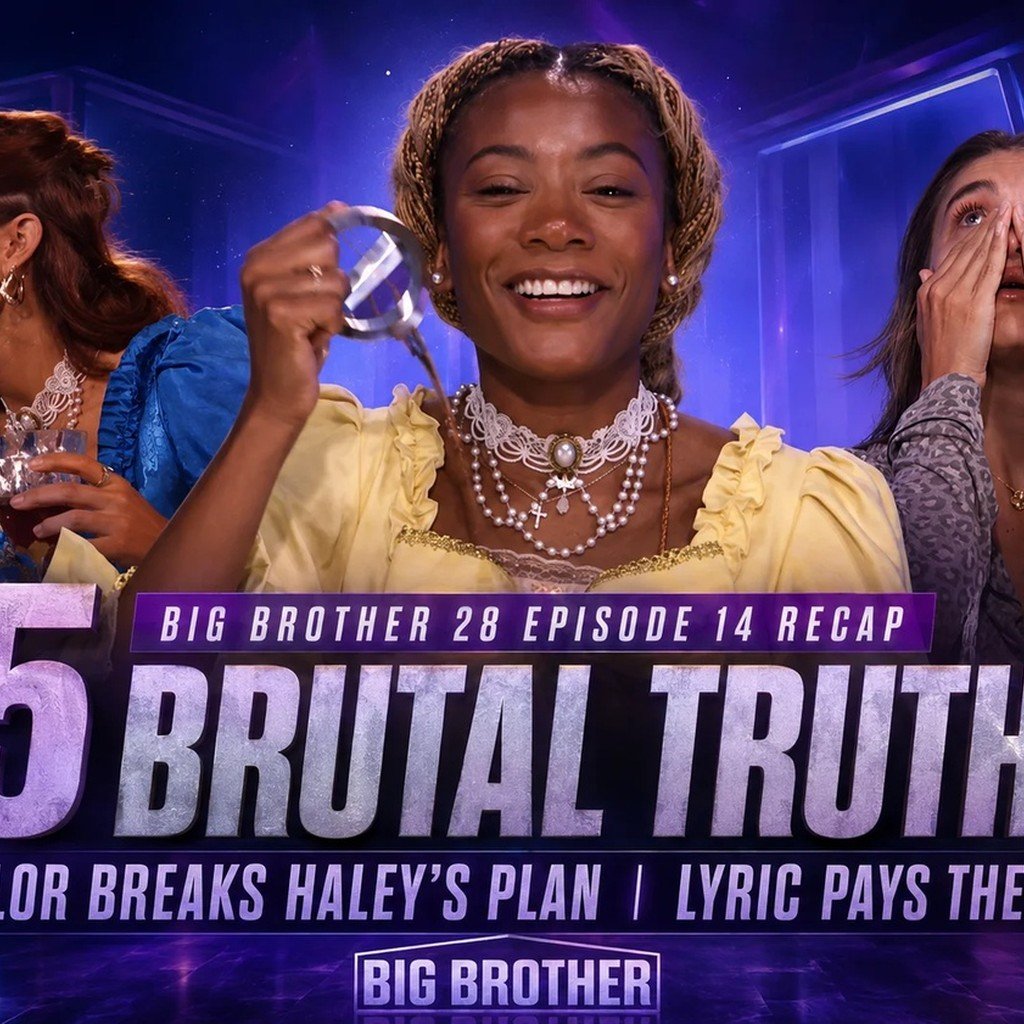
  • Big Brother 28 Episode 8 Review & Recap: Jason Wins the BB Blockbuster as Rome Is Evicted 12-1

    Big Brother 28 Episode 8 Review & Recap: Jason Wins the BB Blockbuster as Rome Is Evicted 12-1

    Big Brother 28 Episode 8 closed Rick Devens’ HOH week with Jason winning the BB Blockbuster and Rome becoming the second houseguest evicted from the game by a 12-1 vote.

    Tonight’s episode reached the result everyone expected, but the path to Rome’s eviction revealed far more than the final vote suggested.

    Rome spent his final hours campaigning to Drew and Barrett, correctly arguing that keeping him could give them someone willing to take a shot at the Toolshed. Drew understood the logic. Barrett entertained it. Neither player turned that awareness into a serious attempt to change the vote.

    Jason removed every question surrounding his safety by winning the BB Blockbuster. Melody remained beside Rome without ever becoming the true target, while Lyric avoided the competition entirely after Devens used the Power of Veto to save her.

    Devens completed the backdoor he wanted, but his HOH was not the strategic masterclass the final result may suggest. He won two competitions, nominated four people, exposed himself as a major physical threat and made a move that arguably benefited Angela and Dee more than it improved his own position.

    Rome played badly enough to deserve his eviction.

    That does not mean evicting him was best for everyone who voted against him.

    Big Brother 28 Episode 8 Quick Rundown

    • Rome continued campaigning to remain in the house.
    • Drew and Barrett discussed whether keeping Rome could benefit their individual games.
    • Rome argued that he could target the Toolshed before Drew or Barrett had to expose themselves.
    • Jason, Melody and Rome competed in the BB Blockbuster.
    • Jason won the BB Blockbuster and guaranteed his safety.
    • Melody and Rome became the final nominees.
    • Rome said goodbye to Lyric before the vote.
    • Rome was evicted by a vote of 12-1.
    • Devens completed his original backdoor plan.

    Rome Finally Made the Right Argument After Destroying His Credibility

    Rome entered tonight knowing he needed to convince the house that keeping him was more valuable than removing him.

    For the first time all week, his argument had some real strategic logic behind it.

    Rome told Drew and Barrett that he could be useful as someone willing to target the Toolshed. He understood that the majority alliance was becoming too comfortable and that several of its lower-ranking members would eventually need someone else to take the first shot.

    That should have interested Drew.

    Drew has relationships throughout the house, but he cannot remain protected by every group forever. Rome offered him a shield, a number outside the Toolshed and a player reckless enough to attack the people Drew was not yet prepared to challenge himself.

    The problem was that Rome had already made himself impossible to trust.

    He exposed Lyric, Melody and Jason as the people closest to him. He participated in a fake breakup that multiple houseguests immediately questioned. He fought with Haley, made emotional decisions and repeatedly revealed too much information whenever he felt cornered.

    Rome wanted Drew and Barrett to see him as a weapon.

    They saw him as a weapon that could explode in their hands.

    His campaign was not completely wrong. It was simply coming from the least credible person in the house.

    Grade: C-

    What Worked

    • Rome correctly identified that the Toolshed was becoming too comfortable.
    • He understood that Drew and Barrett could eventually need someone willing to attack the majority.
    • He presented himself as a shield who would remain ahead of quieter players.
    • His campaign forced Drew to consider whether evicting him actually benefited Drew’s game.
    • He continued fighting instead of accepting defeat.

    What Didn’t Work

    • Rome had already destroyed too much trust.
    • He exposed nearly every relationship he needed to protect.
    • His promises changed depending on who was listening.
    • He never assembled a realistic voting coalition.
    • His emotional gameplay made him too unpredictable to use safely.
    • He waited until the end of the week to make arguments that should have been part of his game much earlier.

    Drew and Barrett Saw the Problem but Chose the Safest Answer

    The most important strategic conversation in tonight’s episode belonged to Drew and Barrett.

    The Jugglers understood that Rome staying could benefit their individual games more than it benefited the Toolshed. Rome was messy, loud and unreliable, but he was also willing to take the shot that neither Drew nor Barrett wanted to take yet.

    Drew recognized that Rome could target Devens, Angela, Dee or Kamu while keeping attention away from him.

    That was the correct read.

    Rome could have acted as a shield, taken the blame for weakening the majority and remained a larger target than both Drew and Barrett. Keeping him would have preserved another number outside the Toolshed while giving the Jugglers more time to strengthen their position.

    They still voted him out.

    Recognizing a move is not the same as making one.

    Drew continues to demonstrate one of the strongest strategic minds in the house. He understands the different relationships, recognizes where the power sits and sees how the game could eventually turn against him.

    His problem is that he wants every possible option without accepting the risk of choosing one.

    Drew wants the Toolshed’s protection, Melody’s loyalty, Barrett’s trust and access to the outsiders. That is a strong position in Week 2, but every additional connection creates another reason for people to question where he truly stands.

    Forcing a failed flip for Rome would have been reckless. However, Drew and Barrett did not appear to seriously test whether the votes could be gathered.

    They identified the value of keeping Rome and then followed the same majority they were privately questioning.

    Grade: B-

    What Worked

    • Drew correctly recognized Rome’s value as a shield.
    • Barrett seriously considered the argument.
    • The Jugglers showed that they are thinking beyond the Toolshed.
    • Drew understood that Rome could take the first shot without exposing him.
    • Their conversation revealed real distrust underneath the majority alliance.

    What Didn’t Work

    • They never developed an actual vote-flip plan.
    • Drew continued discussing moves instead of making them.
    • Barrett followed the conversation without taking control of it.
    • Neither player gathered the numbers required to keep Rome.
    • Their votes strengthened the exact structure they were questioning.
    • Once the vote ended 12-1, their strategic discussion changed nothing.

    Drew Is Playing a Better Game Than Most of the House, but He Cannot Stay Everywhere Forever

    Drew remains one of the best-positioned players in the game.

    He has the Toolshed.

    He has the Jugglers with Barrett.

    He has Melody.

    He has relationships with people outside the majority.

    That gives him information from nearly every direction, but it also means multiple sides will eventually compare notes and realize Drew has been offering protection everywhere.

    His connection with Melody is already becoming visible. Angela and Dee have questioned how loyal he is to the Toolshed, and his interest in keeping Rome gives them another reason to wonder whether Drew is planning beyond the alliance.

    The difference between Drew and Dee is visibility.

    Both are sitting in strong positions, but people are beginning to notice Drew’s relationships. Dee was HOH last week, controlled the first eviction and somehow returned to the background as though none of it happened.

    Drew is doing more active juggling.

    That makes his game more impressive, but it also makes it more dangerous.

    He cannot spend the entire season waiting for the perfect moment. At some point, he will have to decide which relationships are real and which ones were only temporary protection.

    Jason Won Because He Could Not Trust the House to Save Him

    Jason entered the BB Blockbuster knowing that winning was the only guaranteed path to safety.

    He delivered.

    Jason defeated Melody and Rome, removed himself from the block and eliminated any possibility of becoming the backup eviction target if Rome had won.

    It was the clearest and most important move anyone made tonight.

    Jason did not need Devens to protect him. He did not need Angela to forgive him. He did not need the house to decide Melody was more dangerous. He won and took the decision away from everyone else.

    That does not mean his position is suddenly good.

    Jason remains exposed after his nomination ceremony fight with Angela. Devens nominated him. The Toolshed views him as an outsider, and multiple houseguests question whether his emotions are genuine or part of a performance.

    His reconciliation with Angela did not erase any of that.

    Jason survived because he won a competition.

    His social game did not save him.

    Rome’s eviction also removes one of the few people who could remain a larger and more obvious target than Jason. If the Toolshed retains power, Jason is still one of the easiest people to nominate without creating internal conflict.

    The BB Blockbuster gave him another week.

    Now he must prove he can use it.

    Grade: A-

    What Worked

    • Jason performed under maximum pressure.
    • He guaranteed his own safety.
    • He avoided becoming the backup target.
    • He proved he could win when his game depended on it.
    • The victory gave him time to rebuild damaged relationships.

    What Didn’t Work

    • His social position remains weak.
    • Angela still has reasons to target him.
    • Rome’s eviction removed a larger shield.
    • Winning did not repair the damage from the nomination ceremony.
    • He remains an easy target for the majority.
    • He cannot rely on saving himself every time he touches the block.

    Jason and Angela’s Reconciliation Felt Just as Performative as Their Fight

    Tonight attempted to provide closure to the nomination ceremony confrontation between Jason and Angela, but their reconciliation was difficult to take seriously.

    The original argument already felt theatrical.

    Jason and Angela escalated the situation, delivered dramatic accusations and behaved as though their relationship had reached a permanent breaking point. They then made up almost immediately afterward.

    Nothing about the resolution felt earned.

    Both players had strategic reasons to lower the temperature. Jason could not afford to remain Angela’s primary target while sitting on the block. Angela had already made her point and gained nothing from continuing to push the argument.

    The truce made sense.

    That does not mean it was genuine.

    Jason and Angela both understand how to create a moment and position themselves as the center of a scene. Their fight created television. Their reconciliation protected their games.

    Neither moment proved the relationship was actually repaired.

    Melody Survived Because Rome Was the Easier Choice

    Once Jason won the BB Blockbuster, Melody became the final nominee sitting beside Rome.

    She was never in serious danger.

    Melody handled the week better than Rome, but her safety also came from Rome making himself too difficult to keep. She did not need to launch a frantic campaign, expose relationships or promise everything to everyone.

    She remained calm while Rome continued reminding the house why he was the target.

    Drew’s protection also mattered.

    His connection with Melody gives her access to someone inside the Toolshed without requiring her to become part of the alliance’s core. That relationship helped protect her this week, but it could eventually place a larger target on her.

    Angela and Dee are already watching Drew.

    If they begin viewing Melody as the person pulling him away from the alliance, nominating Melody could become the easiest way to force Drew to reveal where he stands.

    Melody survived tonight comfortably.

    She still needs to build a position that does not depend on another nominee being more chaotic than she is.

    Grade: B-

    What Worked

    • Melody remained calm beside the obvious target.
    • She avoided overplaying her campaign.
    • Drew’s protection continued benefiting her.
    • Rome absorbed nearly all the negative attention.
    • She survived without needing to win the BB Blockbuster.
    • The vote confirmed that she was never the real target.

    What Didn’t Work

    • Melody remains outside the safest structure.
    • Her connection with Drew is becoming visible.
    • She did little to reshape the week herself.
    • Her safety depended heavily on Rome being the alternative.
    • She could become a repeat pawn.
    • Targeting her could eventually expose Drew’s divided loyalties.

    Lyric Quietly Escaped the Week With Almost Everything She Needed

    Lyric began Devens’ HOH week on the block.

    She ended it safe, separated from a sinking showmance and free from the consequences of the final vote.

    The fake breakup with Rome may not have fooled the entire house, but it convinced the only person who mattered. Devens used the Power of Veto on Lyric and placed Rome on the block in her place.

    That decision gave Lyric nearly every possible advantage.

    She avoided the BB Blockbuster. She never had to sit beside Rome during the eviction vote. She did not have to cast a vote against him, and his departure lowered the immediate threat created by their showmance.

    Their emotional goodbye gave tonight’s episode its strongest human moment, but from a game perspective, Lyric leaves the week in a better individual position.

    She can now rebuild without having to defend Rome’s mistakes.

    She can reconnect with people who viewed the pair as inseparable and argue that his behavior damaged her game.

    However, Lyric must be careful. Several houseguests recognized the breakup as strategy, and her social game could become too transparent if everyone realizes she is building similar personal connections with multiple people.

    For now, she lost her closest guaranteed number but also lost the person increasing her threat level.

    Grade: B+

    What Worked

    • Lyric convinced Devens to use the Veto on her.
    • She avoided the BB Blockbuster.
    • Rome’s eviction reduced her immediate threat level.
    • She never had to vote against her showmance partner.
    • She can rebuild as an individual player.
    • She escaped the week without taking public responsibility for Rome leaving.

    What Didn’t Work

    • Several players saw through the fake breakup.
    • Rome’s eviction removed one of her most loyal numbers.
    • Her loyalty remains questionable.
    • Her social strategy could become too obvious.
    • She must prove she can create stronger connections outside the showmance.

    Rome Was a Bad Player but a Useful Shield

    Rome played badly enough to deserve his eviction.

    He was also potentially valuable to several people who voted him out.

    Both things can be true.

    Rome was never going to hide behind the house structure. He was never going to quietly control votes or build a secret network without anyone noticing. He announced his concerns, exposed his emotions and made himself the center of every conflict.

    That made him dangerous.

    It also made him predictable.

    Drew, Barrett, Jason, Melody and other outsiders could have used Rome as a shield. He was willing to target the Toolshed before most of them were ready to expose themselves.

    He would have taken the shot.

    He also would have taken the blame.

    Instead, the house removed one of the loudest players openly questioning the power structure while leaving the quieter and more dangerous players protected.

    Dee can disappear after controlling a week.

    Drew can maintain several overlapping relationships.

    Kamu can remain socially protected without becoming the central target.

    Rome could not do any of those things.

    The house removed the easiest threat to see.

    The smarter players remain hidden behind him.

    The Single Vote for Rome Exposed More Resistance Than Another Unanimous Eviction Would Have

    Rome was evicted 12-1.

    The result was still decisive, but the lone vote prevented tonight from becoming the season’s second consecutive unanimous eviction.

    That vote did not create a serious threat to the plan. It did not come close to saving Rome, and it may become a source of suspicion during the next HOH cycle.

    However, it at least showed that someone was willing to break from the group.

    Ashley’s eviction established a house eager to vote together. Tonight nearly repeated the same pattern despite Drew and Barrett privately questioning whether removing Rome benefited them.

    The larger problem remains unchanged.

    Several players understand that the Toolshed is gaining control, but very few are willing to publicly resist it.

    The cast talks about moves.

    They recognize the majority.

    They discuss using outsiders as shields.

    Then most of them vote with the house.

    A 12-1 vote is more interesting than 13-0, but it still was not a competitive eviction.

    Rome’s campaign created conversation without creating numbers.

    The Toolshed Is Becoming Too Comfortable

    Rome’s eviction strengthened the Toolshed without forcing the alliance to reveal its internal hierarchy.

    Devens won the competitions.

    Angela helped shape the targets.

    Dee benefited quietly.

    Drew and Barrett questioned the alliance privately but still followed the group publicly.

    That is how a majority alliance begins turning into a steamroll.

    It does not require complete loyalty. It only requires everyone to remain afraid of being the first person to openly challenge it.

    Drew knows the Toolshed cannot benefit every member forever.

    Barrett understands the value of keeping outside targets.

    Neither was willing to break from the structure tonight.

    Rome leaving also removes someone who was prepared to attack the alliance openly. Jason remains outside it, but he is already damaged. Melody has Drew protecting her. Lyric is rebuilding after losing Rome.

    The Toolshed is not unbeatable.

    The rest of the house is simply making it look stronger than it is.

    Devens Completed the Backdoor but Still Played Angela’s Game

    Devens can point to a clean result.

    He won HOH.

    He won the Power of Veto.

    He backdoored Rome.

    Rome was evicted 12-1.

    On paper, that looks like a dominant week.

    The execution was far less impressive.

    Devens nominated Lyric, Melody and Jason after Rome exposed them as the people closest to him. He then used the Veto on Lyric even though he acknowledged that her breakup with Rome could be fake.

    Saving Lyric instead of Melody created unnecessary risk.

    Had Rome won the BB Blockbuster, both Rome and Lyric would have survived. The showmance Devens wanted to separate would have remained intact, and either Jason or Melody would have left instead.

    Jason’s victory prevented that outcome.

    The plan worked, but the BB Blockbuster had to rescue Devens from the weakness in his own Veto decision.

    Devens also strengthened Angela’s position more than his own. Angela wanted Rome and Jason weakened. Both touched the block, Rome left and Jason remains exposed.

    Dee received another week of protection without winning anything or publicly controlling the vote.

    Devens collected the competition wins, nominations, Veto decision and blood.

    Angela and Dee collected many of the benefits.

    That is why this HOH continued to feel like Devens playing Angela’s game instead of building the best possible position for himself.

    Grade: C+

    What Worked

    • Devens won both major competitions.
    • He successfully placed Rome on the block.
    • His intended target was evicted.
    • The week strengthened his immediate alliance.
    • He demonstrated control over the nomination cycle.
    • He removed someone willing to target people around him.

    What Didn’t Work

    • He saved Lyric instead of creating insurance against Rome.
    • Jason’s victory prevented the worst possible outcome.
    • He made himself an obvious competition threat.
    • Angela and Dee benefited without taking equal responsibility.
    • He used major power to remove someone already destroying his own game.
    • His HOH strengthened a structure that may eventually use him as a shield.

    Dee Slid Back Into the Bushes Like Her HOH Never Happened

    Dee remains one of the best-positioned players in the house because no one is treating her like the person who controlled the previous week.

    She was HOH.

    She nominated four people.

    She helped send Ashley home.

    One week later, Dee has already disappeared into the background.

    That separates her from Drew.

    Drew is also positioned in the middle, but people are beginning to notice his relationships. His connection with Melody is visible, his Final Two with Barrett creates another layer and Angela is already questioning his loyalty.

    Dee receives many of the same benefits without attracting the same suspicion.

    Rome’s eviction removed someone unpredictable enough to target her. Devens won the competitions. Angela created noise through her confrontation with Jason. Drew and Barrett questioned the alliance.

    Dee remained protected while everyone else became more visible.

    She does not need to dominate every conversation when the structure continues producing outcomes that benefit her.

    The strongest part of Dee’s game is her ability to control one week and vanish the next.

    America’s Involvement Needs to Create Real Disruption

    Tonight ended with America entering the game.

    The season needs the disruption.

    Two weeks have produced one unanimous eviction and one 12-1 vote. The house is not completely united, but the actual eviction results remain overwhelmingly predictable.

    An America-controlled power could force players to deal with consequences they cannot manage through private conversations. It could reward someone outside the majority, expose how the audience views the cast or place power somewhere the Toolshed does not expect.

    The twist needs to affect the game.

    Big Brother regularly introduces public votes that sound important but ultimately protect the same power structure already controlling the house.

    After tonight, another decorative twist will not be enough.

    The game needs something capable of turning all these private doubts into actual resistance.

    Final Thoughts

    Big Brother 28 Episode 8 gave Devens the result he wanted, but tonight did not prove that his HOH was a strategic masterpiece.

    Jason won the BB Blockbuster when he could not trust his social game to keep him safe. Melody survived because Rome remained the clear target. Lyric escaped the week in a stronger individual position after Devens saved her and Rome left by a 12-1 vote.

    Rome deserved to be evicted.

    His game was careless, emotional and impossible to stabilize. He exposed his allies, reacted badly under pressure and never built enough trust for his campaign to succeed.

    However, Drew and Barrett correctly understood that Rome could have been useful. He was willing to attack the Toolshed, absorb the blame and remain ahead of them as a target.

    They recognized his value and still helped remove him.

    That summarizes the house right now.

    Several players understand the structure.

    Very few are ready to challenge it.

    Devens collected the visible accomplishments and the blood. Angela received another result that benefited her game. Dee returned to the background as though she had not controlled the previous week.

    Tonight delivered an important competition win, an emotional goodbye between Rome and Lyric and several conversations that revealed cracks beneath the majority.

    The result was still predictable.

    The house has plenty of drama.

    It still needs someone willing to turn that drama into a real move.

    Best Player of the Night: Jason

    Jason entered the BB Blockbuster with his game in danger and guaranteed his safety by winning. His position remains weak, but nobody made a more important move tonight.

    Biggest Winner: Lyric

    Lyric began the week nominated, convinced Devens to save her and watched Rome leave without having to compete in the BB Blockbuster or vote against him.

    Best-Positioned Player: Dee

    The Toolshed became stronger, Rome left and Dee remained protected without becoming the public face of the decision.

    Most Underrated Player: Barrett

    Barrett showed that he understands the Toolshed cannot benefit everyone forever. He now needs to prove he can turn that awareness into action.

    Player in the Most Dangerous Good Position: Drew

    Drew sees the house clearly and has relationships everywhere, but his attempt to protect every option is beginning to expose how many sides he is playing.

    Biggest Loser: Rome

    Rome finally made several valid strategic arguments, but his previous mistakes ensured nobody trusted him enough to act on them.

    Best Moment: Jason Wins the BB Blockbuster

    Jason removed every possibility of becoming the backup eviction target and forced the house to choose between Rome and Melody.

    Most Emotional Moment: Rome Says Goodbye to Lyric

    Rome and Lyric’s final embrace and kiss gave the eviction genuine emotion after a week filled with fake breakups, strategic arguments and performative conflict.

    Worst Move: Drew and Barrett Recognize Rome’s Value and Still Evict Him

    They correctly identified that Rome could attack the Toolshed for them and then helped the Toolshed remove him.

    What Worked

    • Jason winning the BB Blockbuster under pressure.
    • Rome’s campaign forcing Drew and Barrett to examine their positions.
    • Lyric escaping the block and reducing her threat level.
    • Melody remaining calm beside the real target.
    • Rome and Lyric’s emotional goodbye.
    • Dee continuing to hide behind louder players.
    • The episode revealing cracks beneath the Toolshed.
    • The 12-1 vote providing at least one sign of resistance.

    What Didn’t Work

    • The eviction result remained completely predictable.
    • Drew and Barrett identified a move without seriously attempting it.
    • Devens unnecessarily risked his backdoor plan by saving Lyric.
    • Jason and Angela’s reconciliation still felt performative.
    • The outsiders helped the majority remove one of their shields.
    • Rome made the right arguments after destroying his credibility.
    • Most of the cast continued confusing private conversations with actual gameplay.

    Overall Grade: B

    Tonight delivered a meaningful BB Blockbuster victory, an emotional conclusion to Rome and Lyric’s showmance and several strategic conversations that exposed growing distrust inside the Toolshed.

    The problem is that most of those conversations changed nothing.

    Rome’s eviction made sense, but the 12-1 result still showed a house more comfortable following the majority than challenging it. Jason earned his safety, Lyric emerged from the week in a better position and Drew continued proving that he understands the game.

    Now someone needs to prove they are willing to act.

    Make sure to subscribe to our Late Night Crew Youtube Channel. Follow @yorkjavon@kspowerwheels@MS_MISCHA & @LateNightCrewYT on X.

  • Big Brother 28 Episode 7 Review & Recap: Devens Plays Angela’s Game, Backdoors Rome

    Big Brother 28 Episode 7 Review & Recap: Devens Plays Angela’s Game, Backdoors Rome

    Big Brother 28 is becoming professional wrestling with beds, slop, scripted-feeling confrontations and enough alliances to fill an entire faction war.

    Episode 7 delivered noise, tears, insults, a fake breakup and a Rome backdoor, but much of the drama felt more performed than lived. Angela and Jason acted like they had reached an irreversible breaking point at the nomination table, only to apologize and hug almost immediately. Lyric treated her separation from Rome like an audition for Are You The One? and Love Island. Rome turned every conversation into another dramatic segment, while Devens won the Power of Veto and completed a plan that increasingly looked like Angela’s HOH disguised as his own.

    Meanwhile, Dee quietly disappeared back into the bushes.

    That may be the most impressive game in the house.

    One week after serving as HOH, controlling the nominations and helping establish the season’s power structure, Dee has almost completely removed herself from public danger. Unlike Drew, whose middle positioning is beginning to attract suspicion, nobody is seriously examining Dee. She held power, got blood on her hands and then slipped back into the background as if Week 1 never happened.

    Devens may be wearing the HOH key, but Angela is driving the week and Dee is benefiting from all of it.

    The Nomination Ceremony Fight Was More Performance Than Reality

    Episode 7 returned to Angela and Jason’s confrontation following Devens’ nominations of Jason, Lyric and Melody.

    Angela accused Jason of being messy and manipulating people through emotional relationships. Jason pushed back, Haley entered the argument and the nomination table became a stage for everyone to raise their voices and establish their television roles.

    Then Angela and Jason made up almost immediately.

    Jason apologized, admitted he had been messy and hugged Angela. The supposed blood feud barely survived long enough to reach the next segment.

    There may have been genuine frustration underneath the yelling, but the performance was much larger than the actual conflict. Angela knows how Big Brother television works. Jason has previous reality television experience. Both understand that a loud confrontation produces airtime, Diary Room sessions and an episode cliffhanger.

    Angela played the chaotic babyface exposing the house villain. Jason played the theatrical heel defending his social game. Haley joined the argument as another babyface, while Rome found another opportunity to make himself look worse.

    It was entertaining television, but it did not feel like a meaningful relationship collapse. It felt like a wrestling angle where everyone cut promos, brawled around the ring and shook hands backstage 30 seconds later.

    What worked

    • Episode 7 opened with immediate energy.
    • Jason’s messy social game became public information.
    • Haley refused to allow Jason to control the conversation.
    • The confrontation exposed several strained relationships.

    What didn’t work

    • Angela and Jason reconciled almost immediately.
    • The intensity did not match the actual fallout.
    • Everyone appeared conscious of creating a television moment.
    • The episode treated temporary frustration like a house-changing feud.

    Jason Was Presented as the Villain, but Rome Somehow Became the Target

    Episode 7 never adequately explained how the week moved from Jason being exposed as a dangerous social player to Rome becoming the person Devens absolutely needed to remove.

    Jason entered the week as an obvious concern. He had discussed targeting the returning players, talked too openly about his emotional influence and created enough distrust for Angela to publicly attack his game.

    Then Rome suddenly became the backdoor target.

    The shift began when Rome tried to negotiate safety with Devens and exposed his closest relationships. Instead of making himself safer, Rome handed the HOH a diagram of his structure. Devens could nominate the people around Rome, weaken his position and use him as the common enemy around whom the new majority could unite.

    That explains the mechanics.

    It still does not completely explain why Rome became more urgent than Jason.

    Jason remained nominated, publicly exposed and socially unpredictable. Rome was playing loudly and poorly enough that he might have continued destroying his own position without anyone needing to backdoor him.

    The move appeared to be less about Rome being the strongest player and more about Rome being the easiest target around whom Angela, Dee, Devens and the Toolshed could organize.

    Jason is dangerous, but he can be used later.

    Rome became the sacrifice that helped formalize the new power structure.

    What worked

    • Devens used Rome’s own information against him.
    • Rome revealed exactly which relationships could be attacked.
    • Targeting Rome gave the new majority a common objective.
    • Jason remained available as a backup eviction option.

    What didn’t work

    • The broadcast failed to explain the target shift clearly.
    • Rome’s threat level was never properly compared with Jason’s.
    • Devens may be removing a self-destructive player before a subtler threat.
    • Episode 7 expected the audience to accept the backdoor as obvious.

    Devens Is HOH, but He Is Playing Angela’s Game

    Devens holds the power, but Angela has shaped the week.

    Angela drove the anti-Jason conversation, pushed the idea that the people around Rome were dangerous and helped turn the HOH room into the center of a new majority structure. Devens made the nominations and won the Veto, but the overall direction has consistently benefited Angela’s priorities.

    That is dangerous for Devens.

    He is taking the visible risks while Angela influences the targets. His name is attached to the nominations, the Veto decision, the replacement nominee and the possible eviction. If the move fails or the house turns against the veteran group, Devens absorbs the blame first.

    Angela can claim she merely voiced concerns.

    Dee can disappear.

    Devens cannot hide from the fact that he executed the plan.

    He may believe he is leading the alliance, but this week he looks more like the person doing the work for people who will gladly allow him to become the shield.

    What worked

    • Devens maintained complete control of the competitions.
    • He gathered enough information to expose Rome’s structure.
    • His HOH strengthened his immediate alliance network.
    • He successfully placed his intended target on the block.

    What didn’t work

    • Angela appears to be shaping his targets.
    • Devens is accumulating nearly all the visible blood.
    • His competition wins are making him impossible to ignore.
    • The people benefiting most from his HOH may sacrifice him first.

    Dee Is in One of the Best Positions in the House

    Drew has received deserved attention for playing both sides, but Dee may be positioned even better.

    The difference is visibility.

    People are beginning to question Drew. His relationship with Melody, his connections across multiple groups and his habit of appearing comfortable with everyone have started raising concerns. Some players are beginning to wonder whether Drew can actually be trusted.

    Nobody is seriously looking at Dee.

    That is remarkable considering Dee was the Week 1 HOH.

    She controlled the first nominations, helped establish important relationships and emerged from the week with blood that should have remained visible. Instead, she handed power to Devens, stepped backward and disappeared into the bushes as though she had never been HOH.

    Devens is winning competitions.

    Angela is creating confrontations.

    Jason and Rome are attracting attention.

    Drew is being examined for playing the middle.

    Dee is sitting behind all of them.

    She remains connected to the experienced players, included in the dominant structure and protected by larger targets. She does not need to win another competition because other people are currently doing the work for her.

    That is the ideal position in early Big Brother.

    The best player is not always the person making the loudest move. Sometimes it is the person who makes a move, allows everyone else to become distracted and disappears before anyone realizes what happened.

    What worked

    • Dee successfully lowered her profile after serving as HOH.
    • Nobody is seriously targeting or investigating her.
    • She remains protected within the majority structure.
    • Devens and Angela are absorbing the attention around her.
    • She does not need to win power to influence the game.

    What didn’t work

    • Dee could eventually become associated with the veteran structure.
    • Her previous HOH decisions may resurface once larger targets leave.
    • Playing too quietly could allow other players to build stronger résumés.
    • She must avoid being exposed as the person benefiting from every side.

    Drew Is Well Positioned, but People Are Beginning to Notice

    Drew remains one of the best-connected players in the house.

    He has relationships throughout the Toolshed, Four Seasons and several smaller agreements. His Final Two with Barrett gives him another layer of protection, and louder personalities continue shielding him from immediate danger.

    The problem is that the middle only remains safe while both sides believe the middle belongs to them.

    Drew’s attempts to protect Melody have raised questions. Angela and Dee have started examining his loyalty, and his habit of maintaining relationships everywhere is beginning to look less like good social play and more like evidence that he cannot be trusted.

    Drew is still in an excellent position.

    Unlike Dee, however, people are beginning to look directly at him.

    Dee held HOH and vanished from suspicion. Drew has not held power, yet his positioning is already attracting attention.

    That makes Dee’s game cleaner right now.

    Drew has more visible connections. Dee has fewer visible enemies.

    What worked

    • Drew receives information from almost every side.
    • Larger targets consistently protect him.
    • His relationship with Barrett gives him an important private structure.
    • He has avoided becoming a primary target.

    What didn’t work

    • His support for Melody exposed his divided loyalties.
    • Angela and Dee are beginning to question him.
    • Too many overlapping relationships could eventually be compared.
    • He may be forced to choose a side earlier than expected.

    Taylor Is Quietly Playing One of the Cleanest Games

    Taylor survived Week 1 and immediately understood what several other players still have not learned: she does not need to perform every day.

    She has been relaxing, observing and allowing the louder players to destroy one another. She is not forcing herself into every alliance, revealing unnecessary targets or turning personal emotions into house-wide problems.

    She also gave LaTrice the reality check she needed.

    LaTrice was crying because Rome had not included her among the people he asked Devens to protect. Taylor essentially asked the most obvious question in the house: Why are you crying when you are not even on the block?

    She was right.

    LaTrice received valuable information about where she stood with Rome, but she was safe. Rome’s poor decision was his problem. Taylor recognized that LaTrice did not need to inherit his crisis or become emotionally attached to someone else’s collapsing game.

    Through this stage of their seasons, Taylor Brown is playing a cleaner and more controlled game than Taylor Hale played during the opening weeks of Big Brother 24.

    Taylor Hale’s eventual victory was historic, but her early game was unstable. She was isolated, struggled to build relationships and survived partly because other players mishandled her.

    Taylor Brown is intentionally staying out of danger.

    That does not mean she has already played a better complete game. It means her opening two weeks have been more disciplined.

    What worked

    • Taylor immediately lowered her profile after surviving Week 1.
    • She is allowing bigger targets to eliminate one another.
    • Her advice to LaTrice was strategically correct.
    • She is not allowing emotion to control her decisions.
    • Few players currently have a reason to target her.

    What didn’t work

    • Taylor could eventually become expendable if she remains too quiet.
    • She still needs stronger long-term relationships.
    • Avoiding danger is not the same as controlling a vote.
    • She will eventually need to demonstrate more active influence.

    LaTrice Needed to Stop Crying Over Rome’s Game

    LaTrice was understandably hurt that Rome did not prioritize her.

    However, Taylor correctly recognized that LaTrice was turning useful information into unnecessary emotional distress.

    LaTrice was not nominated.

    Rome had no power.

    His failure to name her should have encouraged LaTrice to reconsider the relationship, not cry over it. Rome revealed that she was not as important to his game as she believed. That should free her to move elsewhere.

    Rome’s apology did little to improve the situation because the scene again became centered on his emotions. He cried, explained and transformed LaTrice’s disappointment into another Rome performance.

    LaTrice needs to listen to Taylor.

    Let Rome carry his own problems.

    What worked

    • LaTrice learned where she actually stood with Rome.
    • Taylor immediately identified the correct response.
    • LaTrice remained outside the main target structure.
    • Rome’s possible eviction could free her to build better relationships.

    What didn’t work

    • LaTrice gave Rome’s decision too much emotional importance.
    • Her crying revealed how invested she was.
    • Rome’s apology centered himself.
    • She needed another player to remind her that she was safe.

    Lyric Turned the Fake Breakup Into Love Island

    Lyric and Rome’s fake breakup was supposedly designed to reduce their threat level.

    Lyric treated it like permission to float from guy to guy.

    She spent the week flirting, building new connections and acting as though she had entered Are You The One? and Love Island instead of Big Brother. The plan worked well enough for Devens to believe that she was separating from Rome and could become loyal to him.

    Devens used the Veto on her.

    That was an excellent result for Lyric and a terrible read from Devens.

    The larger question is whether the breakup remains fake if Rome leaves.

    Rome appears much more emotionally invested in Lyric than Lyric is in him. He has talked about their future and dating outside the house. Lyric appears more willing to treat the relationship as one option among several.

    If Rome is evicted, Lyric could move on immediately.

    She will be free to continue flirting, separate herself from Rome’s failed game and present herself as an independent player. The fake breakup may become real before Rome finishes his post-eviction interviews.

    Rome can return to his pickleball clients.

    They may be the most reliable relationships waiting for him outside the house.

    What worked

    • Lyric actively persuaded the Veto holder to save her.
    • Her flirtation created additional social options.
    • She separated herself from Rome’s collapsing position.
    • She guaranteed her safety without winning a competition.

    What didn’t work

    • The fake breakup was obvious to several houseguests.
    • Her behavior made the showmance look less genuine.
    • Moving rapidly between men could damage her credibility.
    • Other players may eventually compare notes.
    • Devens rewarded someone he already suspected might be lying.

    Devens Backdoored Rome but Saved the Wrong Person

    Devens won the Power of Veto and removed Lyric from the block before naming Rome as the replacement nominee.

    That left Rome, Jason and Melody facing the BB Blockbuster and eviction.

    Backdooring Rome followed the plan.

    Saving Lyric was still the wrong decision.

    Had Devens saved Melody, the final nominees would have been Rome, Lyric and Jason. If Rome won the Blockbuster, Lyric could still be evicted. If Lyric won, Rome would remain vulnerable.

    That would have provided insurance against the twist.

    Instead, Lyric is completely safe. If Rome wins the Blockbuster, both members of the showmance survive and Devens’ entire HOH loses its purpose.

    Jason or Melody would leave instead.

    Devens admitted that Lyric could be lying about the breakup and saved her anyway. Recognizing a possible lie and then rewarding it is not strong strategy.

    He made the complicated emotional decision when the simple structural decision was available.

    What worked

    • Devens won both HOH and Veto.
    • Rome was unable to compete for the Veto.
    • The intended backdoor was completed.
    • Devens potentially created a short-term relationship with Lyric.

    What didn’t work

    • He saved the wrong nominee.
    • Rome and Lyric can both survive the week.
    • He trusted a player participating in a fake breakup.
    • He allowed Angela’s preferred structure to guide his HOH.
    • His competition résumé is making him the veteran group’s most obvious target.

    The CBS and Paramount Veterans Are Controlling the Story

    There is no confirmed evidence that Dee, Devens, Angela and Jason are literal production plants.

    However, they are all products of the CBS and Paramount reality television system.

    Dee and Devens came from Survivor. Angela previously played Big Brother. Jason competed on RuPaul’s Drag Race. They understand cameras, confessionals, story arcs and how to create moments that production can use.

    That experience matters.

    The early season has repeatedly revolved around them. Angela creates the arguments. Jason plays the theatrical villain. Devens wins the competitions and carries out the moves. Dee quietly benefits while avoiding attention.

    Devens appears most likely to become the first one sacrificed.

    He is the strongest visible competitor, the person officially making the decisions and the player accumulating the most blood. Angela can claim she merely expressed concerns. Dee can continue hiding. Jason can position himself as an outsider.

    Devens cannot erase the nominations from his résumé.

    He may be the face of the veteran structure, but he is also its easiest fall guy.

    What worked

    • The experienced players understand how to create television.
    • Their presence accelerated the early gameplay.
    • They built strong overlapping relationships.
    • Dee has used the structure particularly well.

    What didn’t work

    • The casting creates an obvious experience imbalance.
    • The television narrative revolves heavily around familiar personalities.
    • Devens is absorbing the consequences for moves benefiting several people.
    • The season increasingly feels produced around character roles.

    Big Brother 28 Is Becoming Professional Wrestling

    The house is divided into factions, duos, temporary tag teams and oversized supergroups.

    The arguments feel like promos.

    The Diary Room sessions are backstage interviews.

    The nomination ceremony is the weekly confrontation segment, and the Veto ceremony is the closing angle.

    Angela is the unpredictable veteran babyface. Jason is the theatrical heel. Rome is the loud heel who keeps talking himself into trouble. Devens is the authority figure who believes he controls the show. Dee is the quiet mastermind standing behind the curtain. Drew is working both locker rooms, and Taylor is staying away from the overbooked main event.

    The alliances are factions: Toolshed, Crossovers, Four Seasons, The Jugglers, Honor Society and every other temporary agreement created before anyone has had time to remember the previous one.

    Professional wrestling is not the problem.

    Pretending the performance is completely authentic is the problem.

    Big Brother has always contained showmanship, but this season is barely attempting to hide it.

    What worked

    • The defined personalities make the season easy to follow.
    • The alliance structure creates opportunities for betrayals.
    • The cast knows how to create memorable television.
    • Several players occupy clear and entertaining roles.

    What didn’t work

    • Too many arguments feel designed for airtime.
    • Temporary disagreements are treated like permanent feuds.
    • The alliance count has become ridiculous.
    • Character work is beginning to overwhelm authentic gameplay.

    Final Thoughts

    Big Brother 28 Episode 7 was entertaining, strategically important and filled with exaggerated performances.

    Angela and Jason’s fight looked serious until they reconciled seconds later. The episode never properly explained why Jason stopped being the apparent target and Rome became the emergency. Lyric used a fake breakup to secure safety and turn the house into a dating show. Rome continued performing while his game collapsed.

    Devens won everything, but he is playing Angela’s game and taking the blame for it.

    Drew remains one of the best-positioned players, although people are beginning to recognize how many sides he is playing.

    Taylor continues quietly handling the early game better than most of the cast.

    Dee may be positioned best of all.

    She controlled Week 1, helped shape the power structure and then vanished back into the bushes without anyone seriously looking at her. Devens and Angela are creating the noise. Drew is attracting suspicion. Dee is benefiting from every move while barely appearing responsible for any of them.

    That is not inactivity.

    That is positioning.

    What worked

    • Dee and Taylor continued playing clean, controlled games.
    • Drew remains connected throughout the house.
    • Lyric actively saved herself.
    • Rome’s backdoor created meaningful stakes.
    • Episode 7 produced memorable television.

    What didn’t work

    • The nomination fight felt fake.
    • The target shift was poorly explained.
    • Devens saved the wrong nominee.
    • Angela appears to be controlling Devens’ HOH.
    • The showmance can still survive intact.
    • The season’s conflicts increasingly feel like wrestling angles.

    Best Player of Episode 7

    Lyric.

    She entered nominated, sold Devens a questionable breakup story and walked away safe.

    Best-Positioned Player

    Dee.

    She was HOH last week, controlled the game and disappeared back into safety without anyone seriously looking at her.

    Most Underrated Player

    Taylor.

    She is relaxed, protected and correctly telling LaTrice not to cry over someone else’s collapsing game.

    Player in the Most Dangerous Good Position

    Drew.

    He is connected everywhere, but people are beginning to notice.

    Worst Player of Episode 7

    Rome.

    He exposed his relationships, argued, cried, performed and landed on the block as the primary target.

    Worst Strategic Decision

    Devens saving Lyric instead of Melody.

    He removed his insurance against Rome winning the BB Blockbuster.

    Episode 7 Grade: B+

    Episode 7 was entertaining and strategically important, but too much of the drama felt performed and the target-shift story was incomplete.

    Devens’ HOH Grade: C

    Devens won both competitions and completed the Rome backdoor, but he is executing Angela’s agenda, increasing his own threat level and allowing Dee to benefit without taking any heat.

    Make sure to subscribe to our Late Night Crew Youtube Channel. Follow @yorkjavon@kspowerwheels@MS_MISCHA & @LateNightCrewYT on X.

  • Big Brother 28 July 12, 2026 Review & Recap: Dee Takes Control, Devens Gets Messy and the Crossovers Take Shape

    Big Brother 28 July 12, 2026 Review & Recap: Dee Takes Control, Devens Gets Messy and the Crossovers Take Shape

    Big Brother 28 July 12, 2026 finally started feeling like an actual season of Big Brother tonight.

    After Thursday’s chaotic, overproduced time-travel premiere and Friday’s Big Brother: Unlocked reveal, tonight’s 90-minute episode delivered the first Head of Household competition, the season’s earliest power structures, some questionable social interactions and the first three nominations of the summer. The game is moving quickly, but CBS created an unnecessary problem by treating Unlocked like required viewing. Dee Valladares was officially revealed as Rachel Reilly’s replacement Friday night, yet tonight’s episode barely reintroduced her or properly recapped how she entered the house. Anyone who skipped the companion show was expected to understand why a former Survivor winner had suddenly appeared and was competing for power. (EW.com)

    Once the episode moved past that confusion, it did a much better job establishing the personalities inside the house.

    Taylor became emotional after believing Rick Devens had ignored her and failed to give her a hug. It was a small interaction that she turned into something much larger, which could become a recurring problem if she continues assigning strategic meaning to every social slight. Rome and Lyric’s immediate flirtation also received plenty of attention, making it clear that production already sees them as the season’s first potential showmance.

    Then there was Jason saying he was “scared of being around so many straight people.” That was wild. It may have been intended as a joke or an exaggerated expression of feeling out of place, but it still landed badly. Reverse the identities in that sentence and nobody would casually brush it aside. Jason can be entertaining without every comment automatically being treated as harmless simply because it comes wrapped in camp.

    The first Head of Household competition continued the season’s crossover-heavy opening. Only Angela Murray, Rick Devens and Dee were eligible to become HOH, while the groups of new houseguests who brought them into the game had to stabilize their platforms as they completed the challenge. That decision remains unfair to the 14 original cast members. They entered the house expecting to play Big Brother, only to be told that the season’s first and most valuable HOH would automatically belong to one of three people CBS had already presented as “reality icons.”

    Dee ultimately defeated Angela and Devens by completing the puzzle, building her fire and burning through her rope first. Devens and the group supporting him—Chuk, Drew, Haley and Taylor—were consequently made Have-Nots. The challenge itself was visually impressive, and watching the two Survivor players deal with fire while Angela tried to survive the physical chaos gave the competition some natural comedy. Still, Dee winning was the most important possible result because it immediately placed one of the season’s most experienced strategic players in control. (Big Brother Network)

    Dee did not waste that power.

    Rather than locking herself into one obvious group, she helped construct multiple layers of protection. The real power structure is the Crossovers alliance consisting of Dee, Devens, Angela, Barrett and Drew. On paper, that is an extremely dangerous five. It combines the three experienced television personalities with two younger players who appear socially connected and physically capable.

    The problem is that Barrett already has reasons to question where he truly stands.

    At the same time, Dee and Devens allowed Kamu, Haley and Chuk to believe the Red Corner was a legitimate structure with the two veterans attached. In reality, the Red Corner appears to be a secondary arrangement that Dee can use for information and numbers while keeping her actual loyalty with the Crossovers. That is smart positioning by Dee because she has placed herself near the center of both groups without publicly appearing tied to one dominant alliance. (Big Brother Junkies)

    Kamu proved during his conversation with Dee that he is thinking strategically. His argument for breaking up a perceived group and considering Barrett as a nominee made sense from his perspective. Barrett is socially capable, physically imposing and connected enough to become dangerous if allowed to settle into the game.

    However, Dee inviting Barrett into the HOH room while Kamu was in the middle of pitching Barrett for the block was unbelievably sloppy.

    Kamu is part of the Red Corner structure that Dee is trying to maintain, while Barrett is inside her real Crossovers alliance. Bringing Barrett into that room risked exposing the difference between Dee’s genuine relationships and the people she is merely allowing to feel protected. Even if Barrett did not hear the entire pitch, there was no strategic benefit to creating that awkward situation. Dee has shown that she can manage several conversations at once, but managing multiple alliances means keeping the right people separated at the right times.

    Devens created an even larger information-management problem.

    He told Angela about the Red Corner arrangement because he feared she would eventually discover it and feel excluded. That portion of the decision was understandable. Angela is part of the Crossovers, and withholding a secondary alliance from her could have produced a much larger explosion later.

    Telling Drew after he walked into the conversation was far more questionable.

    Devens turned information that could have been carefully shared into something that was suddenly circulating throughout nearly the entire Crossovers alliance—except Barrett. That is the worst possible person to leave out because Barrett already has reason to wonder whether he is fifth in a five-person group. Dee was right to be frustrated. Devens made a unilateral decision that affected her HOH, her fake alliance and her relationship with Barrett without consulting her first.

    It was not catastrophic, but it was messy.

    The situation also strengthened the feeling that CBS may end up sacrificing Devens first among its three crossover additions. Dee is already constructing several layers of protection, and Angela handled the new information far more calmly than anyone familiar with her previous season might have expected. Devens, meanwhile, is already spilling information and placing himself between competing interests. He is entertaining, but entertainment and long-term positioning are not the same thing.

    The nomination process reinforced Dee’s diplomatic approach. She selected one person from each of the three groups that participated in the HOH competition: Mallory Aurichio, Taylor Brown and Yash Patel.

    Mallory did herself no favors during her conversation with Dee. Rather than determining what Dee needed, offering something useful or creating a clear strategic connection, she rambled through personal information without providing a compelling reason to keep her safe. It felt more like an uncomfortable introductory conversation than a serious meeting with the first HOH.

    Taylor’s nomination could be explained through Dee’s one-person-per-group reasoning, but the edit needed to give Yash’s placement more attention. Yash was part of the team that directly helped Dee win. Jason later indicated that Dee had suggested their group would be protected, making Yash’s nomination particularly questionable. Spreading the nominations across the three groups gave Dee a clean public explanation, but nominating someone who helped deliver her power could make future players less willing to trust her promises. (Big Brother Network)

    The episode ended with Mallory, Taylor and Yash officially on the block, but the larger story was everything developing around them. Dee may be the first HOH, yet she is not playing a simple opening week. She is maintaining a real alliance, managing a fake alliance, protecting several dangerous players and attempting to conceal which relationships matter most to her.

    That ambition could make her the season’s dominant strategist—or cause her entire structure to collapse once people compare information.

    Tonight’s episode was considerably stronger than the premiere because it finally allowed strategy and personalities to drive the show instead of forcing everything through a bloated time-travel storyline. The introduction of another America’s Vote twist could become excessive, especially with three recognizable players already holding an enormous advantage, but the cast itself is producing enough tension that the season does not need constant production interference.

    Dee emerged as the clear central player, Kamu showed legitimate strategic instincts, Angela demonstrated surprising restraint and Devens provided the first meaningful crack inside the Crossovers. The gameplay was imperfect, occasionally sloppy and already complicated.

    In other words, Big Brother 28 has officially begun.

    Overall Grade: B+

    Make sure to subscribe to our Late Night Crew Youtube Channel. Follow @yorkjavon@kspowerwheels@MS_MISCHA & @LateNightCrewYT on X.

  • Big Brother 28 Premiere: Full Episode Recap

    The Big Brother 28 Premiere — and they wasted absolutely NO time going crazy. Episode 1 just dropped and Shay is breaking down EVERY twist, turn, and shocking moment.

    #LNC Rachel Reilly entered the Big Brother 28 house as an icon… and left in a VOLCANO. No, that’s not a joke. BB28 opened with one of the wildest premiere twists in the show’s history and we’re unpacking every second of it. This season has HISTORY WRITTEN all over it and the Late Night Crew is covering every episode.

    Subscribe and hit the bell so you don’t miss a single recap drop. #LNC 🔔 SUBSCRIBE for every Big Brother 28 recap, reaction & live stream 👍 LIKE if Rachel’s exit left your jaw on the floor 💬 COMMENT

    #BigBrother28 #BB28 #RachelReilly #BigBrother #BB28Recap #RealityTV #LNC #LateNightCrew #Angela #RickDevens #BigBrotherRecap

    shay@latenightcrew.net

    Paypal: https://paypal.me/LateNightCrewLNC

    Cashapp $LateNightCrewLLC https://cash.app/$LateNightCrewLLC

    https://www.venmo.com/u/LateNightCrew

    #LNC #BB28